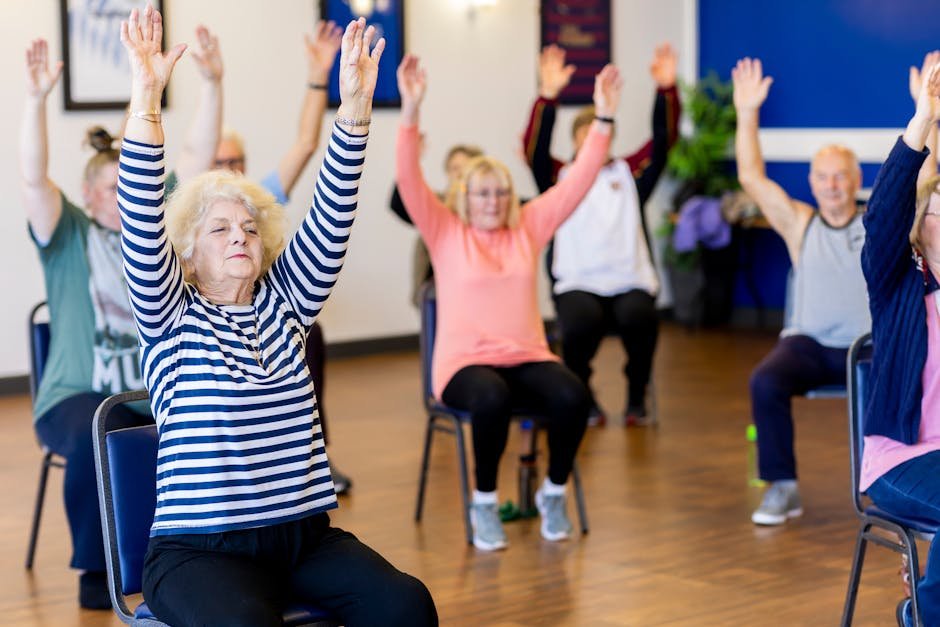
Senior Neck and Upper Back Exercise Routine: Safe, Simple Moves to Ease Stiffness and Improve Posture
This post contains affiliate links. As an Amazon Associate, I earn from qualifying purchases at no extra cost to you.
Free resources — no credit card required for trial
🎧 Listen to health & wellness audiobooks free for 30 days
Start 30-Day Free Trial →
📚 Read unlimited health books free for 30 days
Try Kindle Unlimited Free →
Free resources — no credit card required for trial
🎧 Listen to health & wellness audiobooks free for 30 days
Start 30-Day Free Trial →
🛒 Recommended Products
As an Amazon Associate we earn from qualifying purchases at no extra cost to you.
Branfit Shoulder and Back Brace Posture Corrector — Breathable Posture Trainer for Upper B
$24.99
Posture Corrector for Women and Men — Comfortable Effective Brace for Shoulder and Back Pa
$22.99
Bodywellness Posture Corrector for Men and Women — Adjustable Back Straightener with Clavi
$19.99
Updated Posture Corrector — Adjustable Upper Back Brace for Clavicle Support and Neck Pain
$21.99
TRIDUCNA Shiatsu Neck Back and Shoulder Massager with Heat — Deep Tissue 3D Kneading Pillo
$49.99
📚 Read unlimited health books free for 30 days
Try Kindle Unlimited Free →
If you’ve been waking up with a stiff neck, feeling tension across your shoulders after a drive, or noticing that your posture isn’t quite what it used to be, you’re definitely not alone. Neck and upper back discomfort is one of the most common complaints among older adults — and the good news is that a simple, consistent senior neck and upper back exercise routine can make a real difference. You don’t need a gym membership, fancy equipment, or an hour of your day. Just a chair, a wall, and a few minutes of gentle movement can help you feel more comfortable, move more freely, and stand a little taller. Let’s get into it.
Why Neck and Upper Back Exercises Matter So Much for Seniors
It’s easy to underestimate just how much your neck and upper back do for you every single day. These muscles and joints are involved in nearly everything — turning your head to check traffic, reaching up into a cabinet, sitting at a table for a meal, or even just walking with good balance. When they become stiff or weak, everyday tasks can feel harder and even a little risky.
For older adults especially, maintaining good mobility in this area supports healthy posture, which in turn affects how you breathe, how you balance, and how much energy you use moving through the day. Tension that builds up from long periods of sitting, driving, reading, or using a screen tends to settle right in the neck and upper back — which is exactly why gentle, regular movement is so important. Think of these exercises less as a “workout” and more as essential maintenance for your body.
The great news is that you don’t have to push through discomfort or do anything dramatic to see results. Small, consistent movements done within a comfortable, pain-free range can gradually increase flexibility, reduce stiffness, and strengthen the muscles that hold you upright. Over time, that adds up to better posture, less daily tension, and a greater sense of ease in your body.
Important Safety Tips Before You Start
Before jumping into any new exercise routine, a little preparation goes a long way — especially when it comes to the neck and spine. If you have a recent neck or back injury, osteoporosis, a spinal fusion, severe arthritis, vertigo, or uncontrolled high blood pressure, it’s important to have a chat with your doctor first. This isn’t about scaring you off — it’s about making sure your routine works for you rather than against you.
When you do start, always move within a comfortable, pain-free range. There’s a big difference between a gentle stretch and pain — mild pressure or a light pulling sensation is normal, but sharp pain, numbness, tingling, or dizziness means you should stop and rest. Use a sturdy, straight-backed chair without wheels for any seated exercises, and stand near a wall when doing upright movements if balance is a concern.
One of the simplest but most overlooked tips: breathe normally throughout your exercises. Many people hold their breath without realising it, especially during holds or stretches. Try to exhale during the effort part of a movement and inhale during the easier parts. Keeping your breath flowing helps your muscles relax and your body stay calm.
A Gentle Warm-Up to Prepare Your Body
Starting with a brief warm-up — just three to five minutes — helps prepare your muscles and joints for movement and reduces the risk of discomfort. Think of it as a gentle “hello” to your body before you ask it to do something new.
Begin with some gentle shoulder rolls: lift your shoulders up toward your ears as you inhale, then roll them back and down as you exhale. Do eight to ten rolls in each direction. This releases tension that tends to accumulate across the top of the shoulders and base of the neck. Follow that with some slow, gentle head turns — just turning your head to the right, then to the left, within a comfortable range. Four to six turns each side is plenty. If you’re seated, you can also do some light foot taps or marching in place for a minute or two to get your circulation going and loosen up your hips and lower back, which all connect to how your upper body feels.
Your Step-by-Step Senior Neck and Upper Back Exercise Routine
This routine includes nine carefully chosen exercises that cover everything from gentle neck retraining to upper back strengthening and chest opening. Start with just one set of each exercise. As you become more comfortable over a few weeks, you can add a second set or increase your reps gradually — no rushing needed.
Chin Tucks are a brilliant starting point. Sit or stand tall, then gently tuck your chin straight back — almost like you’re making a small double chin. Hold for three to five seconds, then release. Aim for eight to twelve repetitions. This simple move helps correct forward head posture, which is incredibly common in people who spend time reading or looking at screens.
Neck Side Bends involve gently tilting your head toward one shoulder, holding briefly, and returning to centre before repeating on the other side. Six to ten reps per side is a good starting point. Keep the movement small and slow — you don’t need to go far to feel the benefit. Neck Rotations follow a similar principle: turn your head gently to one side as far as comfortable, hold a moment, and return to centre. If any dizziness occurs, stop and rest.
Shoulder Blade Squeezes are wonderfully effective for the upper back. Simply squeeze your shoulder blades together as if you’re trying to hold a small pencil between them, hold for five seconds, then release. Ten to fifteen repetitions of this move strengthens the muscles that pull your shoulders back and support upright posture. Wall Angels take this further — stand with your back against a wall and slowly slide your forearms upward, keeping contact with the wall. It’s harder than it sounds for many people, which tells you just how much this area needs attention.
Thoracic Extension gently opens the upper back by interlacing your fingers behind your head and lifting your chest as you lean slightly backward. Seated Thoracic Rotation involves gently twisting your upper body to one side while keeping your hips still — great for spinal mobility. Cat-Cow can be done on all fours or seated in a chair, flowing between arching and rounding your spine with your breath. Finally, the Doorway Chest Stretch balances everything out by opening the chest and front of the shoulders — a key counterpart to all the backward and upward movements you’ve done.
What You Can Do: Practical Tips for Getting the Most From This Routine
- Start with two days per week and work toward three days as you feel more comfortable. Consistency matters far more than intensity.
- Aim for 15–25 minutes per session, including your warm-up. That’s genuinely all you need to see gradual improvements.
- Use a sturdy chair or wall for balance and support during any exercises where you feel unsteady.
- Move slowly and mindfully. These aren’t exercises to rush through — slower, more controlled movements are more effective and safer for your joints.
- Scale back if needed. If something causes discomfort, reduce the range of motion or skip that move for now. Listen to your body over any instruction.
- Progress in small steps. When an exercise starts to feel easy, try adding two to three seconds to your hold time, or add two extra reps. Don’t jump ahead too quickly.
- Pair this with gentle daily movement like short walks or light stretching on rest days to keep things fluid.
- Keep a simple log. Even just noting “did three exercises today, felt good” can help you track progress and stay motivated.
- If you have arthritis or osteoporosis, focus on smaller ranges of movement and avoid any extreme neck extension or forceful holds.
- Seek guidance if symptoms arise. Persistent pain, new numbness, weakness, or dizziness should always be checked by a healthcare professional.
Building a Simple Weekly Routine and Staying Motivated
One of the biggest obstacles to regular exercise isn’t knowing what to do — it’s staying consistent when life gets busy or when motivation dips. The good news is that this routine is short enough that you can fit it in almost anywhere: before breakfast, during a quiet mid-morning, or as an afternoon wind-down. The key is finding a time that works naturally for you and linking it to something you already do — like after your morning cup of tea or before your favourite TV programme.
A simple weekly plan might look like this: Day one, do your warm-up and one full set of the routine. Day two, take a rest or go for a gentle walk. Day three, repeat the routine — perhaps adding a second set if you’re feeling good. Day four, rest or do some easy stretching. Day five, another full session. The weekend can be reserved for rest or whatever gentle movement you enjoy most, whether that’s gardening, a stroll, or some quiet mobility work.
It’s completely normal to feel some mild stiffness in the first week or two, particularly if you haven’t done much structured movement recently. That’s your body waking up and adapting — it’s a positive sign. What you want to avoid is pushing into actual pain. Progress with these exercises tends to be gradual and cumulative: after a few weeks, you may notice you can turn your head more easily, your shoulders feel less tense at the end of the day, or you’re sitting a little taller without consciously thinking about it. Those small wins are worth celebrating.
Remember, the goal here isn’t perfection. It’s steady, kind progress. Some days you’ll do the full routine; other days you might only manage a few chin tucks and some shoulder rolls before breakfast. That still counts. Your body is learning new patterns, and every small effort contributes to long-term comfort and independence.
The Bottom Line: A regular senior neck and upper back exercise routine doesn’t have to be complicated or time-consuming to be genuinely effective. With just a few simple, safe movements performed a few times a week, you can ease everyday stiffness, improve your posture, and support better movement throughout your day. Start gently, progress gradually, use your chair or wall for support, and always move within a comfortable, pain-free range. Your neck and upper back do so much for you — giving them a little dedicated care can make a noticeable difference in how you feel and move, day in and day out.
This is not medical advice. Consult your healthcare provider before starting any new health routine or using any product mentioned here.