How to Improve Balance in 7 Minutes a Day: A Safe, Simple Routine for Seniors
This post contains affiliate links. As an Amazon Associate, I earn from qualifying purchases at no extra cost to you.
Free resources — no credit card required for trial
🎧 Listen to health & wellness audiobooks free for 30 days
Start 30-Day Free Trial →
🛒 Recommended Products
As an Amazon Associate we earn from qualifying purchases at no extra cost to you.
TheraBand First Step to Active Health Kit — Senior Exercise Program for Balance and Fall P
$19.99
EZ Off Jar Opener for Seniors — Under Cabinet Jar Opener for Weak Hands and Arthritis
$9.99
Omron 5 Series Upper Arm Blood Pressure Monitor — 2-User 100-Reading Memory Wide-Range Cuf
$44.99
OMRON 7 Series Wireless Wrist Blood Pressure Monitor — Clinically Validated with Connect A
$69.99
Vitality 4 Life Senior Resistance Band with Instruction Guide — Specifically for Elderly F
$16.99
📚 Read unlimited health books free for 30 days
Try Kindle Unlimited Free →
Balance is one of those things most of us take for granted — until we don’t. Whether it’s reaching for something on a high shelf, stepping off a curb, or simply getting up from a chair, steady balance is quietly working in the background of nearly everything we do. The wonderful news? You can improve balance with just seven minutes of gentle, purposeful movement each day. No gym membership, no expensive equipment, no hour-long workout sessions required. Just seven minutes, a sturdy chair, and a little consistency. If you’re a senior who wants to feel more confident on your feet — or a family member helping a loved one stay independent — this guide is for you.
Why Balance Matters More Than You Might Think
Falls are one of the leading causes of injury among older adults, and fear of falling can be just as limiting as a fall itself. When we start to feel unsteady, we naturally pull back — we move less, go out less, and take fewer chances. Over time, that reduced movement can actually weaken the muscles and coordination we need to stay safe. It becomes a cycle that’s hard to break.
The good news is that balance is a skill — and like any skill, it responds to practice. The legs, hips, and the nervous system all play a role in keeping us upright, and all of them can be trained and strengthened at any age. Even small, regular sessions of balance-focused movement can help your body become more responsive and your mind more confident. Think of it as an investment in your independence that pays dividends every single day.
That’s why a seven-minute daily balance routine is such a powerful tool. It’s short enough to actually do consistently, but purposeful enough to make a real difference. Over weeks and months, you may notice steadier steps, less hesitation when moving around the house, and a greater sense of ease when standing up, walking outdoors, or navigating everyday situations.
Before You Begin: Safety First
Starting any new movement routine deserves a moment of preparation — especially when it comes to balance work. If you’ve experienced recent dizziness, unsteady legs, knee or hip pain, or a fall in the past few months, it’s a good idea to check in with your doctor before starting this routine. The same goes if you’re managing a condition that affects your coordination or take medications that may affect your balance. Your safety always comes first.
Setting up a safe space is equally important. Clear the area of any clutter or loose rugs, wear well-fitting non-slip shoes (or firm-soled slippers), and make sure a sturdy chair or wall is within arm’s reach throughout the session. Think of that chair as your safety partner — not a crutch, but a reassuring presence that lets you push your limits without worry. Move slowly, breathe regularly, and if you feel tired, take a longer rest between exercises. There’s no rush here.
If you use a walker or cane, keep it close and feel free to use it throughout the routine. If you have knee or hip pain, keep movements small and within a comfortable range. This routine is designed to be adapted to your body — not the other way around.
The 7-Minute Balance Routine: Your Step-by-Step Guide
This routine is divided into seven one-minute segments, covering a warm-up, five exercises, and a gentle cool-down. Each exercise targets a different aspect of balance — leg strength, weight shifting, coordination, and hip stability — so together they form a well-rounded session. Here’s how it flows:
Warm-Up (0:00–1:00): Begin with gentle movement to wake up your body — slow marching in place, soft arm circles, and a few ankle rolls. This gets the blood flowing and signals to your nervous system that movement is coming.
Exercise 1 — Sit-to-Stand (1:00–2:00): Sit toward the front edge of a sturdy chair, feet hip-width apart. On a slow exhale, press through your heels and stand tall — without leaning too far forward. Then slowly lower yourself back down over 3–5 seconds. Repeat for the full minute. This builds the leg strength and pelvic stability that support every step you take. If you need to use your arms to help push up, that’s completely fine. As you get stronger, try using your arms less.
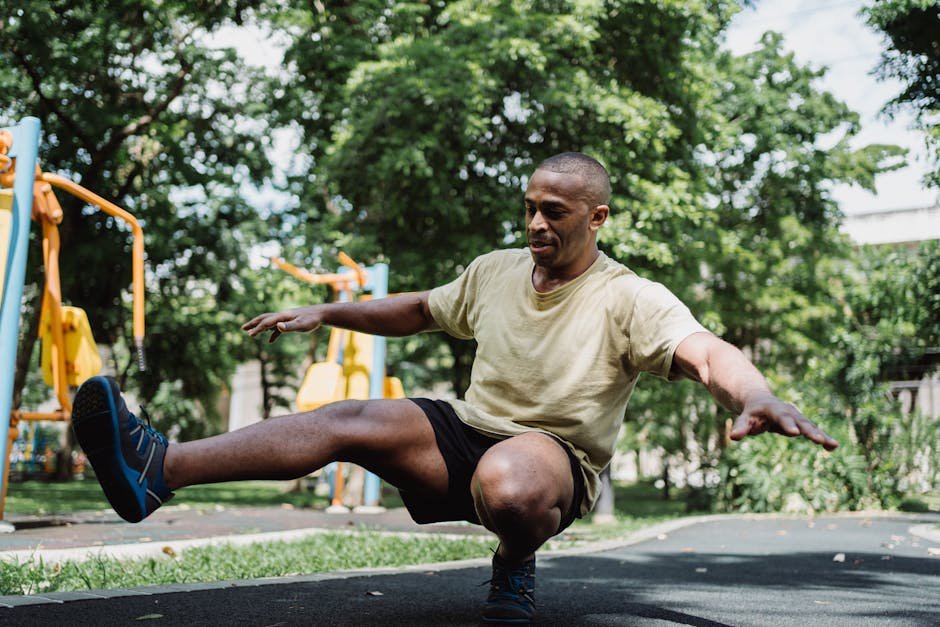
Exercise 2 — Single-Leg Stand (2:00–3:00): Standing near a wall or chair, lightly shift your weight onto one leg and lift the other foot a few inches off the floor. Hold for up to 30 seconds, then switch sides. If lifting a foot feels too challenging right now, practice gentle toe taps or a small sway instead — you’ll progress at your own pace. Keep your gaze fixed on a steady point in front of you and your hips level.
Exercise 3 — Heel-to-Toe Walking (3:00–4:00): Standing beside a wall for support, take slow, deliberate steps placing the heel of one foot directly in front of the toes of the other — like walking a tightrope. Do 6–8 steps, look ahead (not down), then turn around carefully and repeat. This is a wonderful exercise for dynamic balance — the kind you use when navigating uneven pavement or a busy room.
Exercise 4 — Side Leg Raises (4:00–5:00): Stand behind a chair with one hand resting on the back. Lift one leg out to the side in a small, controlled movement, keeping your torso tall and avoiding any leaning. Do 8–12 repetitions on each side. Strong hips are essential for steady walking and getting in and out of chairs safely.
Exercise 5 — Step-Back Balance (5:00–6:00): Stand tall with feet hip-width apart. Take a small step backward with one foot, return to center, then repeat with the other side. If stepping backward feels uncomfortable, switch to a gentle narrow march in place, focusing on lifting your feet and landing softly. Keep your shoulders relaxed and your gaze forward.
Cool-Down (6:00–7:00): Finish with slow, deep breaths — in through the nose for four counts, out through the mouth for four counts. Add gentle shoulder rolls, a soft side-to-side head tilt, and seated calf and ankle stretches. This helps your body wind down and reduces any stiffness that might have built up during the session.
How to Improve Balance Beyond the 7-Minute Routine
Once you’ve established the daily routine, there are lovely little ways to weave balance practice into the fabric of everyday life — no extra time required. These micro-moments of practice add up surprisingly quickly and help reinforce what you’re building during your dedicated seven minutes.
Try standing on one foot (with a light hand on the counter) while you brush your teeth or wait for the kettle to boil. Stand up and do a brief balance exercise during TV commercial breaks. When using stairs, take one step at a time, hold the railing, and engage your core — these small mindful choices all count. Picture yourself at the kitchen sink, reaching confidently for a mug on the upper shelf, or stepping off a curb and landing firmly — these everyday victories are exactly what this routine is building toward.
What You Can Do: Practical Tips for Safe Balance Training
- Always have support nearby. A sturdy chair back, kitchen counter, or wall should be within arm’s reach during every exercise, especially when you’re starting out.
- Start small and build gradually. If seven minutes feels like a lot at first, begin with just one or two minutes a day and add more time as you feel steadier and more confident.
- Wear the right shoes. Non-slip, well-fitting shoes with a firm sole provide the foundation your feet need. Avoid loose slippers or thick socks on slippery floors.
- Practice at the same time each day. Linking your routine to an existing habit — like after breakfast or before your morning shower — helps it stick.
- Listen to your body. If anything feels sharp, painful, or causes dizziness, stop and rest. It’s perfectly okay to modify or skip an exercise on harder days.
- Review your medications with your doctor. Some medications can affect balance as a side effect. If you’ve noticed new unsteadiness, it’s worth asking your healthcare provider about this.
- Keep your living space fall-friendly. Remove loose rugs, improve lighting in hallways, and consider grab bars in the bathroom — your environment is part of your fall-prevention plan.
- Celebrate small wins. Notice when getting out of a chair feels a little easier, or when you feel steadier on your feet. These small victories are meaningful progress.
Handling Common Challenges With Kindness and Patience
It’s completely normal to face a few bumps along the way, and knowing how to handle them makes all the difference. Dizziness is one of the most common concerns — if you feel lightheaded during any exercise, stop immediately, sit down, and drink some water. If dizziness is frequent or persistent, please check in with your doctor, as it could signal an underlying issue worth investigating.
If you have arthritis or joint pain, keep all movements small and gentle, staying well within your comfortable range. Chair-based versions of every exercise are just as valuable and will still build strength and coordination over time. There’s no version of this routine that’s “too easy” if it means you’re doing it safely and consistently.
Fear of falling is something many people don’t talk about openly, but it’s incredibly common — and completely understandable. If anxiety around movement is holding you back, remind yourself that you have support right there (the chair, the wall), and that you can stop at any moment. Confidence builds gradually, and every single practice session is a quiet act of courage. You don’t have to conquer fear in a day — you just have to take the next careful, hopeful step.
For those with vision changes, keep your surroundings clear and bright, and rely a little more on the wall or chair for security. If you use a mobility aid, keep it right beside you throughout the routine. This program is yours to adapt — the goal is always safety and consistency, not perfection.
The Bottom Line: Learning how to improve balance doesn’t require hours at the gym or elaborate equipment — it just requires seven mindful minutes each day and a commitment to showing up for yourself. This gentle, structured routine helps strengthen your legs, stabilise your hips, sharpen your coordination, and build the quiet confidence that makes daily life feel safer and more joyful. You deserve to feel secure in your own home, to reach for that mug on the shelf without hesitation, and to take a walk outside without fear holding you back. Start where you are, adapt as you need to, and remember: every steady step forward is a victory worth celebrating.
This is not medical advice. Consult your healthcare provider before starting any new health routine or using any product mentioned here.