How to Use Blocks and Straps in Senior Yoga: A Practical Guide to Safer, More Comfortable Practice
This post contains affiliate links. As an Amazon Associate, I earn from qualifying purchases at no extra cost to you.
Free resources — no credit card required for trial
🎧 Listen to health & wellness audiobooks free for 30 days
Start 30-Day Free Trial →
🛒 Recommended Products
As an Amazon Associate we earn from qualifying purchases at no extra cost to you.
TheraBand First Step to Active Health Kit — Senior Exercise Program for Balance and Fall P
$19.99
EZ Off Jar Opener for Seniors — Under Cabinet Jar Opener for Weak Hands and Arthritis
$9.99
Omron 5 Series Upper Arm Blood Pressure Monitor — 2-User 100-Reading Memory Wide-Range Cuf
$44.99
OMRON 7 Series Wireless Wrist Blood Pressure Monitor — Clinically Validated with Connect A
$69.99
Vitality 4 Life Senior Resistance Band with Instruction Guide — Specifically for Elderly F
$16.99
📚 Read unlimited health books free for 30 days
Try Kindle Unlimited Free →
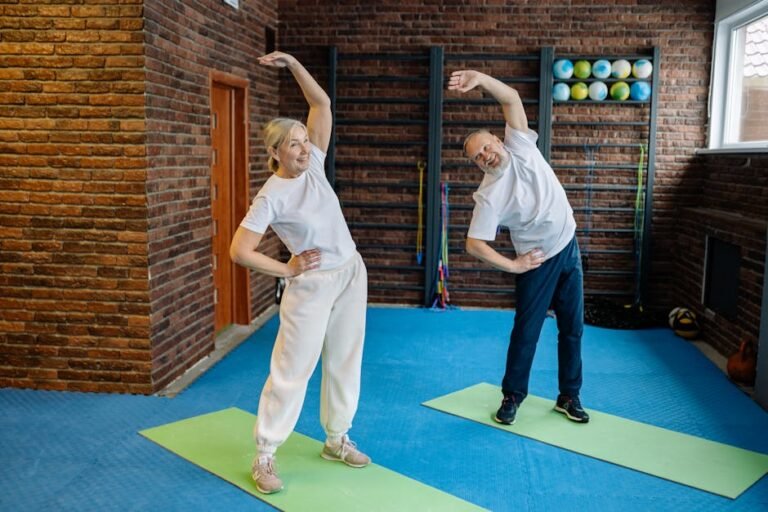
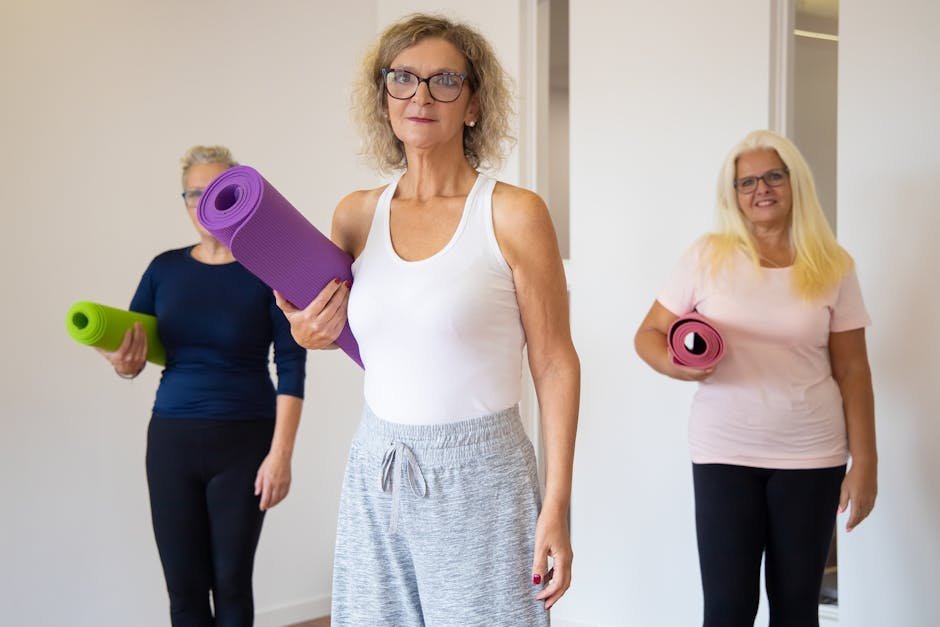
If you’ve ever looked at a yoga pose and thought, “There’s no way my body does that,” you’re not alone — and you’re not out of options. Using blocks and straps in senior yoga is one of the simplest, most effective ways to make movement feel accessible, comfortable, and genuinely enjoyable again. These humble little props can completely change your relationship with yoga, helping you move more freely without pushing your body into places it doesn’t want to go. Whether you’re brand new to yoga or returning after a long break, this guide will show you exactly how to use blocks and straps to support your joints, improve your balance, and build confidence one breath at a time.
What Are Yoga Blocks and Straps — and Why Do They Matter for Seniors?
Yoga blocks are small, sturdy supports — typically made from foam or cork — that act like a portable extension of the floor. When reaching the ground feels difficult due to tight hips, a stiff back, or limited mobility, a block brings the surface up to meet you instead of forcing you to strain downward. Foam blocks are lightweight and gentle on the joints, while cork blocks are firmer and tend to last longer. Both are excellent choices depending on your personal needs and preferences.
Yoga straps are long fabric belts — usually around six feet — with a buckle or loop at one end. Think of a strap as an extension of your arms. When your hamstrings are tight or your shoulders won’t quite reach where you’d like them to go, a strap bridges that gap safely and gently. No straining, no pulling, no frustration. If you don’t have a strap yet, a sturdy belt or a long towel can work perfectly well as a starting point.
Together, these props are not signs of weakness or limitation — they’re smart tools used by yogis at every level. For older adults especially, blocks and straps offer practical support for knees, hips, the lower back, and shoulders, making yoga not just possible, but genuinely pleasurable. The goal is never to force your body into a “perfect” shape. It’s to find your shape, comfortably and safely.
The Real Benefits of Using Blocks and Straps in Senior Yoga
One of the biggest gifts these props offer is safety and stability. Blocks bring the floor closer, so standing and seated poses feel more grounded and secure. Straps let you maintain gentle tension and length in a stretch without overreaching or risking a pulled muscle. For anyone managing osteoporosis, joint replacements, or chronic stiffness, that sense of control is genuinely transformative.
Props also support better alignment — which matters more than most people realise. When your joints are well-aligned (knees tracking over ankles, spine long, shoulders relaxed), your body works more efficiently and with far less strain. Blocks and straps help you find that alignment even when flexibility is limited, reducing the kind of compensatory movements that can lead to discomfort over time.
There’s also a powerful confidence boost that comes with consistent, supported practice. When you have props you trust, you’re more likely to show up on your mat day after day. That consistency is where the real benefits accumulate — improved balance, greater strength, calmer breathing, and a lifted mood. Senior yoga with blocks and straps isn’t a lesser version of yoga. In many ways, it’s yoga at its most mindful and intentional.
Step-by-Step: Using Blocks and Straps in Common Senior Yoga Poses
Let’s get practical. Here are four accessible poses that beautifully illustrate how blocks and straps can make senior yoga both safe and effective.
Seated Forward Fold with a Strap: Sit on the edge of a chair or on the floor with legs extended and knees soft. Loop the strap around the soles of your feet and hold both ends with a relaxed grip. Sit tall, lift through the crown of your head, then slowly hinge forward at the hips — keeping your spine long rather than rounding your back. Use the strap to gently draw your feet closer as the stretch deepens, never forcing. Hold for a few slow breaths, then release. This is wonderful for hamstrings and the lower back.
Triangle Pose with a Block: Stand with feet wide apart and turn your left foot out 90 degrees. Place a block on the outside of your left shin at whatever height feels comfortable — there’s no rule that says it has to be at ankle level. Rest your left hand on the block, reach your right arm upward, and keep your chest open and your spine long. Look upward if that feels easy on your neck, or keep your gaze forward. Hold for a few breaths, then switch sides. The block takes the pressure off your lower back and lets you find the full, joyful stretch the pose is meant to offer.
Bridge Pose with Block Support: Lie on your back with knees bent and feet flat on the floor, hip-width apart. Place a block beneath your sacrum — the bony triangular area at the base of your spine. Press your feet gently into the floor to lift your hips and let the block support you in a gentle, restful backbend. Keep your neck relaxed. This pose is beautifully restorative for the lower back and hips. If a block feels too firm, a rolled blanket works just as well.
Bound Angle Pose with a Strap: Sit with the soles of your feet together and knees open to the sides. Loop the strap around your feet and hold it with both hands in front of you. Sit tall and gently pull the strap to draw your feet a little closer — but never force your knees toward the floor. If your hips feel tight, sit on a folded blanket or small cushion to elevate the pelvis slightly. This simple adjustment can make an enormous difference in comfort.
What You Can Do: Practical Tips for Using Props Safely
Getting started with blocks and straps doesn’t need to be complicated. Here are some straightforward tips to help you practice with confidence and care:
- Start with a medium-height foam block if you’re new to props — it’s versatile, lightweight, and forgiving on sensitive joints.
- Choose a strap around six feet long with a simple buckle. If it feels too long, tie a temporary knot to shorten it.
- Always keep a micro-bend in your knees during standing forward folds — this protects both your hamstrings and your lower back.
- Practice near a wall or sturdy chair if balance is a concern. Having that safety net nearby makes it easier to relax into poses.
- Start with shorter holds and slower movements — even 20 to 30 seconds per pose is beneficial when you’re beginning. Build up gradually.
- Adjust block heights to suit your body, not someone else’s. Higher is not weaker — it’s smarter.
- Use folded blankets, pillows, or towels as cushioning under hips, knees, or the lower back whenever you need extra comfort.
- Wipe down foam blocks with a damp cloth and keep straps clean and free of frays. Store them somewhere easy to grab so your mat is always ready to go.
- Hydrate before and after practice, and stop immediately if you feel lightheaded, dizzy, or unusually fatigued.
- If any pose causes pain, ease back or skip it entirely. Pain is your body’s signal — always listen to it.
Adapting Senior Yoga for Different Mobility Levels
One of the most encouraging things about yoga with props is that it truly meets you where you are. If getting down to the floor feels daunting or impractical, almost every pose in this guide can be adapted for a chair. Sit toward the edge of a sturdy chair, use the chair back for balance support, and place blocks on the seat beneath your hands. A strap around the feet works just as well seated in a chair as it does on the floor — and in some cases, it’s actually easier.
For anyone dealing with foot, knee, or hip sensitivities, higher block positions are your friend. There’s no need to work your way down to the lowest setting if that creates discomfort. Your block height is not a measure of progress — your breath quality, your ease of movement, and how you feel after practice are what truly matter.
If you’re just getting started, keep your sessions short — even 10 to 15 minutes is genuinely beneficial. Build gradually, adding new poses or longer holds as your body grows stronger and more familiar with the movements. Slow, steady consistency will serve you far better than occasional intense sessions. And if you have any concerns about specific health conditions — osteoporosis, recent surgery, chronic pain, or joint replacements — it’s always worth having a quick conversation with your healthcare provider before beginning a new routine.
Building a Sustainable Senior Yoga Routine with Props
The beauty of yoga props is that they don’t just make individual poses easier — they make the whole idea of regular practice more sustainable. When yoga feels manageable and comfortable, you’re far more likely to come back to it. And it’s that consistency — showing up on the mat two, three, four times a week — where the cumulative benefits really begin to shine.
Over time, regular practice with blocks and straps can help improve your range of motion, enhance your balance and coordination, support better posture, and even contribute to calmer, more regulated breathing. These aren’t small things. They’re the kinds of changes that make everyday life feel easier — getting up from a chair, reaching for something on a high shelf, walking with more confidence and stability.
You might also find that your relationship with your body shifts in a quieter, more profound way. Yoga encourages you to notice — to pay attention to how you’re breathing, where you’re holding tension, what feels easier today than it did last week. That quality of awareness, cultivated gently over time, is one of yoga’s most enduring gifts at any age.
So if you’re ready to begin, start simple. Gather a block and a strap (or a belt and a towel), find a quiet corner, and try one or two of the poses above. Move slowly, breathe steadily, and let go of any expectation about what yoga “should” look like. Your practice is yours — and every mindful breath is a step in the right direction.
The Bottom Line: Using blocks and straps in senior yoga is one of the most practical and empowering choices you can make for your movement routine. These simple props help you stay safe, find better alignment, reduce strain on sensitive joints, and explore a wider range of poses with genuine confidence. You don’t need flexibility, strength, or experience to get started — just a willingness to listen to your body and move at your own pace. With blocks and straps by your side, yoga becomes less about what you can’t do and far more about everything you can.
This is not medical advice. Consult your healthcare provider before starting any new health routine or using any product mentioned here.