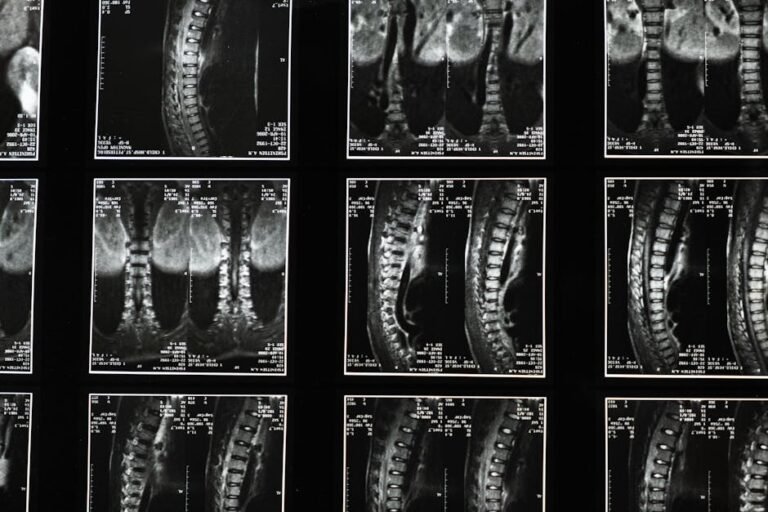
How Muscle Degeneration Affects Your Spine’s Ability to Protect Your Nervous System
This post contains affiliate links. As an Amazon Associate, I earn from qualifying purchases at no extra cost to you.
Free resources — no credit card required for trial
🎧 Listen to health & wellness audiobooks free for 30 days
Start 30-Day Free Trial →
📚 Read unlimited health books free for 30 days
Try Kindle Unlimited Free →
Free resources — no credit card required for trial
🎧 Listen to health & wellness audiobooks free for 30 days
Start 30-Day Free Trial →
📚 Read unlimited health books free for 30 days
Try Kindle Unlimited Free →
Think about every movement you made this morning — reaching for your phone, stepping out of bed, pouring your first cup of coffee. Each of those actions depended on something you probably never gave a second thought to: the muscles wrapping around and supporting your spine. These muscles do far more than help you stand up straight. They are the silent guardians of your spinal cord and the entire network of nerves that keeps your body functioning. But here’s what many people don’t realise — when those muscles begin to degenerate, the consequences ripple far beyond simple back pain. Muscle degeneration along the spine can actually compromise the very structures that protect your nervous system. Understanding this connection is one of the most important things you can do for your long-term health.
Your Spine Is More Than Just a Backbone
It’s easy to think of the spine as just a column of bones stacked on top of each other, but that picture barely scratches the surface. Your spine is one of the most sophisticated structures in the human body, engineered to do two seemingly opposite jobs at the same time. On one hand, it acts as a sturdy, protective tunnel for your spinal cord — the essential highway of nerves running from your brain to every part of your body. On the other, it allows for remarkable flexibility, enabling you to bend, twist, stretch, and balance with ease.
This incredible balancing act is made possible by a team effort. Vertebrae (the bones), intervertebral discs (the shock absorbers), ligaments, and muscles all work in concert. And while we tend to focus on the bones and discs when things go wrong, it’s actually the muscles that serve as the dynamic, active stabilisers of the entire system. Deep, small muscles near the spine handle fine postural adjustments moment to moment, while larger, more powerful muscles manage bigger movements. Together, they keep everything in alignment, absorb the forces of daily activity, and — crucially — protect the delicate neural structures nestled within the spinal canal.
When this muscular team is strong, coordinated, and working well, your spine remains stable, your movements feel natural and fluid, and your nerves are shielded from the mechanical stresses of life. It really is an elegant, beautifully balanced system. The trouble starts when that muscular foundation begins to break down.
What Muscle Degeneration Along the Spine Actually Means
The term “muscle degeneration” might conjure images of dramatic weakness, but the reality is often far more subtle — and that’s what makes it so easy to overlook until things become more serious. Spinal muscle degeneration isn’t simply about muscles getting smaller or weaker, although those things do happen. It’s a complex, multifaceted process driven by several interwoven factors that affect how your muscles function, communicate, and sustain themselves over time.
One key factor is neurophysiological in nature — meaning it involves the communication pathway between your nervous system and your muscles. If those signals become less efficient or slower, your spinal muscles can’t activate at the right moment or with the right force. This is particularly important because protecting your spine isn’t just about raw strength; it’s about timing. Muscles that activate a fraction of a second too late during a stumble or a heavy lift can’t do their protective job properly.
There are also biomechanical factors at play. Habitual poor posture, repetitive movements done incorrectly, or prolonged sitting can place uneven demands on spinal muscles — overworking some while letting others weaken from underuse. Over time, this reshapes how your spine moves and bears load. Then there are metabolic factors: muscles need adequate nutrients and efficient energy systems to stay healthy and repair themselves. When metabolism is impaired — through poor diet, chronic illness, or inactivity — the muscles deteriorate more rapidly.
The practical result of all this? You might notice reduced strength in everyday tasks, a tendency to tire more quickly when holding a posture, stiffness or reduced range of motion, and a subtle sense of instability or clumsiness when moving. Each of these signs points to a growing vulnerability — not just to back pain, but to genuine structural changes in how well your spine can shield the nerves running through it.
How Weakening Spinal Muscles Put Your Neural Structures at Risk
Here’s where the stakes truly become clear. When your spinal muscles lose their ability to do their protective job effectively, the passive structures — the bones, discs, and ligaments — are forced to absorb more of the mechanical load that muscles would normally handle. Think of it like a building where the internal steel framework is weakening; eventually, the outer walls have to bear more stress than they were designed for, and cracks start to appear.
In your spine, this increased stress on passive structures accelerates wear and tear. Discs can degrade more quickly, vertebrae may shift subtly out of optimal alignment, and ligaments can thicken or tighten in response to instability. All of these changes narrow the spaces through which your spinal cord and nerve roots pass. The result? Those neural structures — which were once well-cushioned and protected — become increasingly vulnerable to compression, irritation, and damage.
This is why muscle degeneration isn’t just a musculoskeletal problem; it has direct implications for your nervous system. Compressed or irritated spinal nerves can cause symptoms far from the back itself — pain, tingling, numbness, or weakness in the arms or legs, depending on which nerves are affected. Understanding this chain of events helps explain why addressing spinal muscle health early is so much more powerful than waiting until symptoms become severe.
The Hidden Trap of Compensation Patterns
Your body is remarkably clever, and when one set of muscles starts to underperform, it doesn’t just give up. It compensates. Other muscles step in to pick up the slack — larger, more superficial muscles, or even muscles in the hips and shoulders, might start working overtime to maintain your posture and keep you moving. In the short term, this feels helpful. You continue to function, the pain might be minimal, and life goes on.
The problem is that these compensatory patterns were never meant to be permanent. The muscles filling in for your weakened spinal stabilisers are often not designed for that role. They fatigue more quickly, generate tension in new areas, and can pull your body into less-than-ideal positions. Over time, what starts as a smart adaptation becomes what experts call a maladaptive pattern — a response that creates its own set of problems while the original issue continues to fester beneath the surface.
This leads to a self-perpetuating cycle that can be genuinely difficult to break. The original muscle degeneration triggers compensation, which causes new strain and pain in other areas, which further disrupts movement patterns, which in turn makes the initial degeneration worse. People often end up treating the symptoms of compensation — the shoulder tension, the hip pain, the headaches — without ever addressing the root cause. Breaking this cycle typically requires a whole-body approach that targets the true origin of the dysfunction.
What You Can Do to Support Your Spinal Muscles and Protect Neural Structures
Here’s the encouraging part: you have more power over your spinal muscle health than you might think. While serious muscle degeneration warrants professional medical attention, there is a lot you can do proactively to support the strength, coordination, and resilience of the muscles protecting your spine and nervous system.
Consistency is the key. None of these steps requires dramatic lifestyle overhauls — small, steady habits are what make the biggest difference over time. The goal is to keep your spinal muscles active, well-nourished, and properly coordinated, so they can continue doing their protective work effectively for years to come.
- Move regularly and gently: Activities like walking, swimming, cycling, and yoga keep spinal muscles engaged and healthy without placing excessive stress on the spine. Movement also helps nourish the intervertebral discs, which rely on fluid exchange driven by activity to stay healthy.
- Practice mindful posture: Pay attention to how you sit, stand, and lift throughout the day. Keeping a neutral spinal alignment — neither slumped nor overly arched — reduces unnecessary strain on your spinal muscles and the structures they protect.
- Strengthen your core consistently: The deep core muscles, including those wrapping around the lumbar spine, are critical stabilisers. Gentle, focused core exercises — such as those used in Pilates or prescribed by a physiotherapist — can significantly improve spinal stability over time.
- Eat and hydrate well: Muscles need protein, vitamins, and minerals to maintain and repair themselves. Your spinal discs also depend on adequate hydration to retain their cushioning properties. A balanced, nutrient-rich diet supports the entire spinal system.
- Manage stress actively: Chronic stress contributes to persistent muscle tension and can affect how your brain processes pain signals. Techniques like deep breathing, mindfulness meditation, or simply spending time doing things you enjoy can make a real difference to your muscular health.
- Listen carefully to your body’s early warning signals: Persistent stiffness, recurring aches, or a sense of instability in your back are worth taking seriously. Catching and addressing these signals early — before full degeneration sets in — is far easier than reversing established damage.
- Get professional help when needed: If you’re experiencing ongoing back pain, reduced mobility, or nerve-related symptoms like tingling or weakness in your limbs, see a healthcare professional. A physiotherapist, osteopath, or spine specialist can assess your specific situation and guide you toward targeted rehabilitation strategies.
Why Acting Early on Spinal Muscle Health Makes All the Difference
One of the most important messages from the science of muscle degeneration and neural structure protection is that timing matters enormously. The spine has a remarkable capacity for resilience when it’s well-supported, but once degeneration reaches a point where neural structures are being compromised, recovery becomes harder and more complex. Prevention and early intervention are almost always more effective — and far less disruptive to your life — than managing advanced symptoms.
It’s also worth shifting the way we think about back care altogether. Spinal health isn’t just about avoiding injury or managing pain episodes — it’s about actively nurturing the muscular system that keeps your entire nervous system protected and functioning well. When you invest in your spinal muscles through movement, good nutrition, smart posture habits, and timely professional advice, you’re not just protecting your back. You’re protecting the neural infrastructure that underlies everything you do, from walking and working to sleeping and thinking clearly.
The good news is that your body responds beautifully to care and consistency. It’s never too early — and rarely too late — to start making choices that support your spinal muscles and, through them, the health of your nervous system. Treat these muscles as the unsung heroes they truly are, and they’ll continue to protect you for decades to come.
The Bottom Line: Muscle degeneration along the spine is about much more than back pain or weakness — it directly affects your body’s ability to protect the spinal cord and nerve roots that keep your entire body functioning. Driven by a combination of neurophysiological, biomechanical, and metabolic factors, this degeneration can lead to dangerous compensation patterns and progressively compromise neural structures over time. The empowering flip side is that regular movement, mindful posture, good nutrition, stress management, and professional support when needed can meaningfully slow or prevent this decline. Your spinal muscles are your nervous system’s first line of defence — taking care of them is one of the smartest investments you can make in your long-term health and quality of life.
This is not medical advice. Consult your healthcare provider before starting any new health routine or using any product mentioned here.