Neuromuscular Re-education for Postural Correction: How to Retrain Your Body for a Healthier Spine
This post contains affiliate links. As an Amazon Associate, I earn from qualifying purchases at no extra cost to you.
Free resources — no credit card required for trial
🎧 Listen to health & wellness audiobooks free for 30 days
Start 30-Day Free Trial →
🛒 Recommended Products
As an Amazon Associate we earn from qualifying purchases at no extra cost to you.
BestOffice Ergonomic Mesh Desk Chair with Lumbar Support — Adjustable Rolling Swivel Chair
$69.99
Branfit Shoulder and Back Brace Posture Corrector — Breathable Posture Trainer for Upper B
$24.99
Posture Corrector for Women and Men — Comfortable Effective Brace for Shoulder and Back Pa
$22.99
Bodywellness Posture Corrector for Men and Women — Adjustable Back Straightener with Clavi
$19.99
Amazon Basics Ergonomic Executive Office Chair with Lumbar Support and Flip-up Armrests
$149.99
📚 Read unlimited health books free for 30 days
Try Kindle Unlimited Free →
Do you reach the end of a long day feeling like your body has been slowly folded in half? Maybe your neck is stiff from hours of screen time, your shoulders are curling forward like closing parentheses, or your lower back is sending out dull, persistent complaints after too many hours in a chair. It’s tempting to chalk all of this up to “just getting older” or “the price of a desk job” — but those aches and pains may actually be your body sending you a very important message about your posture. And here’s the really encouraging news: through a process called neuromuscular re-education for postural correction, you can actually teach your brain and muscles to realign, rebalance, and move in ways that support your spine rather than strain it. Let’s explore how it all works — and what you can do starting today.
Your Spine Is an Engineering Marvel — And It Deserves Your Attention
Your spine isn’t just a stack of bones holding you upright. It’s one of the most sophisticated structures in the human body — strong enough to support your weight, flexible enough to let you bend, twist, and reach, and precise enough to protect the spinal cord, the main communication highway between your brain and every single part of your body. When your spine is functioning well, all of this happens seamlessly. When it isn’t, you feel it.
What makes your spine so clever is that it isn’t a straight, rigid pole — it’s a series of natural, flowing curves. There’s a gentle inward curve in your neck (called the cervical lordosis), an outward curve in your upper back (thoracic kyphosis), and another inward curve in your lower back (lumbar lordosis). These curves aren’t design flaws; they’re evolutionary masterpieces. Working like a spring, they absorb shock, distribute your body weight evenly, and make movement efficient. In fact, these natural curves allow your spine to withstand compressive forces up to ten times greater than a straight column would. That’s impressive engineering.
The problem is that modern life puts those curves under constant pressure. When the curves become too flat or too exaggerated — through long hours of sitting, poor workstation setups, or habitual slumping — your body’s ability to absorb impact and distribute load is compromised. Over time, this sets the stage for chronic discomfort, joint stress, and a whole cascade of compensatory problems elsewhere in the body. Understanding this is the first step toward doing something about it.
Posture Is Not a Position — It’s a Dynamic Process
Many of us grew up hearing “stand up straight!” barked at us like a military command. But modern science has a much more nuanced and fascinating understanding of posture. Rather than being a fixed, static position you hold, posture is actually a continuous, dynamic process — a real-time balancing act your body is performing every single moment, whether you’re sitting at your desk, walking to the kitchen, or lying in bed.
Think of your brain as the conductor of an extraordinarily complex orchestra. Every moment, it’s receiving a flood of sensory input — information from your eyes, your inner ear, and tiny sensors called proprioceptors embedded in your muscles and joints that constantly report back on where each part of your body is in space. Your brain processes all of this instantly and sends signals to specific muscles, telling them exactly when to contract, when to relax, and how much force to apply. The result is a seamless, mostly unconscious series of tiny adjustments that keep you upright, balanced, and moving efficiently.
Here’s where it gets really interesting — and really relevant to why you might be struggling with your posture today. Because the system is so adaptive, your body can learn to treat less-than-ideal positions as “normal.” Spend enough hours slumped over a laptop and your brain will start to register that as your default alignment. Your muscles will adjust their tension patterns to match. That’s the bad news. The good news? This adaptability works in both directions. You can actively re-educate your neuromuscular system to adopt healthier, more supportive movement patterns — and that’s exactly what postural correction through neuromuscular re-education is all about.
How Modern Lifestyles Are Reshaping Our Bodies (Not for the Better)
Let’s be honest: human bodies were not designed to sit for eight to ten hours a day. Yet for millions of us, that’s precisely what modern work and leisure looks like. And it’s creating what some health professionals are calling an epidemic of postural dysfunction — a widespread pattern of muscle imbalances, structural strain, and movement inefficiency that drives enormous amounts of discomfort and pain.
One of the most common culprits is what’s become known as “text neck” — the forward head posture that develops when we spend hours looking down at phones or tablets. For every inch your head shifts forward from its ideal alignment over your shoulders, the effective weight your neck muscles have to support roughly doubles. This relentless strain can contribute to chronic neck pain, frequent headaches, and even tingling or numbness in the arms. Then there’s the “desk hunch” — the rounded shoulders and exaggerated upper back curve that develops from prolonged computer use. Beyond how it looks and feels, this posture actually compresses your chest cavity, which can subtly affect your breathing and put extra stress on your shoulders and ribs.
And perhaps most prevalent of all is what happens to the lower back during long sitting sessions: the natural inward curve of the lumbar spine flattens out or even reverses, placing increased pressure on the spinal discs and surrounding structures. What makes all of these patterns particularly tricky is that they don’t stay isolated. A forward head posture creates tightness at the front of the neck and chest, which leads to weakness in the upper back, which forces the lower back to compensate — and so on. It’s like pulling one loose thread on a sweater. The whole thing starts to unravel. Over time, these cascading compensations can entrench themselves as habitual movement patterns, making the problem self-perpetuating unless you actively intervene.
What Neuromuscular Re-education Actually Means
The phrase “neuromuscular re-education” might sound like medical jargon, but the concept is actually beautifully straightforward. It simply means retraining the connection between your nervous system and your muscles so that your body learns to hold itself, move, and coordinate in more efficient and supportive ways. Rather than just trying to force yourself into a “correct” position through willpower, neuromuscular re-education works at the root level — changing the patterns that are stored in your brain and body through consistent, mindful practice.
This is fundamentally different from simply telling yourself to “sit up straight.” When you force a rigid posture, you’re fighting against deeply ingrained muscular habits and often creating new tension in the process. True postural correction through neuromuscular re-education addresses the underlying imbalances — the muscles that have become chronically tight and shortened, the muscles that have become weak and underactivated, and the inefficient movement patterns that have been reinforced over years. It’s a process, not a quick fix, but the changes it produces are lasting because they’re built into the way your brain and body communicate.
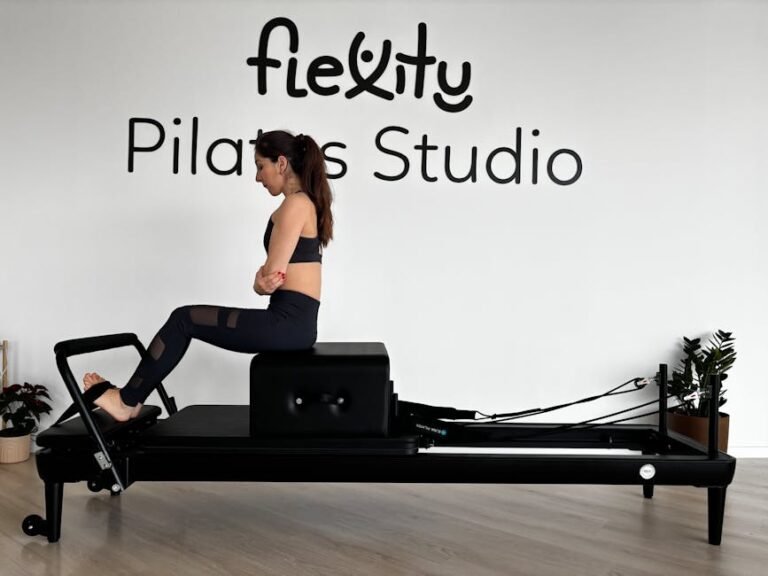
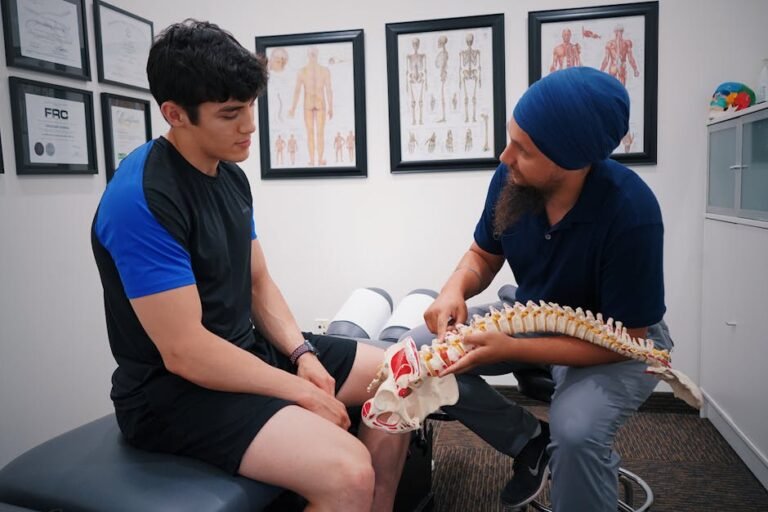
This approach can encompass a wide range of practices — from targeted therapeutic exercises and movement therapies like Pilates and yoga, to manual therapies from physiotherapists, chiropractors, or osteopaths, to simple daily habits of awareness and movement. The common thread is intentional, consistent engagement with how you’re holding and moving your body, gradually shifting your nervous system’s definition of “normal” toward something that actually supports your spine’s natural design.
Practical Tips for Better Posture: What You Can Do Right Now
You don’t need to overhaul your entire life to start making a meaningful difference to your posture and spinal health. Small, consistent changes add up to significant results over time. Here are some genuinely practical, evidence-informed steps you can weave into your daily routine to begin your neuromuscular re-education journey:
- Check in with your body regularly: Several times throughout your day, pause and take stock of how you’re sitting or standing. Are your shoulders creeping up toward your ears? Is your head drifting forward of your shoulders? Is your lower back rounding into the chair? Gentle awareness — without judgment — is the starting point for change. Setting a timer or using a posture reminder app can help make this a habit.
- Break up sitting with movement: Aim to stand up and move for a few minutes every 30 to 60 minutes. Even a short walk to refill your water glass, some gentle neck rolls, or a quick stretch gives your muscles and nervous system a reset. Prolonged static postures, even good ones, are stressful for the body.
- Optimise your workspace: Make sure your computer screen is at or just below eye level so you’re not craning your neck up or down. Your chair should support the natural curve of your lower back, your feet should be flat on the floor or a footrest, and your elbows should be at roughly a 90-degree angle when you type. Small adjustments here can make a huge daily difference.
- Stretch the tight spots: Most desk-bound postures create tightness across the chest, the front of the neck and shoulders, and the hip flexors. Incorporating gentle stretches that open these areas — chest openers, neck stretches, hip flexor lunges — can begin to unwind the tension that pulls you out of alignment.
- Build a stronger core: Your core muscles — including your abdominals, back muscles, and pelvic floor — act as a natural internal corset for your spine, providing the stability it needs to maintain healthy alignment during daily activities. Practices like Pilates and yoga are excellent for developing functional core strength in a way that supports rather than strains your spine.
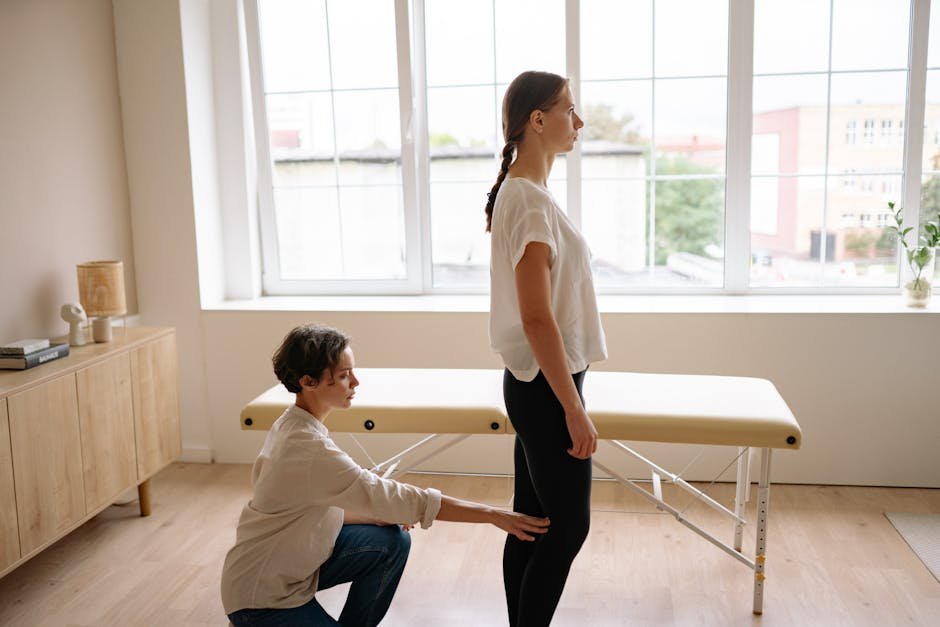
- Get professional guidance if you need it: If you’re dealing with chronic pain, significant postural dysfunction, or you’re not sure where to start, working with a physiotherapist, chiropractor, or osteopath can be genuinely transformative. These professionals can identify your specific muscle imbalances and postural patterns, and guide you through a personalised programme of neuromuscular re-education that gets to the root of the problem.
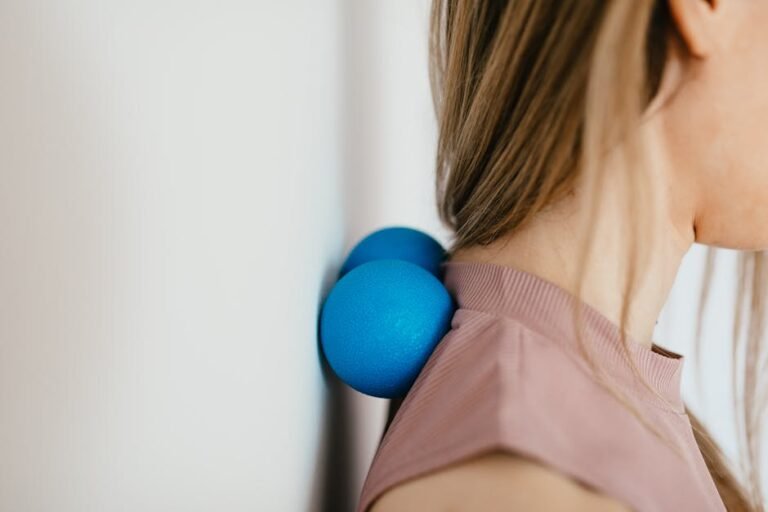
- Consider supportive tools: Ergonomic lumbar supports, posture reminder devices, foam rollers for myofascial release, and resistance bands for targeted strengthening exercises can all support your journey. Look for well-reviewed options that suit your specific needs and lifestyle.
The Long Game: Why Consistency Is Everything
It’s worth being honest about one thing: postural correction through neuromuscular re-education is not an overnight process. Your current postural habits have likely been building for years, even decades, and the muscular patterns and neural pathways that support them are well-established. Rewriting them takes consistent, patient effort. But here’s the encouraging thing — every small step genuinely counts, and the changes your body makes in response to this kind of retraining are real and lasting.
Think of it like learning a musical instrument. At first, you have to consciously think about every movement. Over time, with repetition and practice, those movements become automatic — they become your new normal. That’s exactly how neuromuscular re-education works. The more consistently you practice better alignment, more supportive movement habits, and targeted strengthening and stretching, the more your brain and body will begin to adopt those patterns as their default setting. You won’t have to think about sitting well — it will just become how you sit.
The payoff goes well beyond simply avoiding pain, though that’s certainly a compelling reason to start. People who invest in improving their posture and spinal alignment often report breathing more easily, feeling more energetic, moving with greater confidence, and experiencing an overall sense of ease in their bodies that can be genuinely life-changing. Your spine supports you through everything you do, every single day. Giving it the support it needs in return is one of the most powerful investments you can make in your long-term health and quality of life.
The Bottom Line: Neuromuscular re-education for postural correction is about much more than standing up straight. It’s a scientifically grounded, practical approach to retraining the brain-muscle connection so your body can return to the natural, efficient alignment it was designed for. By understanding how your spine works, recognising how modern habits can throw it off balance, and consistently practising the small daily changes that support healthier movement, you can reduce pain, improve function, and genuinely feel better in your body — not just for now, but for years to come. Start small, be consistent, and be kind to yourself along the way. Your spine will thank you.
This is not medical advice. Consult your healthcare provider before starting any new health routine or using any product mentioned here.