Localized Pain vs. Referred Pain: What Your Spinal Muscles Are Really Telling You
This post contains affiliate links. As an Amazon Associate, I earn from qualifying purchases at no extra cost to you.
Free resources — no credit card required for trial
🎧 Listen to health & wellness audiobooks free for 30 days
Start 30-Day Free Trial →
🛒 Recommended Products
As an Amazon Associate we earn from qualifying purchases at no extra cost to you.
Back Gel Ice Pack Wrap — Microwaveable Pain Relief Heat Pad for Upper and Lower Back Thera
$22.99
BODYPROX Pain Relief Ice Pack with Strap for Hot and Cold Therapy — Microwave Heat Pad for
$14.99
iReliev Hot and Cold Therapy Gel Pack — Reusable Freezable Microwaveable Compression Pack
$16.99
Magic Gel Ice Pack for Back Pain Relief — 2 Pack Reusable Lower Back Wrap for Hot or Cold
$19.99
Relief Expert Reusable Ice Pack for Back — Lower Back Ice Pack Wrap with Cold Compress
$17.99
📚 Read unlimited health books free for 30 days
Try Kindle Unlimited Free →
Have you ever felt a nagging ache in your hip or a mysterious throb down your leg — only to discover the real culprit was a tight muscle in your lower back? Or maybe you’ve experienced sharp, pinpoint soreness right where you pulled a muscle, and it felt entirely different from the vague, wandering discomfort you’ve had at other times. If any of this sounds familiar, you’re not alone. Spinal muscle pain is one of the most common — and most misunderstood — sources of discomfort in adults. Understanding the difference between localized nociceptive pain and referred pain in your spinal muscles isn’t just fascinating anatomy trivia; it’s genuinely useful knowledge that can help you find relief faster, communicate better with your healthcare provider, and take smarter steps toward protecting your spine every single day.
Your Spine’s Incredible Support System (It’s Way More Than Bones)
Most of us think of the spine as a rigid column of vertebrae stacked neatly on top of one another — a kind of internal scaffolding. But your spine is so much more dynamic than that. Think of it as the central pillar of a magnificent tent: flexible enough to sway and adapt with every movement you make, yet strong enough to hold its shape under pressure. What keeps it that way isn’t just bone — it’s an intricate network of muscles, tendons, and ligaments working in constant, coordinated harmony.
Your spinal muscles come in two broad categories. Deep, smaller muscles act almost like internal “guy wires,” providing precise, moment-to-moment stability with every tiny shift in your posture. Larger, more superficial muscles handle the bigger, more powerful movements — bending forward to pick something up, twisting to look over your shoulder, or straightening up after tying your shoes. Together, they work like a finely tuned orchestra, each section playing its part to keep movement smooth and safe.
When everything is functioning well, you barely notice these muscles at all — which is exactly how it should be. But when the system is disrupted by injury, repetitive stress, prolonged poor posture, or simply the wear and tear of daily life, those same muscles can become a very loud source of protest. And that protest — that pain — can take several different forms, which is why understanding your spinal muscles is such an important part of understanding your pain.
Why Spinal Muscle Pain Is Rarely Simple
Here’s something that surprises a lot of people: spinal muscle pain is almost never caused by one single, isolated factor. It tends to be a tangled web of contributors, each one influencing the others. Think of your spinal muscles as a finely woven tapestry — when one thread starts to unravel, the tension spreads, and soon other threads are affected too.
Some of the most common contributors to spinal muscle dysfunction include changes in how your nervous system processes pain signals, the development of tight bands or “trigger points” within the muscle tissue itself, and poor communication between the brain and the muscles it’s supposed to be directing. There’s also the very practical issue of mechanical imbalance — the way you sit at your desk, carry your bag, or favour one side of your body when you walk can place uneven, cumulative stress on your spine over time.
What makes this particularly interesting — and occasionally frustrating — is that these factors together can produce very different types of pain. Sometimes the pain is felt right where the problem is. Sometimes it shows up somewhere else entirely. And sometimes, if muscle dysfunction goes unaddressed for long enough, the nervous system itself can change in ways that amplify pain sensitivity and make the whole picture even more complex. This is why pinpointing the type of spinal pain you’re experiencing is such a valuable first step.
Localized Nociceptive Pain and Referred Pain: Understanding the Key Difference
The terms might sound clinical, but the concepts behind localized nociceptive pain and referred pain are actually quite straightforward — and very practical to understand.
Localized nociceptive pain is pain you feel directly at the site of the problem. The word “nociceptive” simply refers to pain arising from actual or potential tissue damage. So if you strain a muscle in your mid-back while lifting something heavy, the sharp, aching sensation you feel right in that specific spot? That’s localized nociceptive pain. The damaged muscle fibers send a clear, direct signal to your brain: “Something’s wrong, right here.” It tends to be easy to point to, often described as sharp, dull, aching, or throbbing, and it generally responds well to straightforward measures like rest, applying heat or ice, and gentle movement to encourage healing.
Referred pain, on the other hand, is pain felt in a completely different area from where the actual problem lies. This is where things get genuinely mysterious. A dysfunctional or trigger-point-riddled muscle in your lower back might not cause pain in your lower back at all — instead, it might send discomfort radiating into your buttocks, hip, or down your leg. Tight muscles in your neck and upper back can refer pain into your shoulder, arm, or head, contributing to those tension headaches that seem to have no obvious cause. Referred pain often feels like a deep ache, tingling, numbness, or even a burning sensation, and because it shows up somewhere “unexpected,” it can be genuinely tricky to diagnose.
Why does referred pain happen? It comes down to the complexity of your nervous system. Nerves from different parts of the body share pathways in the spinal cord, and sometimes the brain essentially misreads the return address on an incoming pain signal. The pain is absolutely real — your brain just gets confused about exactly where it’s coming from. This is why treating the area that hurts isn’t always the most effective approach; sometimes you need to address the area that’s causing the problem, which may be somewhere else entirely.
When Pain Becomes Chronic: The Bigger Picture
Acute spinal muscle pain — the kind that comes on after a specific incident like a sudden strain or an awkward movement — often resolves with time and appropriate care. But when muscle dysfunction goes unaddressed, or when pain is repeatedly ignored, something more complicated can develop. The nervous system is remarkably adaptable, but that adaptability cuts both ways. Persistent pain signals can actually change the way your nervous system processes those signals, making it more sensitive and lowering your pain threshold over time. This is sometimes called central sensitisation, and it can make what began as a localised problem feel much more widespread and harder to shake.
There’s also the very human tendency to compensate. When something hurts, we naturally try to protect it — limping, hunching, or favouring one side. While these compensatory movements feel helpful in the short term, over time they can place undue stress on other muscles and joints that weren’t originally part of the problem, potentially creating entirely new sources of discomfort. This is one of the key reasons why early, informed action matters so much when it comes to spinal pain — catching and addressing muscle dysfunction sooner rather than later can help break this cycle before it becomes entrenched.
The good news is that awareness is genuinely powerful here. Simply understanding that your hip pain might actually originate from your lumbar muscles, or that your nagging headaches might be connected to tension in your neck and upper back, can change how you approach your own care. It can also make conversations with your physiotherapist, osteopath, or GP much more productive.
Practical Tips: What You Can Do to Support Your Spinal Muscles
While the mechanics of spinal muscle pain can sound complex, there’s a great deal within your control. Small, consistent habits can make a meaningful difference — both in preventing problems and in supporting recovery when issues do arise.
- Work on your posture mindfully. Pay attention to how you sit, stand, and move throughout the day. Aim to keep your ears, shoulders, and hips roughly aligned. A simple posture check every hour can reduce cumulative strain on your spinal muscles significantly.
- Keep moving — gently and regularly. Your spinal muscles need movement to stay nourished and functional. Walking, swimming, yoga, and Pilates are all excellent choices. Even short movement breaks — standing up, stretching briefly, walking to the kitchen — can help prevent muscles from stiffening and becoming dysfunctional.
- Build a strong, functional core. Your core is far more than your abdominal muscles — it’s a whole cylinder of muscles wrapping around your torso, including the deep stabilisers that support your spine from within. A strong core takes pressure off your spinal muscles and reduces injury risk. Ask a physiotherapist or qualified trainer for safe exercises tailored to your current fitness level.
- Stretch the areas that commonly get tight. Hips, hamstrings, hip flexors, and chest muscles are frequent culprits in spinal muscle dysfunction. Gently stretching these areas regularly can reduce tension and help maintain good spinal alignment.
- Optimise your ergonomics. Your desk, car seat, mattress, and sofa all influence how your spinal muscles function over time. An ergonomic chair, a well-positioned monitor, and a supportive mattress are investments worth making. Small environmental adjustments can have a surprisingly big impact over months and years.
- Listen carefully to your body. Mild discomfort that resolves with movement is often normal. Sharp, persistent, worsening, or referred pain — particularly if accompanied by numbness, tingling, or weakness — warrants professional attention. Don’t wait until pain becomes severe before seeking help.
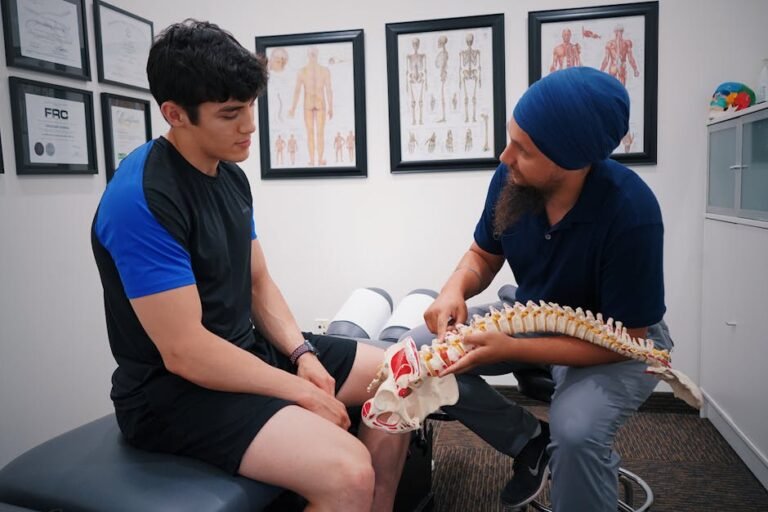
- Consider professional support early. Physiotherapists, osteopaths, and sports medicine specialists are skilled at distinguishing between localised and referred spinal pain, identifying trigger points, and designing targeted rehabilitation programmes. Early professional input can make recovery significantly faster and more complete.
Finding the Right Products to Support Spinal Health
Alongside movement and lifestyle habits, certain tools can make a genuine difference in day-to-day spinal muscle care. Foam rollers and massage balls are popular, affordable options for releasing tension in tight muscles and fascial tissue — they won’t replace hands-on professional treatment, but used consistently and correctly, they can help manage muscle tightness and reduce the build-up of trigger points. Look for a high-density foam roller for larger muscle groups and a firm massage ball for targeting smaller, more specific areas.
If you spend long hours at a desk, a quality lumbar support cushion or an ergonomic chair can make a significant difference in how much strain your spinal muscles accumulate over the course of a workday. Pair this with a monitor stand to bring your screen to eye level and reduce the forward head posture that so commonly contributes to neck and upper back muscle dysfunction. Heat pads and ice packs are also simple but effective tools for managing localised muscle soreness, particularly in the early stages of a strain or during flare-ups of chronic tension.
When shopping for any of these products, prioritise quality and suitability for your specific needs. Reading reviews and, where possible, getting a recommendation from your healthcare provider or physiotherapist will help ensure you’re investing in something genuinely useful rather than just another item gathering dust in the corner.
The Bottom Line: Spinal muscle pain — whether it shows up right where the problem is as localized nociceptive pain, or makes itself known somewhere unexpected as referred pain — is your body’s way of asking for attention. Understanding the difference between these two types of pain gives you a real advantage: it helps you make sense of confusing symptoms, communicate more effectively with healthcare professionals, and take targeted, informed action rather than simply hoping things improve on their own. Your spinal muscles work incredibly hard for you every single day. With the right knowledge, consistent healthy habits, and professional guidance when needed, you can return the favour — and enjoy a stronger, more comfortable, more mobile back for years to come.
This is not medical advice. Consult your healthcare provider before starting any new health routine or using any product mentioned here.