How Your Spine Is Built Before You’re Born: Understanding Somitogenesis and Congenital Spinal Conditions
This post contains affiliate links. As an Amazon Associate, I earn from qualifying purchases at no extra cost to you.
Free resources — no credit card required for trial
🎧 Listen to health & wellness audiobooks free for 30 days
Start 30-Day Free Trial →
📚 Read unlimited health books free for 30 days
Try Kindle Unlimited Free →
Your spine is one of the most extraordinary structures in the human body — a flexible, load-bearing column that keeps you upright, lets you twist and bend, and shields your most vital nerves. Most of us only start thinking about our spine when it hurts. But here’s something truly remarkable: the story of your spine begins not in adulthood, not even in childhood, but in the very first weeks of life inside the womb. A biological process called somitogenesis — the formation of tiny building-block structures called somites — quietly lays the entire blueprint for your vertebral column before you’ve even developed fingers or toes. And when this process goes even slightly off-course, the consequences can shape a person’s spinal health for life. Whether you’re curious about spine health, managing a congenital condition, or simply love understanding how the human body works, this post breaks it all down in plain, accessible language.
The First Weeks of Life: How Your Body Starts Building Itself
It’s hard to imagine that a single microscopic disc of cells eventually becomes a fully formed human being, but that’s exactly what happens. Within days of conception, one of the most important events in human development kicks off: a process called gastrulation. During gastrulation, that simple disc reorganises itself into three distinct layers of cells, each with a very different destiny.
The outermost layer, called the ectoderm, will go on to form your brain, spinal cord, and skin. The innermost layer, the endoderm, will line your digestive and respiratory tracts. But the middle layer — the mesoderm — is the one we’re most interested in here. The mesoderm is an incredibly versatile tissue that eventually produces your muscles, connective tissues, circulatory system, and your entire skeleton, including every single bone in your spine.
Shortly after gastrulation, another critical process called neurulation begins. Guided by a temporary rod-like structure called the notochord, part of the ectoderm folds in on itself and fuses to form the neural tube — the direct precursor to your brain and spinal cord. Specialised cells break away from this tube and migrate throughout the embryo, eventually forming the peripheral nervous system. It’s a beautifully choreographed sequence of events, and it all sets the stage for the main architects of your spine to get to work.
Meet the Somites: The Tiny Building Blocks of Your Spine
Here’s where somitogenesis comes in. Nestled right alongside the developing neural tube is a strip of mesoderm tissue called the paraxial mesoderm. Starting around the third week of embryonic development, this tissue begins to segment itself — almost like a zipper being pulled — into a series of paired, block-like structures called somites.
By the fifth week of development, a typical human embryo will have formed approximately 42 to 44 pairs of these somites, arranged neatly from the future neck region all the way down to the tailbone. The process is highly precise and remarkably rhythmic, with new somites forming in a wave-like pattern, one pair at a time, following a strict biological clock. Scientists have found this timing to be so consistent that counting somites is actually one of the most reliable ways to estimate how far along an early embryo is in its development.
Each somite is far more than just a blob of cells. Think of it as a preprogrammed blueprint for a specific segment of your body. Every somite is destined to produce a portion of your vertebral column, the muscles that support and move your spine, and even the deeper layer of skin in that region. The signals that guide this process — complex chemical messengers and genetic instructions — must work together in perfect harmony to ensure each vertebra forms in the right shape, in the right position, at exactly the right time. The end result, when everything goes to plan, is the beautifully functional, flexible spine you carry through life.
When Somitogenesis Goes Off Track: Understanding Congenital Spinal Conditions
So what happens when this intricate biological process encounters a problem? Disruptions in somitogenesis — whether caused by genetic factors, environmental influences, or a combination of both — can lead to structural abnormalities in the spine that are present from birth. These are broadly referred to as congenital spinal conditions, and they offer a striking window into just how much our long-term spinal health depends on those earliest developmental moments.
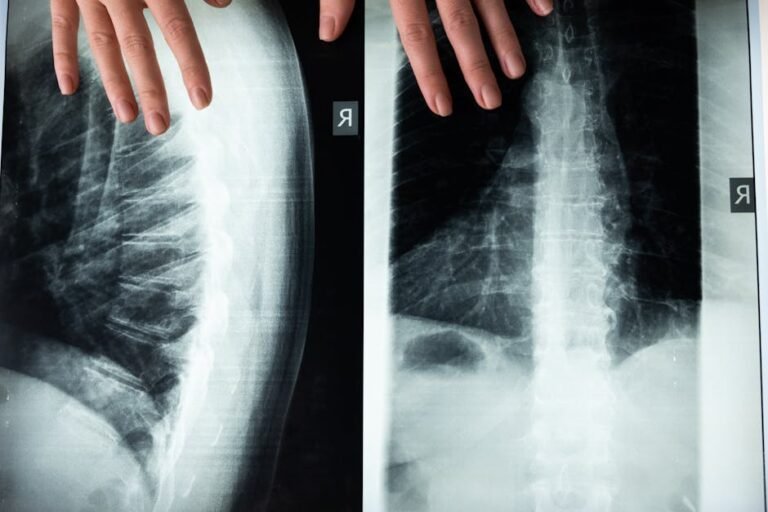
One of the most well-known consequences of disrupted somitogenesis is the formation of a hemivertebra. This occurs when a somite only partially develops, resulting in a wedge-shaped vertebral body instead of a symmetrical one. Because the spine is designed around symmetry, a single hemivertebra can cause the entire column to curve to one side. This is actually a leading cause of congenital scoliosis — a sideways spinal curve that is present from birth, distinct from the more common adolescent-onset scoliosis. Depending on where the hemivertebra sits and how severe the resulting curve is, it can affect posture, growth, and in more serious cases, even organ function.
Another condition that can arise is called block vertebrae. This happens when adjacent somites fail to properly separate during development, causing two or more vertebrae to fuse together. Unlike surgical spinal fusion performed in adulthood for pain management, this fusion is structural and congenital — meaning the normal joints between those vertebrae simply never formed. The result is a stiff, inflexible section of the spine that can lead to restricted movement, compensatory strain on other spinal segments, and discomfort over time. Both hemivertebrae and block vertebrae are powerful reminders that the strength and flexibility we associate with a healthy back are rooted in a process that plays out in just the first few weeks of existence.
What This Means If You or Your Child Has a Congenital Spinal Condition
Learning that a spinal condition has its origins in early embryonic development can feel overwhelming at first. But for many families, understanding the biological “why” behind a diagnosis is genuinely empowering — it transforms a confusing medical label into something that makes sense, and it helps frame the journey ahead with greater clarity and confidence.
It’s worth knowing that congenital spinal conditions exist on a wide spectrum. Some are mild and require only monitoring over time. Others may need more active intervention, including physical therapy, spinal bracing, or in some cases surgery. The critical thing is early detection. The sooner a congenital spinal issue is identified, the more options are typically available for managing it effectively and preventing it from worsening during periods of rapid growth — particularly in childhood and adolescence.
Modern medicine has made tremendous strides in diagnosing and treating congenital spinal conditions. Paediatric orthopaedic specialists, neurosurgeons, and genetic counsellors work together to develop personalised care plans that account for each child’s unique anatomy and needs. If you’re navigating this as a parent or caregiver, know that you don’t have to figure it out alone — specialist teams and support communities exist specifically to help families like yours.
Practical Tips: What You Can Do to Support Spinal Health
Whether you’re concerned about a child’s development, managing a congenital condition yourself, or simply want to be proactive about your spine health from the ground up, here are practical steps you can take:
- Prioritise prenatal care: Regular check-ups during pregnancy allow healthcare providers to monitor fetal development closely. While not all congenital spinal conditions can be detected before birth, advanced imaging can sometimes identify abnormalities early, opening the door to better planning and support.
- Watch for early signs in infants and young children: Pay attention to any persistent asymmetry in your child’s posture, unusual curves in the back, or limited range of motion. These are worth discussing with your paediatrician — earlier is always better when it comes to spinal development.
- Seek specialist input when needed: If a congenital spinal condition is suspected or diagnosed, ask for a referral to a paediatric orthopaedist or spinal specialist. A general diagnosis is just the starting point; specialist care provides the detailed picture needed to make informed decisions.
- Explore a multidisciplinary approach to treatment: Managing congenital spinal conditions often involves a team — physiotherapists, orthopaedic surgeons, neurologists, and sometimes genetic counsellors. Embracing this team-based model gives you access to the full range of expertise your situation may require.
- Consider physical therapy for strength and flexibility: Even when surgery isn’t on the table, physical therapy can play a powerful role in maintaining spinal stability, building supporting muscle strength, and improving quality of life. Look for a physiotherapist experienced in paediatric or spinal conditions.
- Connect with support communities: Living with or caring for someone with a congenital spinal condition has emotional as well as physical dimensions. Online forums, patient advocacy organisations, and local support groups can be invaluable sources of encouragement, practical advice, and connection with people who truly understand your experience.
- Keep asking questions: You are your own (or your child’s) best advocate. Don’t hesitate to ask your medical team to explain things in plain language, discuss all available options, and revisit your care plan as circumstances change. Informed patients get better outcomes.
Why Understanding Spine Science Matters for Everyone
You might be wondering why any of this is relevant if you don’t have a congenital condition and neither does anyone in your family. Here’s the thing: understanding the biological foundations of your spine gives you a richer, more respectful relationship with your body. When you know that your vertebral column was assembled with remarkable precision from dozens of microscopic building blocks during the earliest days of your existence, it changes how you think about spinal health as a whole.
It’s a reminder that your spine has been working hard since before you took your first breath. The least we can do is return the favour — by moving regularly, maintaining good posture, strengthening the muscles that support the column, and seeking help early when something doesn’t feel right. Spine health isn’t just about avoiding injury in adulthood; it’s a lifelong relationship that begins at the cellular level and benefits from ongoing attention and care.
It also cultivates empathy. When we understand that some spinal conditions are not the result of lifestyle choices but of early developmental blueprints, it shifts the narrative. People living with congenital spinal conditions deserve not just excellent medical care, but also understanding and support from those around them. Science, in this case, is a powerful tool for compassion.
The Bottom Line: Your spine is built on an extraordinarily precise biological process called somitogenesis, in which tiny structures called somites form the foundational blueprint for every vertebra, muscle, and connective tissue in your back — all within the first few weeks of embryonic development. When this process is disrupted, congenital spinal conditions like hemivertebrae and block vertebrae can result, shaping a person’s spinal architecture from birth. Understanding these origins doesn’t just satisfy scientific curiosity — it empowers individuals, families, and caregivers to seek earlier diagnoses, ask better questions, and advocate more effectively for specialised, personalised care. Whether your spine is navigating a congenital challenge or simply carrying you through daily life, it deserves your attention, your respect, and your ongoing care.
This is not medical advice. Consult your healthcare provider before starting any new health routine or using any product mentioned here.