Why Chronic Spinal Pain Is a Nervous System Problem: Understanding Central Sensitization and Maladaptive Neuroplasticity
This post contains affiliate links. As an Amazon Associate, I earn from qualifying purchases at no extra cost to you.
Free resources — no credit card required for trial
🎧 Listen to health & wellness audiobooks free for 30 days
Start 30-Day Free Trial →
🛒 Recommended Products
As an Amazon Associate we earn from qualifying purchases at no extra cost to you.
Back Gel Ice Pack Wrap — Microwaveable Pain Relief Heat Pad for Upper and Lower Back Thera
$22.99
BODYPROX Pain Relief Ice Pack with Strap for Hot and Cold Therapy — Microwave Heat Pad for
$14.99
iReliev Hot and Cold Therapy Gel Pack — Reusable Freezable Microwaveable Compression Pack
$16.99
Magic Gel Ice Pack for Back Pain Relief — 2 Pack Reusable Lower Back Wrap for Hot or Cold
$19.99
Relief Expert Reusable Ice Pack for Back — Lower Back Ice Pack Wrap with Cold Compress
$17.99
📚 Read unlimited health books free for 30 days
Try Kindle Unlimited Free →
That nagging ache in your lower back that just won’t go away. The persistent neck tension that flares up every time you sit at your desk. The spinal discomfort that seems to have taken up permanent residence in your body, long after the original injury should have healed. If any of this sounds familiar, you’re not alone — and more importantly, there’s a reason your pain keeps hanging around that goes far beyond “bone and muscle.” Modern pain science has revealed something remarkable: chronic spinal pain is deeply tied to your nervous system, and understanding the concepts of central sensitization and maladaptive neuroplasticity could genuinely change how you approach your recovery.
Your Spine Is More Than Just a Stack of Bones
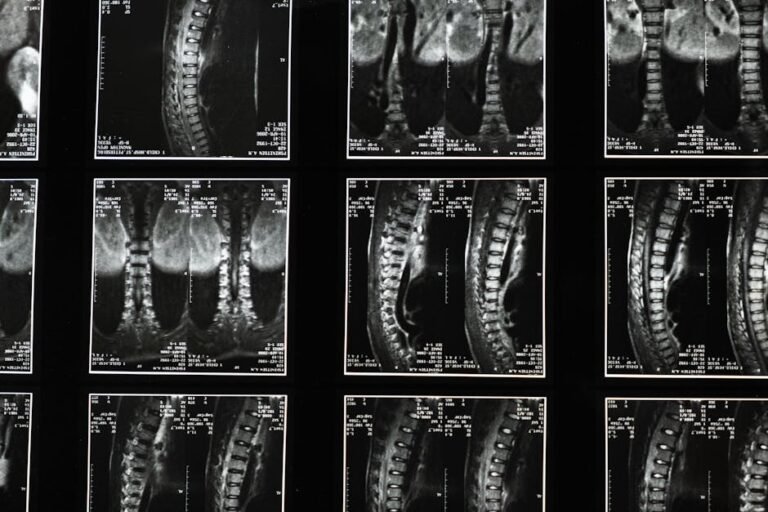
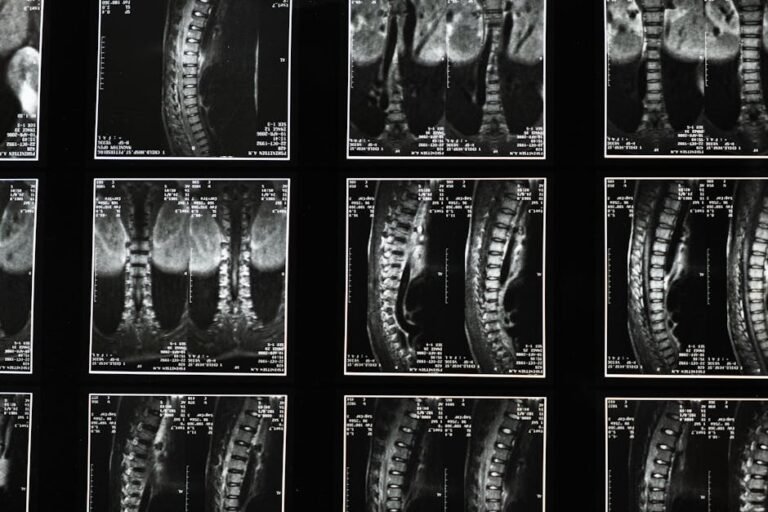
Most of us think of the spine in mechanical terms — a column of bones that holds us upright and lets us bend and twist. And yes, that’s absolutely part of the picture. Your spine is a genuine engineering marvel, made up of individual vertebrae, shock-absorbing discs, tough ligaments, and layers of powerful muscles, all working together to give you both strength and flexibility. It’s one of the most sophisticated structures in your entire body.
But here’s what often gets overlooked: your spine has a second, equally critical job. Running through the bony tunnel at the centre of your spinal column is your spinal cord — a superhighway of nerve tissue that relays messages between your brain and every part of your body below your neck. Every movement you make, every sensation you feel, every signal your organs receive — all of it travels through or near your spine. This means your spine and your nervous system aren’t separate systems. They are intimately intertwined partners, and what affects one almost always affects the other.
This partnership is why spinal problems can sometimes cause symptoms that seem completely unrelated to your back — numbness in your fingers, weakness in your legs, even changes in bladder function. And it’s also why nervous system changes can show up as back pain. The relationship runs in both directions, and understanding that is the foundation of understanding chronic pain.
The Two-Way Street: How the Spine and Nervous System Influence Each Other
Think of the spine-nervous system relationship as a two-way street, where traffic — in the form of signals, stresses, and dysfunction — can flow in either direction and cause congestion on both sides.
On one side, structural problems in the spine can directly impact the nervous system. A herniated disc pressing on a nerve root, arthritis narrowing the channels where nerves exit the spine, or wear-and-tear changes over time can all compress or irritate delicate nerve tissue. When that happens, nerves can’t carry their messages properly. The result isn’t just pain — it can mean numbness, tingling, muscle weakness, or even changes in how your internal organs work. The physical architecture of your spine quite literally shapes the environment your nervous system lives in.
But traffic also flows the other way. When the nervous system struggles — whether due to injury, illness, or even something like a stroke — it can stop sending the right instructions to the muscles that support and stabilise your spine. Without proper muscle coordination, your spine loses its finely tuned balance. Other muscles try to compensate, posture shifts, movement patterns change, and over time, those compensations can create real structural changes in the spine itself. One problem feeds the other in a cycle that can be genuinely difficult to break without understanding what’s driving it.
When Pain Becomes a Habit: Understanding Central Sensitization
Here’s where things get particularly fascinating — and where central sensitization enters the picture. Most of us understand acute pain intuitively: you injure something, it hurts, and over time it heals and the pain fades. That’s your nervous system working exactly as it should, using pain as a warning signal to protect damaged tissue. But the nervous system is not a fixed, rigid system. It is “plastic,” meaning it can change and adapt over time based on its experiences.
When pain signals keep firing for weeks, months, or even years, the nervous system can begin to adapt in ways that are not helpful. This is what’s known as central sensitization — a state in which your spinal cord and brain essentially become hypersensitive to pain signals. Imagine your body’s internal alarm system getting stuck in high-alert mode. Suddenly, even mild sensations — light touch, gentle movement, everyday activities — can trigger an intense pain response. Things that should not hurt, do. Pain that should have faded, lingers. It’s not that the pain is “in your head” in a dismissive sense; it is a real, measurable change in how your nervous system processes information.
A useful way to picture this: your nervous system is like a smoke alarm. A real fire (acute injury) should trigger it. But with central sensitization, the alarm becomes so sensitive it goes off when someone burns toast — or even just thinks about cooking. The alarm is real. The response is real. But the sensitivity has become disproportionate to the actual threat. This is why people with chronic spinal pain can experience intense discomfort even when scans show no significant ongoing structural damage.
Maladaptive Neuroplasticity: When Your Brain Learns to Be in Pain
Maladaptive neuroplasticity takes this a step further, and it’s one of the most important — and least talked about — concepts in understanding why chronic spinal pain can be so stubbornly persistent. Neuroplasticity, in its positive form, is how we learn new skills, form memories, and recover from injuries. The brain and nervous system physically rewire themselves in response to experience. That’s a beautiful thing. But prolonged dysfunction can push this process in an unhelpful direction.
With maladaptive neuroplasticity, the nervous system essentially “learns” to be in pain. Repeated pain signals carve out new neural pathways — think of them as well-worn grooves in the brain and spinal cord — that make the pain experience easier to trigger and harder to switch off. Even after the original structural problem in your spine has healed or improved significantly, these learned pathways can keep the pain signals firing. The nervous system has reorganised itself around the pain experience, reinforcing it rather than letting it fade.
This is not a sign of weakness, and it is absolutely not a psychological failing. It is a genuine physical change in nervous system function, backed by a growing body of neuroscience research. It also helps explain something many chronic pain sufferers find deeply confusing and frustrating: why standard treatments aimed purely at the physical spine — surgery, injections, rest — sometimes provide incomplete or temporary relief. If the nervous system itself has been reshaped by prolonged pain, addressing only the structural side of the equation may not be enough to achieve lasting improvement.
What You Can Do: Practical Tips for Managing Chronic Spinal Pain
Understanding central sensitization and maladaptive neuroplasticity isn’t just academically interesting — it opens up a genuinely broader toolkit for managing chronic spinal pain. When you know that your nervous system is part of the problem, you can start targeting it as part of the solution. The good news is that because the nervous system is plastic, it can be reshaped in a positive direction too.
- Keep moving — gently and consistently. It might feel counterintuitive when you’re in pain, but staying still can actually worsen central sensitization and allow muscle imbalances to deepen. Low-impact activities like walking, swimming, yoga, or Pilates provide beneficial input to your nervous system and help maintain spinal mobility without overwhelming a sensitised system.
- Make stress reduction a priority. Chronic stress keeps your nervous system in a heightened state of alert, which directly amplifies pain sensitivity. Daily practices like mindfulness meditation, deep breathing, time in nature, or even a creative hobby you love can genuinely dial down nervous system excitability over time.
- Learn about how pain actually works. This one might surprise you, but education is one of the most powerful tools in chronic pain management. Understanding that your pain is being amplified by a sensitised nervous system — rather than signalling ongoing tissue damage — can significantly reduce the fear and anxiety that surround it. And reduced fear means reduced pain amplification. Knowledge truly is power here.
- Pace yourself thoughtfully. Avoid the “boom-and-bust” pattern that many people with chronic pain fall into: overdoing it on a good day, then crashing for several days afterwards. Instead, gradually and consistently increase your activity levels, building resilience without repeatedly triggering your sensitised nervous system.
- Review your posture and daily ergonomics. How you sit, stand, and move throughout the day matters enormously. A well-set-up workstation, supportive seating, and regular movement breaks throughout your day reduce unnecessary strain on your spine and support healthier nerve function.
- Build a team-based approach to your care. Chronic spinal pain with a nervous system component often benefits most from a multidisciplinary approach. Physiotherapists, pain specialists, chiropractors, and doctors who understand this complex picture can each bring valuable perspectives and tools to your recovery plan.
- Consider products that support recovery and comfort. Ergonomic lumbar support cushions, foam rollers for gentle myofascial release, and resistance bands for targeted spinal strengthening exercises are all practical tools that can support your daily routine. Look for well-reviewed options that suit your specific needs and always check with your healthcare provider before starting a new exercise programme.
None of these steps are quick fixes, and that’s actually okay. The nervous system responds to consistency over time. Small, steady changes compound into meaningful improvements — and that’s worth investing in.
Why a Broader View of Spinal Pain Changes Everything
For too long, chronic back and neck pain has been treated as purely a mechanical problem — find the damaged structure, fix or remove it, and the pain goes away. And for some people, in some situations, that approach works beautifully. But for the many millions of people worldwide who continue to struggle with persistent spinal pain despite treatments aimed solely at their anatomy, this narrow view leaves them without answers and without hope.
Recognising the role of central sensitization and maladaptive neuroplasticity doesn’t mean dismissing the importance of structural spinal health. Your discs, joints, muscles, and ligaments absolutely matter, and keeping them healthy is a worthy goal. But it does mean expanding the conversation to include the nervous system as an active participant in both the problem and the solution. It means asking not just “what is wrong with my spine?” but also “what has happened to my pain processing system, and how can I help it recalibrate?”
This broader perspective also brings something that chronic pain sufferers often desperately need: a sense of agency. When you understand that your nervous system is adaptable — that it changed in response to prolonged pain and can change again in response to the right inputs — chronic pain shifts from something that is simply happening to you, to something you can actively influence. That shift in mindset, supported by the right professional guidance and consistent self-care, can be genuinely transformative.
The Bottom Line: Chronic spinal pain is rarely just about what’s happening in your bones and discs. Your nervous system plays a central role — and when pain persists, central sensitization and maladaptive neuroplasticity can cause the nervous system to become hypersensitive, amplifying pain signals long after any original injury has healed. Understanding this mind-body connection is not just intellectually interesting; it’s practically empowering. By combining smart movement, stress management, pain education, good ergonomics, and a comprehensive healthcare team, you can begin to work with your nervous system rather than against it — and reclaim a life with greater comfort, mobility, and freedom.
This is not medical advice. Consult your healthcare provider before starting any new health routine or using any product mentioned here.