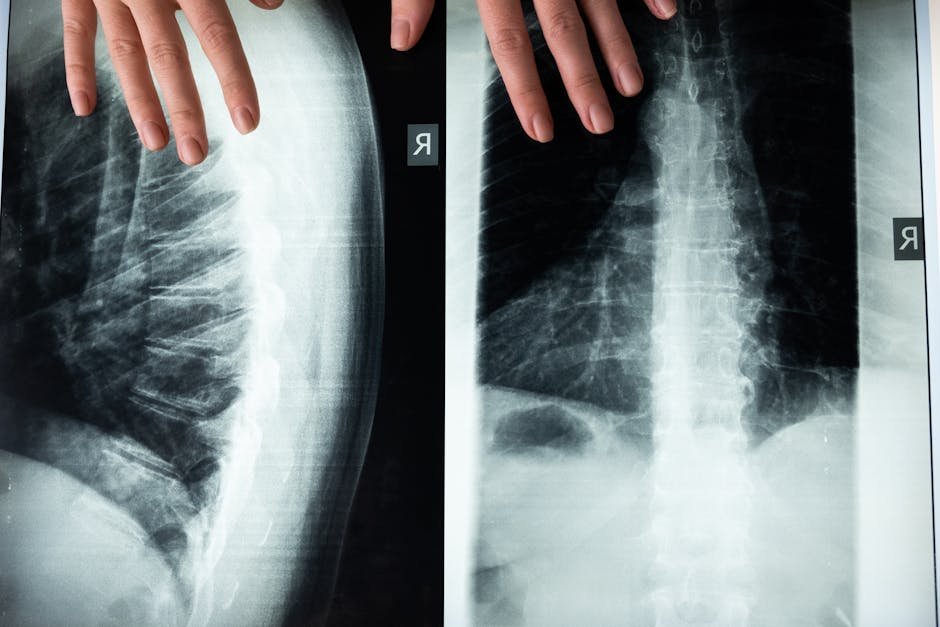
How Your Spine Really Works: Understanding Spinal Biomechanics for a Stronger, Pain-Free Back
This post contains affiliate links. As an Amazon Associate, I earn from qualifying purchases at no extra cost to you.
Free resources — no credit card required for trial
🎧 Listen to health & wellness audiobooks free for 30 days
Start 30-Day Free Trial →
🛒 Recommended Products
As an Amazon Associate we earn from qualifying purchases at no extra cost to you.
TruContour Lumbar Pillow for Sleeping — Adjustable Height Lower Back Support
$39.99
Branfit Shoulder and Back Brace Posture Corrector — Breathable Posture Trainer for Upper B
$24.99
Posture Corrector for Women and Men — Comfortable Effective Brace for Shoulder and Back Pa
$22.99
Bodywellness Posture Corrector for Men and Women — Adjustable Back Straightener with Clavi
$19.99
ComfiLife Lumbar Support Pillow for Sleeping — Memory Foam Triangle Wedge Pillow
$34.99
📚 Read unlimited health books free for 30 days
Try Kindle Unlimited Free →
Most of us never give our spine a second thought — until it starts hurting. Then suddenly, it’s all we can think about. But here’s the thing: your spine is one of the most extraordinary structures in the entire human body, quietly working around the clock to keep you upright, flexible, and moving through life. Whether you’re sitting at a desk, chasing after the kids, dancing at a wedding, or lifting heavy shopping bags, your spine is constantly adapting, absorbing forces, and keeping everything in balance. Understanding the basics of spinal biomechanics — how your spine actually functions under diverse mechanical demands — isn’t just fascinating science. It’s genuinely practical knowledge that can help you move better, feel better, and prevent the aches and pains that so many of us accept as inevitable.
Your Spine Is Far More Than a Stack of Bones
It’s tempting to picture your spine as something like a simple tower of building blocks — one vertebra balanced on top of another, holding you upright through sheer rigidity. But that picture doesn’t even come close to doing justice to this remarkable structure. Scientists and clinicians describe the human spine as one of nature’s most sophisticated biomechanical designs, and once you understand why, it completely changes how you think about your own body.
Your spine has several critical jobs happening simultaneously. It’s your central postural pillar, keeping you stable whether you’re sitting still or sprinting. It enables three-dimensional movement — bending forward and backward, side to side, and rotating — giving you the range of motion needed for everything from tying your shoelaces to parallel parking. And perhaps most importantly, it acts as a protective housing for your spinal cord and the network of nerves that carry messages between your brain and virtually every part of your body. Damage to that neural highway can have consequences far beyond your back itself.
What makes this possible is a concept called biotensegrity. It sounds like a complicated engineering term, but the idea is actually quite intuitive. Think of a well-pitched tent or a suspension bridge: stability doesn’t come just from rigid poles or towers pushing upward, but from the balanced tension in the cables, guy ropes, or suspension wires pulling everything together in harmony. In your spine, the bones (vertebrae) provide compression and structure, while the surrounding muscles, ligaments, and connective tissues provide dynamic tension. When these two forces are in balance, your spine becomes resilient, adaptable, and remarkably strong — capable of handling the diverse mechanical demands of real life without breaking down.
The Kinetic Chain: Why Your Whole Body Is Connected to Your Spine
One of the most eye-opening ideas in spinal biomechanics is the concept of the kinetic chain. Rather than thinking of your spine in isolation, imagine your entire body as a series of interconnected segments — like a chain of dominoes where movement in one part ripples through all the others. This idea, borrowed from engineering and applied to human movement, explains why what happens at your feet or hips can have a very real effect on your lower back, or why tension in your shoulders can eventually show up as neck pain.
Here’s a practical example: every time you take a step, forces travel upward from your foot, through your ankle, knee, and hip, into your pelvis, and then up through your entire vertebral column to your head and neck. It’s a seamless, flowing transmission of energy. But it works in the other direction too. When you reach overhead, swing a tennis racket, or carry a heavy bag on one shoulder, forces from your upper body travel downward through your spine to your pelvis and legs. Your body is a sophisticated, bidirectional load transmission system, with bones, muscles, ligaments, and fascia all playing cooperative roles.
When every link in that chain is healthy and mobile, the whole system flows smoothly. Forces are distributed efficiently, movements feel effortless, and your spine is protected. But introduce a weak link — tight hips, limited ankle mobility, an imbalanced shoulder — and the whole chain compensates, often placing extra stress on your spine in ways that accumulate over time. Understanding this interconnectedness is genuinely empowering, because it means looking beyond the site of pain to understand the bigger picture of how your body moves as a whole.
Why Spinal Biomechanics Should Matter to You in Everyday Life
You might be wondering: this is all very interesting, but what does it actually mean for me on a Tuesday morning when my back is stiff and I’ve got a full day ahead? The answer is: quite a lot. Recognising your spine as part of a dynamic, integrated system is the foundation of both preventing problems and recovering from them more effectively.
When your kinetic chain is working well, you enjoy efficient movement, better posture, and a naturally lower risk of strain or injury. Your body absorbs daily shocks gracefully, distributes your weight evenly across your joints, and adapts fluidly to different tasks. You feel capable, balanced, and at ease in your own body. But when something is off — even somewhere that seems unrelated to your back — the consequences often show up in your spine. Persistent lower back pain, for instance, is frequently linked to limited hip mobility, which forces the lumbar spine to overcompensate during movement. Neck pain can stem from how you hold your arms while typing, or from a posture pattern that starts at your feet.
The good news is that this understanding gives you real agency. Rather than treating your back pain as a mystery or simply waiting for it to pass, you can start asking more useful questions: Where might there be tightness or weakness elsewhere in my chain? Am I moving my whole body efficiently, or am I relying on my spine to do work it shouldn’t have to? This shift in perspective — from viewing your spine in isolation to seeing it as part of an interconnected whole — is one of the most practical tools available for long-term spinal health and overall well-being.
What You Can Do: Practical Tips for Better Spinal Health
The encouraging truth is that supporting your spinal biomechanics doesn’t require expensive equipment or a complicated programme. Consistent, mindful habits applied across your day can make a profound difference to how your spine feels and functions over time. Here are some practical, evidence-informed steps you can start taking right now:
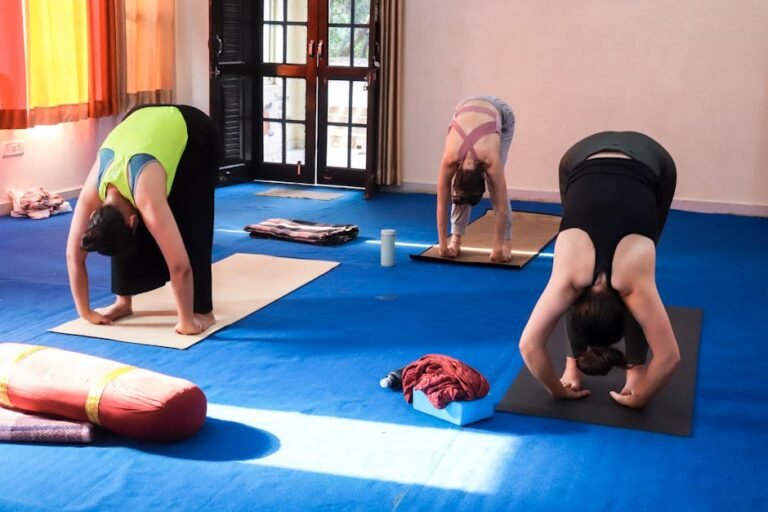
- Keep moving — and vary your movement: Your spine loves movement and dislikes being stuck in any one position for too long. Whether you sit at a desk or stand all day, take regular breaks to walk around, stretch, and change position. Incorporate gentle twists, side bends, forward folds, and back extensions into your daily routine to keep all parts of the chain engaged and flexible.
- Build a smarter, stronger core: Your core is much more than your visible abdominal muscles. It’s a deep system of muscles wrapping around your trunk — including your deep abdominals, obliques, and back extensors — that provides genuine spinal stability. Focus on balanced exercises like planks, bird-dogs, and Pilates-style movements rather than endless crunches, which only work one layer of the system.
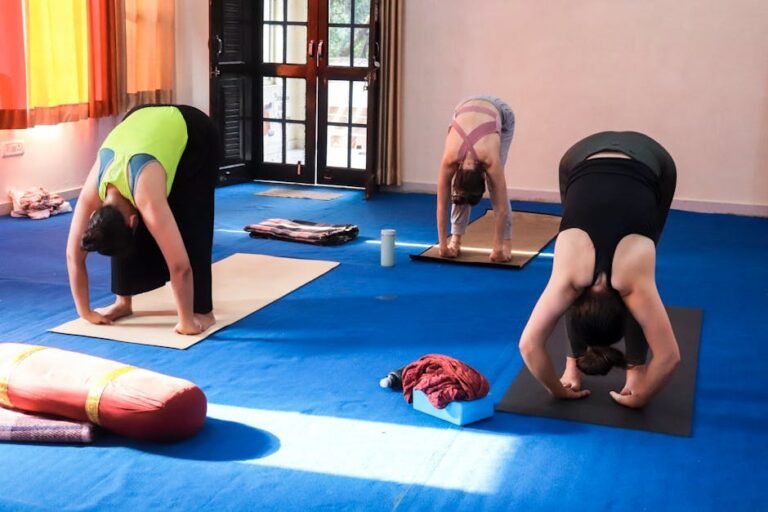
- Work on flexibility across your whole body: Tightness in your hips, hamstrings, or thoracic spine (your mid-back) can force your lumbar spine to compensate during everyday movements. Regular stretching and mobility work for the whole body — yoga and dynamic stretching are particularly effective — helps ensure every link in your kinetic chain can move freely, reducing unnecessary load on your spine.
- Develop postural awareness: You don’t need to obsess over perfect posture every second, but developing a general awareness is genuinely useful. Aim to align your ears over your shoulders, your shoulders over your hips, and your hips over your ankles when standing. When sitting, avoid prolonged slouching or excessive forward head positions. Small, frequent adjustments throughout the day are far more beneficial than trying to hold one “perfect” position.
- Lift with your legs and protect your spine: When picking up anything heavy — from a toddler to a box of books — bend at the knees and hips rather than rounding through your lower back. Keep the object close to your body, engage your core, and let your powerful leg and glute muscles do the heavy lifting. This simple habit protects your spine by keeping forces distributed through the stronger parts of the kinetic chain.
- Take your body’s signals seriously: Persistent stiffness, recurring aches, or a nagging sense of discomfort are your body’s early warning system. These signals often appear before a more serious problem develops. Rather than pushing through or ignoring them, treat them as useful information and consider seeking professional assessment if they persist.
- Consider supportive tools where helpful: Ergonomic chairs, lumbar support cushions, standing desk converters, and foam rollers can all play a supporting role in maintaining spinal health — particularly if you spend long hours at a desk. Look for well-reviewed options that suit your specific situation and budget.
Small, consistent actions genuinely add up. You don’t need to overhaul your entire lifestyle overnight. Picking even two or three of these habits and applying them consistently will begin to make a noticeable difference in how your spine feels day to day.
Putting It All Together: A Holistic View of Spinal Integrity
One of the most valuable shifts you can make in how you think about spinal health is moving away from the idea that your back is simply a problem area to be managed, and toward seeing it as a central player in the full-body system of movement and support. When you understand spinal biomechanics in this way — as a dynamic, interconnected kinetic chain built on the principles of biotensegrity — you start to see that caring for your spine means caring for your whole body.
This holistic perspective also helps explain why so many quick-fix approaches to back pain fall short. Treating only the painful area without addressing the broader movement patterns, muscle imbalances, or postural habits that contributed to the problem often leads to temporary relief at best. A more lasting approach involves understanding your body as a system, identifying where the chain might be breaking down, and building genuine, balanced strength and flexibility throughout.
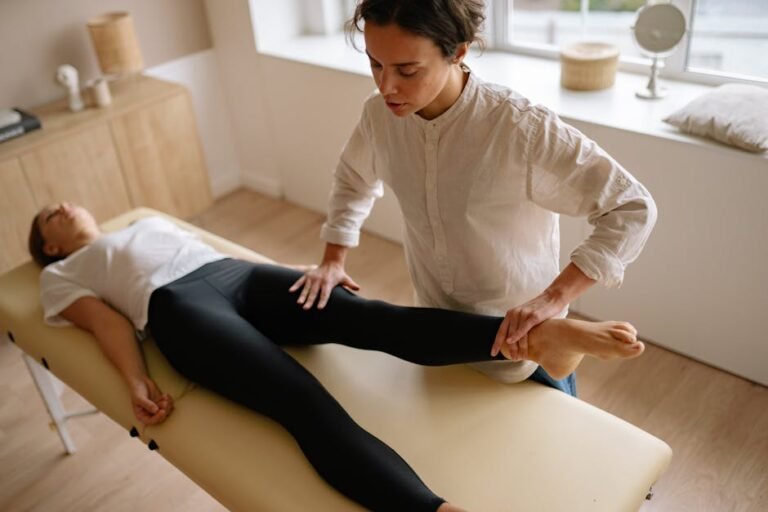
It’s also worth noting that professional guidance has real value here. Physiotherapists, osteopaths, chiropractors, and movement specialists are trained to assess the full kinetic chain and identify patterns that might not be obvious to you on your own. If you’re dealing with persistent or recurrent back pain, investing in a proper assessment can save you months of frustration and give you a much clearer roadmap for recovery and prevention.
The beauty of understanding spinal biomechanics is that it hands the power back to you. You don’t have to be a passive recipient of back pain. With awareness, consistent movement habits, and a willingness to look at your body as the integrated, intelligent system it truly is, you can actively support your spinal integrity and enjoy a far more comfortable, capable life.
The Bottom Line: Your spine is an extraordinary biomechanical marvel — a dynamic system built on the interplay of compression and tension, designed to support your posture, enable fluid movement, and protect your nervous system all at once. By understanding it as part of an integrated kinetic chain that connects every part of your body, you gain a genuinely practical framework for preventing pain, moving more efficiently, and making smarter choices about how you care for yourself every day. Move regularly, build balanced strength, stay flexible, lift wisely, and listen to what your body is telling you — your spine will thank you for years to come.
This is not medical advice. Consult your healthcare provider before starting any new health routine or using any product mentioned here.