Senior Warm-Up Routine: The Simple Daily Habit That Keeps You Moving Safely
This post contains affiliate links. As an Amazon Associate, I earn from qualifying purchases at no extra cost to you.
Free resources — no credit card required for trial
🎧 Listen to health & wellness audiobooks free for 30 days
Start 30-Day Free Trial →
🛒 Recommended Products
As an Amazon Associate we earn from qualifying purchases at no extra cost to you.
TheraBand First Step to Active Health Kit — Senior Exercise Program for Balance and Fall P
$19.99
EZ Off Jar Opener for Seniors — Under Cabinet Jar Opener for Weak Hands and Arthritis
$9.99
Omron 5 Series Upper Arm Blood Pressure Monitor — 2-User 100-Reading Memory Wide-Range Cuf
$44.99
OMRON 7 Series Wireless Wrist Blood Pressure Monitor — Clinically Validated with Connect A
$69.99
Vitality 4 Life Senior Resistance Band with Instruction Guide — Specifically for Elderly F
$16.99
📚 Read unlimited health books free for 30 days
Try Kindle Unlimited Free →
If you’ve ever jumped straight into a walk, a gardening session, or a morning stretch and felt a twinge, a stiff joint, or just a general sense of “my body isn’t ready for this,” you’re not alone. For many older adults, the gap between resting and moving can feel surprisingly big. That’s exactly where a good senior warm-up routine comes in. Taking just five to ten minutes to gently prepare your body before any activity isn’t a luxury — it’s one of the smartest things you can do for your joints, your muscles, your balance, and your long-term independence. The best part? You can do it from your living room, and you don’t need any special equipment to get started.
Why a Senior Warm-Up Routine Matters More Than You Might Think
Warming up isn’t just something athletes do before a race. For older adults, a proper warm-up is genuinely protective. As we age, our joints produce less synovial fluid — the natural lubricant that keeps movement smooth and comfortable. Muscles also take longer to reach their optimal working temperature, and circulation doesn’t ramp up as quickly as it did in younger years. All of this means that going from rest to activity without preparation puts real stress on your body.
A gentle warm-up addresses all of these issues at once. It gets blood flowing to your muscles, makes your joints warmer and more flexible, helps your nervous system “wake up” to movement, and significantly lowers the chance of strains, sprains, or a loss of balance. Think of it as giving your body a friendly heads-up: “Hey, we’re about to move — let’s get ready together.”
The good news is that a warm-up doesn’t need to be intense or complicated. It shouldn’t be about pushing hard or breaking a sweat. It’s simply about waking your body up gradually and safely, so that whatever you do next — whether that’s a neighbourhood walk, some light gardening, or a chair exercise class — feels easier and more comfortable from the very first step.
A Step-by-Step Senior Warm-Up Routine You Can Do at Home
The following routine is designed to take around five to ten minutes from start to finish. You can do it seated in a sturdy chair, standing near a countertop, or a combination of both — whatever works best for your current mobility level. Keep a chair or wall within reach at all times for balance support, and if anything causes pain (not just mild warmth or effort, but actual pain), stop and rest.
Step 1 — Breathing, neck, and shoulder loosening (2–3 minutes): Start by sitting tall or standing with feet hip-width apart. Take four to six slow, deep breaths in through your nose and out through your mouth, letting your belly rise and fall naturally. Follow this with gentle shoulder rolls — lifting your shoulders toward your ears, rolling them back, and releasing them down. Then slowly turn your head from side to side in small, easy movements. This calms your nervous system, sends oxygen through your whole body, and releases the tension that tends to build in the neck and upper back during daily life.
Step 2 — Ankle, knee, and hip mobilisers (3–4 minutes): Sitting or standing near a chair, lift one foot slightly and draw gentle circles with your ankle — eight to ten in each direction — then switch feet. Next, do a light marching motion, bending and straightening each knee alternately for 30 to 60 seconds. For your hips, stand behind your chair with hands resting on the back, and make small circles by gently moving one knee outward and back in. Six to eight circles on each side is plenty. These movements support your gait, improve balance, and warm the hip joints that are so essential for everyday actions like standing up from a chair or stepping sideways.
Step 3 — Upper body and posture work (2–3 minutes): Do slow arm circles forward and backward, starting small and gradually widening if it feels comfortable. Follow with a gentle chest opener: clasp your hands behind your back (or hold a light towel between them) and lift slightly as you breathe in. The chest and shoulders tend to tighten with daily activities like cooking, typing, and driving. Loosening them improves your posture, makes arm movements easier, and reduces the stiffness that can creep in over time.
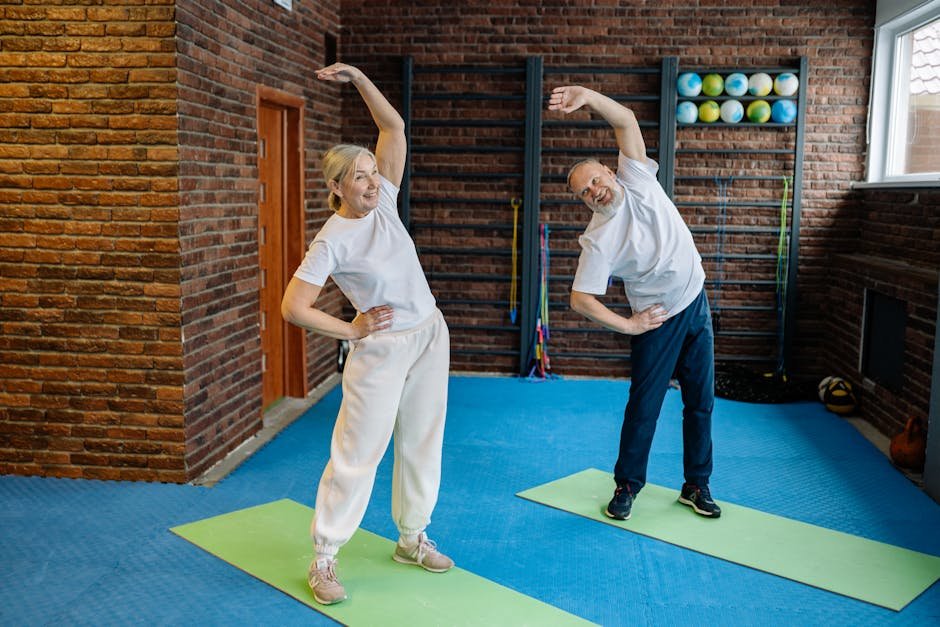
Step 4 — Trunk and back mobility (2–3 minutes): Standing with feet hip-width apart or sitting tall, place your hands on your hips and gently lean to one side and back to centre, then the other. Follow with slow, controlled upper-body twists — turning your torso gently to the left, back to centre, then to the right. If balance is a challenge, do this seated. Never force the movement; work within whatever range feels comfortable. A mobile spine helps with everyday tasks like reaching for items on a shelf, getting in and out of a car, and bending safely.
Step 5 — Light heart-friendly movement (3–4 minutes): March gently in place or walk slowly around the room. If you use a cane or walker, keep it with you. Lift your knees just slightly higher than your normal step and let your arms swing naturally. If standing movement is difficult, try seated chair marching — lifting one knee, then the other, while keeping your back straight. This short cardio-style movement warms your heart and muscles, boosts circulation, and prepares your legs for whatever activity is ahead — all without overloading your joints.
Step 6 — Optional quick mobility circuit (1–2 minutes): If you’re feeling good, run through a short circuit of simple moves — shoulder shrugs, side leg raises with chair support, toe taps, gentle knee lifts, and a slow overhead arm reach. Spend about 15 to 20 seconds on each movement. This optional step primes multiple joints at once and helps keep your body alert and ready for activity.
What You Can Do: Practical Tips for Making This Routine Work for You
The beauty of a senior warm-up routine is that it can be adapted to fit almost any mobility level or living situation. Here are some practical ways to make it a sustainable part of your daily life:
- Start seated if you need to. Every single step in this routine can be performed while seated in a sturdy chair. You can rotate your ankles, roll your shoulders, march in place, and twist your torso — all without standing up. There is no rule that says warm-ups must happen on your feet.
- Keep support within reach. A sturdy chair back, a kitchen countertop, or a wall is all you need for balance support. Use it freely and without embarrassment — it makes the whole routine safer and more confident.
- Start with very small movements. You don’t need a wide range of motion to benefit. Tiny circles, gentle turns, and small steps all count. Over days and weeks, you may naturally notice more freedom and ease in your movements.
- Always breathe. Don’t hold your breath during any movement. Breathe in through your nose and out through your mouth to stay relaxed, oxygenated, and safe throughout the routine.
- Wear supportive footwear. Even indoors, wearing shoes with good grip and support makes a meaningful difference for balance and safety. Avoid slippery socks on hard floors.
- Use simple props if it helps. A lightweight towel, resistance band, or even a couple of full water bottles can add gentle variety. If you have arthritis or limited grip, focus on bodyweight movements and skip anything that causes discomfort in your hands.
- Build gradually. If you’re new to regular movement, aim for three to five minutes of warm-up most days, and gradually extend as you feel stronger and more confident. Consistency matters far more than intensity.
- Hydrate before and after. Drink a glass of water before you start and again when you finish, especially in warmer weather or heated indoor environments.
Important Precautions to Keep in Mind
A warm-up is designed to feel gentle, not challenging. That said, it’s important to pay attention to how your body responds, particularly if you’re managing ongoing health conditions. If you feel dizzy, light-headed, or experience any chest discomfort at any point, stop immediately, sit or lie down safely, and rest. Do not continue until you have spoken with your doctor.
If you have osteoporosis, be mindful of twisting movements and keep all rotations slow, small, and controlled. Avoid any high-impact or sudden movements. If you take medications that affect your heart rate or balance — such as blood pressure medication or certain diuretics — pay close attention to how you feel during movement and flag any unusual symptoms to your healthcare provider.
It’s also worth noting that if you’re recovering from a recent surgery, injury, or illness, please check with your doctor before starting or resuming any warm-up or exercise routine. A physiotherapist or exercise physiologist who specialises in working with older adults can also be a wonderful resource for personalising a routine to your specific needs and goals.
How a Daily Senior Warm-Up Builds Long-Term Resilience
There’s a quiet but powerful ripple effect that happens when you commit to a regular warm-up habit. Over time, consistently moving your joints through their range of motion keeps them more flexible and comfortable. Regularly activating your muscles — even gently — helps maintain the strength and coordination that underpin your balance and confidence. And the act of tuning into your body each day builds a kind of body awareness that makes you more attuned to how you’re feeling, which is itself a form of self-care.
Many people who establish a daily warm-up routine report that their mornings feel less stiff, their walks feel more comfortable, and they feel more confident moving through their day. That might sound like a big result for a few minutes of gentle movement — but it really does add up. The body responds to consistency. Small, regular efforts compound beautifully over weeks and months.
If you’re looking for a supportive tool to help with this routine, a light resistance band can be a gentle addition to some of the upper body and lower body movements — particularly for the chest opener and seated leg work. A non-slip exercise mat is also worth considering if you prefer to do some movements on the floor. And a sturdy chair designed for exercise support can give you extra confidence during standing movements. Always check with your doctor before adding any equipment to your routine.
The Bottom Line: A senior warm-up routine doesn’t need to be complicated, time-consuming, or physically demanding to make a real difference in your health and quality of life. Just five to ten minutes of gentle breathing, joint circles, and light movement before any activity can protect your joints, improve your balance, reduce stiffness, and help you move through your day with greater ease and confidence. Whether you do it before a morning walk, a gardening session, or a gentle exercise class, starting your movement with intention is one of the most caring things you can do for your body — today, and for years to come.
This is not medical advice. Consult your healthcare provider before starting any new health routine or using any product mentioned here.