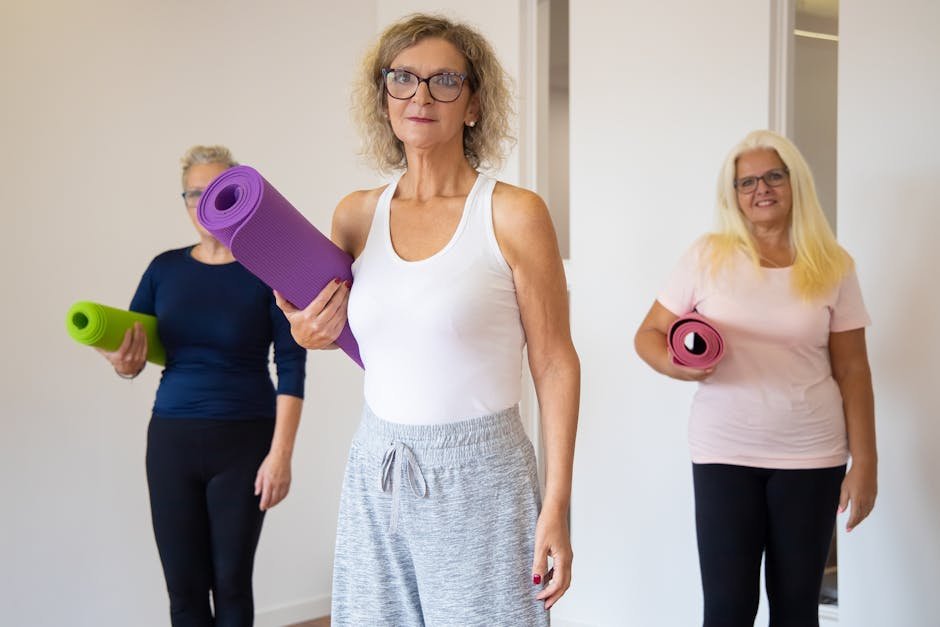
Breathing Techniques for Senior Strength: Simple Practices for a Calmer, Stronger Body
This post contains affiliate links. As an Amazon Associate, I earn from qualifying purchases at no extra cost to you.
Free resources — no credit card required for trial
🎧 Listen to health & wellness audiobooks free for 30 days
Start 30-Day Free Trial →
🛒 Recommended Products
As an Amazon Associate we earn from qualifying purchases at no extra cost to you.
TheraBand First Step to Active Health Kit — Senior Exercise Program for Balance and Fall P
$19.99
EZ Off Jar Opener for Seniors — Under Cabinet Jar Opener for Weak Hands and Arthritis
$9.99
Omron 5 Series Upper Arm Blood Pressure Monitor — 2-User 100-Reading Memory Wide-Range Cuf
$44.99
OMRON 7 Series Wireless Wrist Blood Pressure Monitor — Clinically Validated with Connect A
$69.99
Vitality 4 Life Senior Resistance Band with Instruction Guide — Specifically for Elderly F
$16.99
📚 Read unlimited health books free for 30 days
Try Kindle Unlimited Free →
Here’s something most of us take completely for granted: every single breath we take is an opportunity to feel stronger, calmer, and more in control of our bodies. For seniors looking to maintain their vitality, breathing techniques for senior strength are one of the most underrated tools available — no gym membership required, no special equipment, and you can start right now from the comfort of your favourite chair. Whether you’re looking to feel steadier on your feet, reduce everyday stress, or simply move through your day with a little more ease, learning to breathe with intention can make a remarkable difference.
Why Breathing Matters More Than You Think for Senior Strength
Most of us breathe on autopilot — shallow, quick breaths that barely fill the upper chest. But when we learn to breathe more fully and deliberately, something wonderful happens. Slower, deeper breaths deliver more oxygen to your muscles, making movement feel smoother and less effortful. Think of it like upgrading from a garden hose to a proper water supply. Your muscles simply work better when they’re well-oxygenated.
There’s also a beautiful connection between breath and posture. When you learn to fill your belly and rib cage with air properly, your spine naturally lengthens and your shoulders soften downward. This means you naturally stand or sit taller without straining or gripping. Good posture isn’t just about looking confident — it protects your joints, reduces back discomfort, and helps your body move more efficiently throughout the day.
Perhaps most importantly for seniors, mindful breathing has a direct calming effect on the nervous system. When you’re stressed, your breathing tends to be fast and shallow, which can increase tension in your neck, jaw, and shoulders. Deliberately slowing your breath sends a signal to your brain that you’re safe and can relax. This makes activities like balance exercises, gentle stretches, or even a walk in the park feel far more manageable. The consistency of a short daily breathing practice adds up over time — improving energy, balance, and confidence in ways that can genuinely change how you move through life.
Getting Started Safely: What You Need to Know Before You Begin
One of the best things about breathing exercises for seniors is how accessible they are. You don’t need to be flexible, fit, or even mobile to benefit. A sturdy chair with a straight back is all the equipment you really need. Sit tall on the edge of the chair with your feet flat on the floor and your knees roughly aligned over your hips. If you prefer, some exercises can be done lying down with a pillow supporting your head and knees — whatever feels most comfortable for your body.
The golden rule is to keep everything gentle. Move with your breath, never against it. If something feels tight, uncomfortable, or forced, ease off straight away. There’s no prize for pushing through discomfort — the goal here is calm, sustainable progress. If you have a medical condition such as a heart or lung condition, high blood pressure, or if you’ve had recent surgery, please check with your healthcare provider before beginning a new breathing routine. Similarly, if you ever feel dizzy, lightheaded, or noticeably short of breath during a session, stop and rest.
As a general guide, inhale through your nose when possible — the nose filters and warms the air before it reaches your lungs. For exhaling, you can choose your nose or mouth depending on which exercise you’re doing and what feels most natural to you. Start small, with just five to ten minutes of practice on most days, and gradually build from there as your comfort grows.
Five Safe and Effective Breathing Techniques for Senior Strength
Belly (Diaphragmatic) Breathing is the foundation of everything else. Sit tall or lie comfortably, place one hand on your belly just below the ribcage and the other on your chest. Inhale slowly through your nose and let your belly rise like a small balloon, keeping your chest relatively still. Exhale slowly through your nose or mouth, feeling the belly gently fall. Aim for a rhythm of about four seconds in and four to six seconds out. Practice for five to ten minutes, or use it as a quick calming reset throughout the day. If you struggle to feel your belly rising, place a small soft object on your abdomen to give yourself something to push against — it’s a simple but surprisingly effective cue.
Pursed-Lip Breathing is wonderful for breath control and coordination, and it’s particularly helpful if you ever feel a little breathless during activity. Sit with an upright spine, inhale quietly through the nose for about two counts, then purse your lips as if you’re about to blow out a candle and exhale slowly for four to six counts. Making the exhale longer than the inhale creates a lovely, steady pace. Try using this technique during small bursts of activity — standing up from a chair, climbing stairs, or carrying shopping — to help you maintain control of your breath.
Box Breathing (also called Square Breathing) is excellent for focus, balance, and calming moments of stress. Sit comfortably with your back straight, then inhale through the nose for a count of four, hold gently for four, exhale for four, and hold again for four. Repeat for four to six cycles. If four counts feels too long at first, begin with three and build up gradually. Keep your jaw relaxed and your neck soft, and if you feel at all lightheaded, simply shorten the counts.
Equal Breathing with Gentle Counting helps build stamina and rhythm. Inhale slowly through the nose for a count of four and exhale for the same count of four, keeping the mouth closed if comfortable. This even, matched rhythm is wonderfully grounding and works beautifully as a warm-up before chair yoga or gentle stretching.
Breath Counting for Mindful Movement ties it all together. Sit or stand gently, then inhale and silently count “one,” exhale and count “two,” and continue up through your rounds. This technique helps coordinate your breathing with movement — for example, lifting your arms on an inhale and lowering them on an exhale — building focus and body awareness at the same time.
Pairing Breathing with Gentle Movement for Even Better Results
Breathing exercises for senior strength become even more powerful when you pair them with simple, gentle movements. Chair yoga is a perfect companion. Try this: sit tall in your chair, and as you inhale, slowly raise both arms up toward the ceiling, feeling your spine lengthen. As you exhale, gently lower the arms back down. That’s it — one beautiful, breath-led movement that works your shoulders, engages your core, and reminds your body what it feels like to move with ease and grace.
A simple seated side stretch is another lovely pairing. Inhale to sit tall and feel the spine grow long, then exhale as you gently tilt to one side, reaching one hand toward the floor or resting it on the side of your chair. Inhale back to centre, and repeat on the other side. Let the breath lead the movement — never the other way around. If a movement creates tension or discomfort, simply soften it and reduce the range. There is no correct amount of movement here, only what feels good and safe for your body on that particular day.
The key principle to remember is this: your breath is the guide, not the passenger. When your breath becomes shallow or strained, that’s your body’s way of telling you to slow down, reduce effort, or pause for a rest. Honouring those signals isn’t weakness — it’s wisdom.
What You Can Do: Practical Tips to Make Breathing Practice a Daily Habit
- Create a calm space. Choose a quiet, comfortable spot for your practice — even a favourite armchair by the window works beautifully. Familiar, peaceful surroundings make it easier to focus on your breath.
- Use a timer. Set a gentle phone alarm or use a simple kitchen timer to keep track of your sessions. Even five minutes counts, especially at the beginning.
- Stay hydrated. Drink a glass of water before and after your practice. Deep breathing can be surprisingly thirst-inducing.
- Wear comfortable clothing. Loose, comfortable clothes allow your belly and ribcage to expand freely without restriction.
- Start with just two or three exercises. Don’t try to do everything at once. Choose two techniques you enjoy and stick with those until they feel second nature, then add another.
- Build breathing into your existing routine. Try one minute of diaphragmatic breathing before getting out of bed in the morning, or a few rounds of pursed-lip breathing before your daily walk.
- Listen to your body, always. Stop if you feel pain, dizziness, or unusual shortness of breath. It’s always okay to adjust the pace, counts, or positions to suit how you feel on any given day.
- Keep a simple weekly plan. For example: Day 1, five minutes of belly breathing plus one round of box breathing. Day 3, equal breathing paired with gentle chair yoga movements. Day 5, a ten-minute mix of your favourite techniques. Rest days are just as important as practice days.
Building Confidence One Breath at a Time: Your Gentle Weekly Routine
Consistency truly is the magic ingredient here. A few minutes of mindful breathing practised most days will do far more for your senior strength and wellbeing than an intense session once a week. Think of it the way you might think about watering a plant — a little, regularly, yields far better results than a flood followed by a drought. Give your body and mind the steady nourishment they deserve.
A gentle starting routine might look something like this: begin your week with five minutes of diaphragmatic breathing and one round of box breathing. A couple of days later, extend to seven minutes and add pursed-lip breathing into the mix. Mid-week, try equal breathing paired with five minutes of simple chair yoga movements. Allow yourself a proper rest day — or a short five-minute breathing reset if you’d like to stay connected to the practice. By the end of the week, you might comfortably manage ten minutes of a flowing, enjoyable mix of your favourite techniques. On the weekend, a gentle walk with mindful breathing is a wonderful way to bring it all together.
Remember, there is no rush. There is no finish line. Every calm inhale and relaxed exhale is a sign of growing strength — both in your body and in the steady, confident relationship you’re building with yourself. Each mindful breath is genuinely a small gift you give yourself, a moment of self-care that costs nothing and returns so much.
The Bottom Line: Breathing techniques for senior strength are one of the simplest, safest, and most effective tools available for supporting your energy, posture, balance, and everyday confidence. You don’t need equipment, a gym, or a background in yoga to get started — just a comfortable chair, a few minutes, and a willingness to pay attention to something you’re already doing every moment of every day. Start small, stay consistent, and trust that each steady breath is building a stronger, calmer, more capable you. Your body has been breathing for your whole life — now let’s help it do an even better job.
This is not medical advice. Consult your healthcare provider before starting any new health routine or using any product mentioned here.