How to Protect Your Joints During Daily Activities: A Practical Guide for Older Adults
This post contains affiliate links. As an Amazon Associate, I earn from qualifying purchases at no extra cost to you.
Free resources — no credit card required for trial
🎧 Listen to health & wellness audiobooks free for 30 days
Start 30-Day Free Trial →
🛒 Recommended Products
As an Amazon Associate we earn from qualifying purchases at no extra cost to you.
TheraBand First Step to Active Health Kit — Senior Exercise Program for Balance and Fall P
$19.99
EZ Off Jar Opener for Seniors — Under Cabinet Jar Opener for Weak Hands and Arthritis
$9.99
Omron 5 Series Upper Arm Blood Pressure Monitor — 2-User 100-Reading Memory Wide-Range Cuf
$44.99
OMRON 7 Series Wireless Wrist Blood Pressure Monitor — Clinically Validated with Connect A
$69.99
Vitality 4 Life Senior Resistance Band with Instruction Guide — Specifically for Elderly F
$16.99
📚 Read unlimited health books free for 30 days
Try Kindle Unlimited Free →
Your joints are the unsung heroes of everyday life. They help you get out of bed in the morning, cook your favourite meal, tend the garden, and hug the people you love. But as the years go by, those joints need a little more attention and care to keep doing all those wonderful things. The great news? You don’t need to overhaul your entire lifestyle to make a real difference. Learning how to protect your joints during daily activities is one of the smartest, most empowering things you can do for your long-term independence and comfort — and most of it starts with small, simple changes you can begin today.
Why Protecting Your Joints During Daily Activities Really Matters
It’s easy to take our joints for granted until they start sending us signals — a twinge in the knee when climbing stairs, stiffness in the hips after sitting too long, or aching hands after an afternoon in the garden. These signs are your body’s way of asking for a bit more consideration in how you move through your day.
Joints that move smoothly are the foundation of independence. Think about the activities that matter most to you — preparing a meal, going for a walk with a friend, playing with grandchildren. When joints are healthy and protected, all of that stays within reach. On the other hand, even mild joint discomfort can set off a frustrating cycle: pain leads to less movement, less movement causes stiffness, and stiffness makes everything harder.
The encouraging truth is that small, consistent changes in the way you lift, carry, bend, and move can meaningfully reduce wear and tear on your cartilage and connective tissue. You don’t need to stop doing what you love — you just need to do it a little smarter. That’s what joint protection is really all about.
Everyday Habits That Put Your Joints at Risk (And How to Spot Them)
Before we dive into solutions, it helps to understand which everyday movements are the sneaky culprits behind joint strain. Many of us have developed habits over decades that we’ve never questioned — but they may be quietly adding up to unnecessary wear and discomfort.
Twisting while carrying a load is one of the most common offenders. When you turn at the waist while holding groceries or a laundry basket, you’re placing significant stress on your spine and hips. Similarly, lifting heavy objects from a bent-back position — rather than using your legs — puts enormous strain on your back and knees. Repetitive motions, like the same reaching or gripping action over and over, can wear down a joint over time, especially when you’re not switching positions or taking breaks.
Poor posture is another big one. Slouching while cooking, hunching over a phone, or craning forward at a computer screen all tighten the muscles around your joints and throw your alignment off balance. And don’t underestimate the risk of slips and trips — loose rugs, wet floors, and cluttered hallways are surprisingly common causes of joint injuries. Wearing shoes without proper support can also quietly affect your knee and hip alignment all day long without you even noticing.
How to Protect Your Joints in Common Daily Tasks
Now for the practical part. The good news is that protecting your joints during daily activities doesn’t require fancy equipment or a major time commitment — it’s mostly about moving more mindfully.
Lifting and carrying: Split heavy loads into smaller portions whenever you can, carrying one bag at a time. When you do need to lift something, keep your back straight and bend at the knees — let your legs do the work, not your back. Hold items close to your body rather than away from you, and always turn your whole body rather than twisting at the waist. A wheeled shopping trolley or a small backpack can take a huge amount of pressure off your spine and shoulders on a daily basis.
Getting up from chairs and beds: Before standing, sit at the edge for a moment, feet flat on the floor, then use the armrests to push yourself up using your leg strength. A chair with sturdy armrests is genuinely worth investing in. When getting out of bed, roll onto your side first, then swing your legs down — rather than sitting straight up from lying flat.
Cooking and kitchen tasks: Keep your most-used items at waist height so you’re not constantly bending and reaching. Long-handled tools — a longer spatula, a ladle with a good grip — reduce the need to strain. Non-slip mats under cutting boards and silicone jar openers protect your hands and wrists. And whenever a task allows it, sit down to do it rather than standing the whole time.
Bathing and grooming: A non-slip bath mat, grab bars, and a shower chair are simple additions that make a remarkable difference to safety and joint comfort. A handheld showerhead reduces twisting and reaching, and keeping your toiletries within easy reach means less bending and stretching every single day.
Gardening: Raised garden beds or benches are a game-changer for reducing knee strain. Long-handled tools — a trowel with an extended grip, a lightweight rake — cut down on stooping. Pace yourself, alternate between tasks, and take rest breaks sitting down whenever possible.
A Gentle Exercise Routine to Support Joint Health
Movement is medicine for your joints — but the right kind of movement matters. Gentle, regular exercise keeps joints lubricated, strengthens the muscles that support them, and improves your balance and stability. You don’t need to push yourself hard; consistency matters far more than intensity.
A simple 10-minute routine three days a week can make a real difference. Start with two minutes of gentle warm-up: marching in place, shoulder rolls, neck turns, and ankle circles to get everything loosened up. Follow that with a couple of minutes of mobility work — slow neck tilts and turns, shoulder circles, and gentle wrist rotations.
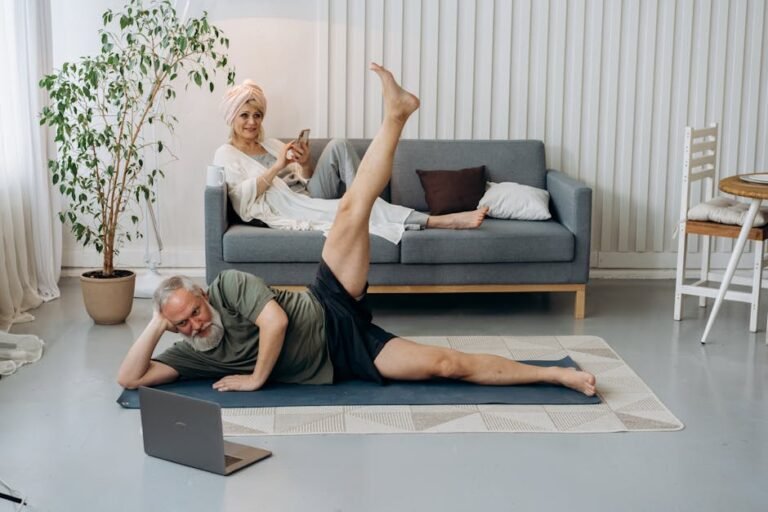
Then move into some light strengthening. Sit-to-stand practice from a sturdy chair is one of the best exercises you can do — aim for 8 to 10 repetitions, keeping your back straight and really using your leg muscles. Calf raises behind a chair (rising onto your toes and slowly lowering) and wall push-ups (hands on the wall at shoulder height, gently bending your elbows) are both easy on the joints while building useful strength. Finish with seated leg extensions and a standing hip exercise (gently lifting one leg out to the side while holding a chair for balance), followed by a minute of easy stretching and single-leg balance work.
These exercises are manageable, safe, and genuinely effective. If you have a specific condition like osteoporosis or a recent joint injury, it’s worth checking with your doctor or a physiotherapist before you start — they can tailor the routine beautifully to your needs.
What You Can Do: Practical Tips to Protect Your Joints Every Day
Here’s a handy summary of the most impactful daily habits to weave into your routine. Even picking just two or three of these to focus on first can bring noticeable improvement:
- Warm up before activity. Even two to three minutes of gentle movement before a task reduces stiffness and lowers your injury risk.
- Wear supportive footwear. Choose shoes with good arch support, a stable sole, and non-slip grip — every single day, not just for exercise.
- Use long-handled tools. In the kitchen, garden, and bathroom, tools with extended handles mean less bending and reaching for your joints.
- Pace yourself. Break tasks into shorter blocks with brief rests in between, rather than pushing through a long stretch of activity.
- Mind your posture. Stand tall, keep your shoulders relaxed and back, and try not to slouch when sitting — especially during screen time.
- Stay well hydrated. Water is essential for joint lubrication and overall connective tissue health.
- Make your home safer. Remove clutter from walkways, secure loose rugs, install grab bars where needed, and make sure all areas are well lit.
- Use assistive devices when helpful. A cane, walker, or reacher tool is not a sign of weakness — it’s a smart way to protect your joints and prevent falls.
- Listen to your body. Mild muscle soreness after activity can be normal, but sharp pain, swelling, or warmth in a joint is a signal to stop and seek advice.
- Manage weight where possible. Even a modest reduction in weight can meaningfully decrease the load on your hips, knees, and lower back.
When to Seek Help — and How to Keep Moving Forward
Joint protection is a long-term practice, not a one-time fix. Most days, the strategies above will be all you need to stay comfortable and mobile. But it’s important to know when something warrants a closer look from a healthcare professional.
If you notice new or worsening pain, swelling, redness, or warmth around a joint, it’s worth checking in with your doctor. These can be signs of inflammation or an underlying condition that needs proper attention. Sudden, severe pain, any inability to bear weight on a joint, or a joint that feels unstable are signals to seek prompt medical care — don’t wait and hope it resolves on its own.
For those living with conditions like osteoporosis, diabetes, or neuropathy, or recovering from a joint replacement or injury, it’s especially worthwhile to work with a physical therapist. They can create a personalised movement plan that fits your specific body and lifestyle — and the results can be genuinely transformative. Think of it as having a knowledgeable guide in your corner.
And remember, every single step you take toward protecting your joints is a step toward preserving the life you love. Start small — perhaps placing a non-slip mat in your kitchen today, or practising one round of sit-to-stand exercises tomorrow morning. Build gradually, celebrate the small wins, and be patient with yourself. Your body is remarkably responsive to consistent, caring attention.
The Bottom Line: Protecting your joints during daily activities doesn’t require big sacrifices or complicated routines — it requires small, thoughtful choices made consistently over time. From the way you lift a grocery bag to the shoes you wear around the house, each mindful adjustment adds up to less strain, less pain, and more of the independence and freedom that make life truly enjoyable. Start with one change today, build from there, and give your joints the care they deserve.
This is not medical advice. Consult your healthcare provider before starting any new health routine or using any product mentioned here.