How to Stay Active Without Overdoing It: A Senior’s Guide to Safe, Enjoyable Movement
This post contains affiliate links. As an Amazon Associate, I earn from qualifying purchases at no extra cost to you.
Free resources — no credit card required for trial
🎧 Listen to health & wellness audiobooks free for 30 days
Start 30-Day Free Trial →
🛒 Recommended Products
As an Amazon Associate we earn from qualifying purchases at no extra cost to you.
TheraBand First Step to Active Health Kit — Senior Exercise Program for Balance and Fall P
$19.99
EZ Off Jar Opener for Seniors — Under Cabinet Jar Opener for Weak Hands and Arthritis
$9.99
Omron 5 Series Upper Arm Blood Pressure Monitor — 2-User 100-Reading Memory Wide-Range Cuf
$44.99
OMRON 7 Series Wireless Wrist Blood Pressure Monitor — Clinically Validated with Connect A
$69.99
Vitality 4 Life Senior Resistance Band with Instruction Guide — Specifically for Elderly F
$16.99
📚 Read unlimited health books free for 30 days
Try Kindle Unlimited Free →
Staying active as we get older is one of the most powerful things we can do for our health — but there’s a big difference between keeping your body moving and pushing it past its limits. If you’ve ever started an exercise routine with great intentions only to feel wiped out, achy, or discouraged a few days later, you’re not alone. The good news is that learning how to stay active without overdoing it isn’t complicated. It’s about working with your body, not against it — and finding a rhythm of movement that feels good, fits your life, and keeps you feeling capable and energised every single day.
Why Staying Active Matters So Much as You Age
Regular, gentle movement does far more for your body and mind than most people realise. It helps keep muscles strong and joints flexible, which means everyday tasks — getting up from a chair, carrying groceries, playing with grandchildren — feel easier and less draining. Movement also helps steady your balance, which is one of the most important things you can protect as you age. Falls are a leading cause of injury among older adults, and consistent physical activity is one of the best defences against them.
Beyond the physical benefits, staying active has a remarkable effect on mood and mental well-being. Exercise releases feel-good chemicals in the brain, helps reduce anxiety, and gives you a sense of accomplishment. Even a short 10-minute walk can lift your spirits and give you a welcome boost of energy. The goal here isn’t to run a marathon or hit the gym for hours — it’s about sustainable, enjoyable movement that supports your independence and quality of life for years to come.
The key phrase is “sustainable and enjoyable.” If exercise feels like punishment, you won’t stick with it. But when you find activities you genuinely like — whether that’s a gentle stroll through the park, a little light dancing in the living room, or some soothing chair stretches with your morning coffee — movement stops feeling like a chore and starts feeling like a gift you give yourself every day.
Common Challenges Seniors Face When Trying to Stay Active
It’s completely normal to face hurdles when it comes to staying active. Arthritis and joint stiffness can make movement uncomfortable, especially first thing in the morning or on cold days. Changes in balance can make you nervous about falling, which can lead some people to avoid exercise altogether — ironically making the problem worse over time. Certain medications can cause dizziness or fatigue, which understandably makes the idea of a workout feel unappealing or even risky.
There are also practical challenges. Maybe the weather isn’t always cooperating, your home isn’t set up with a lot of safe space to move around in, or you simply don’t have someone to exercise alongside you. Busy schedules — yes, seniors have those too — can also get in the way. And sometimes the biggest hurdle is mental: the fear of overdoing it, or frustration from comparing yourself to how active you used to be.
Here’s what’s important to remember: having good days and challenging days is completely normal. The approach that works is tailoring your activity to what your body can do today, and gently building from there. You don’t need to do everything perfectly — you just need to keep moving, at your own pace, in a way that feels safe and right for you.
How to Stay Active Without Overdoing It: Smart Strategies for Safe Movement
One of the simplest and most effective tools for pacing yourself is the “talk test.” During any physical activity, if you can comfortably hold a conversation but couldn’t manage to sing a song, you’re likely working at a safe, moderate intensity. That’s the sweet spot — you’re challenging your body without stressing it. If you’re gasping for breath or can’t get a word out, it’s time to slow down.
Starting small is not a sign of weakness — it’s a sign of wisdom. Choose activities you can finish without feeling completely exhausted. A 5-to-10-minute walk is a perfectly fine starting point. Chair marching, seated leg lifts, or light dancing to your favourite music are all wonderful options that are easy on the joints and can be done at home. The goal is to finish feeling pleasantly tired, not depleted.
Rest is not the enemy of progress — it’s part of it. Plan rest days into your routine, alternate harder activity days with lighter ones, and if you’re new to exercise or returning after a break, think “short and frequent” rather than long workouts. A few 10-minute sessions spread through the day are just as valuable as one longer session, and often much more manageable.
Warming up and cooling down matters more than many people realise. Spend three to five minutes at the start of any activity doing something gentle — easy marching in place, slow shoulder rolls, or ankle circles — to ease your body into movement. When you’re done, take another few minutes for a slow cool-down: light walking, gentle stretches held softly for 10 to 15 seconds. This simple habit helps prevent soreness and keeps your muscles and joints happy.
Choosing the Right Exercises for Your Body
A well-rounded approach to staying active includes three types of movement: aerobic activity (anything that gets your large muscles moving and your heart rate up a little), strength work (to maintain muscle and support your bones), and balance or flexibility exercises (to prevent falls and keep you moving freely). You don’t need to do all three every day — even working on one or two consistently will make a real difference.
For aerobic activity, a gentle walk is hard to beat. Even five minutes is a start. Chair marching — lifting your knees alternately while seated — is a wonderful low-impact option for days when walking isn’t possible. For strength, seated exercises like chair leg lifts or standing heel raises done near a sturdy surface are both safe and effective. For balance, try standing behind a sturdy chair and practising small side steps, or walking heel-to-toe along the floor with the chair nearby for support.
As the weeks go by and things start to feel easier, you can gradually progress. Add a minute or two to your walks. Try a slightly more challenging version of a chair exercise. The rule of thumb is simple: only increase the difficulty when the current level feels easy and comfortable — never when it feels forced. And always listen to your joints. Sharp pain or swelling during any movement is a signal to stop and try something gentler. If pain lingers, that’s a good time to check in with a healthcare professional.
What You Can Do: Practical Tips for Staying Active Safely Every Day
- Schedule activity for your best time of day. Most people have a window when they feel most energetic — morning, mid-afternoon, or early evening. Plan your movement for then, and pair harder tasks with lighter ones.
- Wear the right footwear. Choose supportive shoes with a non-slip sole for any exercise. Good footwear makes a genuine difference to stability and comfort. Use a cane, walker, or handrail whenever you need to — these are tools, not weaknesses.
- Clear your space. Before starting any home exercise, move any clutter from the area and position yourself near sturdy furniture you can hold if needed.
- Make movement a habit around meals. A short five-minute walk after lunch or dinner is easy to build into your routine and has great benefits for energy and digestion.
- Use environmental prompts. Place your walking shoes by the door, set a phone reminder to stand up every hour, or listen to a favourite podcast while you move — these small cues make it much easier to stay consistent.
- Stretch during TV time. While watching a show, do gentle leg lifts, ankle circles, or seated stretches. You’re moving without even thinking of it as exercise.
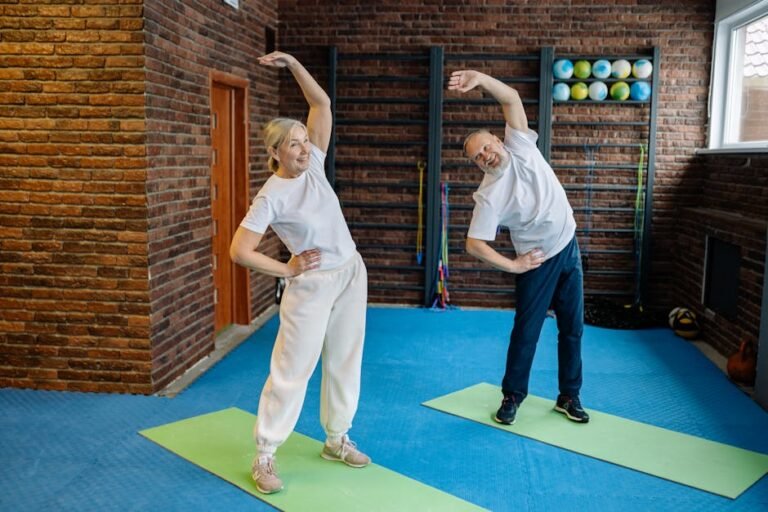
- Make it social. Invite a friend or family member for a light walk, a chair yoga session, or a stretching routine. Having company makes movement more enjoyable and adds a layer of safety.
- Hydrate well. Drink water before, during, and after activity, and avoid exercising hard in very hot weather — plan for cooler parts of the day or move indoors when temperatures are high.
- Set small, weekly goals. Something like “walk 10 minutes on three days this week” is specific, achievable, and worth celebrating. Keep a simple log of what you did and how it felt — this helps you spot progress and stay motivated.
When to Seek Professional Guidance
If you’re unsure where to begin, or if you have a new or worsening pain, dizziness, shortness of breath, chest discomfort, or any episode of fainting, please consult your doctor or a physical therapist before starting or continuing an exercise routine. These symptoms deserve proper attention, and a healthcare professional can help identify any underlying issues and guide you safely.
A physical therapist in particular can be an incredible resource. They can design a programme tailored specifically to your needs, demonstrate safe progressions, and give you targeted exercises to improve balance and reduce fall risk — especially valuable if balance challenges are something you’re dealing with. For those managing conditions like arthritis, diabetes, heart disease, or osteoporosis, a professional can adapt activities to protect your joints and bones while keeping you moving.
Don’t wait until something goes wrong to seek help. A few sessions with a professional at the start of a new exercise routine can set you up with the knowledge and confidence to move safely on your own for years to come. Think of it as an investment in your independence.
A Simple Starter Plan You Can Begin This Week
If you’re looking for a concrete place to begin, here’s a gentle weekly framework you can adapt to your own fitness level and schedule. On three days a week, aim for 10 minutes of easy walking (indoors or out), five minutes of seated or standing strength moves (like leg lifts or heel raises), and five minutes of balance and flexibility work (heel-to-toe walking near a chair, or gentle stretching). That’s just 20 minutes, three times a week — a very achievable starting point.
Each week, try adding one extra minute to your walking time, and introduce one new balance exercise as your comfort grows. On the days in between, keep things light: a short five-to-10-minute stroll, some gentle housework, or a brief stretch routine is all you need. Rest days are not wasted days — they are when your body absorbs the benefits of the movement you’ve done.
Track how you feel as you go. Not just your physical progress, but your mood, your energy levels, your confidence. These are often the first signs that regular movement is working its magic. Celebrate every small win — an extra minute walked, a balance exercise completed without holding on, waking up feeling less stiff than you did the week before. These moments matter, and they add up to something significant over time.
The Bottom Line: Learning how to stay active without overdoing it is really about building a kind, sustainable relationship with your body. It means choosing movement that suits your life, pacing yourself wisely, celebrating small victories, and asking for help when you need it. You don’t have to push to the limit to experience real, meaningful benefits — gentle, consistent movement is enough to protect your joints, improve your balance, lift your mood, and help you feel more capable and independent every day. Start small, stay patient, listen to your body, and keep gently moving forward. You absolutely deserve to feel energised, confident, and connected to a life you love.
This is not medical advice. Consult your healthcare provider before starting any new health routine or using any product mentioned here.