Senior-Friendly Leg Stretch Routine: Keep Your Legs Flexible, Strong, and Comfortable
This post contains affiliate links. As an Amazon Associate, I earn from qualifying purchases at no extra cost to you.
Free resources — no credit card required for trial
🎧 Listen to health & wellness audiobooks free for 30 days
Start 30-Day Free Trial →
🛒 Recommended Products
As an Amazon Associate we earn from qualifying purchases at no extra cost to you.
TheraBand First Step to Active Health Kit — Senior Exercise Program for Balance and Fall P
$19.99
EZ Off Jar Opener for Seniors — Under Cabinet Jar Opener for Weak Hands and Arthritis
$9.99
Omron 5 Series Upper Arm Blood Pressure Monitor — 2-User 100-Reading Memory Wide-Range Cuf
$44.99
OMRON 7 Series Wireless Wrist Blood Pressure Monitor — Clinically Validated with Connect A
$69.99
Vitality 4 Life Senior Resistance Band with Instruction Guide — Specifically for Elderly F
$16.99
📚 Read unlimited health books free for 30 days
Try Kindle Unlimited Free →
If your legs feel stiff in the morning, your knees ache after sitting too long, or you’ve noticed that getting up from a chair takes a little more effort than it used to — you’re not alone, and you’re in exactly the right place. A gentle, senior-friendly leg stretch routine can make a real difference in how you feel every single day. We’re not talking about an intense workout or anything that requires special equipment. Just a few minutes of intentional movement, done consistently, can improve your flexibility, ease joint discomfort, support your balance, and help you move through daily life with more confidence and less pain. Whether you’re 60, 75, or 90, this routine is designed with your body in mind — and you can start today.
Why a Leg Stretch Routine Matters for Seniors
As we get older, our muscles naturally become shorter and tighter if we don’t actively stretch them. Tendons lose some of their elasticity, joints can become stiffer, and circulation in the legs can slow down. The good news? Gentle, regular stretching is one of the most effective things you can do to push back against these changes — and it doesn’t take an hour at the gym to see results.
Think about the movements you do every day: putting on socks or shoes, getting in and out of a car, climbing a few steps, walking a few blocks, or simply standing up from a low chair. All of these everyday actions rely on flexible, mobile legs and hips. A consistent leg stretch routine helps keep those muscles and joints ready for real life. Beyond flexibility, stretching also supports circulation — moving your legs encourages blood flow, which can reduce that heavy or swollen feeling that many older adults experience after long periods of sitting.
Perhaps most importantly, better flexibility supports better balance. Steadier legs and more mobile ankles mean you’re less likely to stumble or fall — and that sense of physical confidence has a wonderful ripple effect on your mood and overall well-being. This isn’t about achieving perfect flexibility. It’s about taking small, steady steps toward feeling better in your body.
Safety First: What to Know Before You Start
Before beginning any new exercise routine — including gentle stretching — it’s worth having a quick conversation with your healthcare provider, especially if you have knee, hip, or back problems, osteoporosis, a recent surgery, or any balance concerns. Your doctor or physical therapist can confirm that these movements are appropriate for your individual situation and suggest any modifications that would work better for you.
A few golden rules to keep in mind every time you stretch: Always warm up first with three to five minutes of gentle movement — marching in place, rolling your shoulders, or circling your ankles will do the trick. This prepares your joints and muscles so they’re ready to stretch safely. Never bounce through a stretch; instead, ease in slowly and smoothly until you feel a gentle pull — not pain. If something hurts sharply, stop immediately. A mild sensation of tension is normal; pain is not.
Make your stretching space as safe and comfortable as possible. That means good lighting, a non-slip floor or mat, and a sturdy chair or kitchen counter nearby for support. Wear non-slip shoes or grippy socks. Keep a glass of water handy and breathe steadily throughout — exhale as you stretch into the position, inhale as you release. These aren’t just tips; they’re habits that will keep you safe and help you get the most out of every session.
Your Step-by-Step Senior-Friendly Leg Stretch Routine
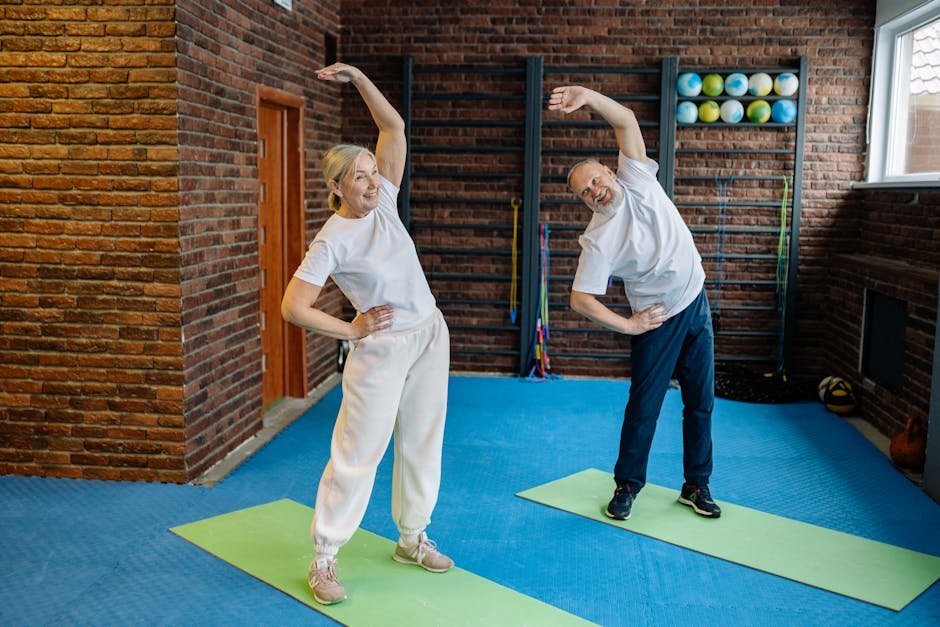
This routine includes seven gentle stretches targeting the hamstrings, calves, hips, quadriceps, inner thighs, and ankles. Aim to hold each stretch for 20 to 30 seconds when you’re starting out, and gradually work toward 40 to 60 seconds as you become more comfortable. Do one to two rounds of each stretch, and try to complete two to three sessions per week at first. You can always build from there.
1. Gentle Warm-Up (3–5 minutes): March in place, lifting your feet gently and swinging your arms. Follow with ankle circles — lift one foot and slowly rotate your ankle five to ten times in each direction, then switch feet. Finish with some shoulder rolls to loosen up your whole body before moving on.
2. Seated Hamstring Stretch: Sit toward the edge of a sturdy chair with both feet flat on the floor. Extend one leg straight out in front of you, heel on the floor, toes pointing up. Sit tall, then slowly hinge forward from your hips (not your back) until you feel a gentle stretch behind your thigh. Hold 20–30 seconds, then switch legs. If you feel tightness in your lower back, bend the knee slightly — you’ll still get a great stretch.
3. Seated Calf Stretch: Sit tall with one leg extended slightly in front, heel down and toes pointing up. If you have a stretching strap, belt, or towel, loop it around the ball of your foot and gently pull the toes toward you. You’ll feel a stretch in your calf. Hold 20–30 seconds per side. If you have knee pain, keep the knee slightly bent or support it with a rolled towel underneath.
4. Seated Figure-4 Hip Stretch: Sit tall in your chair. Place the outside ankle of one leg on the opposite knee, forming a “4” shape. Gently press the bent knee open to the side with your hand and feel the stretch in your hip and outer thigh. For a deeper stretch, hinge slightly forward from your hips while keeping your back straight. Hold 20–30 seconds, then switch sides. If crossing your leg is uncomfortable, try placing a small pillow under the elevated knee for support.
5. Standing Quadriceps Stretch with Chair Support: Stand behind a sturdy chair and hold the backrest for balance. Bend one knee and bring your heel toward your bottom. Hold your ankle with your hand, or use a strap looped around your ankle if reaching is difficult. Keep your knees close together and avoid arching your lower back. Feel the stretch along the front of your thigh, hold 20–30 seconds, then switch legs.
6. Ankle Mobility Exercise: Seated with one foot slightly lifted, point your toes forward and then back toward you — repeat slowly eight to ten times. Then do five to ten gentle circles in each direction. Switch to the other foot. This simple movement keeps your ankles flexible and improves circulation, both of which are important for walking steadily and safely.
7. Seated Inner-Thigh Stretch: Sit toward the edge of your chair and bring the soles of your feet together, letting your knees fall open to the sides. Sit up tall and feel a gentle stretch in your inner thighs. You can gently press your elbows on your knees to deepen the stretch slightly — but never force it. Hold 20–30 seconds. If your knees feel uncomfortable, place a small cushion under each one or move your feet farther away from your body for a gentler angle.
Finish your session with a slow, deep breath and a moment to notice how your body feels. This cool-down is a small but meaningful act of self-care — it signals to your body and mind that the session is complete.
Practical Tips: How to Make This Routine Stick
Knowing the stretches is one thing — building a consistent habit is another. Here are some practical, realistic strategies to help you make this senior-friendly leg stretch routine a regular part of your life:
- Start small: Commit to just two sessions this week. Even a 10-minute routine counts, and small wins build momentum.
- Pair it with an existing habit: Do your stretches after brushing your teeth in the morning, before your favorite TV show, or right after lunch. Linking a new habit to an existing one makes it easier to remember.
- Track how you feel, not just what you do: After each session, jot down one word about how you feel — “looser,” “calmer,” “less stiff.” Over time, these notes become wonderful motivation.
- Use a sturdy chair you love: Having a comfortable, reliable chair designated for stretching makes the whole experience more inviting. Look for one with a firm, non-slip base.
- Invest in a simple stretching strap or resistance band: These affordable tools (available on Amazon) make several of the stretches much easier if you have limited flexibility or trouble reaching your feet.
- Invite a friend or family member: Stretching with someone else is more enjoyable and adds an element of gentle accountability. A caregiver, spouse, or neighbor can join you or simply sit nearby for company and safety.
- Be kind to yourself on tough days: If you only manage one or two stretches on a difficult day, that still counts. Progress isn’t always linear, and every little bit of movement matters.
- Hydrate: Drink a glass of water before and after your session to support circulation and muscle health.
- Share the routine with your care team: If you work with a physical therapist, home care provider, or doctor, show them this routine and ask for any personalized adjustments.
Special Considerations for Common Health Conditions
This routine has been designed to be gentle and adaptable, but it’s worth knowing how to modify it for some of the most common health concerns among older adults. If you have a knee or hip replacement, avoid deep bending or twisting at those joints. Focus on gentler angles and always prioritize support. The seated stretches in this routine are generally excellent options for post-replacement mobility.
For those living with osteoarthritis or osteoporosis, stick to low-impact, controlled movements and never push a joint beyond its comfortable range. Pain is a signal to back off, not push through. If you experience dizziness at any point — whether during a standing stretch or even a seated one — sit or lie down right away and rest until it passes. Never stretch while standing if balance is a significant concern for you; all of the seated options in this routine provide equally valuable benefits.
If you notice that soreness or discomfort lasts more than 24 to 48 hours after a stretching session, that’s a sign to check in with your healthcare provider before continuing. Some muscle awareness is normal; persistent pain is not. And remember: modifications are not a sign of weakness — they’re a sign of wisdom. Adapting a stretch to meet your body where it is today is exactly the right approach.
The Real Benefits of a Consistent Leg Stretch Routine for Seniors
So what can you actually expect to notice if you stick with this routine over time? The benefits go far beyond just “feeling less stiff” — though that alone is wonderful. Improved flexibility means smoother, easier movements throughout your day. Tying your shoes becomes less of a project. Getting in and out of the car feels more manageable. Walking a few blocks feels steadier and more enjoyable.
Better flexibility also supports better posture, and better posture can actually reduce fatigue. When your body is aligned well and moving freely, you use less energy to do the same tasks — which means you have more energy left over for the things you love. Many people also report that a regular gentle stretching routine improves their mood. There’s something genuinely uplifting about taking a few quiet minutes to care for yourself each day — it builds self-confidence and reinforces the message that your health and comfort matter.
Circulation is another quietly powerful benefit. Stretching and gently moving your legs encourages blood flow, which can ease that heavy, tired feeling in the legs that many seniors experience, particularly after long periods of sitting. Healthy circulation also supports skin health and helps your body recover from the natural wear and tear of daily life. These aren’t dramatic changes — but they add up meaningfully over weeks and months of consistent practice.
The Bottom Line: A senior-friendly leg stretch routine doesn’t need to be complicated, long, or intense to be genuinely effective. Just a few minutes of gentle, consistent stretching a few times per week can improve your flexibility, ease stiffness, support your balance, boost circulation, and help you move through each day with greater comfort and confidence. Start with two short sessions this week. Use a sturdy chair for support, move slowly and with intention, and listen to your body every step of the way. Consistency always matters more than perfection — and every stretch you do is a small, meaningful investment in your own well-being. You deserve to feel comfortable, capable, and confident in your body.
This is not medical advice. Consult your healthcare provider before starting any new health routine or using any product mentioned here.