The Link Between Posture and Mobility: Simple Ways to Move More Freely in Later Life
This post contains affiliate links. As an Amazon Associate, I earn from qualifying purchases at no extra cost to you.
Free resources — no credit card required for trial
🎧 Listen to health & wellness audiobooks free for 30 days
Start 30-Day Free Trial →
🛒 Recommended Products
As an Amazon Associate we earn from qualifying purchases at no extra cost to you.
TheraBand First Step to Active Health Kit — Senior Exercise Program for Balance and Fall P
$19.99
EZ Off Jar Opener for Seniors — Under Cabinet Jar Opener for Weak Hands and Arthritis
$9.99
Omron 5 Series Upper Arm Blood Pressure Monitor — 2-User 100-Reading Memory Wide-Range Cuf
$44.99
OMRON 7 Series Wireless Wrist Blood Pressure Monitor — Clinically Validated with Connect A
$69.99
Vitality 4 Life Senior Resistance Band with Instruction Guide — Specifically for Elderly F
$16.99
📚 Read unlimited health books free for 30 days
Try Kindle Unlimited Free →
Have you ever noticed how much easier it feels to walk, reach, or climb stairs on days when your body feels well aligned and relaxed? That’s no coincidence — and it’s exactly why the link between posture and mobility matters so much as we get older. Good posture isn’t about standing ramrod straight or looking like a soldier on parade. It’s about helping your bones, joints, and muscles work together smoothly so that everyday life feels less like a struggle and more like second nature. The good news? You don’t need a gym membership or an hour-long routine. Small, consistent steps toward better posture can make a real and noticeable difference in how you move, feel, and enjoy your days.
Why Posture and Mobility Are So Closely Connected
Think of your body as a carefully balanced structure — like a tower of building blocks. When the blocks are stacked neatly, the whole thing is stable and efficient. When they’re out of line, even small movements require extra effort to compensate. That’s essentially what happens when posture is off. A slouched back, a head that juts forward, or hips that tilt unevenly can quietly create tension and strain across your entire body, making movement feel harder and more tiring than it needs to be.
When posture is well aligned, your spine stays properly supported, your chest has room to breathe fully, and your hips and legs can move more freely. This directly translates to better mobility for the activities you care about most — getting in and out of a chair, climbing stairs, cooking a meal, tending to the garden, or keeping up with grandchildren. The two really are inseparable: improve your posture, and your mobility tends to improve right along with it.
As we age, joints can naturally stiffen, muscles may lose some of their strength, and balance can feel a little less certain. But these changes don’t have to mean giving up on easy, confident movement. Understanding the connection between posture and mobility is the first step toward doing something practical and positive about it.
Common Posture Challenges That Affect How Seniors Move
It helps to know what you’re working with. Several common posture patterns can quietly chip away at mobility over time, and many of them develop gradually — so gradually that you might not even notice until moving starts to feel harder than it used to.
Rounded shoulders and a curved upper back are extremely common, often from hours of sitting, looking at screens, or leaning over a phone. This position can make breathing feel shallower and leave the neck and upper back chronically sore — which in turn makes standing and walking more tiring. Weak core and back muscles mean the spine isn’t well supported, so even simple tasks like standing up from a chair or reaching for something on a high shelf can become surprisingly challenging.
Tight chest and hip muscles are another culprit. Tight chest muscles pull the shoulders forward, while tight hip flexors (often from extended sitting) can limit how well you hinge at the hips — making bending, twisting, and walking feel stiff and guarded. Add in the very understandable effects of fear of falling, past injuries, or pain from conditions like arthritis or osteoporosis, and it’s easy to see why so many people gradually move less, brace more, and lose some of their natural, flowing movement over time. The reassuring truth, however, is that gentle, targeted effort can genuinely reverse many of these patterns.
What You Can Do: Practical Tips to Improve Posture and Support Mobility
You don’t need to overhaul your entire routine. Starting with just a few simple habits and exercises can create a foundation that grows stronger over time. Here are practical, safe strategies you can begin using today:
- Do hourly posture checks. Set a gentle reminder on your phone once an hour. When it goes off, pause and reset: stand or sit tall, relax your shoulders, level your chin, and make sure your weight is roughly even on both feet.
- Sit well to move well. Choose a chair with good back support, and place a small rolled towel or lumbar cushion behind your lower back. Keep feet flat on the floor with knees at about hip height. This alone can reduce the strain that builds up during long periods of sitting.
- Stand with the “string” technique. Imagine a gentle string pulling the top of your head toward the ceiling. Let your ears stack over your shoulders, your hips over your ankles, and allow your shoulders to relax and glide down your back. It’s a subtle shift that makes a real difference.
- Try a chest doorway stretch. Stand in a doorway, place your forearms on the frame, and step forward slowly until you feel a gentle stretch across your chest. Hold for 15–30 seconds and repeat 2–3 times. This helps counteract rounded shoulders beautifully.
- Practice chin tucks. Sit or stand tall and gently tuck your chin back as if holding a small apple under it — keeping your head level. Hold for 5–10 seconds and repeat 10 times. This simple move helps realign the head and neck and relieves tension.
- Do seated shoulder blade squeezes. Sit tall, squeeze your shoulder blades together, hold for 5 seconds, then release. Repeat 10–15 times. This counteracts the forward pull that builds up from daily activities.
- Try pelvic tilts. Lie on your back with knees bent and feet flat. Press the small of your back gently toward the floor by tensing your belly and tilting your pelvis slightly. Hold for 5 seconds, then release. Do 10–15 repetitions. This strengthens the core and supports the lower back.
- Practice chair squats. Stand in front of a sturdy chair, feet shoulder-width apart. Sit back with control, then stand up slowly without using your arms if you can. Aim for 10–12 repetitions. This builds the hip and glute strength that supports walking and standing.
- Try calf raises with support. Stand behind a sturdy chair and hold the back for balance. Rise onto your toes, then slowly lower back down. Do 10–15 reps to support balance and keep your ankles flexible.
- Wear supportive footwear. Shoes with a non-slip sole and good arch support make it easier to stand tall and move safely — it’s a small detail with a surprisingly large impact.
- Distribute weight when carrying bags. Use a backpack, or split weight between both hands, to avoid leaning to one side and disrupting your natural alignment.
- Make your home ergonomics work for you. Keep your computer screen at eye level, use a seat with back support in the car, and adjust the headrest so your neck stays comfortable during journeys.
The key is to weave these habits into your existing routine rather than treating them as a separate chore. A quick posture check while the kettle boils, a shoulder squeeze while watching television — these micro-moments of awareness add up.
A Simple 5-Minute Daily Posture Routine You Can Start Today
One of the most powerful things you can do for your posture and mobility is to commit to a short, consistent daily routine. Five minutes each morning — before you’ve even had breakfast — can begin to make a genuine difference over the course of a few weeks. Here’s a gentle, step-by-step sequence that’s safe for most adults:
1. Pelvic tilts (lying on your back): 10 repetitions. 2. Chin tucks: 10 repetitions. 3. Wall angels: Stand with your back to a wall, arms in a “W” shape, and gently slide them up into a “Y” shape. Do 8–12 repetitions — this mobilises the upper back and reinforces good shoulder alignment. 4. Chest doorway stretch: 2 sets of 15–30 seconds. 5. Seated shoulder blade squeezes: 2 sets of 10–15 repetitions.
You can also add a seated ankle and leg routine to improve circulation and reduce stiffness before standing. Simply sit with your back supported, lift one foot a few inches, then flex and point your toes 10 times per leg. It’s a gentle way to wake up the lower limbs and make that first stand of the day feel smoother.
And don’t overlook balance practice. Standing with feet together near a wall for 20–30 seconds, progressing to a tandem stance (one heel in front of the other) as you grow steadier, is a simple habit that supports fall prevention and confidence — two things that are deeply intertwined with how freely you move through each day.
Real-Life Wins: What Better Posture Can Look Like Day to Day
It can be easy to feel sceptical about whether small daily habits can really make a meaningful difference. But the benefits of improved posture and mobility show up in wonderfully practical ways that matter in real life. Think about reaching the high shelf in the kitchen without wincing, or standing up from the sofa smoothly without needing to push off with both hands. Think about walking the dog and feeling steadier on uneven pavements, breathing more easily as you go.
Better posture supports fuller lung expansion, which often translates to feeling less breathless during everyday activities — whether you’re climbing stairs or carrying shopping bags. Strengthening the muscles that support good alignment also builds the stability that helps you navigate kerbs, steps, and uneven surfaces with more confidence. And perhaps most importantly, these improvements feed a sense of independence and personal control that is genuinely uplifting.
The fear of falling is real and understandable for many older adults, and it can gradually shrink the world by making people reluctant to move freely. Working on posture and balance doesn’t just reduce the risk of falls — it rebuilds confidence, and confidence changes everything about how you move through your day.
Safety First: When to Check with a Professional
While the exercises and habits described here are designed to be gentle and safe for most adults, there are situations where it’s wise to get personalised guidance before starting. If you have osteoporosis with a history of fractures, or you’ve been advised by a healthcare provider to avoid certain movements, please check with your doctor or a physiotherapist before beginning any new exercise routine. The same applies if you have any recent injuries, unresolved joint pain, or a condition that affects your balance or coordination.
Stop any activity immediately and seek medical advice if you experience sudden or severe pain, numbness, tingling, or weakness in your legs. If you feel dizzy, faint, or unsafe at any point, sit down calmly and either modify the activity or stop altogether. Your safety always comes first — there is no benefit worth pushing through a warning sign your body is sending you.
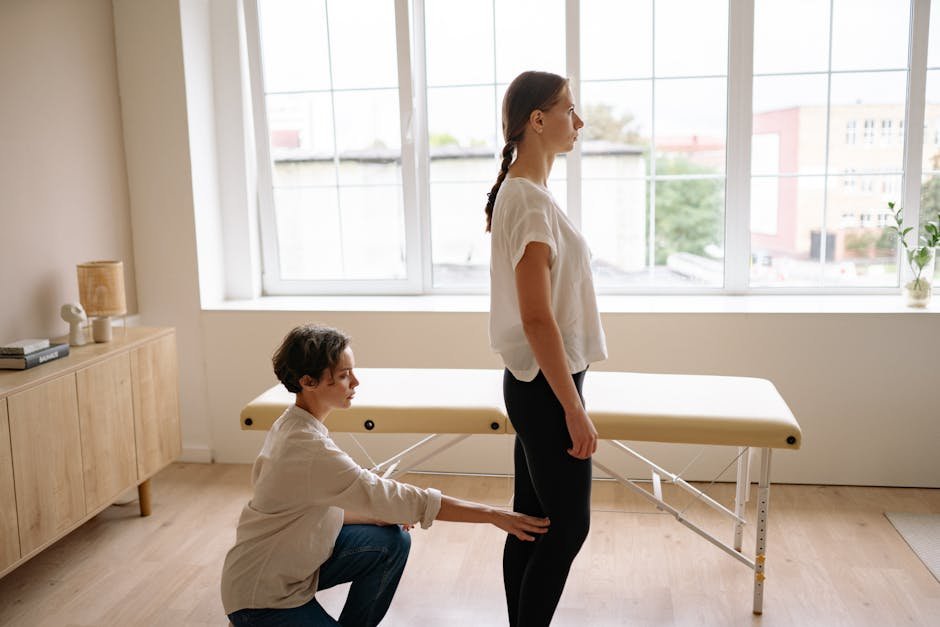
A physiotherapist or an exercise professional with experience in working with older adults can be an invaluable guide, especially if you’re new to posture-focused movement or managing a health condition. Many offer one-to-one sessions or even virtual consultations, making access easier than ever before.
The Bottom Line: The link between posture and mobility is real, well established, and — most encouragingly — something you have a genuine ability to influence, no matter your age or starting point. Good posture supports mobility by aligning your spine, core, and limbs so that daily activities feel more natural and less taxing. It’s not about achieving “perfect posture” but about making gradual, practical improvements you can actually maintain. Start small: sit with proper back support, stand tall with your head gently aligned, try a few chest and upper-back stretches, and add some gentle strengthening and balance moves. Pair these with mindful everyday habits — short posture checks, comfortable footwear, and thoughtful ergonomics at home. With patience and consistency, you’re likely to notice better movement, less discomfort, and a greater sense of freedom to do the things you love most.
This is not medical advice. Consult your healthcare provider before starting any new health routine or using any product mentioned here.