Proprioceptive Alterations in Pathological Spines: What Happens When Your Back’s Internal GPS Goes Wrong
This post contains affiliate links. As an Amazon Associate, I earn from qualifying purchases at no extra cost to you.
Free resources — no credit card required for trial
🎧 Listen to health & wellness audiobooks free for 30 days
Start 30-Day Free Trial →
📚 Read unlimited health books free for 30 days
Try Kindle Unlimited Free →
Have you ever wondered why a back problem that started small can sometimes spiral into months of pain, awkward movement, and frustrating limitations? The answer often lies deeper than the injury itself — and it has everything to do with a hidden communication system inside your body called proprioception. When your spine develops a pathological condition — whether that’s a herniated disc, scoliosis, or instability — your muscles jump into protective mode almost instantly. That’s the good news. The not-so-good news is that these muscular adaptations can quietly distort the signals your brain receives about your body’s position in space, leading to what researchers call proprioceptive alterations in pathological spines. Understanding this process could be the missing piece in your journey back to feeling strong, balanced, and pain-free.
Your Spine Is So Much More Than a Stack of Bones
Most of us think of the spine as simply the backbone — the column of bones running down our back. But that description barely scratches the surface. Your spine is actually one of the most sophisticated structures in the human body: 33 individual vertebrae stacked in a carefully balanced curve, cushioned by soft gel-like discs that absorb shock, held together by ligaments, and powered by an intricate web of muscles. Running right through the centre of this bony tunnel is your spinal cord — the central motorway of your nervous system, carrying messages between your brain and virtually every part of your body.
This interconnected system gives you the freedom to bend forward to tie your shoes, twist to look over your shoulder, and sit comfortably through a long workday. When everything is working in harmony, your spine just gets on with the job quietly and efficiently. You barely notice it. But that beautiful complexity also means that when one part of the system is disrupted, the ripple effects can be felt far and wide. A problem in a single disc, joint, or muscle group doesn’t just stay local — it can change the way your entire spine moves and communicates with your brain.
That brain-spine communication is where proprioception comes in. Tiny sensory receptors called proprioceptors are embedded throughout your muscles, tendons, and joints. They fire constantly, sending your brain a real-time stream of information about where your body is in space, how much effort your muscles are using, and how fast you’re moving. Think of them as your body’s internal GPS — always tracking, always updating. When your spine is healthy and functioning well, that GPS is accurate and reliable. When things go wrong with the spine, the GPS can start giving faulty readings — and that’s where the real trouble begins.
What Happens to Your Spine During a Pathological Condition
Spinal pathologies cover a wide range of conditions, and they’re more common than many people realise. A herniated disc — sometimes called a slipped disc — occurs when the soft material inside a spinal disc pushes outward and presses on nearby nerves. Scoliosis is an abnormal sideways curvature of the spine that can develop at any age. Segmental instability refers to a section of the spine that is slightly too mobile, lacking the controlled movement it needs to function safely. Even necessary surgical procedures can change the mechanical environment of the spine in ways that the surrounding tissues need to adapt to.
Whatever the specific condition, the body’s initial response follows a remarkably consistent pattern: the muscles surrounding the affected area go on high alert. If a nerve is being irritated, nearby muscles tighten and spasm to lock down that segment and prevent further painful movement. If there’s instability, the muscles work overtime to compensate for what the passive structures — the bones, ligaments, and discs — can no longer do on their own. These are called adaptive responses, and in the short term, they are genuinely heroic. Your body is doing exactly what it was designed to do: protect you.
But here’s the crucial part that often gets overlooked: when muscles change how they work, they also change the information they send to your brain. Chronically tight, overworked, or altered muscles send different proprioceptive signals — distorted readings from that internal GPS. Your brain starts building a less accurate map of where your spine is and how it’s moving. This is what proprioceptive alteration looks like in practice. Movements that should feel natural begin to feel uncertain or awkward. Balance may be subtly compromised. And because your body is no longer moving with optimal efficiency, new stresses are placed on structures that weren’t originally involved in the problem.
The Double-Edged Sword: When Protective Patterns Become Problems
It might seem strange to think that your body’s own protective responses could become part of the problem — but that’s exactly what can happen when a spinal condition isn’t resolved, or when compensatory muscular patterns are allowed to persist for too long without being addressed. What begins as a short-term rescue mission can quietly evolve into what’s known as a maladaptive pattern: a strategy that no longer serves a useful purpose and may actually be contributing to ongoing pain and dysfunction.
Chronic muscle tightness is one of the most common examples. Muscles that spasmed to guard a painful area may stay in a state of sustained tension long after the original threat has eased. That constant tightness becomes its own source of discomfort, limiting flexibility and reducing the range of motion you need for everyday activities. Over time, muscle imbalances can develop too — some muscles become overworked and excessively tight while others, no longer being properly recruited, grow weak and underactive. The deep stabilising muscles of the core are particularly vulnerable to this kind of shutdown in response to spinal pain.
Altered movement patterns are another significant concern. To avoid triggering pain, people unconsciously begin moving differently — hunching forward, favouring one side, or changing the mechanics of how they lift, walk, or sit. While these strategies might offer short-term relief, they load the spine and surrounding tissues unevenly, planting seeds for new problems further down the road. And because these altered patterns reinforce distorted proprioceptive signals, they can make it genuinely harder for the brain to guide efficient, safe movement. The result is a cycle that can feel very difficult to break: pain leads to compensation, compensation disrupts proprioception, disrupted proprioception leads to poor movement, and poor movement perpetuates pain.
Understanding the Brain-Spine Connection in Pathological Conditions
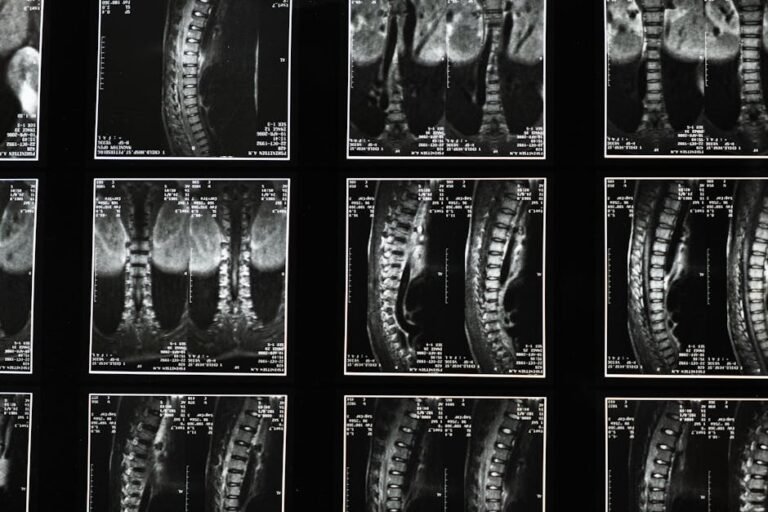
Modern spine health research has moved well beyond simply looking at bones and discs on a scan. Experts now recognise the spine as a fully integrated system where the passive structures (bones, ligaments, and discs), the active muscular system, and the neural control mechanisms — including proprioception — are all deeply and dynamically connected. A disc problem isn’t just a disc problem. It changes muscle behaviour, which alters proprioceptive signals, which affects how your brain interprets your body’s position, which ultimately influences how you move and how much pain you experience.
Think of it like a symphony orchestra. Every section has a role to play, and when everything works together, the performance is seamless and beautiful. But if one section starts playing out of tune — even slightly — the others begin compensating. The overall harmony suffers. The performance becomes strained, effortful, and far less enjoyable for everyone involved. Restoring that harmony requires more than fixing the one instrument that went wrong. It requires retuning the whole ensemble.
This is why so many people find that treating only the structural source of their spinal pain — the disc, the joint, the curve — doesn’t always deliver complete or lasting relief. The muscular adaptations and proprioceptive alterations that have built up over time also need to be addressed. Rehabilitation that deliberately works to retrain the body’s sense of position and movement, alongside strengthening and flexibility work, tends to produce significantly better long-term outcomes than structural treatment alone.
What You Can Do: Practical Tips for Supporting Your Spine and Proprioception
The encouraging news is that your spine and its muscular support system are remarkably resilient. With the right approach, it is absolutely possible to break the cycle of compensation and dysfunction, retrain your proprioceptors, and restore more comfortable, confident movement. Here are some practical, evidence-informed steps you can take to support your spinal health from the inside out:
- Listen to your body early. Persistent aches, stiffness, or a sense of instability in your back are your body’s way of asking for attention. Don’t wait for a small issue to become a chronic one. Early intervention makes a significant difference.
- Keep moving gently and regularly. Movement is medicine for your spine. Walking, swimming, gentle cycling, and targeted stretching all help maintain flexibility, promote blood flow to spinal tissues, and — crucially — keep your proprioceptors active and responsive.
- Be mindful of your posture throughout the day. How you sit, stand, and move matters enormously. Good posture keeps your spine in better alignment, reduces unnecessary stress on discs and ligaments, and allows your muscles to work more efficiently without overcompensating.
- Build a strong, balanced core. The deep muscles of your abdomen, back, and pelvic floor act as a natural internal corset for your spine. Strengthening these muscles — intelligently and progressively — provides the spine with the stable foundation it needs to move freely and safely.
- Try balance and proprioceptive training. Simple exercises like standing on one leg, using a balance board, or practising tai chi or yoga can actively retrain your body’s sense of position. These activities help recalibrate your internal GPS after a period of spinal difficulty.
- Work with a qualified professional. A physical therapist, osteopath, or chiropractor can assess your specific situation, identify maladaptive patterns you may not even be aware of, and design a personalised rehabilitation programme that targets both the underlying condition and the proprioceptive disruption it has caused.
- Address stress and its physical effects. Emotional and psychological stress causes muscles to tighten throughout the body, including around the spine. Practices like mindfulness meditation, deep breathing, and yoga can help reduce this baseline muscle tension and foster a healthier mind-body connection.
- Be patient and consistent. Retraining the neuromuscular system takes time. Consistency with gentle, targeted movement will achieve far more than occasional intense bursts of activity. Small, steady progress adds up to lasting change.
If you’re looking for tools to support your rehabilitation at home, foam rollers, resistance bands, and balance boards can be genuinely useful additions to a guided exercise programme. Look for options on Amazon that are well-reviewed and appropriate for your fitness level — and always check with your healthcare provider before starting anything new.
Why a Holistic Approach to Spine Health Produces the Best Results
One of the most empowering shifts you can make in how you think about spinal health is moving away from a purely structural view — the idea that back pain is simply about what shows up on a scan — and toward a more integrated understanding of how your entire system works together. Bones, discs, muscles, nerves, and the brain are not separate entities that can be fixed in isolation. They form one interconnected system, and lasting recovery usually requires attention to all of its components.
This is particularly true when proprioceptive alterations have developed as a result of a spinal pathology. Even after the original structural problem has been treated or managed, the distorted movement patterns and faulty proprioceptive signals may persist unless they are directly addressed. This is not a reason to feel discouraged — quite the opposite. It means there are active, meaningful steps you can take beyond simply waiting for a disc to heal or relying solely on pain medication. You can participate in your own recovery in a very real and effective way.
Rebuilding your body’s internal GPS takes time, consistency, and the right guidance — but it is entirely achievable. People recover from complex spinal conditions every day, not by suppressing their symptoms but by understanding what their body needs and responding with patience, movement, and care. Your spine has carried you through everything life has thrown at you so far. With the right support, it can continue to do so for many years to come.
The Bottom Line: When the spine develops a pathological condition — whether a herniated disc, scoliosis, instability, or another issue — the body responds with muscular adaptations designed to protect and stabilise. While these responses are initially helpful, they can lead to chronic tightness, muscle imbalances, altered movement patterns, and importantly, proprioceptive alterations that distort your brain’s sense of where your spine is in space. This disruption to the body’s internal GPS can perpetuate a cycle of pain and dysfunction that goes well beyond the original structural problem. The good news is that this cycle can be broken. Through gentle regular movement, core strengthening, proprioceptive retraining, good posture habits, and professional guidance, you can help your spine and its supporting muscular system find their way back to balance, resilience, and pain-free function.
This is not medical advice. Consult your healthcare provider before starting any new health routine or using any product mentioned here.