The Biomechanics of Dynamic Spinal Movement: How Your Spine Balances Strength and Flexibility
This post contains affiliate links. As an Amazon Associate, I earn from qualifying purchases at no extra cost to you.
Free resources — no credit card required for trial
🎧 Listen to health & wellness audiobooks free for 30 days
Start 30-Day Free Trial →
📚 Read unlimited health books free for 30 days
Try Kindle Unlimited Free →
Here’s something most of us never think about: from the moment your alarm goes off in the morning to the second your head hits the pillow at night, your spine is working non-stop. It bends, twists, absorbs shocks, and holds you upright — all without you giving it a second thought. Yet understanding the biomechanics of dynamic spinal movement, and truly appreciating what your spine does every single day, can be the first step toward taking much better care of it. Whether you’ve been dealing with nagging back pain or you simply want to move through life with more ease and confidence, knowing how your spine actually works is genuinely empowering. Let’s take a closer look at this incredible structure and what you can do to keep it strong, supple, and resilient for years to come.
Your Spine’s Grand Design: A Remarkable Paradox in Motion
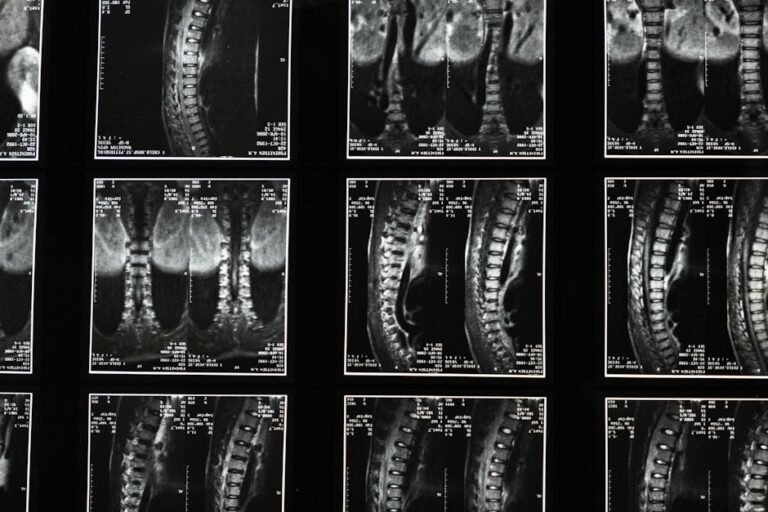
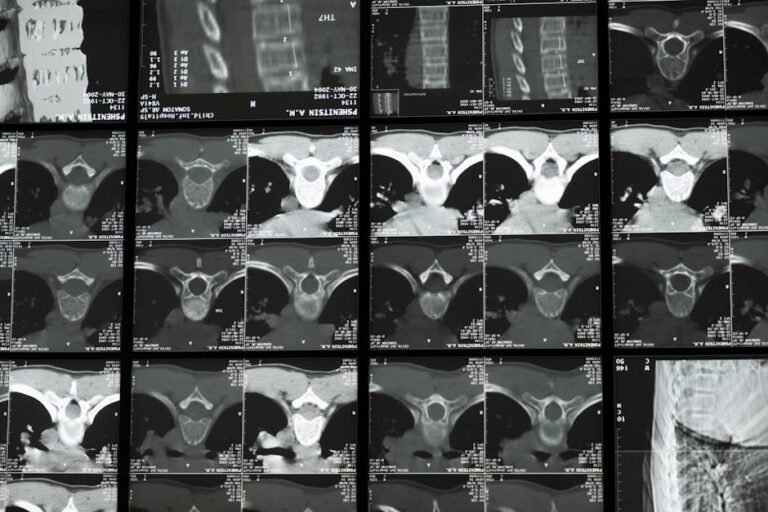
If someone asked you to design a structure that had to be both completely rigid and incredibly flexible at the same time, you’d probably laugh them out of the room. It sounds impossible. And yet, your spine does exactly this — every single day — with breathtaking elegance. On one hand, your spinal column is a robust, load-bearing pillar. It supports the weight of your entire upper body, transmits forces from your head all the way down to your pelvis, and forms a protective tunnel around your delicate spinal cord. That’s serious structural work.
On the other hand, this exact same structure is a highly flexible mechanism that lets you fold forward to touch your toes, arch backward, rotate to look over your shoulder, and move through a dazzling range of motion. Without this freedom of movement, life would be drastically limited. Think about picking up a child, swinging a tennis racket, or simply turning in your seat to grab something from the back of the car. All of that depends on your spine’s capacity for fluid, dynamic movement across multiple planes.
This dual identity — robust stability combined with dynamic flexibility — is what makes your spine one of the most sophisticated pieces of biological engineering in the natural world. When this balance is working well, you barely notice your spine at all. It’s only when something disrupts that intricate equilibrium that discomfort and limitation creep in. Understanding the biomechanics of dynamic spinal movement helps explain both why problems arise and what we can do to prevent them.
The Three Systems That Keep Your Spine Working in Harmony
Your spine doesn’t manage its remarkable dual role alone. Instead, it relies on three interconnected systems working in constant, seamless collaboration. Think of it like a symphony orchestra — each section has its part to play, and the magic only happens when they all work together in perfect timing.
The passive structures form the architectural foundation of your spine. These include the vertebrae (the individual bones that stack to form your spinal column), the intervertebral discs (those jelly-filled cushions sitting between each vertebra that act as phenomenal shock absorbers and allow movement between the bones), and the ligaments (strong, fibrous bands that connect everything together like tough, biological ropes). These structures give your spine its shape and inherent strength, but they’re not enough on their own to provide true dynamic stability.
The active muscular system is where the real action happens. Hundreds of muscles, both large and small, surround your spine and do far more than just help you lift heavy things. They initiate movement, but — crucially — they also control it. When you bend forward, for example, your back muscles work in a lengthening, controlled way to slow that movement down so you don’t simply topple over. Your deep core muscles are quietly firing almost all the time, making tiny adjustments to keep your spine protected and aligned, even during complex or unexpected movements.
The neurological control system is the master conductor of the whole operation. Your brain and nervous system are constantly receiving sensory feedback from nerves embedded throughout your muscles, ligaments, and joints — information about your position in space, the loads you’re carrying, and how your tissues are behaving. Your brain processes all of this in milliseconds and sends back precise instructions to your muscles. This is what allows you to react when you stumble, maintain your balance on an uneven surface, or catch a falling object before you’ve even consciously registered what’s happening.
What “Dynamic Stability” Really Means for Your Back
When most people hear the word “stability,” they picture something frozen and immovable — a statue, a brick wall, or a perfectly still tree on a windless day. But modern understanding of spinal biomechanics tells us something far more interesting: real spinal stability isn’t about being rigid. It’s about dynamic equilibrium. Your spine is stable not because it locks into place, but because it can constantly adapt, absorb, and return to balance throughout continuous movement.
Consider something as ordinary as walking. With every single step, your weight shifts, your pelvis tilts, forces travel up from the ground, and your spine must respond — absorbing impact, adjusting alignment, and maintaining your upright position. All of this happens without you thinking about it for even a fraction of a second. That is dynamic stability in its purest form. Or think about what happens when you trip slightly — before you’ve consciously registered the stumble, your muscles and nervous system have already begun firing a cascade of corrections to keep you upright. This instantaneous responsiveness is what the biomechanics of dynamic spinal movement is all about.
This is a genuinely important shift in thinking for anyone dealing with back issues or trying to prevent them. A healthy spine isn’t just a strong one — it’s a strong and adaptable one. It can maintain position under varying loads, control movement with precision, and recover quickly from unexpected disruptions. Building that kind of resilient, dynamic stability is the real goal of good spinal health — and it’s achievable with the right daily habits.
Why Everyday Life Puts Unique Demands on Your Spine
It might be tempting to think of spinal stress as something that only happens during heavy lifting or intense exercise. But the truth is, the demands on your spine are relentlessly varied throughout an ordinary day. Sitting hunched over a laptop for hours places sustained, compressive load on your discs in ways that are quite different from a morning jog or an afternoon of gardening. Each of these activities calls on your passive structures, muscles, and neurological control systems in a different way.
Prolonged static postures — like sitting at a desk for hours — can be particularly challenging. When you stay in one position for too long, your muscles fatigue, your discs can become unevenly loaded, and your nervous system receives less of the varied sensory feedback it needs to keep everything in good working order. Over time, this can contribute to stiffness, weakness, and an increased vulnerability to injury when you do suddenly move quickly or unexpectedly.
Movement variety, on the other hand, is genuinely nourishing for your spine. Your intervertebral discs don’t have a direct blood supply — they rely on the pumping action of movement to bring in nutrients and flush out waste. Regular, varied movement keeps your muscles engaged and responsive, maintains the suppleness of your ligaments, and keeps your neurological pathways sharp and well-practised. In other words, your spine thrives on being used — thoughtfully and consistently.
What You Can Do: Practical Tips to Support Your Spine’s Dynamic Biomechanics
The good news is that supporting the biomechanics of dynamic spinal movement doesn’t require a complete lifestyle overhaul. Small, consistent habits can make a genuinely significant difference over time. Here’s a practical toolkit to help you nurture all three of your spine’s key systems — passive, active, and neurological — in everyday life:
- Move mindfully throughout your day: Pay genuine attention to how you move during routine activities — bending to pick something up, reaching for a high shelf, or getting in and out of the car. Can you make those movements smoother and more controlled? Bringing awareness to your movement patterns sharpens your neurological control and reduces unnecessary strain.
- Strengthen your core intelligently: Your core muscles — including your abdominals, back muscles, and pelvic floor — are your spine’s built-in support system. Focus on exercises that build stability and controlled movement rather than brute force. Think planks, bird-dogs, and gentle Pilates-based exercises rather than aggressive crunches or heavy loaded movements if you’re just starting out.
- Break up prolonged sitting: Even a two-minute walk or a gentle stretch every 30–45 minutes can meaningfully reduce the load on your discs, re-engage your postural muscles, and refresh your nervous system. Set a timer if you need the reminder — your spine will thank you.
- Prioritise flexibility and mobility work: Gentle stretching and mobility exercises help keep your spinal column and surrounding tissues supple. Activities like yoga and Pilates are particularly well-suited because they combine flexibility with core engagement and body awareness — addressing all three of your spine’s key systems at once.
- Walk more: Regular walking is one of the simplest and most effective things you can do for your spine. It encourages blood flow, nourishes your discs through movement, keeps your muscles active, and reinforces the neurological pathways that underpin dynamic stability.
- Listen to your body’s signals: Persistent pain, stiffness, or a nagging sense of discomfort are your spine’s way of communicating that something needs attention. Don’t dismiss these signals or simply push through them. Seeking professional guidance early, from a physiotherapist, chiropractor, or your GP, is almost always more effective than waiting until a problem becomes entrenched.
None of these tips require expensive equipment or hours of time. What they do require is consistency and intention. Small investments in your spine’s health, made regularly, compound over time into significant improvements in how you feel and move.
The Bigger Picture: Why Understanding Spinal Biomechanics Matters
Back pain is one of the leading causes of disability worldwide, affecting hundreds of millions of people at some point in their lives. Yet so much of what contributes to spinal problems is rooted in simple misunderstandings about how the spine works — the belief that rest is always better than movement, that a strong back is the same as a rigid one, or that pain is simply an inevitable part of getting older. Understanding the true biomechanics of dynamic spinal movement challenges all of these assumptions.
Your spine is not a fragile structure that needs to be protected by avoiding movement. It is a dynamic, adaptive, brilliantly engineered system that actually thrives on movement — provided that movement is varied, controlled, and mindful. The more you understand about how your passive structures, active muscles, and neurological systems work together, the better equipped you are to make informed choices about your posture, your exercise habits, and when to seek professional support.
It’s also worth remembering that spinal health doesn’t exist in isolation. Stress, sleep quality, nutrition, and mental wellbeing all influence how your body manages pain and recovery. A holistic approach — one that combines movement, mindfulness, and healthy lifestyle habits — is almost always more effective than any single intervention on its own.
The Bottom Line: Your spine is one of the most extraordinary structures in the human body — a masterpiece of biological engineering that manages to be both powerfully strong and wonderfully flexible at the same time. Understanding the biomechanics of dynamic spinal movement reveals that true spinal health is about much more than avoiding injury; it’s about actively nurturing the interplay between your bones, discs, ligaments, muscles, and nervous system every single day. By moving mindfully, strengthening your core, staying consistently active, and listening to your body’s signals, you can support this incredible system and enjoy greater ease, freedom, and resilience in everything you do. Your spine has been working hard for you your entire life — it’s never too late to start giving it the care it deserves.
This is not medical advice. Consult your healthcare provider before starting any new health routine or using any product mentioned here.