Daily Stretching Routine for Upright Posture: A Gentle Guide for Older Adults
This post contains affiliate links. As an Amazon Associate, I earn from qualifying purchases at no extra cost to you.
Free resources — no credit card required for trial
🎧 Listen to health & wellness audiobooks free for 30 days
Start 30-Day Free Trial →
🛒 Recommended Products
As an Amazon Associate we earn from qualifying purchases at no extra cost to you.
TheraBand First Step to Active Health Kit — Senior Exercise Program for Balance and Fall P
$19.99
EZ Off Jar Opener for Seniors — Under Cabinet Jar Opener for Weak Hands and Arthritis
$9.99
Omron 5 Series Upper Arm Blood Pressure Monitor — 2-User 100-Reading Memory Wide-Range Cuf
$44.99
OMRON 7 Series Wireless Wrist Blood Pressure Monitor — Clinically Validated with Connect A
$69.99
Vitality 4 Life Senior Resistance Band with Instruction Guide — Specifically for Elderly F
$16.99
📚 Read unlimited health books free for 30 days
Try Kindle Unlimited Free →
If you’ve ever caught your reflection in a shop window and noticed your shoulders rounding forward, or felt that familiar ache in your neck after an afternoon of reading, you’re not alone. For many of us as we get older, maintaining upright posture starts to feel like a losing battle. But here’s the good news: a simple daily stretching routine for upright posture — one that takes less than 15 minutes — can make a genuine, lasting difference. Good posture isn’t just about looking confident or “standing tall.” It affects how easily you breathe, how steady you feel on your feet, and how much your neck, shoulders, and lower back ache at the end of the day. Whether you’re 60, 70, or beyond, small daily stretches can keep your spine aligned, your muscles responsive, and your confidence quietly growing.
Why Upright Posture Matters More As We Age
Aging naturally brings changes to the spine, muscles, and joints. Vertebrae can compress slightly, muscles lose some of their tone, and years of sitting at desks or looking at screens take a toll. The result is often a gradual forward lean — head moving ahead of the shoulders, shoulders rounding inward, and the lower back losing its natural curve. Over time, this can make everyday tasks like cooking, gardening, and walking feel more tiring and even a little risky for your balance.
Good posture, however, is genuinely practical. When your spine is gently upright, your lungs have more room to expand, so breathing feels easier. Your digestive organs sit more comfortably. Your neck and back muscles aren’t working overtime to support a head that’s drifting too far forward. And your centre of gravity stays more stable, which directly supports your balance and reduces the risk of falls — one of the most important health concerns for older adults.
The encouraging truth is that posture is trainable at any age. You don’t need to push through pain, join a gym, or buy expensive equipment. A consistent daily stretching routine for upright posture, done gently and mindfully, can retrain the muscles and remind your nervous system what “upright” actually feels like.
What You’ll Need Before You Start
One of the best things about this routine is how little equipment it requires. You most likely have everything you need already. Grab a sturdy chair with a solid back — not a wobbly stool — and position it near a wall for added stability if you need it. Clear a small space around you so you can move your arms freely without bumping into furniture.
A lightweight strap, a fabric belt, or even a long bath towel can come in handy for one of the stretches, helping you reach further without straining. Wear comfortable, loose clothing that doesn’t restrict your movement, and make sure you’re wearing non-slip shoes or grippy socks. Slippery feet on a hard floor are an unnecessary risk, so take a moment to sort that before you begin.
If you have osteoporosis, have had recent surgery, live with joint problems, or manage chronic pain, please check in with your doctor before starting any new stretching routine. This isn’t meant to alarm you — it’s simply good self-care to make sure the movements are right for your particular body.
Your Step-by-Step Daily Stretching Routine for Upright Posture
This routine takes around 8 to 12 minutes and covers all the key areas that support an upright spine: the neck, chest, upper back, shoulders, and hips. Move slowly and breathe steadily throughout. Inhale to prepare, and exhale as you ease into each stretch.
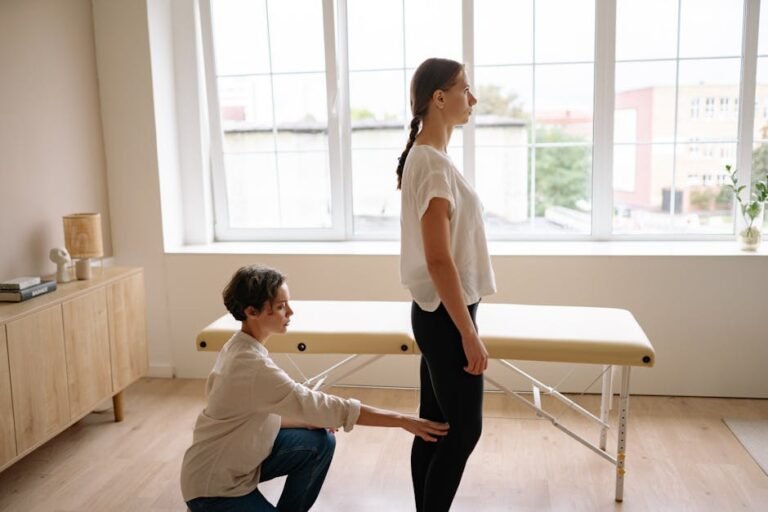
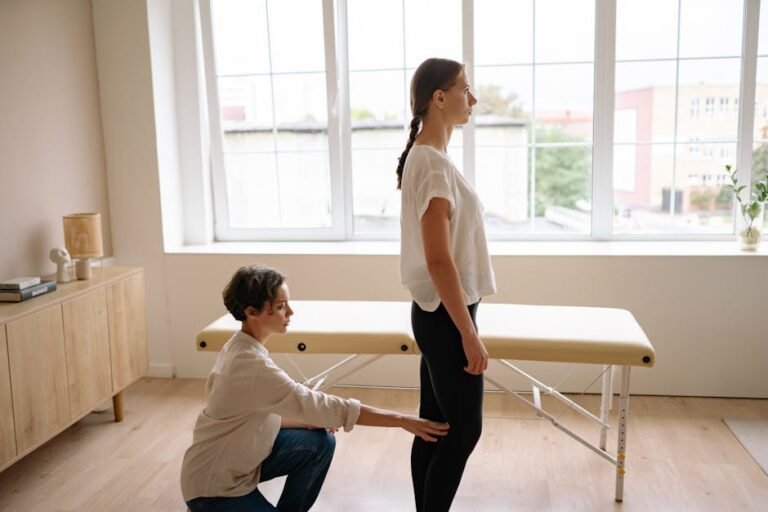
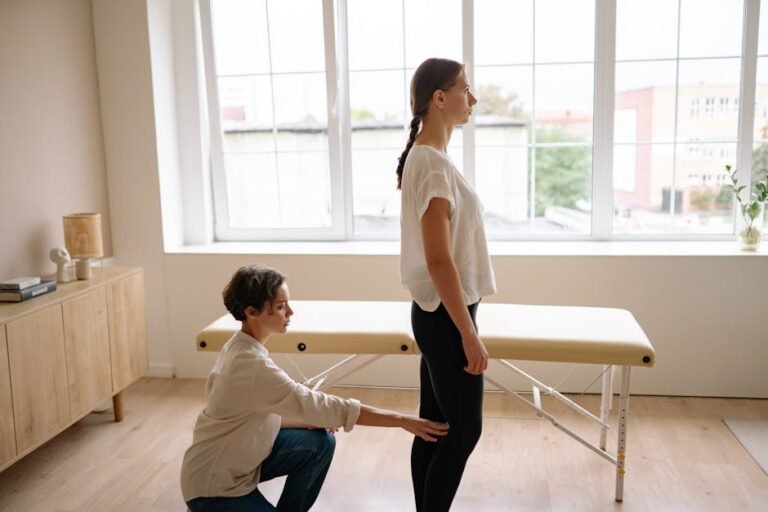
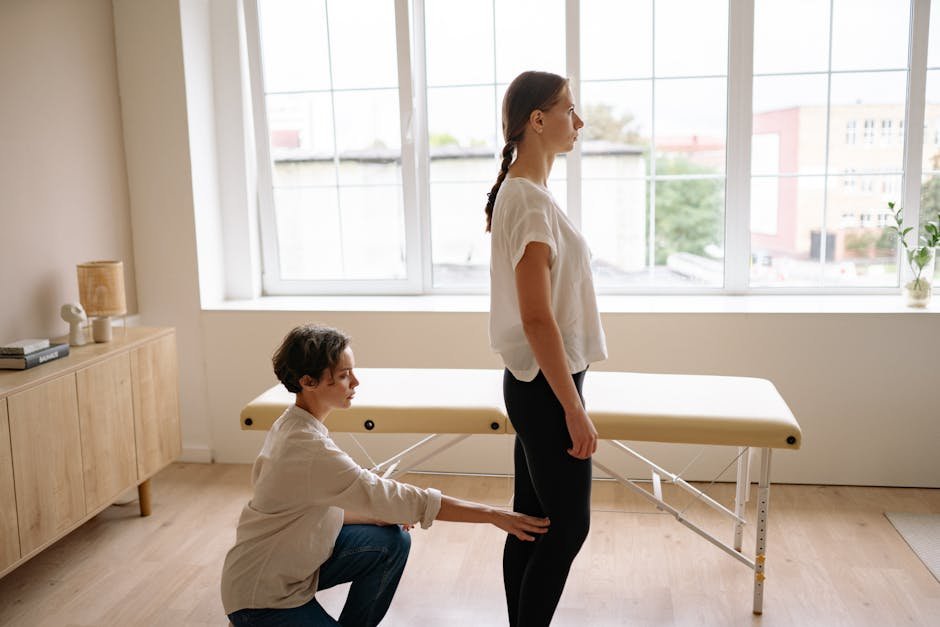
Start with a posture check and gentle warm-up (1–2 minutes). Sit tall in your chair with feet flat on the floor and hip-width apart. Let your shoulders drop away from your ears. Imagine a gentle string lifting the very top of your head toward the ceiling. Take a few slow breaths — inhale through your nose, exhale through your mouth — and feel your chest rise and soften. This simple act of checking in with your body sets the tone for everything that follows.
Chin tucks and neck looseners (1 minute) are next. Sitting tall, gently draw your chin straight back — as if you’re making a “double chin.” This might feel odd at first, but it’s one of the most effective ways to ease forward head posture. Hold for 3–5 seconds, release, and repeat. You can also add a gentle side neck stretch: slowly tilt your head toward one shoulder while the opposite hand rests quietly on your thigh. Hold for 5–10 seconds and switch sides.
Shoulder blade squeezes come next — do 2 sets of 10. Sitting or standing tall, bend your elbows to 90 degrees or simply let your arms rest at your sides. Now gently squeeze your shoulder blades together, as if you’re trying to hold a small, soft grape between them. Hold for 3–5 seconds and release. This movement counters the forward rounding that builds up from daily tasks like driving or using a phone.
A doorway chest opener works beautifully for releasing the tightness across your chest and front shoulders. Stand in a doorway and place your forearms on the frame at about chest height. Slowly step one foot forward until you feel a gentle stretch across your chest. Hold for 20–30 seconds, breathe, and step back. No doorway? A wall corner works just as well. Do 2 sets.
Wall angels or a seated alternative train the upper back to support an upright position. If standing, rest your back, head, and hips lightly against a wall, standing about 6 inches away. Start with arms in a “W” shape (elbows bent, upper arms at shoulder height) and slowly slide them up into a “Y,” keeping contact with the wall throughout. If the wall version is uncomfortable, simply sit in your chair and raise your arms as high as feels easy, then bring them back down gently. Aim for 2 sets of 8–10 repetitions.
A gentle seated twist adds lovely mobility through the spine. Sit tall in your chair, place one hand on the opposite knee and the other on the back of the chair. Inhale to lengthen your spine, then exhale and slowly rotate toward the chair back. Hold for 15–20 seconds, then switch sides. If any twisting causes discomfort, simply skip this one.
Hip flexor stretches are more important for posture than many people realise. Tight hip flexors pull the pelvis forward and contribute to lower back pain and slumping. You can do a standing version — stepping one foot back near a chair for balance, keeping hips facing forward — or a seated knee-to-chest version if your knees prefer it. Hold for 20–30 seconds on each side.
Finish with a gentle lengthening stretch. Stand or sit tall and take a moment to imagine yourself growing taller from head to toe. If standing, you can softly fold forward from the hips, letting your upper body hang loosely, then rise slowly back to upright. Take a few calm breaths and notice how your body feels.
Practical Tips: Making This Routine Stick
Knowing the exercises is one thing — doing them consistently is where the real change happens. Here are some simple, practical strategies to help this routine become a natural part of your day:
- Attach it to an existing habit. Do your stretches right after brushing your teeth in the morning, or just before a favourite television programme. Pairing a new habit with one you already do is one of the most reliable ways to make it stick.
- Keep it visible. Print out the routine and pin it somewhere you’ll see it — on the fridge, by the kettle, or on the bathroom mirror. Out of sight really does mean out of mind.
- Start small if you need to. Even 5 minutes is worthwhile. You don’t have to do the full routine every single day from the start. Build up gradually.
- Invite a friend or family member. Having someone stretch alongside you — even just for the first week — adds motivation and an extra set of eyes for safety, especially on the standing exercises.
- Stay hydrated. Drink a glass of water before and after your routine. Muscles stretch more easily when you’re well hydrated.
- Modify without guilt. If a movement doesn’t feel right, use a seated version or skip it entirely. Your routine should fit your body as it is today — not as you think it should be.
- Track how you feel. Keep a simple notebook or use your phone to jot down one word about how you feel after each session. Over weeks, you’ll likely notice patterns of improvement that encourage you to keep going.
- Wear the right footwear. Non-slip shoes or grippy socks are a small but important safety detail, especially for the standing movements.
Adapting the Routine for Common Mobility Challenges
Not every body is the same, and this routine is designed with flexibility in mind. If you have balance issues, use your chair as a steady anchor for every standing movement. There’s no benefit to wobbling — safety always comes first. Keep one hand on the back of the chair or a wall whenever you feel uncertain.
If knee pain or arthritis is a concern, lean into the seated variations throughout. Avoid deep knee bends and slow your pace right down. Shorter ranges of motion done gently are far more beneficial than pushing through discomfort. For shoulder stiffness, use smaller arm movements and shorter holds. The wall or doorway can guide your movement and prevent you from accidentally overstretching.
If you have back pain or osteoporosis, skip any movement that causes pain without hesitation. Chair-based versions of almost every exercise in this routine are available. Avoid deep forward folds or twists if they’re uncomfortable, and focus on the gentle, pain-free movements that feel good. Even a shortened version of this routine done consistently will deliver real benefits over time.
The Long-Term Benefits of a Consistent Posture Stretching Routine
Consistency is where the magic lives with this kind of gentle, daily practice. Over weeks and months, regular stretching helps maintain muscle length, supports spinal alignment, and gradually trains your nervous system to hold an upright posture more automatically — even when you’re not thinking about it. You may notice that you’re sitting taller at the dinner table without consciously reminding yourself. Or that reaching for something on a high shelf feels a little easier. These are real, meaningful improvements.
Beyond the physical, there’s a quieter benefit that’s equally worth celebrating. A predictable daily routine — even a short one — can anchor your morning and give you a sense of accomplishment. That small boost in mood and confidence is not nothing. It’s a genuine part of taking good care of yourself.
Research consistently supports the idea that even modest daily movement, done regularly, outperforms occasional intense sessions. Eight to twelve minutes every day matters far more than a longer session once a week. Think of it as brushing your teeth for your spine — a small, consistent act of care that adds up beautifully over time.
The Bottom Line: A daily stretching routine for upright posture doesn’t have to be complicated, painful, or time-consuming. With just 8 to 12 gentle minutes each day — using nothing more than a sturdy chair, a wall, and perhaps a towel — you can support your spine, ease everyday stiffness, improve your breathing, and feel steadier on your feet. Every chin tuck, every shoulder squeeze, every gentle twist is a small investment in your comfort, safety, and confidence. Start where you are, move at your own pace, and celebrate every small improvement. Your body will thank you for it.
This is not medical advice. Consult your healthcare provider before starting any new health routine or using any product mentioned here.