Guided Meditation for Joint Relaxation: A Gentle Daily Practice for Seniors
This post contains affiliate links. As an Amazon Associate, I earn from qualifying purchases at no extra cost to you.
Free resources — no credit card required for trial
🎧 Listen to health & wellness audiobooks free for 30 days
Start 30-Day Free Trial →
🛒 Recommended Products
As an Amazon Associate we earn from qualifying purchases at no extra cost to you.
TheraBand First Step to Active Health Kit — Senior Exercise Program for Balance and Fall P
$19.99
EZ Off Jar Opener for Seniors — Under Cabinet Jar Opener for Weak Hands and Arthritis
$9.99
Omron 5 Series Upper Arm Blood Pressure Monitor — 2-User 100-Reading Memory Wide-Range Cuf
$44.99
OMRON 7 Series Wireless Wrist Blood Pressure Monitor — Clinically Validated with Connect A
$69.99
Vitality 4 Life Senior Resistance Band with Instruction Guide — Specifically for Elderly F
$16.99
📚 Read unlimited health books free for 30 days
Try Kindle Unlimited Free →
If your mornings start with stiff fingers, achy knees, or that familiar tightness in your hips, you are far from alone. Millions of older adults wake up every day navigating joint discomfort — and while there are many ways to manage it, one of the most accessible and surprisingly powerful tools costs nothing and requires almost no special equipment. Guided meditation for joint relaxation is a simple, seated practice that helps soften the muscles around aging joints, ease stiffness, and gently shift the way your mind experiences pain. Whether you are brand new to meditation or you have dabbled in it before, this guide is here to walk you through everything you need to know — warmly, practically, and at your own pace.
Why Guided Meditation for Joint Relaxation Actually Works
You might be wondering: how can simply breathing and paying attention to my body actually help my joints feel better? It is a fair question, and the answer makes a lot of sense once you understand what is happening in your body during a mindfulness practice. When we experience joint pain or stiffness, the muscles surrounding those joints often tense up in response — a kind of protective reaction. That muscular tension can make the discomfort feel even more intense than it needs to. Guided meditation works by deliberately inviting those muscles to soften, using focused attention and slow breathing as the tools.
Beyond the physical, there is also a mental dimension worth appreciating. Chronic pain has a way of making the mind hyper-focused on discomfort, which can amplify how we experience it. A regular mindfulness practice gently trains the brain to observe sensation without panic or judgment. Over time, many people find that the same level of joint stiffness simply feels less distressing — not because the pain has magically disappeared, but because the mind has become a calmer, steadier companion. Add in better sleep, improved mood, and more patience in daily life, and you have a practice that supports your whole wellbeing, not just your joints.
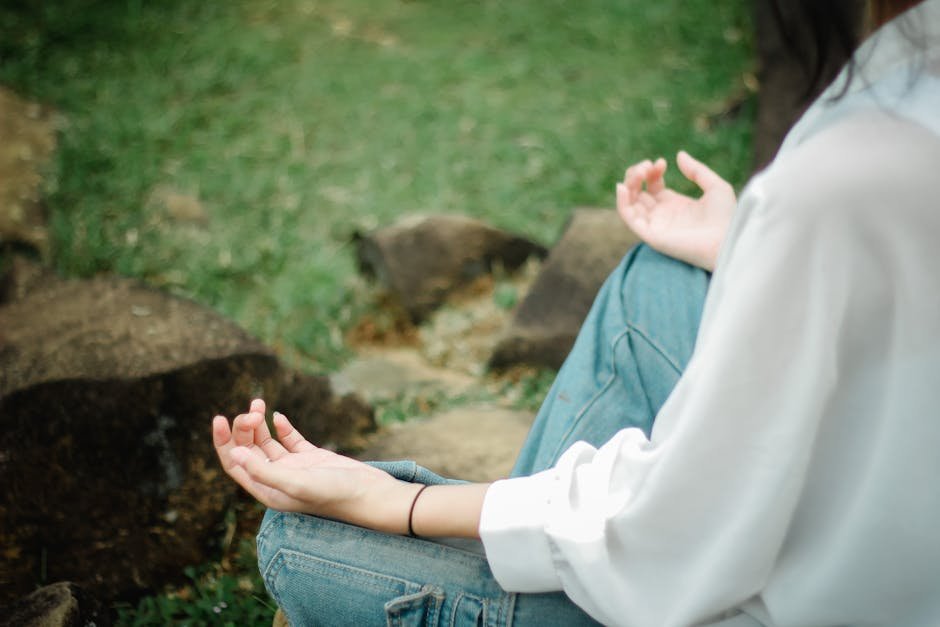
Best of all, this is not about pushing your body into difficult positions or achieving some perfect meditative state. The goal is gentle awareness. You can do the entire practice sitting in a sturdy chair with back support or lying down if that suits you better. No yoga mat required. No special clothing. Just you, your breath, and a few quiet minutes set aside for yourself.
How to Get Started: Setting Up for Success
Before you dive into the actual meditation, a little preparation goes a long way toward making the experience comfortable and enjoyable. Start by choosing a time of day when you are least likely to be interrupted. Many people find that mornings work beautifully — before the busyness of the day sets in — but an afternoon rest period or a wind-down session before bed can work just as well. Consistency matters far more than timing, so pick a slot that you can realistically stick to.
Your environment matters too. Find a warm, quiet spot and dim the lights or use soft, gentle lighting. If you tend to feel chilly when sitting still, have a light blanket nearby. Some people enjoy soft nature sounds or gentle instrumental music playing quietly in the background, which can help mask household noise and signal to the brain that it is time to relax. Remove any clutter around your seating area and make sure there is a wall or sturdy surface close by if you ever need to steady yourself when getting up.
For seating, choose a chair with a straight back that allows you to sit tall without slumping. If your knees or hips feel particularly tight, placing a small cushion or a rolled-up towel under your hips can provide a helpful lift. Keep your feet flat on the floor, hip-width apart, for a stable, grounded feeling. If you use a cane or walker, keep it within easy reach — safety always comes first. Once you are settled, you are ready to begin.
A Step-by-Step Guided Meditation Routine for Your Joints
This routine moves gently through the body from feet to face, inviting warmth and ease into each joint area along the way. Start with just five minutes if that is all you have — even a short session is genuinely worthwhile. You can gradually extend the practice as it begins to feel more natural and comfortable.
Begin by settling into your chair or lying position, placing your hands gently in your lap or by your sides. Let your shoulders drop away from your ears. Close your eyes if that feels safe, or simply soften your gaze toward the floor. Now take a slow breath in through your nose for a count of four, feeling your chest and belly gently rise. Exhale softly for a count of six, letting the breath carry away any tension it finds. Repeat this for a minute or two until you feel your body beginning to settle.
Next, bring your attention to your joints in a gentle body scan — starting at your feet and ankles, then moving upward through your knees, hips, spine, shoulders, elbows, wrists, hands, neck, and finally your face and jaw. At each area, breathe in and imagine a warm, gentle light arriving at that joint. As you exhale, picture any stiffness or tension drifting away with the breath. You can offer yourself a quiet, kind phrase as you go — something like, “This is the moment I soften,” or, “Softness remains here.” These simple words act as anchors, gently redirecting a busy mind back to the present moment.
Once you have moved through every joint, take a few slow, full breaths that encompass your whole body. Breathe in as though drawing in peace; breathe out as though releasing stiffness. Sit quietly for twenty to thirty seconds, noticing how your body feels now compared to when you started. Then begin to return gently — wiggle your fingers and toes, open your eyes slowly, and take one comfortable breath in and out before you move. Take your time getting up, and use your chair arms or a nearby surface for support.
Practical Tips for Adapting This Practice to Your Needs
One of the loveliest things about guided meditation for joint relaxation is how easy it is to tailor to your individual situation. No two bodies are the same, and this practice is designed to flex around yours — not the other way around.
- Start small and build gradually. A five-minute session is a complete, valuable practice. There is no need to push for longer sessions before you feel ready. Add time slowly, only when it feels comfortable and natural.
- Adjust your breathing counts. If inhaling for four counts and exhaling for six feels too long, shorten it to two and four. The key is that the exhale is slightly longer than the inhale, which activates your body’s natural calming response.
- Skip painful joints if needed. If a particular joint is flaring up and focusing on it feels distressing, simply acknowledge it gently and move on. You can rest your attention on nearby, more comfortable areas, or simply breathe warmth toward the region without actively scanning it.
- Use mouth breathing if nasal breathing is uncomfortable. While breathing in through the nose is ideal when possible, a soft exhale through the mouth is perfectly fine. Do what feels natural and easeful for your body.
- Try recording your own voice. If you find it helpful to be guided through the steps, consider recording yourself reading the routine aloud. Playing it back on your phone or tablet makes it easy to follow without having to remember each step.
- Invite a loved one to join you. Practicing alongside a family member or caregiver can make the routine feel more enjoyable and helps reinforce consistency. It also adds a lovely element of shared calm to your relationship.
- Create a routine anchor. Link your meditation practice to something you already do every day — right after your morning tea, for example, or just before your afternoon nap. Habit stacking like this makes it far easier to stay consistent.
- Use a large-print card. If you would find it helpful, write out the key steps on a large-print card that you can keep in your practice spot, so you never have to scramble to remember what comes next.
What to Do When Pain Flares During Practice
Even with the gentlest approach, there may be days when a joint feels particularly uncomfortable, or when sitting still actually seems to heighten your awareness of pain. This is completely normal, and it does not mean meditation is not working or is not right for you. It simply means your body is asking for a little extra care in that moment.
If you notice a flare of pain during your session, the first thing to do is pause and breathe. You do not have to push through or keep going if it does not feel right. A useful phrase to offer yourself is: “I am here with you, and I will breathe through this moment.” This kind of compassionate self-talk is not just comforting — it actively engages the part of your brain that helps regulate pain perception. You can also shorten your session on difficult days, focusing only on one or two comfortable joint areas rather than the full body scan.
If pain worsens during or after practice, stop and rest. This is not a failure — it is good self-awareness and good self-care. Wait until you feel ready before resuming, and consider shortening your sessions for a while. If you have arthritis, a joint replacement, or another ongoing condition, it is always worth having a conversation with your doctor or physiotherapist about incorporating meditation into your routine, especially if you plan to include any gentle movement alongside your practice. They can offer personalised guidance that keeps you safe and supported.
Building a Sustainable Daily Meditation Habit
The real magic of guided meditation for joint relaxation does not come from a single session — it comes from showing up gently and regularly over time. Like watering a plant, the cumulative effect of small, consistent practice is far more powerful than occasional long sessions. With regular practice, many people notice that muscle tension around the joints gradually decreases, mood improves, sleep deepens, and transitioning into daily activities — getting dressed, walking to the kitchen, climbing stairs — begins to feel a little smoother.
If you are just starting out, aim for two to three sessions this week. Keep them short — five to ten minutes is plenty. Notice how you feel afterwards. Do your shoulders feel a little lower? Are your hands resting more softly? Is your breath a little calmer? These small signs of relief are worth celebrating, because they are evidence that your practice is already doing something meaningful. Gradually, as the routine becomes more familiar, you can weave it into your daily rhythm the same way you would a morning cup of tea or an evening walk.
Over weeks and months, your meditation practice can become what one might call a trusted companion in your day — a predictable moment of quiet and ease that your body actually begins to look forward to. That sense of anticipation itself is a wonderful shift: instead of dreading the stiffness of morning or the aches of afternoon, you have a gentle, reliable tool to turn to. You are not fighting your body. You are working with it, one slow breath at a time.
The Bottom Line: Guided meditation for joint relaxation is one of the simplest, most accessible self-care practices available to older adults — and it truly delivers results when practiced consistently. By combining slow, intentional breathing with gentle, compassionate attention to each joint in your body, you can help soften muscular tension, reduce the perception of pain, and bring a genuine sense of calm and ease into your daily life. You do not need to be flexible, experienced, or pain-free to begin. You just need a chair, a few quiet minutes, and the willingness to offer yourself a little kindness. Start small, stay consistent, and let each session — however brief — count as a step toward a steadier, more comfortable you.
This is not medical advice. Consult your healthcare provider before starting any new health routine or using any product mentioned here.