
Stretches to Relieve Tension Headaches: A Gentle Daily Routine for Seniors
This post contains affiliate links. As an Amazon Associate, I earn from qualifying purchases at no extra cost to you.
Free resources — no credit card required for trial
🎧 Listen to health & wellness audiobooks free for 30 days
Start 30-Day Free Trial →
🛒 Recommended Products
As an Amazon Associate we earn from qualifying purchases at no extra cost to you.
TheraBand First Step to Active Health Kit — Senior Exercise Program for Balance and Fall P
$19.99
EZ Off Jar Opener for Seniors — Under Cabinet Jar Opener for Weak Hands and Arthritis
$9.99
Omron 5 Series Upper Arm Blood Pressure Monitor — 2-User 100-Reading Memory Wide-Range Cuf
$44.99
OMRON 7 Series Wireless Wrist Blood Pressure Monitor — Clinically Validated with Connect A
$69.99
Vitality 4 Life Senior Resistance Band with Instruction Guide — Specifically for Elderly F
$16.99
📚 Read unlimited health books free for 30 days
Try Kindle Unlimited Free →
If you’ve ever felt that familiar band of pressure wrapping around your head, squeezing at your temples, or aching at the base of your skull, you already know just how draining a tension headache can be. The good news? There are simple, gentle stretches to relieve tension headaches that you can do right at home — no gym membership, no equipment, and no strenuous effort required. For older adults especially, a few minutes of mindful movement each day can make a real difference in how your neck, shoulders, and head feel. Let’s walk through everything you need to know to get started safely and comfortably.
Understanding Tension Headaches and Why Stretching Helps
A tension headache is one of the most common types of headache, and it tends to feel like a steady, dull pressure — almost like a tight band squeezing around your head. You might notice it most at the back of your skull, across your forehead, or around your temples. Unlike migraines, tension headaches usually don’t come with nausea or light sensitivity, but they can still be genuinely uncomfortable and disruptive to your day.
So what causes them? Often, it comes down to muscle tightness in the neck, shoulders, and upper back — areas that hold a surprising amount of our daily stress. For many older adults, things like sitting for long periods, looking down at a phone or book, or simply the natural changes in posture that come with age can all contribute to that built-up tension. Poor circulation in those tight muscles doesn’t help either.
This is exactly where gentle stretching comes in. When you move these muscles slowly and deliberately, you encourage blood flow, ease tightness, and send a signal to your nervous system that it’s safe to relax. You don’t need to push hard or break a sweat — the goal is small, consistent movements that your body can handle with comfort and ease. Over time, that consistency is what really pays off.
Before You Begin: A Few Important Safety Points
Before jumping into any new physical routine, it’s worth taking a moment to make sure stretching is appropriate for you right now. If you have any recent neck or spine injuries, osteoporosis, severe arthritis, or if you’re experiencing headaches that are unusually severe, new, or feel different from your normal headaches, please check in with your doctor first. Stretching is generally very safe, but your individual health picture matters.
When you’re ready to begin, set yourself up for success. Choose a sturdy chair with a supportive back, or stand near something stable you can hold if needed. Wear comfortable, cushioned footwear if you’re standing. Keep your posture upright but relaxed — no need to be stiff as a board. And always, always move slowly. These stretches should feel like a gentle, mild pull, never a sharp pain.
Breathing matters too. It’s very common to unconsciously hold your breath when concentrating, but slow, steady breathing actually enhances the relaxation response and helps your muscles release more fully. If at any point you feel dizziness, sharp pain, tingling, or numbness, stop immediately and rest. Listen to your body — it’s always the best guide.
Six Gentle Stretches to Relieve Tension Headaches
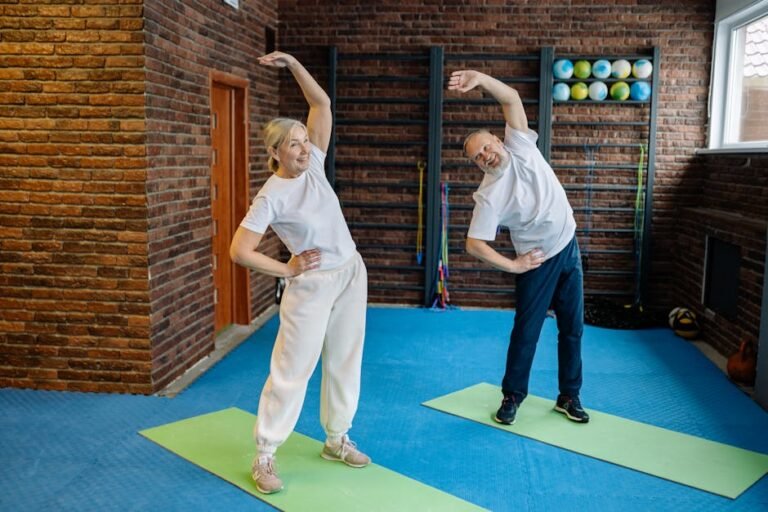
This routine focuses on the neck, shoulders, and upper back — the key areas where tension headache-related tightness tends to build up. You can do all six stretches in about five minutes, and they can be done seated or standing with support. Aim to do one to two sessions a day, choosing two or three stretches per session to start, then building up as you feel comfortable.
1. Gentle Neck Tilt (Ear to Shoulder): Sit tall with your shoulders relaxed and feet flat on the floor. Slowly tilt your right ear toward your right shoulder, keeping your left shoulder down. You can place your right hand gently on your head for a little extra support. Hold for 15–30 seconds, breathing smoothly, then return to centre and repeat on the left. Do two to three repetitions per side. This one is especially good for easing tightness along the sides of the neck.
2. Chin Tuck: Sit or stand tall, then gently draw your chin straight back — as if you’re making a subtle double chin. Keep your eyes forward and feel the lengthening at the back of your neck. Hold for 5–10 seconds, then release. Repeat 6–10 times. This stretch directly counteracts the forward head posture many of us develop from looking at screens or reading.
3. Shoulder Shrug and Release: With your arms at your sides, inhale and lift your shoulders up toward your ears as high as feels comfortable. Hold for two to three seconds, then slowly drop them down and back as you exhale. Repeat 8–12 times, finishing with a few gentle backward rolls to loosen the joint. This one is wonderfully satisfying for releasing that tightly held upper shoulder tension.
4. Shoulder Blade Squeeze: Sitting tall, gently squeeze your shoulder blades together — like you’re trying to hold a small coin between them. Hold for five seconds, then release. Do 8–12 repetitions, breathing in as you squeeze and out as you release. This movement improves posture and eases the tension that builds across the upper back and into the base of the neck.
5. Gentle Neck Rotation: Sitting with your back supported, slowly turn your head to the right as far as feels comfortable, keeping your chin level. Hold for 15–20 seconds, then return to centre and repeat to the left. Do two to three repetitions per side, and move slowly — this is not a race. If dizziness occurs, stop and rest.
6. Temple and Jaw Release: Place your fingertips at your temples and make small, gentle circles for 20–30 seconds. Then slowly open and close your jaw a few times with smooth, unhurried movements. Finish with a few long, slow, deep breaths. This soothing technique targets the muscles of the face and jaw, which often hold more tension than we realise.
As an optional add-on, if you feel up to it, try a doorway chest stretch: stand in a doorway with your forearms on the frame at chest height, then step forward slowly until you feel a gentle stretch across your chest. Hold 15–20 seconds and repeat two to three times. Opening up the chest helps improve overall posture and reduces the strain on your neck.
What You Can Do: Practical Tips for Making This a Daily Habit
The real magic of stretching comes from doing it regularly — not perfectly, not intensely, but consistently. Here are some practical ways to make these stretches a natural part of your day:
- Pick a time that works for you. Many people find that a morning stretch after waking up sets a comfortable tone for the day, while an early evening session helps release tension that’s built up. Either works — the best time is the one you’ll actually stick to.
- Use a simple reminder. Set a five-minute timer on your phone, stick a note on the fridge, or place your favourite chair near a window as a visual cue. Small prompts go a long way.
- Start small and build gradually. If the full routine feels like too much at first, choose just two or three stretches and do those well. Add more as your body gets used to the movement.
- Pair stretching with breathing. Try combining your routine with slow, deep belly breaths or even a short mindfulness moment. Stress is a major driver of tension headaches, and this one-two combination addresses both the physical and emotional sides.
- Keep a water bottle nearby. Staying hydrated supports muscle function and overall comfort. Sip between stretches if you like.
- Wear comfortable clothing and footwear. You don’t need anything special — just make sure nothing is pinching or restricting your movement.
- Celebrate progress, not perfection. If your neck feels even a little looser after a week, that’s a genuine win. Notice and appreciate those small shifts.
- Consider a supportive neck pillow for nighttime. Sometimes tension headaches are worsened by poor sleeping posture. A contoured cervical pillow can help keep your neck aligned while you sleep, complementing your daytime stretching efforts.
Modifications and Safety Tips for Older Adults
One of the wonderful things about these stretches is that they’re designed with senior bodies in mind — which means they come with built-in flexibility. Every stretch in this routine can be modified to suit your current range of motion, strength, and comfort level. If you have neck arthritis, for example, simply reduce the range of movement for tilts and rotations. A smaller stretch done safely is always better than a bigger one that causes pain.
If you have osteoporosis or any history of spine issues, it’s especially important to move within a comfortable, pain-free range and to talk with your healthcare provider about which movements are most appropriate for you. The same goes for anyone who has had recent surgery or injury in the neck or shoulder area.
Remember these core principles: favour consistency over intensity; breathe slowly and evenly throughout; never push through sharp pain, tingling, or dizziness; and always move with control rather than momentum. These habits protect you and, over time, genuinely build strength and flexibility in the muscles that support your neck and head.
When to Seek Medical Advice About Tension Headaches
Gentle daily stretches can be a fantastic tool for managing the kind of everyday tension headaches that many people experience — but it’s important to know when to reach beyond home remedies. If your headaches continue week after week despite regular stretching and self-care, or if they’re becoming more frequent or more intense, it’s worth having a conversation with your doctor.
There are also certain warning signs that should prompt you to seek medical attention more promptly. These include headaches that come on very suddenly and severely, headaches accompanied by fever, confusion, vision changes, weakness, numbness, or difficulty speaking, or headaches that feel distinctly different from your usual ones. These symptoms can point to conditions that need proper medical evaluation and care.
Similarly, if you’re taking headache medication and find yourself using it more frequently than before, or if your headache pattern has changed in any way, bring that up with your healthcare provider. Managing tension headaches is a team effort — your daily stretching routine is a valuable part of that picture, but it works best alongside good medical support.
The Bottom Line: Stretches to relieve tension headaches are a practical, gentle, and genuinely effective tool that many seniors can safely add to their daily routine. By spending just five minutes a day on targeted movements for the neck, shoulders, and upper back, you can help ease muscle tightness, improve posture, boost circulation, and gradually reduce the frequency and intensity of those nagging tension headaches. Start slowly, listen to your body, breathe deeply, and be patient with yourself. Small, consistent steps really do add up — and a more comfortable, headache-free day is absolutely worth working toward.
This is not medical advice. Consult your healthcare provider before starting any new health routine or using any product mentioned here.