
The Abdominal Wall and Core Stability: What’s Really Holding Your Spine Together
This post contains affiliate links. As an Amazon Associate, I earn from qualifying purchases at no extra cost to you.
Free resources — no credit card required for trial
🎧 Listen to health & wellness audiobooks free for 30 days
Start 30-Day Free Trial →
🛒 Recommended Products
As an Amazon Associate we earn from qualifying purchases at no extra cost to you.
TruContour Lumbar Pillow for Sleeping — Adjustable Height Lower Back Support
$39.99
BestOffice Ergonomic Mesh Desk Chair with Lumbar Support — Adjustable Rolling Swivel Chair
$69.99
Branfit Shoulder and Back Brace Posture Corrector — Breathable Posture Trainer for Upper B
$24.99
Posture Corrector for Women and Men — Comfortable Effective Brace for Shoulder and Back Pa
$22.99
Bodywellness Posture Corrector for Men and Women — Adjustable Back Straightener with Clavi
$19.99
📚 Read unlimited health books free for 30 days
Try Kindle Unlimited Free →
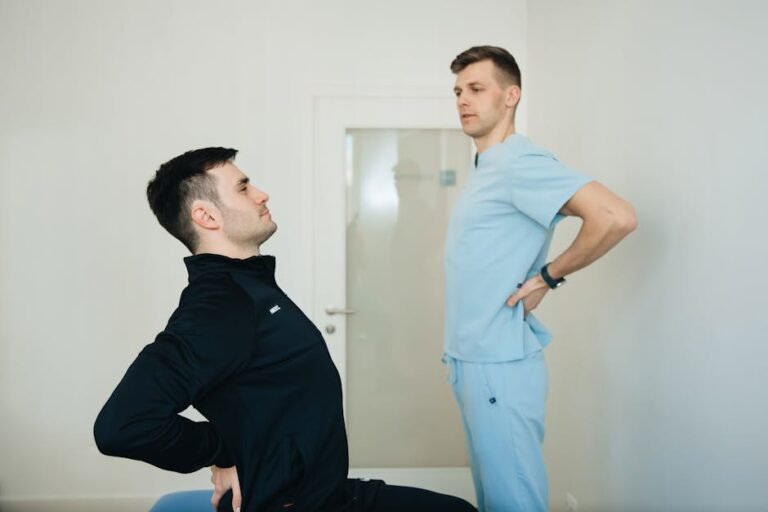
Have you ever reached across the kitchen counter and felt that sudden, unwelcome twinge in your lower back? Or maybe you’ve noticed a creeping stiffness after sitting at your desk all day, leaving you wondering why your back feels like it belongs to someone twice your age. If either of those sounds familiar, you’ve probably heard the advice to “strengthen your core.” But here’s the thing — most of us picture a chiselled six-pack when we hear that word, and that mental image misses the bigger, far more fascinating story. Core stability is not about looking good at the beach. It’s about how an extraordinary network of muscles, connective tissue, and even your breath work together as a team to keep your spine safe, supported, and strong every single day. Understanding how this system actually works is one of the most practical things you can do for your long-term spinal health.
Your Spine Is Not a Lone Soldier — It’s Part of a Team
For a long time, the spine was treated a bit like a simple stack of bones and spongy discs — a rigid central axis doing all the heavy lifting on its own. And while your vertebrae and intervertebral discs are absolutely essential, thinking of the spine in isolation is like admiring a towering oak tree and ignoring the root system keeping it upright. The spine is constantly adapting, absorbing shocks, and redistributing forces throughout your entire body. It is a dynamic, living structure — and it relies heavily on everything around it.
Modern understanding of spinal health has shifted towards what experts call an “extraspinal” view. This simply means that muscles, connective tissues, and delicate sheets of fascia — the body’s internal wrapping that connects everything together — that exist beyond the immediate spine play a critical role in its stability. Think of your spine as the central mast of a sailing ship. It doesn’t stay upright on its own; it depends on a complex rigging of ropes and sails pulling in multiple directions to keep it steady in the wind. Your muscles and fascia are that rigging.
What makes this particularly exciting is that many of the muscles contributing to your spinal stability don’t even attach directly to your vertebrae. Hip muscles, large upper back muscles, and even your breathing muscle all feed into this support network through fascial connections and the way your nervous system co-ordinates their activity. Once you appreciate this, core stability transforms from a simple gym concept into a whole-body conversation — and that changes everything about how you approach looking after your back.
Meet the Extended Core Family: More Than Just Your Six-Pack
When most people think of their core, they think of the rectus abdominis — those stacked muscles down the front of your belly that form the famous “six-pack.” But your true core is far more extensive, and some of its most important members are muscles you might never have associated with your back at all.
The quadratus lumborum, tucked deep in your lower back, helps stabilise your spine from side to side and is frequently involved in that nagging lower back stiffness many people experience. The iliopsoas complex is a powerful hip flexor that bridges your lower spine, pelvis, and thigh bone — it’s central to your posture and connects the movements of your upper body to your legs. The large latissimus dorsi muscles sweep down your upper back all the way to your pelvis, creating a strong link between your arms, trunk, and lower body. And your gluteal muscles — yes, your bottom — are not just aesthetic features. They are powerhouses for hip stability, walking, running, and indirectly keeping your pelvis and lower back well-supported.
Together, these muscles form a dynamic support matrix around your spine. They function like a finely tuned orchestra — each instrument contributing to the overall performance. When even one player is weak, tight, or not activating properly, the whole symphony can suffer. That’s often when pain, stiffness, or recurring injuries start to creep in.
The Abdominal Wall and Core Stability: Why Your Natural Corset Matters So Much
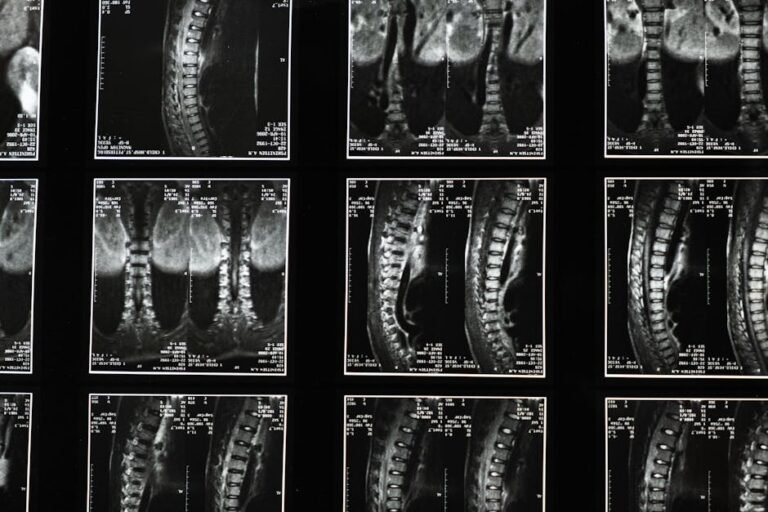
Now let’s look more closely at the abdominal wall, because it truly is the powerhouse of your core stability system. It’s not just one muscle — it’s a layered arrangement that wraps around your trunk like a natural, adjustable corset. Beneath the surface-level six-pack sit deeper muscles including the transverse abdominis and the internal and external obliques, all working together to provide support, control movement, and protect your spine.
The key mechanism the abdominal wall uses is something called intra-abdominal pressure (IAP). Picture your abdominal cavity as a pressurised canister. When your deep abdominal muscles — particularly the transverse abdominis — contract and tighten, they increase the pressure inside this canister. That pressure acts like an internal airbag, providing remarkable rigidity and support to your lumbar spine from the inside out. It’s one of nature’s most elegant engineering solutions.
This isn’t just relevant when you’re deadlifting at the gym. Your brain triggers this bracing mechanism constantly — when you stand up from a chair, carry shopping bags, twist to look over your shoulder, or maintain your posture during a long meeting. When your abdominal wall is weak or poorly co-ordinated, this natural internal support system underperforms, leaving your spine to absorb stress it was never designed to handle alone. Over time, that adds up to pain, fatigue, and injury.
The Core Canister: How Your Breath, Pelvic Floor, and Abs Work as One
Here’s where the picture becomes even more interesting. The abdominal wall doesn’t work in isolation either — it’s part of an integrated pressure system that involves three other key players: your deep back muscles, your pelvic floor, and your diaphragm (the main muscle of breathing). Together, these structures form what movement specialists often describe as a “core canister.”
Imagine a sealed tin can. The diaphragm forms the lid at the top. The pelvic floor muscles form the base at the bottom. Your abdominal wall and deep back muscles make up the sides. For this canister to do its job properly — generating that stabilising internal pressure and protecting your spine — all four walls need to be working in harmony. When one part is weak, overly tight, or poorly timed, the whole system becomes less effective.
The breathing connection is particularly fascinating. Every time you take a deep diaphragmatic breath, your diaphragm descends, gently increasing pressure on your internal organs. This naturally and subtly engages your abdominal wall and pelvic floor in a coordinated response. In other words, breathing well is not separate from having a stable core — it’s an integral part of it. This is one reason why practices like yoga, Pilates, and mindfulness-based movement, which all emphasise breath awareness, tend to produce such meaningful improvements in back health and postural control.
What You Can Do: Practical Tips for Building Real Core Stability
The good news is that you don’t need to overhaul your entire lifestyle or spend hours in the gym to start nurturing this system. Small, consistent habits applied with awareness go a very long way. Here are some practical, accessible ways to start building a stronger, more integrated core:
- Practice diaphragmatic (belly) breathing daily. Lie on your back with one hand on your chest and one on your belly. As you breathe in, your belly should rise; as you breathe out, it should fall. Even five minutes of this each day helps engage your deep core and reconnects your breath with your stability system.
- Gently activate your core before movement. Before lifting, standing up, or even coughing, lightly draw your belly button towards your spine without holding your breath. This gentle bracing engages your transverse abdominis — your body’s natural internal corset — and helps protect your spine.
- Strengthen your “extended core family.” Include exercises for your glutes, hips, and upper back in your weekly routine. Bridges, squats, lunges, and gentle back extensions all contribute to that broader support network your spine depends on.
- Explore yoga, Pilates, or Tai Chi. These disciplines emphasise whole-body movement, body awareness, and the coordination of breath with motion — exactly what an integrated core needs. Many people find them transformative for back health.
- Be mindful of your posture throughout the day. You don’t need to sit perfectly rigid, but imagine a gentle upward pull from the crown of your head. This subtle lengthening naturally activates your deep core muscles and reduces unnecessary strain on your spine.
- Don’t ignore persistent pain. If you’re experiencing ongoing discomfort, seek guidance from a physiotherapist, chiropractor, or a musculoskeletal specialist. They can assess your specific patterns and give you a personalised programme that works for your body.
The beauty of these approaches is that they don’t require expensive equipment or intense workouts. They’re about building awareness and coordination — teaching your body’s natural support system to function the way it was designed to.
Why This Knowledge Changes Everything About Back Care
There’s a quiet but important shift that happens when you stop thinking about your core as a cosmetic goal and start thinking about it as a functional, integrated system. Instead of grinding through hundreds of crunches, you start paying attention to how you breathe, how your hips move, how your posture feels during ordinary tasks. You begin to understand why a weak glute can contribute to lower back pain, or why learning to breathe into your belly might do more for your spinal stability than any abdominal exercise you’ve ever tried.
This perspective also helps explain why so many people work hard in the gym and still struggle with recurring back issues. Isolated muscle training, while valuable in some contexts, doesn’t necessarily teach your nervous system to activate the right muscles at the right time in the right sequence. Real core stability is about co-ordination, timing, and integration — not just raw strength.
The encouraging reality is that your body already has all the equipment it needs. Your diaphragm, pelvic floor, abdominal wall, and the full extended family of supporting muscles are there, waiting to be engaged and trained. With a little understanding and some consistent, mindful practice, you can genuinely improve how your spine feels and functions — not just during exercise, but during every moment of your daily life.
The Bottom Line: Core stability and abdominal wall strength are about far more than aesthetics or athletic performance. Your spine depends on a sophisticated, interconnected system of muscles, fascia, and breath working in harmony — from your deep abdominal layers to your glutes, hips, diaphragm, and pelvic floor. When you understand and nurture this integrated network, you give your spine the support it was designed to have, reducing pain, improving posture, and building a resilience that lasts. Start small, stay consistent, and remember: your body is already remarkably well-designed. You just have to work with it.
This is not medical advice. Consult your healthcare provider before starting any new health routine or using any product mentioned here.
Watch the Full Video
Recommended Products
As an Amazon Associate we earn from qualifying purchases at no extra cost to you.
- TruContour Lumbar Pillow for Sleeping — Adjustable Height Lower Back Support — $39.99
- BestOffice Ergonomic Mesh Desk Chair with Lumbar Support — Adjustable Rolling Sw — $69.99
- Branfit Shoulder and Back Brace Posture Corrector — Breathable Posture Trainer f — $24.99
- Posture Corrector for Women and Men — Comfortable Effective Brace for Shoulder a — $22.99
- Bodywellness Posture Corrector for Men and Women — Adjustable Back Straightener — $19.99