
The Three Subsystems of Spinal Stability: How Your Spine Really Keeps You Upright (The Panjabi Model Explained)
This post contains affiliate links. As an Amazon Associate, I earn from qualifying purchases at no extra cost to you.
Free resources — no credit card required for trial
🎧 Listen to health & wellness audiobooks free for 30 days
Start 30-Day Free Trial →
🛒 Recommended Products
As an Amazon Associate we earn from qualifying purchases at no extra cost to you.
TruContour Lumbar Pillow for Sleeping — Adjustable Height Lower Back Support
$39.99
Branfit Shoulder and Back Brace Posture Corrector — Breathable Posture Trainer for Upper B
$24.99
Posture Corrector for Women and Men — Comfortable Effective Brace for Shoulder and Back Pa
$22.99
Bodywellness Posture Corrector for Men and Women — Adjustable Back Straightener with Clavi
$19.99
ComfiLife Lumbar Support Pillow for Sleeping — Memory Foam Triangle Wedge Pillow
$34.99
📚 Read unlimited health books free for 30 days
Try Kindle Unlimited Free →
Free resources — no credit card required for trial
🎧 Listen to health & wellness audiobooks free for 30 days
Start 30-Day Free Trial →
📚 Read unlimited health books free for 30 days
Try Kindle Unlimited Free →
Have you ever stopped to marvel at the fact that your spine lets you deadlift a heavy bag of groceries and then moments later lets you curl up comfortably on the sofa? It’s both a sturdy structural pillar and a supremely flexible chain of bones — and that paradox is exactly what makes it so fascinating. Spinal stability isn’t just about having “a strong back.” According to one of the most influential models in spine science — the Panjabi Model — your spine’s ability to stay healthy and pain-free depends on three interconnected subsystems working in perfect harmony. Understanding how these systems work together can genuinely transform the way you think about your back, your posture, and the steps you take every day to protect your spine.
Why Your Spine Is One of the Body’s Greatest Engineering Marvels
Think about everything your spine does in a single day. It bears the weight of your entire upper body. It absorbs the repeated impact of walking, running, and jumping. It acts as a protective channel for the delicate spinal cord. And somehow, it also allows you to bend forward to tie your shoes, twist to back your car out of the driveway, and stretch upward to reach the top shelf. If your spine were too rigid, you’d move like a robot. Too flexible, and it would crumble under load. The fact that it manages both extremes simultaneously is nothing short of remarkable.
This extraordinary balance is what researchers call “dynamic equilibrium.” Your spine is constantly adjusting — micro-corrections happening dozens of times per second — to keep you stable without sacrificing your freedom of movement. For decades, scientists and clinicians have been working to understand exactly how this works at a mechanical and neurological level. That research has given us some genuinely practical insights into why backs get hurt, why they sometimes don’t heal well, and what we can all do to support long-term spinal health.
One of the most important breakthroughs in this field came from Dr. Manohar Panjabi, a biomedical engineer whose model of spinal stability changed how clinicians and researchers think about the back. Rather than viewing spinal stability as a single quality — like simply having “good core strength” — Panjabi identified three distinct but deeply interconnected subsystems that must all work together for the spine to function well. Think of it as a three-legged stool: remove or weaken any one leg, and the whole thing becomes unstable.
The Panjabi Model of Spinal Stability: An Overview
Dr. Panjabi’s model is elegantly simple in concept, even though the biology behind it is wonderfully complex. He proposed that spinal stability is maintained by three subsystems: the passive subsystem (your bones and ligaments), the active subsystem (your muscles), and the neural control subsystem (your nervous system). Each one plays a unique role, and each one depends on the others to do its job properly.
What makes this model so useful — especially for everyday people trying to understand their own back health — is that it shifts the conversation away from single-cause thinking. Back pain isn’t usually just about a “slipped disc” or just about “weak abs.” More often, it reflects a breakdown in the coordination between these three systems. When you understand the role each one plays, you can start to appreciate why a truly healthy spine requires attention to movement, muscle training, and even mental body awareness.
The Passive Subsystem: Your Spine’s Built-In Architecture
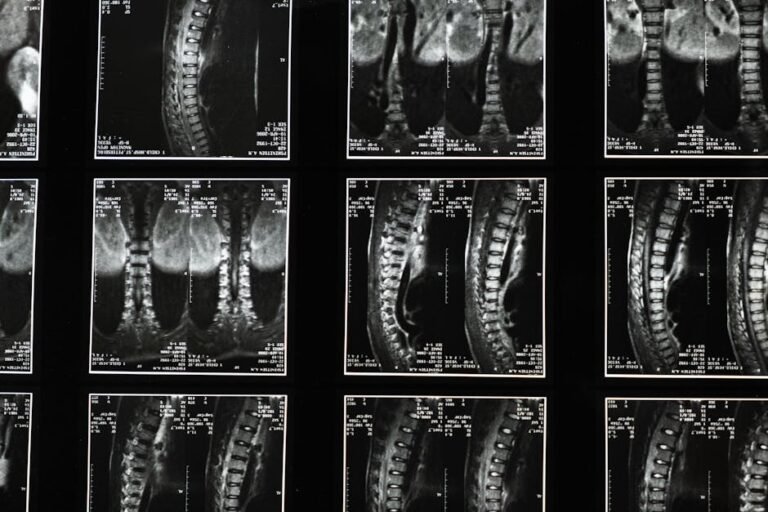
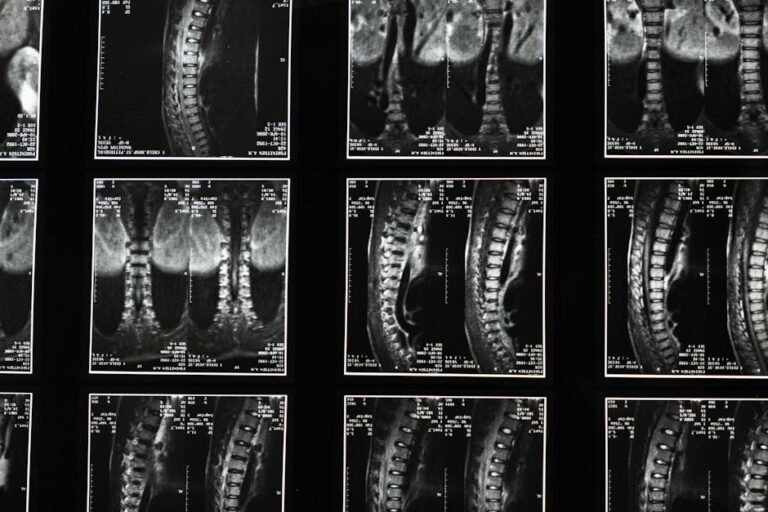
The first subsystem in the Panjabi Model is the passive subsystem, and it’s the one most people think of when they picture the spine. This is the physical hardware: your vertebrae (the individual bones), the intervertebral discs that sit between them like cushioning shock absorbers, and the network of ligaments and joint capsules that hold everything together. These structures are called “passive” because they don’t generate movement or force on their own — they provide the scaffolding.
Ligaments, for example, are tough fibrous bands that connect bone to bone. Think of them as natural seatbelts for your spine: they allow movement up to a point, and then they pull tight to prevent your joints from moving dangerously far. The facet joint capsules surrounding the small joints between each vertebra add further stability and contain lubricating fluid that keeps movement smooth. The discs, meanwhile, are filled with a gel-like substance that acts as a cushion, distributing pressure and allowing the spine to flex and compress without damage.
While this passive architecture is robust, it has its limits. On its own, the passive subsystem can’t adapt to dynamic, changing loads — it can’t contract or relax in response to the situation. It provides a kind of baseline structural integrity, but it absolutely relies on the other two subsystems to keep it from being overloaded. When ligaments are repeatedly strained or discs are compressed beyond their capacity, that’s often a sign that the other subsystems aren’t doing their share of the work.
The Active Subsystem: The Muscle Powerhouse That Keeps You Moving Safely
The active subsystem is all about muscle — specifically, every muscle that surrounds and supports your spine. These muscles are the dynamic stabilisers of your back, capable of generating force, controlling movement, and reacting instantly to changes in your body’s position. Without them, the passive structures would face constant overload.
It’s helpful to think about these muscles in two groups. First, there are the deep core muscles — the ones you might not feel during a workout but that are absolutely critical to spinal stability. The transversus abdominis, often described as your body’s natural corset, wraps around your midsection and creates intra-abdominal pressure that stiffens the spine when you need it most. The multifidus muscles run along the length of the spine itself and provide localised, segment-by-segment stabilisation. These deep muscles work largely below conscious awareness, quietly bracing your spine before you even begin a movement.
Then there are the global muscles — the larger, more powerful ones you probably think of when you think about core training. Your rectus abdominis, obliques, erector spinae, and glutes are responsible for the big movements: bending, twisting, extending, and generating power. These muscles matter too, but they work best when the deep stabilisers are doing their job underneath. A common mistake people make is training only the global muscles (think crunches and back extensions) while ignoring the deeper stabilising layer — which can actually leave the spine more vulnerable, not less.
The Neural Control Subsystem: The Intelligent Conductor of Your Spine
This third subsystem is arguably the most fascinating — and the most underappreciated. The neural control subsystem is your nervous system: your brain, your spinal cord, and the vast network of nerves that run through your muscles, ligaments, and joints. It acts as both a sensor and a command centre, constantly gathering information about your body’s position and sending precise instructions back to your muscles.
Embedded throughout your muscles, ligaments, and joint capsules are tiny sensory receptors called proprioceptors. These receptors send a continuous stream of real-time data to your brain: where your limbs are in space, how fast you’re moving, how much load your spine is currently bearing. Your brain integrates all of this information at extraordinary speed and formulates movement strategies accordingly. If you’re about to pick up a heavy box, your brain sends anticipatory signals to your core muscles to pre-activate — bracing before the load even arrives. This is called feedforward control, and it’s one of the most elegant features of human movement.
There’s also feedback control, which kicks in after an unexpected event — like stumbling on an uneven pavement or catching yourself when you slip. Without this intelligent neural management, your passive structures would be left unprotected and your muscles would fire randomly. Interestingly, research suggests that pain itself can interfere with neural control, causing muscles to fire out of sequence or with altered timing. This helps explain why someone who has injured their back once is at higher risk of re-injury — not just because of tissue damage, but because the neural control system has been disrupted.
What Happens When the Three Subsystems Fall Out of Sync
One of the most important takeaways from the Panjabi Model is this: chronic back pain is rarely just one thing going wrong. It’s usually about a breakdown in the teamwork between these three subsystems. When any one of them underperforms, the others are forced to compensate — and that compensatory strain is often where pain and injury begin.
If your deep core muscles (active subsystem) are weak or poorly coordinated, your ligaments and discs (passive subsystem) absorb more load than they’re designed to handle. Over time, this leads to wear, strain, and pain. Equally, if the passive structures are compromised — say, from a herniated disc or overstretched ligaments — the active and neural systems have to work overtime to compensate, resulting in muscle fatigue, spasms, and altered movement patterns. And when the neural control system is disrupted — through injury, sustained pain, or simply years of sedentary living — muscles may not fire at the right time or with the right intensity, leaving the spine poorly supported during everyday activities.
Understanding this interconnection is genuinely empowering. It means that supporting your spine isn’t about doing one magic exercise or buying one perfect chair. It’s about nurturing all three systems consistently — through movement, targeted strengthening, body awareness, and good habits.
Practical Tips: What You Can Do to Support All Three Subsystems
The good news is that every one of these subsystems responds positively to the right lifestyle habits. Here are practical, evidence-informed steps you can start taking today to support your spinal stability and long-term back health:
- Move regularly and vary your movement: Walking, swimming, gentle yoga, and dancing all help keep your spinal joints lubricated and healthy (supporting the passive subsystem) while gently working the surrounding muscles. Sitting still for long periods is one of the worst things for spinal health.
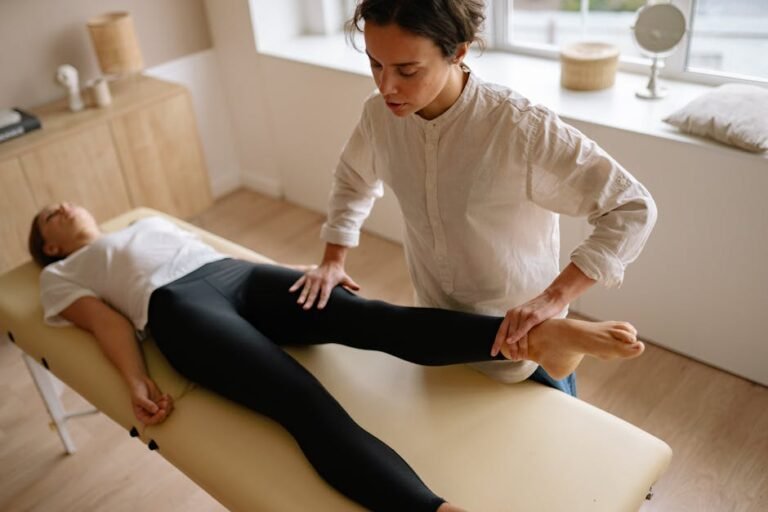
- Train your deep core muscles: Exercises like the plank, bird-dog, dead bug, and pelvic tilt specifically target the deep stabilising muscles of your spine. These train the active subsystem where it matters most — at the segmental level. Consider working with a physiotherapist to ensure you’re engaging the right muscles correctly.
- Practice mindful posture: Check in with your body regularly throughout the day. Are you slumping at your desk? Carrying your bag on one shoulder? Good postural habits train the neural control system and reduce unnecessary strain on your passive structures.
- Learn and use proper lifting technique: Bend at the hips and knees, keep objects close to your body, and engage your core before you lift. This pattern protects the passive structures, activates the right muscles, and reinforces safe neural movement patterns.
- Listen to your body’s warning signals: Persistent aching, stiffness, or sharp pain are your neural control system sending you messages. Don’t ignore them. Early intervention — whether that’s rest, movement modification, or seeing a healthcare professional — is almost always more effective than waiting.
- Stay hydrated: The intervertebral discs are largely made of water and depend on good hydration to maintain their height, flexibility, and shock-absorbing capacity. Drinking enough water each day is one of the simplest things you can do for your passive subsystem.
- Consider balance and proprioception training: Activities like standing on one leg, using a wobble board, or practising tai chi challenge and refine the neural control subsystem’s ability to make fast, accurate stability adjustments.
None of these steps require expensive equipment or hours at the gym. Small, consistent actions — a daily walk, a few minutes of core work, a moment of posture awareness at your desk — add up to meaningful support for all three of the Panjabi subsystems over time.
The Bottom Line: Your spine’s incredible ability to be both strong and flexible isn’t magic — it’s the result of three beautifully coordinated subsystems working in concert: the passive architecture of bones, discs, and ligaments; the dynamic power of your surrounding muscles; and the intelligent oversight of your nervous system. When all three are functioning well and communicating effectively, you get a stable, mobile, resilient spine. When one falls behind, the whole system feels it. By understanding the Panjabi Model of spinal stability, you gain a powerful new perspective on back health — one that moves beyond quick fixes and towards a holistic, sustainable approach to keeping your spine strong and pain-free for life.
This is not medical advice. Consult your healthcare provider before starting any new health routine or using any product mentioned here.