Modern Tools for Analyzing Spinal Biomechanics: What Science Reveals About Your Back Health
This post contains affiliate links. As an Amazon Associate, I earn from qualifying purchases at no extra cost to you.
Free resources — no credit card required for trial
🎧 Listen to health & wellness audiobooks free for 30 days
Start 30-Day Free Trial →
📚 Read unlimited health books free for 30 days
Try Kindle Unlimited Free →
Your spine is working for you right now — and every single moment of every day. Whether you’re sitting at your desk, reaching for something on a high shelf, or simply breathing, this remarkable structure is quietly doing its job: supporting your weight, enabling movement, and protecting the delicate network of nerves that connects your brain to the rest of your body. Yet most of us don’t give our spine a second thought until something goes wrong. Thanks to incredible advances in spinal biomechanics — the science of how your spine moves and functions — researchers and healthcare professionals now have powerful modern tools to understand, assess, and protect this extraordinary part of your body. In this post, we’re going to break it all down in plain English and show you what it means for your everyday health.
Why Your Spine Is One of Nature’s Greatest Engineering Feats
If you were tasked with designing the human spine from scratch, you’d quickly realise just how impossibly complex the challenge is. You’d need a structure strong enough to bear the weight of your entire upper body, flexible enough to allow twisting, bending, and reaching in every direction, and protective enough to shield the most critical nerve pathway in the body — all at the same time. Yet nature pulled it off beautifully.
Your spine functions simultaneously as a robust structural column, a highly flexible articulated system, and a fortress for your spinal cord. When you carry shopping bags, that load travels down through your vertebrae. When you reach across to buckle a child’s seatbelt, a complex series of joints and muscles makes it possible. And through all of that, your spinal cord — the superhighway carrying messages between your brain and your limbs — stays safe inside its bony protective tunnel.
To truly understand how this all works, scientists study two distinct aspects of spinal function. Kinematics refers to the study of movement itself — how far you can bend, how fast you can twist, and in which direction your spine travels. Kinetics, on the other hand, looks at the forces that cause and govern those movements — the pushes and pulls from muscles, ligaments, and gravity. Together, these two fields of study give us a complete picture of spinal biomechanics, from big, sweeping movements right down to microscopic shifts between individual bones.
The Secret Architecture Behind Every Move You Make
One of the most fascinating things about your spine is that it isn’t one solid, rigid rod — it’s a beautifully engineered stack of individual, interconnected segments. This multi-segmental architecture is what gives your spine its incredible versatility. Think of it less like a steel beam and more like a string of sophisticated, cooperative joints, each doing its part.
The fundamental building block of this system is known as the functional spinal unit (FSU). Each FSU consists of two adjacent vertebrae (the bony segments of your spine), the intervertebral disc that cushions and connects them, and the surrounding ligaments and muscles that stabilise the whole unit. Together, these components form a tiny but powerful joint system capable of movement in multiple directions — bending forward and back, tilting side to side, and rotating.
Here’s where it gets really impressive: scientists describe this as movement across “six degrees of freedom.” Each individual segment has this range, and the movements of all these small units add up to give your spine its global range of motion — the ability to touch your toes, turn your head, or lean into a stretch. At the same time, these tiny units are constantly absorbing axial loads — the downward pressure from gravity and everyday activities like walking, lifting, and standing. When everything is working well, this system operates with extraordinary efficiency. When something goes wrong with even one segment, however, the effects can ripple throughout the entire spine.
Modern Tools for Analyzing Spinal Biomechanics: How Science Looks Inside
For much of medical history, understanding the spine meant observing it from the outside or studying it in static conditions. That’s all changed dramatically. Today, researchers and clinicians have access to a suite of cutting-edge technologies that allow them to analyse spinal biomechanics with incredible precision — both in the laboratory and in real-world settings.
Motion analysis technology is one of the most powerful tools in the toolkit. Using high-speed cameras, reflective markers placed on the body, and sophisticated computer software, researchers can track every tiny movement of the spine in real time. This is the same kind of technology you might have seen used to animate characters in blockbuster films, but here it’s being used to identify exactly where and how the spine moves abnormally. A patient might be asked to perform everyday movements — bending, reaching, walking — while their spine’s motion is captured and analysed in extraordinary detail. This can pinpoint restricted segments, instability, or compensatory movement patterns that might be contributing to pain.
Finite element modelling (FEM) takes things into the digital realm. Researchers build highly detailed virtual models of the spine, including digital representations of vertebrae, discs, ligaments, and muscles. They can then apply simulated forces and stresses to test how the spine responds in different scenarios — without involving a single real patient. This allows scientists to safely explore questions like: How does this surgical implant affect load distribution? What happens to disc pressure when someone lifts incorrectly? How does a particular injury alter the mechanics of adjacent segments? These are questions that would be impossible or unethical to answer through direct experimentation, making FEM an invaluable research and planning tool.
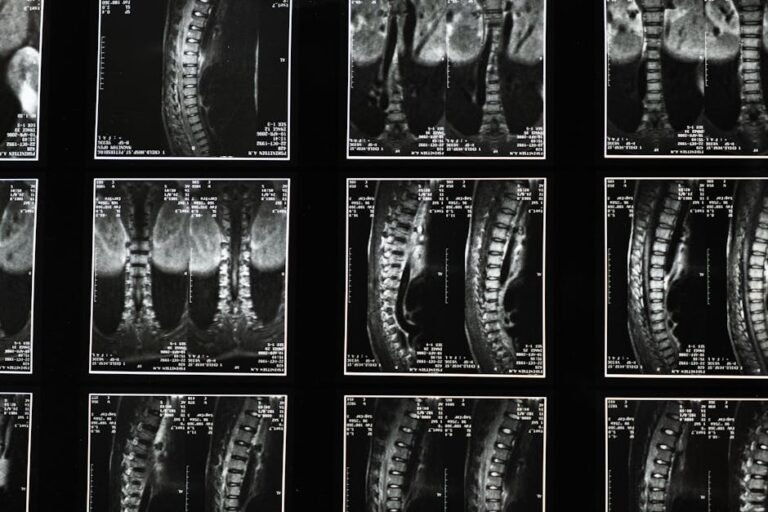
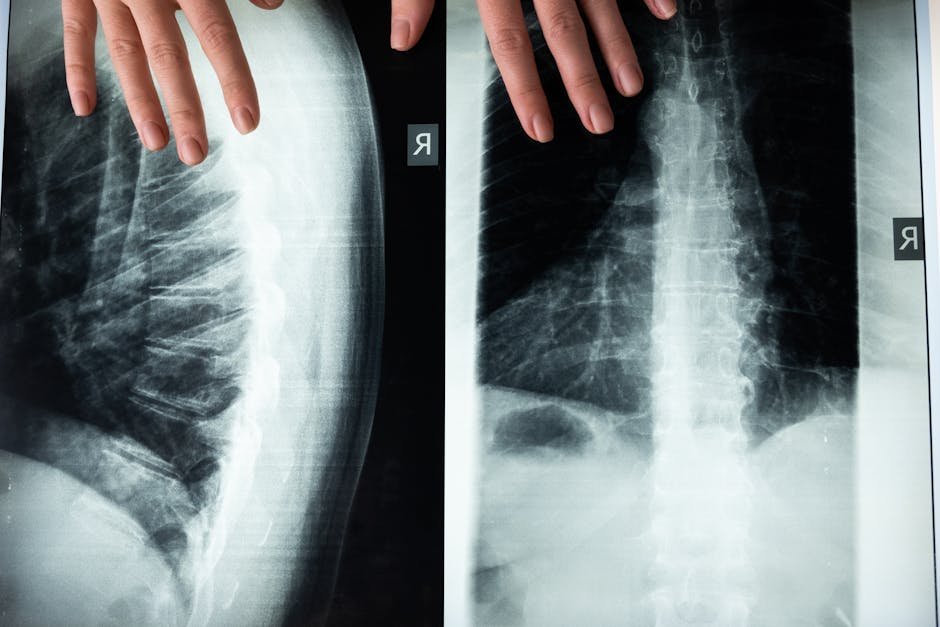
Finally, in-vivo measurement techniques — meaning measurements taken within the living body — provide real-world data to complement what we learn from cameras and computers. Advanced imaging such as dynamic MRI scans and fluoroscopy (a type of moving X-ray) can capture the spine in action, while tiny implanted sensors can measure actual forces experienced during daily activities. Together, these approaches give us a richer, more complete understanding of how the spine behaves in living people going about their lives — and how conditions like disc degeneration or muscle weakness change that behaviour.
What Spinal Biomechanics Research Means for People in Pain
All of this scientific progress isn’t just interesting in an academic sense — it has very real, practical implications for anyone dealing with back pain, stiffness, or spinal injury. The insights gained from modern biomechanical analysis are actively shaping how healthcare professionals assess, diagnose, and treat spinal conditions.
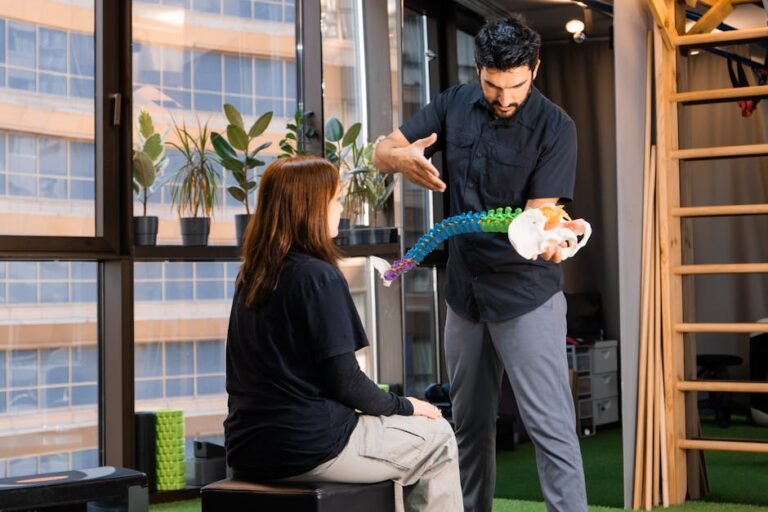
For example, understanding how individual spinal segments move (or fail to move) helps physiotherapists and chiropractors design highly targeted treatment plans. Rather than applying a one-size-fits-all approach to back pain, a clinician informed by biomechanical analysis can identify the specific segment causing problems, understand why it’s moving the way it is, and choose interventions most likely to restore healthy function. This precision is a game-changer for patient outcomes.
Biomechanics research has also transformed rehabilitation. We now know, for instance, that the muscles surrounding the spine — particularly the deep core muscles — play a crucial role in stabilising each functional spinal unit during movement. This understanding has led to the development of rehabilitation programmes focused on retraining these stabilising muscles, helping people not just recover from injury but actually reduce their risk of future problems. The science, in other words, is making treatment smarter and more effective across the board.
What You Can Do: Practical Tips for a Healthier Spine
Understanding spinal biomechanics doesn’t require a science degree to be useful. In fact, the practical takeaways are beautifully straightforward. Here are evidence-informed habits you can start building into your daily life right now:
- Mind your posture throughout the day. Good posture isn’t just about appearances — it’s about keeping your spinal segments in alignment so forces are distributed evenly across your discs and joints. Whether you’re sitting at a desk, standing in a queue, or scrolling your phone, aim for a neutral spine position.
- Keep moving regularly. Your spine is designed for movement, and your intervertebral discs rely on movement to stay nourished and healthy. Activities like walking, swimming, and yoga encourage a full range of motion and help maintain the flexibility of your ligaments and the suppleness of your discs.
- Strengthen your core muscles. Your abdominal muscles, back muscles, and diaphragm act like a natural corset around your spine, providing the stability each segment needs — especially during lifting or strenuous activity. Core-focused exercises like pilates or targeted physiotherapy exercises are excellent investments in your spinal health.
- Lift properly — every time. This advice has been around for decades because it works. Bending your knees and letting your powerful leg muscles do the heavy lifting dramatically reduces the shear forces and bending stress on your spinal segments and discs. Make it a habit, even for lighter objects.
- Take regular breaks from static positions. Sitting or standing in the same position for prolonged periods increases disc pressure and fatigues the stabilising muscles. Set a reminder to change position, stretch gently, or take a short walk every 30 to 45 minutes.
- Listen to what your body is telling you. Pain is your body’s alarm system, and persistent back pain or stiffness deserves attention. Catching a problem early almost always means simpler treatment and faster recovery. Don’t push through warning signs and hope for the best.
- Seek professional assessment if needed. If you’re experiencing ongoing back discomfort, a qualified healthcare provider — whether a physiotherapist, chiropractor, or GP — can apply their understanding of spinal biomechanics to assess your movement, identify any problems, and create a personalised plan for you. There’s no need to self-diagnose or suffer in silence.
Small, consistent habits add up enormously over time. Your spine has served you faithfully for years; a little daily attention is the least it deserves in return.
The Future of Spinal Health: Where the Science Is Heading
The field of spinal biomechanics is evolving rapidly, and the future looks genuinely exciting for anyone interested in their back health. As motion analysis technology becomes more affordable and accessible, it’s moving out of specialist research labs and into clinical settings — meaning the kind of precise movement assessment once reserved for elite athletes may soon be available to anyone visiting a physiotherapy practice.
Advances in finite element modelling are also being combined with artificial intelligence to create increasingly sophisticated predictive tools. In the near future, clinicians may be able to input a patient’s individual spinal measurements and movement data into a model that predicts their risk of injury, recommends the optimal treatment pathway, or even simulates the likely outcome of surgery before the operation takes place. This kind of personalised, data-driven care represents a significant leap forward from current approaches.
Wearable technology is another exciting frontier. Devices that can monitor spinal movement and posture in real time throughout the day — alerting you when you’ve been sitting in a harmful position or tracking your movement quality during exercise — are already emerging. As these tools improve and become more mainstream, they have the potential to bring the insights of biomechanics research directly into everyday life, helping ordinary people make smarter choices about how they move, sit, work, and exercise. The science of spinal biomechanics, in other words, isn’t just for researchers anymore — it’s becoming a practical toolkit for all of us.
The Bottom Line: Your spine is an extraordinary feat of natural engineering, quietly supporting, protecting, and enabling you through every moment of your day. Modern tools for analyzing spinal biomechanics — from motion capture technology and computer simulations to advanced imaging techniques — are giving scientists and healthcare professionals an unprecedented window into how this remarkable structure works, how it fails, and how it heals. Whether you’re dealing with back pain or simply want to keep your spine healthy for decades to come, the insights from this research translate into clear, practical actions: move regularly, strengthen your core, lift wisely, and take pain seriously. Your spine has been looking after you your whole life — now it’s time to return the favour.
This is not medical advice. Consult your healthcare provider before starting any new health routine or using any product mentioned here.