Your Myofascial System: The Hidden Network That Controls Your Spinal Health
This post contains affiliate links. As an Amazon Associate, I earn from qualifying purchases at no extra cost to you.
Free resources — no credit card required for trial
🎧 Listen to health & wellness audiobooks free for 30 days
Start 30-Day Free Trial →
🛒 Recommended Products
As an Amazon Associate we earn from qualifying purchases at no extra cost to you.
Back Gel Ice Pack Wrap — Microwaveable Pain Relief Heat Pad for Upper and Lower Back Thera
$22.99
BODYPROX Pain Relief Ice Pack with Strap for Hot and Cold Therapy — Microwave Heat Pad for
$14.99
iReliev Hot and Cold Therapy Gel Pack — Reusable Freezable Microwaveable Compression Pack
$16.99
Magic Gel Ice Pack for Back Pain Relief — 2 Pack Reusable Lower Back Wrap for Hot or Cold
$19.99
Relief Expert Reusable Ice Pack for Back — Lower Back Ice Pack Wrap with Cold Compress
$17.99
📚 Read unlimited health books free for 30 days
Try Kindle Unlimited Free →
Have you ever woken up with a stiff, aching back and wondered why — even after a full night’s sleep, regular stretching, and no obvious injury? You’re not alone. Millions of people live with persistent spinal discomfort that seems to have no clear cause, no matter how many times they’ve been told their X-rays look “fine.” The truth is, your spine is far more than a stack of bones and discs. Beneath the surface lies a remarkable, body-wide web called the myofascial system, and understanding it could completely change how you think about your spinal health, your pain, and what you can actually do about it.
Why the Old Way of Thinking About Your Spine Falls Short
For decades, the traditional approach to spinal pain focused almost exclusively on the structural components you can see on a scan — a bulging disc, a misaligned vertebra, or a pinched nerve. If something hurt, the assumption was that a specific, identifiable part must be broken or out of place. Treat that part, fix the problem. Simple, right? Except for the millions of people whose pain persisted even after addressing those structural issues, it clearly wasn’t that simple.
This “reductionist” way of thinking — breaking the body down into individual parts and examining each in isolation — is useful for some things, but it misses the bigger picture entirely. Your body isn’t a machine made of separate, independent components. It’s a living, breathing, constantly adapting system where every structure influences every other structure. The spine, in particular, is best understood as a dynamic, integrated unit where bones, discs, muscles, ligaments, and connective tissues are all in constant, ongoing communication with one another.
Modern science has brought about a significant shift in thinking when it comes to spinal health. We now understand that persistent pain and limited movement often have more to do with the soft tissue network surrounding the spine than with the bones and discs themselves. And sitting right at the centre of this new understanding is the myofascial system — a continuous, interconnected network that most people have never heard of, but that plays an absolutely critical role in how your spine moves, feels, and heals.
What Exactly Is the Myofascial System?
The word “myofascial” combines two parts: “myo,” which means muscle, and “fascial,” which refers to fascia — a specialised type of connective tissue that exists throughout your entire body. Fascia is perhaps best described as a three-dimensional, body-wide spiderweb. If you’ve ever cut into a raw piece of chicken or steak and noticed that thin, whitish, filmy membrane clinging to the muscle? That’s fascia. But it’s not just a superficial coating — it goes incredibly deep, wrapping around and running through every muscle, bone, organ, nerve fibre, and blood vessel in your body, from your scalp all the way down to the soles of your feet.
When your fascia is healthy, it’s pliable, elastic, and well-hydrated. It allows your muscles and other structures to glide smoothly past one another, making it possible for your spine to bend, twist, rotate, and bear weight with ease and fluid grace. Think of healthy fascia like a brand-new, well-oiled piece of cling wrap — flexible, smooth, and responsive. It provides both structure and mobility at the same time, a seemingly contradictory but essential combination.
However, when fascia becomes tight, dried out, or restricted — due to stress, injury, poor posture, repetitive movements, or even long hours of sitting — it starts to behave less like cling wrap and more like dried-out leather. Restrictions develop, and because the fascial network is continuous throughout your whole body, a tightness in one area can create tension and dysfunction in a completely different area. This is why tightness in your hips can cause lower back pain, or why a restriction in your shoulder might contribute to chronic neck tension. The myofascial system doesn’t respect the neat anatomical borders we draw on diagrams — it’s one continuous, connected whole.
How the Myofascial System Directly Influences Your Spine
Your spine performs an extraordinary range of tasks every single day. It protects your spinal cord, supports the weight of your upper body, enables movement in almost every direction, and absorbs the constant shocks and forces of daily life. To do all of this effectively, it relies not just on the bones and discs themselves, but on the entire network of muscles, ligaments, and connective tissue that surrounds and supports it — your myofascial system included.
When fascial restrictions develop anywhere along the body’s continuous network, they can create pulling forces that affect the spine directly. Imagine a snag in a piece of fabric — that snag pulls the surrounding material out of shape, creating wrinkles and tension far from the original point of damage. The same thing happens in your body. A tight band of fascia in your thoracic spine (mid-back) can pull your lumbar spine (lower back) out of its natural alignment. Restrictions in the fascia surrounding your hip flexors can tilt your pelvis forward, compressing the lower back. Even the fascia in your feet, if restricted, can send tension all the way up the chain to your spine.
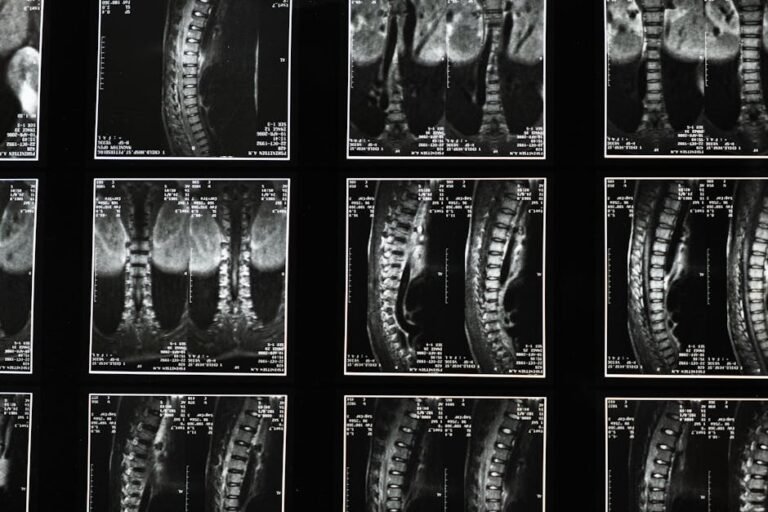
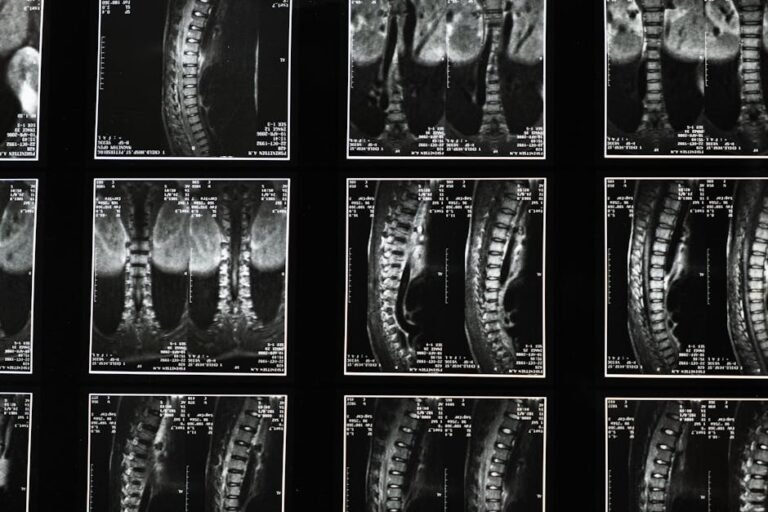
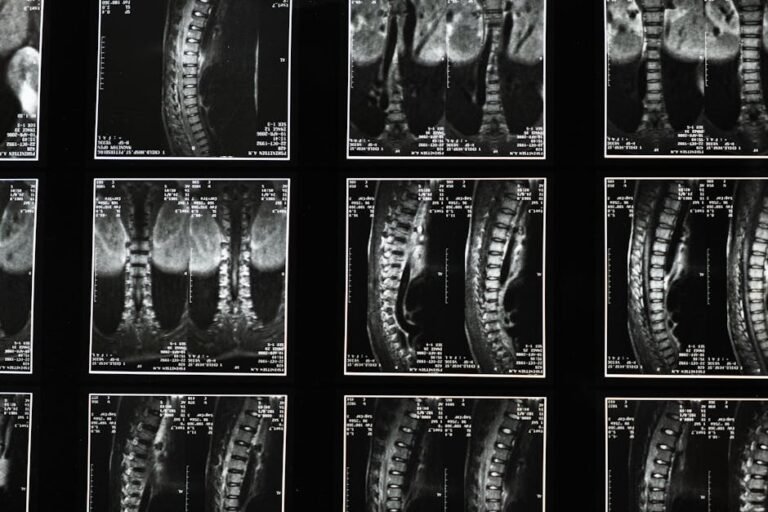
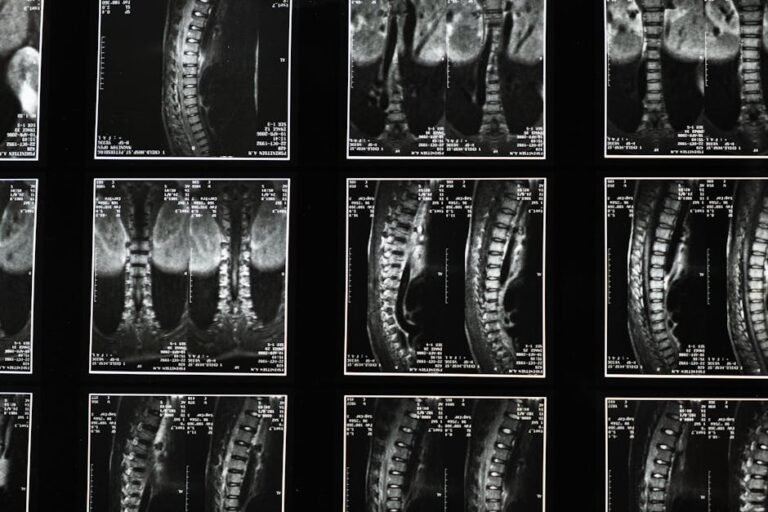
This interconnected influence means that treating spinal pain effectively often requires looking well beyond the spine itself. It also explains why two people with apparently identical disc herniations on their MRI scans can have wildly different pain experiences — because the state of their surrounding myofascial system plays a huge role in how that structural issue manifests as actual discomfort and disability. Addressing the myofascial system isn’t an optional extra when it comes to spinal health; it’s a fundamental part of the picture.
Myofascial Release: A Cornerstone of Modern Spinal Physical Therapy
As our understanding of the myofascial system has grown, so too has its role in physical therapy for spinal conditions. Myofascial release (MFR) has evolved from a fringe technique into a genuine cornerstone of treatment for spinal dysfunction — and for good reason. Rather than simply targeting a painful spot or a specific muscle group, MFR takes a whole-body approach, seeking out the fascial restrictions that are contributing to pain and limitation, wherever they may be hiding.
A trained myofascial release therapist uses gentle, sustained manual pressure applied to specific areas of the body to slowly encourage the fascia to soften, lengthen, and release its grip. This is quite different from traditional massage, which primarily works on muscle tissue. MFR works patiently and precisely on the fascial layers themselves, allowing the tissue time to respond and release at its own pace. The pressure is often described as feeling like a slow, gentle melting sensation rather than the more vigorous manipulation associated with other manual therapies.
The benefits of myofascial release for spinal health are wide-ranging. By releasing restrictions in the fascial network, MFR can reduce the abnormal pulling forces on the spine, restore proper biomechanical alignment, improve circulation to the affected tissues, enhance nerve function, and dramatically increase range of movement. Perhaps most importantly, it addresses the underlying causes of pain rather than merely masking the symptoms — giving your body the opportunity to genuinely heal and function better over the long term. Many people with chronic spinal pain who have tried numerous other treatments report significant, lasting relief after a course of myofascial release therapy.
What You Can Do: Practical Tips for a Healthier Myofascial System
The good news is that you don’t have to wait for a therapy appointment to start supporting your myofascial health. There are several meaningful steps you can take in your daily life to keep your fascial network supple, hydrated, and functioning well — and your spine will thank you for every single one of them.
- Drink plenty of water: Fascia is a connective tissue that depends heavily on hydration to stay elastic and pliable. When you’re dehydrated, your fascia can become stiff and sticky, increasing the risk of restrictions and pain. Make consistent hydration a daily priority — your whole body, spine included, will benefit.
- Move your body regularly and mindfully: Prolonged sitting or standing in fixed positions is one of the fastest routes to fascial restriction. Break up long periods of stillness with gentle movement. Activities like yoga, Pilates, tai chi, and swimming are particularly effective at maintaining fascial mobility because they involve slow, controlled, multi-directional movement.
- Try self-myofascial release at home: Foam rollers, lacrosse balls, and tennis balls can all be used to apply gentle, sustained pressure to tight or restricted areas. Move slowly over tender spots and pause when you find one, allowing the pressure to gradually ease the restriction rather than rolling quickly back and forth. Products like foam rollers are widely available and can be a worthwhile investment for your spinal health routine.
- Be mindful of your posture: How you hold your body throughout the day has a profound effect on your myofascial system. Slouching, forward head posture, and uneven weight distribution all create fascial stress patterns that accumulate over time. Try imagining a gentle upward pull from the crown of your head to encourage length and alignment through your spine.
- Incorporate slow, sustained stretching: Quick, bouncy stretches don’t give fascia enough time to respond and release. Aim to hold gentle stretches for at least 90 seconds to two minutes, which is the minimum time needed to begin creating real change in fascial tissue.
- Manage your stress levels: Chronic psychological stress doesn’t stay in your mind — it manifests physically as tension throughout your body, including your myofascial system. Practices like deep breathing, meditation, progressive muscle relaxation, and spending time in nature can all help reduce the physical burden of stress on your fascia and spine.
- Consult a qualified professional: If you’re dealing with persistent spinal pain or significant movement restrictions, seek out a skilled physical therapist or certified myofascial release practitioner. A professional can assess your unique pattern of restrictions and guide you through a targeted, effective treatment plan that addresses the root cause of your symptoms.
Making even a few of these changes consistently can create real, noticeable improvements in how your spine feels and moves over time. The key is consistency — small, regular efforts add up to significant results.
Embracing a Whole-Body Perspective on Spinal Wellbeing
Perhaps the most empowering shift that comes from understanding the myofascial system is the move away from thinking of your body as a collection of separate, disconnected parts, and towards seeing yourself as the beautifully integrated whole that you truly are. When your spine hurts, the answer may not always lie at the exact point of pain. It might be found in a restriction in your calf, a tightness in your chest, or a fascial pattern built up over years of one-sided movement or prolonged desk work.
This holistic perspective isn’t just intellectually interesting — it’s practically transformative. It opens up new possibilities for healing and prevention that simply aren’t available when you’re only looking at bones and discs. It encourages you to pay attention to your whole body, to move with greater awareness, to take care of your connective tissue alongside your muscles and joints, and to approach your health with the curiosity and patience that genuine, lasting change requires.
The field of physical therapy is increasingly embracing this integrated view, and the results for patients with chronic and persistent spinal conditions are genuinely exciting. If you’ve been struggling with back pain, neck stiffness, or spinal discomfort that just doesn’t seem to respond to conventional approaches, it may well be time to look deeper — into the hidden web of fascia that connects and supports your entire body.
The Bottom Line: Your spine doesn’t exist in isolation. It’s supported, shaped, and influenced by the myofascial system — a continuous, body-wide network of connective tissue that affects everything from your posture and flexibility to your chronic pain levels. When fascia becomes tight or restricted, it can create tension and dysfunction throughout the entire spinal chain. The encouraging news is that myofascial release therapy, combined with everyday habits like good hydration, mindful movement, and stress management, can make a real and lasting difference to your spinal health. Understanding your body as a connected whole is one of the most powerful tools you have for living with less pain and greater freedom of movement.
This is not medical advice. Consult your healthcare provider before starting any new health routine or using any product mentioned here.