How Your Spinal Muscles Keep You Strong: Understanding the Active Muscular System and Spinal Stability
This post contains affiliate links. As an Amazon Associate, I earn from qualifying purchases at no extra cost to you.
Free resources — no credit card required for trial
🎧 Listen to health & wellness audiobooks free for 30 days
Start 30-Day Free Trial →
🛒 Recommended Products
As an Amazon Associate we earn from qualifying purchases at no extra cost to you.
Branfit Shoulder and Back Brace Posture Corrector — Breathable Posture Trainer for Upper B
$24.99
Posture Corrector for Women and Men — Comfortable Effective Brace for Shoulder and Back Pa
$22.99
Bodywellness Posture Corrector for Men and Women — Adjustable Back Straightener with Clavi
$19.99
Updated Posture Corrector — Adjustable Upper Back Brace for Clavicle Support and Neck Pain
$21.99
TRIDUCNA Shiatsu Neck Back and Shoulder Massager with Heat — Deep Tissue 3D Kneading Pillo
$49.99
📚 Read unlimited health books free for 30 days
Try Kindle Unlimited Free →
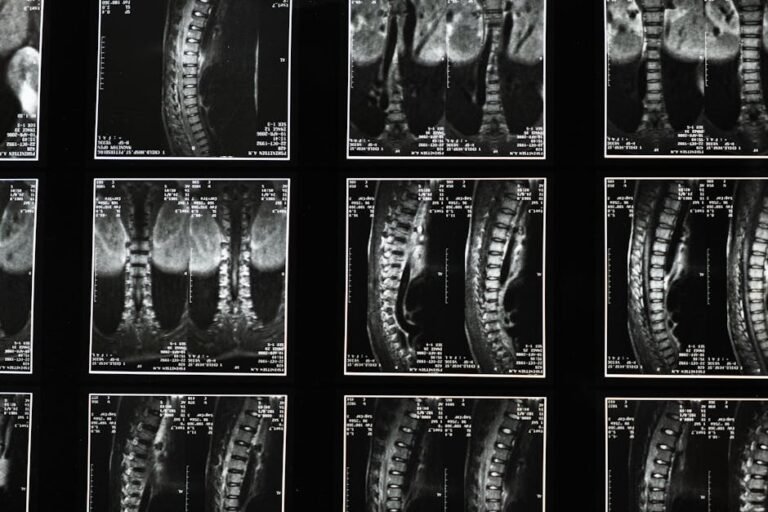
Have you ever reached for something on a high shelf and felt a sudden twinge in your lower back? Or maybe you’ve noticed that nagging stiffness that creeps in after a long day at your desk? Those little reminders are your body’s way of telling you that your spine — one of the most brilliantly engineered structures in the human body — is working hard to keep you upright, mobile, and protected. Most of us think of the spine in terms of bones and discs, but there’s a whole other layer of the story that rarely gets the attention it deserves: your muscles. Specifically, what researchers call the active muscular system, and the extraordinary role it plays in spinal stability every single day of your life. Understanding this system is one of the most empowering things you can do for your back health — and it all starts with a closer look at how your body is designed.
More Than Just Bones: The Incredible Design of Your Spine
Your spine is, in every sense of the word, a masterpiece. It carries the weight of your head and torso, absorbs shock when you walk or run, and still allows you to bend, twist, reach, and stretch in dozens of directions. That combination of strength and flexibility is genuinely rare in engineering terms, and it works because your spine isn’t just one type of structure — it’s several systems working in perfect harmony.
The first system most people think of is the “passive” one: your vertebrae (the bones), the intervertebral discs (the cushiony pads between them), and your ligaments (the tough, fibrous bands holding everything in place). These passive components give your spine its fundamental shape and create the basic structural framework — like the steel beams of a building. They’re essential, but they’re only part of the picture.
Relying entirely on passive structures would leave your spine rigid and vulnerable. What truly brings it to life — what makes it adaptive, responsive, and resilient — is the dynamic living system of muscles that surrounds and supports it. These aren’t just the muscles you use when you go to the gym. They’re working right now, as you sit reading this, making thousands of tiny adjustments to keep you balanced and protected. And when they’re strong and well-conditioned, your whole body benefits.
Panjabi’s Framework: The Three Systems Behind Spinal Stability
To really understand spinal stability, it helps to look at a widely respected framework developed by researcher Manohar Panjabi. His model breaks spinal stability down into three interconnected subsystems, each playing a unique and irreplaceable role. Together, they form a kind of biological team that keeps your spine safe and functional no matter what life throws at it.
The first is the Passive Spinal Column — the bones, discs, and ligaments we just talked about. These provide the foundational structure and define the natural limits of your movement. The second is the Neural Control System — your brain and nervous system, acting as the command centre. It’s constantly receiving feedback from your muscles and joints, processing that information, and sending precise instructions back out to tell your muscles when and how hard to contract. It works faster than conscious thought, which is why you can catch yourself from falling before you even realise you stumbled.
The third — and the true star of today’s story — is the Active Muscular System. This includes every muscle surrounding your spine, from the tiny deep muscles connecting individual vertebrae to the large, powerful muscles spanning multiple spinal segments. These muscles generate force, create movement, and above all, provide what Panjabi called “dynamic stability.” Think of it like a tent: the poles and fabric are your passive structures, your nervous system is the person adjusting the ropes, and your muscles are those taut ropes themselves — constantly fine-tuning tension to keep the whole structure stable, even in a strong wind.
What Your Spinal Muscles Actually Do (It’s So Much More Than Moving)
Here’s something that surprises a lot of people: your spinal muscles are far more than movement machines. Yes, they help you bend and twist and lift — but their most important job happens at a much subtler level. They are your spine’s dynamic protectors, shock absorbers, and precision controllers, working constantly in the background whether you’re moving or completely still.
When you’re simply standing or sitting, your spinal muscles maintain what’s called a tonic activation — a low-level, constant contraction that holds your alignment against gravity. It’s a quiet hum that never fully switches off. When you start moving — walking, lifting a bag of groceries, reaching across a table — they shift into a more powerful, coordinated mode, generating the forces needed for movement while simultaneously keeping individual spinal segments stable and protected.
One of the most impressive things these muscles do is respond reflexively. If you slip on a wet floor or someone bumps into you unexpectedly, your neural control system activates specific muscles to brace your spine in a fraction of a second — often before your conscious brain has even registered the danger. That lightning-fast protective response is only possible because your muscular system is always primed and ready. The better conditioned your muscles are, the faster and more effectively that response works.
In practical terms, a healthy active muscular system contributes to better posture, more efficient load distribution when you carry or lift things, improved shock absorption during impact activities like running, and greater precision in everyday movements. Without it, your spine would essentially be an unstable stack of bones unable to cope with the demands of real life.
Why Strong Spinal Muscles Are Your Best Defence Against Back Pain
Understanding the active muscular system isn’t just fascinating science — it’s genuinely useful knowledge for anyone who wants to protect their back and move well for life. When your spinal muscles are strong, balanced, and responsive, they form a robust protective shield around your spine. They share the load, cushion the impacts, and provide the precise control that keeps individual joints from being overstressed.
On the flip side, when these muscles are weak, fatigued, or poorly coordinated, your spine becomes more vulnerable. Everyday activities that should be completely safe — like picking something up off the floor or sitting at a desk for a few hours — can start to place undue stress on your discs, joints, and ligaments. Over time, that adds up. Many cases of chronic back pain are closely linked to insufficient muscular support around the spine, which is why strengthening and conditioning these muscles is so often a central part of recovery and prevention programmes.
The good news is that your muscles respond beautifully to training and care. Unlike the passive structures of your spine (bones and discs have limited capacity to adapt), your muscles can get significantly stronger, more coordinated, and more resilient with the right kind of attention. That means you have real, meaningful control over your spinal health — and that’s an incredibly empowering thing to know.
Practical Tips: What You Can Do to Support Your Active Muscular System
Armed with this understanding, the natural next question is: what can you actually do to support and strengthen your spinal muscles? The answer doesn’t have to involve complicated equipment or gruelling workouts. Small, consistent habits go a long way. Here are some practical, evidence-informed steps you can start taking today:
- Train your whole core, not just your abs: Your core is a three-dimensional cylinder of muscles surrounding your trunk — front, back, and sides. Exercises like planks, bird-dog, dead bug, and pelvic tilts engage the deep stabilising muscles that support your spine. Pilates and yoga are also excellent options for building functional core strength.
- Move regularly and vary your activities: Your muscles thrive on varied, frequent movement. Avoid staying in any one position — sitting or standing — for prolonged periods. Set a reminder to move every 30–45 minutes, whether that’s a short walk, a stretch, or simply changing positions.
- Practise mindful lifting and bending: Before lifting anything heavy, take a breath and gently brace your core. When picking something up from the floor, hinge from your hips rather than rounding through your lower back. These small adjustments make a significant difference over time.
- Work on hip and glute strength: Your gluteal muscles are major contributors to spinal stability. Weak glutes force your lower back to overcompensate. Incorporate exercises like glute bridges, clamshells, and squats to build strength in this area.
- Stay hydrated and eat well: Muscles need water and nutrients to function, recover, and adapt. Adequate protein intake supports muscle repair, while staying hydrated keeps your tissues supple and responsive.
- Listen to your body: Discomfort is a signal worth paying attention to. If a movement causes pain, modify it or stop. Pushing through significant pain rarely helps and can lead to further injury.
- Seek professional guidance when needed: If you’re dealing with persistent back pain, are new to exercise, or aren’t sure where to begin, a physiotherapist, sports medicine professional, or qualified personal trainer with spinal health expertise can provide personalised guidance tailored to your specific needs and goals.
The beauty of these habits is that they compound over time. A few minutes of intentional movement each day, done consistently, adds up to a meaningfully stronger and more resilient spine over weeks and months.
Bringing It All Together: Your Spine Is a Team Effort
One of the most valuable takeaways from Panjabi’s stability framework is the reminder that your spine’s health is never down to just one thing. It’s a team effort — passive structures, an intelligent nervous system, and a dynamic muscular system all working together in a constantly shifting, beautifully coordinated collaboration. When all three systems are functioning well and supporting each other, your spine can handle the demands of a full, active life with remarkable grace.
The active muscular system is arguably the most trainable and adaptable part of that trio, which means it’s also where your effort and attention can have the biggest impact. By building strength, staying mobile, moving with intention, and giving your body the care it needs, you’re not just preventing injury — you’re investing in your quality of life for years to come. Your muscles are your spine’s unsung heroes. It’s time to give them the credit, and the care, they deserve.
The Bottom Line: Your spine’s stability depends on far more than bones and discs — the active muscular system, as described in Panjabi’s influential framework, is the dynamic, trainable force that truly keeps your back safe, strong, and functional. From reflexive protection against sudden movements to sustained postural support throughout the day, your spinal muscles are working tirelessly on your behalf. The good news is that with regular, varied movement, targeted core and glute strengthening, mindful body mechanics, and professional support when needed, you can significantly enhance the strength and resilience of this incredible system — and enjoy a healthier, more mobile spine as a result.
This is not medical advice. Consult your healthcare provider before starting any new health routine or using any product mentioned here.