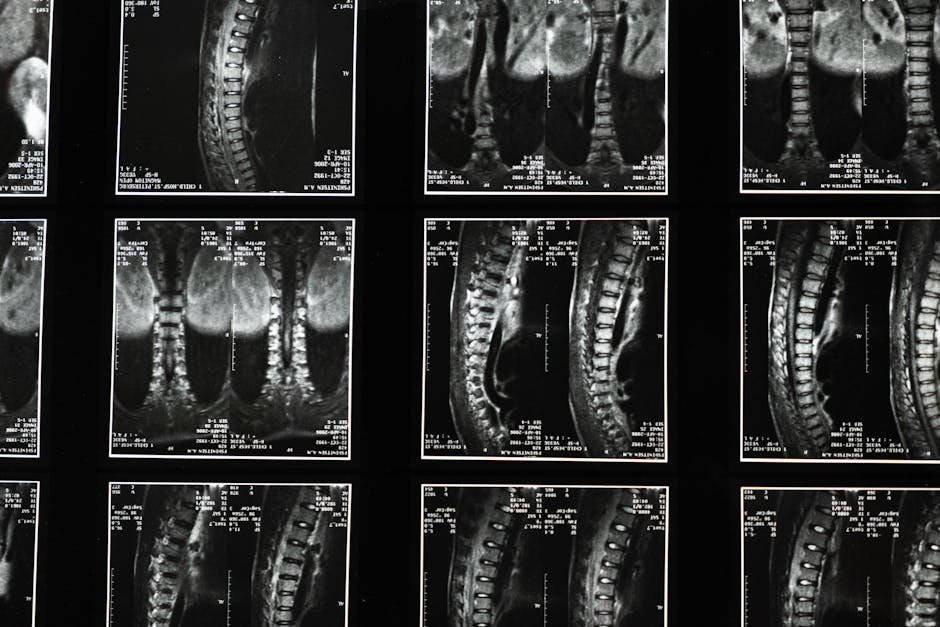
Your Spine and Its Muscles: Understanding the Dual Role of Spinal Musculature in Pain and Pathology
This post contains affiliate links. As an Amazon Associate, I earn from qualifying purchases at no extra cost to you.
Free resources — no credit card required for trial
🎧 Listen to health & wellness audiobooks free for 30 days
Start 30-Day Free Trial →
🛒 Recommended Products
As an Amazon Associate we earn from qualifying purchases at no extra cost to you.
Back Gel Ice Pack Wrap — Microwaveable Pain Relief Heat Pad for Upper and Lower Back Thera
$22.99
BODYPROX Pain Relief Ice Pack with Strap for Hot and Cold Therapy — Microwave Heat Pad for
$14.99
iReliev Hot and Cold Therapy Gel Pack — Reusable Freezable Microwaveable Compression Pack
$16.99
Magic Gel Ice Pack for Back Pain Relief — 2 Pack Reusable Lower Back Wrap for Hot or Cold
$19.99
Relief Expert Reusable Ice Pack for Back — Lower Back Ice Pack Wrap with Cold Compress
$17.99
📚 Read unlimited health books free for 30 days
Try Kindle Unlimited Free →
Your spine is one of the most remarkable structures in the human body — a flexible, load-bearing column that lets you bend, twist, lift, and move through every moment of your day, all while protecting the delicate network of nerves that connects your brain to the rest of your body. But here’s something most people don’t realise: when spinal problems arise, the drama doesn’t stop with the bones or discs. Your surrounding muscles immediately get involved, launching an emergency response that can be both your greatest ally and, over time, a surprising contributor to ongoing pain. Understanding the dual role of spinal musculature — how these muscles both protect and potentially perpetuate problems — is one of the most empowering things you can do for your long-term spine health.
What Actually Goes Wrong With Your Spine?
Before we can appreciate what your muscles are doing, it helps to understand the kinds of spinal conditions that can trigger their response in the first place. Think of your spine as a beautifully engineered flexible tower: individual bones called vertebrae, cushioned by soft, jelly-filled discs, held together by tough ligaments, and forming a protective tunnel for your spinal cord. It’s resilient — but it’s not indestructible.
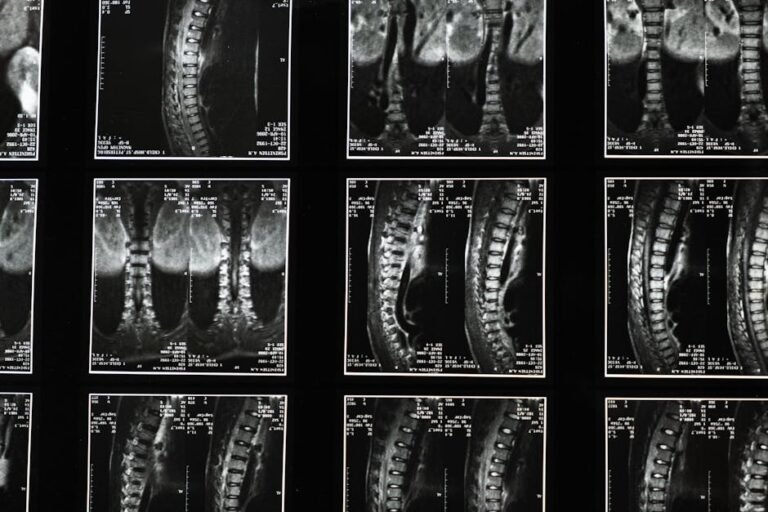
Several common conditions, or “pathologies,” can disrupt the spine’s delicate balance. Disc herniation — often called a “slipped disc” — happens when the soft inner material of a spinal disc pushes outward and presses on nearby nerves, potentially causing sharp pain, numbness, or weakness that radiates into an arm or leg. Scoliosis is a sideways curvature of the spine that can range from barely noticeable to quite significant, often leading to uneven posture and muscle strain over time. Segmental instability occurs when one or more segments of the spine move beyond their normal range, often producing pain and an unsettling feeling of “giving way.” Even after a successful spinal surgery, the spine’s mechanics change, and the surrounding muscles are required to adapt to an entirely new normal.
What all of these conditions share is this: none of them happen in isolation. The moment something goes wrong in your spine, ripples spread through the surrounding tissues — and your muscles feel every one of them.
The Dual Role of Spinal Musculature: Hero and Hindrance
Here’s where the story gets fascinating. When your spine is under threat — whether from a herniated disc, instability, or a structural change — your body’s very first instinct is to protect itself. Your muscles act as first responders, launching what scientists call “adaptive modifications.” Initially, these responses are genuinely helpful. Muscles surrounding a painful or damaged area will involuntarily tense up and spasm in a process known as muscle guarding. This acts like a natural brace, limiting movement to prevent further injury — think of it like your body’s own built-in splint.
Alongside guarding, you’ll often develop compensatory movement patterns. If bending forward causes pain, you might unconsciously start arching your back, shifting your weight differently, or recruiting entirely different muscle groups to get around the discomfort. This shifts the mechanical load away from the vulnerable area, which in the short term is genuinely protective. Your body is clever like that.
The problem is that these emergency adaptations weren’t designed to run indefinitely. What begins as a smart short-term solution can evolve into a long-term pattern that actually feeds the problem. Muscles that are constantly guarding become chronically tight, shortened, and painful in their own right — even after the original injury has begun to heal. Some muscles become overactive and dominant, while others — starved of normal nerve signals or simply sidelined by the new movement patterns — grow weak and essentially “switch off.” This imbalance creates inefficient ways of moving that place stress on other parts of the body, opening the door to new aches, pains, and injuries in entirely different locations.
This is the dual role of spinal musculature in a nutshell: an immediate adaptive helper that can, if left unaddressed, transform into an ongoing contributor to chronic dysfunction and persistent pain. Your muscles tried to be the hero — and sometimes, without the right intervention, they end up inadvertently keeping you stuck.
Why Modern Spine Care Looks at the Whole Picture
For a long time, the medical world approached spinal problems with a very structural lens: find the damaged bone or bulging disc, fix it, and you’re done. And while structural issues absolutely matter, modern understanding of spine health recognises something far more nuanced. The spine is best understood as an integrated system — almost like a well-tuned orchestra — made up of three interdependent components.
First, there are the passive structures: the vertebrae, the ligaments, and the discs. These provide the framework. Second, there are the active muscular systems: the muscles that surround, attach to, and move the spine. These are your stabilisers and movers. Third — and critically — there are the neural control mechanisms: your brain and nervous system, which orchestrate every movement, send signals to your muscles, and interpret sensations like pain. When one part of this trio is disrupted, the others are inevitably affected.
This means that truly effective treatment for spinal conditions needs to look beyond just the structural fault. It must ask: How are the muscles responding? What compensatory patterns have developed? How is the nervous system processing pain and movement? Treating only the primary pathology — the disc, the curve, the instability — without also addressing the muscular consequences is a bit like repairing one instrument in an orchestra without considering how it affects the overall harmony. The structural fix might be perfect, yet the whole system can still feel “off” if the muscular and neural components aren’t brought back into balance too.
Recognising the Signs That Your Muscles Are Part of the Problem
One of the most important things you can do for your spine health is to become more body-aware — to notice when muscle-driven patterns might be amplifying your symptoms rather than resolving them. Chronic muscle tension and stiffness that persists long after an initial injury is a common sign. So is pain that seems to have “spread” or moved to new areas that weren’t originally affected — a classic indicator of compensatory overload on muscles that weren’t designed to carry that burden.
Reduced flexibility and limited range of motion that don’t seem to improve despite rest is another clue. If you feel like you need to “brace” or “guard” a section of your back constantly, or if you notice that one side of your back is noticeably tighter or more developed than the other, these can all reflect the maladaptive muscular patterns described above. Changes in how you walk, sit, or stand that feel odd but have become your “new normal” are also worth paying attention to.
None of this means you’re imagining your symptoms or that the problem is “just muscle.” Rather, it highlights that muscles are living, responsive tissue — and they carry the story of every spinal issue you’ve experienced. Recognising their role is the first step toward addressing it effectively.
What You Can Do: Practical Tips for Supporting Your Spine and Its Muscles
The good news is that understanding this muscle-spine relationship is genuinely empowering. Your muscles are adaptable, trainable, and responsive to the right kind of attention. Here are practical, evidence-informed steps you can take to support your spinal musculature and break unhelpful cycles of tension and compensation:
- Keep moving, consistently: Regular, varied movement is one of the best things you can do for both your spine and its surrounding muscles. A combination of aerobic exercise (walking and swimming are especially gentle on the spine), strength training (particularly targeting your core, which acts as your natural spinal brace), and flexibility work like yoga or stretching will help keep muscles balanced and responsive.
- Build your core — the right way: Core strength isn’t about doing endless sit-ups. It’s about building deep, stabilising muscles around your lower back and abdomen. Exercises like bird-dogs, dead bugs, and gentle Pilates movements train the specific muscles that support your lumbar spine without putting it under excessive load.
- Prioritise posture throughout the day: How you hold yourself during everyday activities matters enormously. Avoid prolonged slouching, which stresses spinal discs and overworks certain muscles. If you sit for extended periods, set a timer to stand and move every 30–45 minutes.
- Lift with your legs, every time: When picking up anything heavy, bend at the knees and hips, keep your back straight, engage your core, and hold the object close to your body. This transfers load to your powerful leg muscles and significantly reduces strain on the spine.
- Optimise your ergonomics: Your workspace, car seat, and sleeping setup all have a daily influence on your spinal musculature. Ensure your monitor sits at eye level, your chair provides lumbar support, and your mattress is firm enough to keep your spine in a neutral position overnight. Small adjustments accumulate into significant differences over time.
- Stretch regularly — and specifically: Tight hip flexors, hamstrings, and thoracic muscles are common contributors to lumbar and cervical spine strain. Gentle, targeted stretching of these areas can reduce the demand placed on muscles that have been compensating, helping to restore more natural movement patterns.
- Don’t ignore persistent pain: Pain is your body’s alarm system. While mild soreness after activity is normal, sharp, radiating, or progressively worsening pain is a signal to pause and seek professional assessment rather than push through.
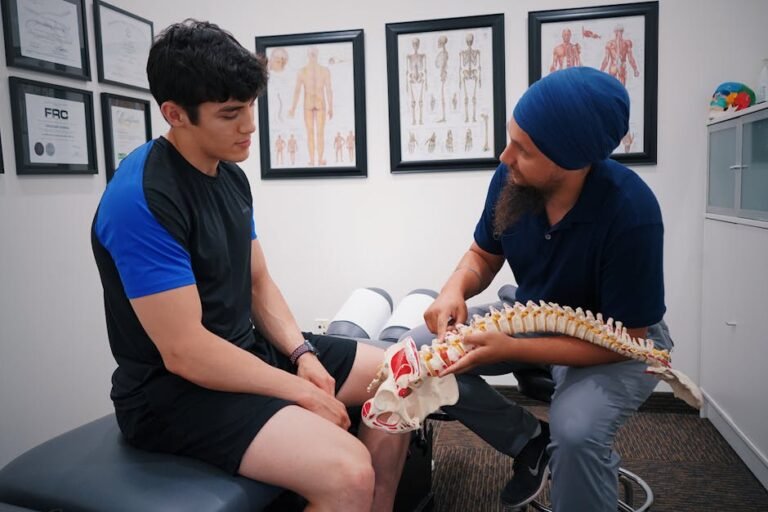
- Seek expert guidance early: A physiotherapist, osteopath, or chiropractor can help accurately diagnose both the structural issue and the muscular compensation patterns that have developed around it. They can design specific rehabilitation programmes to retrain weakened muscles, release overactive ones, and restore efficient, pain-free movement. Early intervention consistently leads to better outcomes.
The Road to Recovery: Retraining Your Spine and Its Muscles Together
Recovery from spinal pathology isn’t just about waiting for a disc to heal or a structural problem to resolve — it’s about actively retraining the relationship between your spine and its surrounding muscles. This is why rehabilitation programmes for spinal conditions so often focus on gradual, progressive exercise rather than simply rest. The goal is to rebuild the muscular coordination, strength, and flexibility that allow your spine to function as part of a fully integrated system again.
It’s worth acknowledging that this process takes time and patience. If maladaptive muscle patterns have been embedded for months or years — which is entirely common, because many people live with spinal discomfort for a long time before seeking help — the muscles need consistent, repetitive new input to “re-learn” healthier patterns. There’s no shortcut, but there is real progress available to most people who commit to the process.
Working with a qualified professional who understands both the structural and muscular dimensions of spinal pathology makes an enormous difference. They can monitor your progress, adjust exercises as you improve, and help you avoid accidentally reinforcing the same compensatory patterns you’re trying to break. Combined with the lifestyle habits described above, this approach gives you the most complete toolkit available for lasting spine health.
The Bottom Line: Your spine and its surrounding muscles are deeply, dynamically interconnected — and when spinal problems arise, the muscles play a dual role that can either support your recovery or, if left unaddressed, keep you trapped in a cycle of chronic tension and pain. By understanding this relationship, staying active, building functional strength, prioritising good movement habits, and seeking professional guidance when needed, you can actively support your spine’s healing and resilience. You have more influence over your spine health than you might think — and that’s genuinely good news.
This is not medical advice. Consult your healthcare provider before starting any new health routine or using any product mentioned here.