Shoulder Mobility for Seniors: Simple Exercises to Stay Flexible, Strong, and Independent
This post contains affiliate links. As an Amazon Associate, I earn from qualifying purchases at no extra cost to you.
Free resources — no credit card required for trial
🎧 Listen to health & wellness audiobooks free for 30 days
Start 30-Day Free Trial →
📚 Read unlimited health books free for 30 days
Try Kindle Unlimited Free →
Free resources — no credit card required for trial
🎧 Listen to health & wellness audiobooks free for 30 days
Start 30-Day Free Trial →
🛒 Recommended Products
As an Amazon Associate we earn from qualifying purchases at no extra cost to you.
Back Gel Ice Pack Wrap — Microwaveable Pain Relief Heat Pad for Upper and Lower Back Thera
$22.99
BODYPROX Pain Relief Ice Pack with Strap for Hot and Cold Therapy — Microwave Heat Pad for
$14.99
iReliev Hot and Cold Therapy Gel Pack — Reusable Freezable Microwaveable Compression Pack
$16.99
Magic Gel Ice Pack for Back Pain Relief — 2 Pack Reusable Lower Back Wrap for Hot or Cold
$19.99
Relief Expert Reusable Ice Pack for Back — Lower Back Ice Pack Wrap with Cold Compress
$17.99
📚 Read unlimited health books free for 30 days
Try Kindle Unlimited Free →
Think about how many times a day your shoulders quietly do the heavy lifting — reaching for a mug on the top shelf, pulling on a jacket, brushing your hair, or wrapping your arms around someone you love. When your shoulders move freely and without pain, these moments feel effortless. But when stiffness or aching creeps in, even the simplest tasks can start to feel like a chore. The great news? Shoulder mobility for seniors is something you can genuinely improve at any age, and it doesn’t require a gym membership or fancy equipment. This guide walks you through everything you need to know — in plain, friendly language — so you can protect your independence and keep doing the things that bring you joy.
Why Shoulder Mobility Matters More As You Age
Your shoulders are the most mobile joints in your entire body. That incredible range of movement is a gift — but it also means the shoulder is one of the first places where stiffness and discomfort tend to show up as the years go by. Tissues naturally become less elastic over time, and if we’re not actively maintaining movement, things can tighten up faster than we’d like.
Reduced shoulder mobility doesn’t just affect your comfort — it can chip away at your independence. Difficulty reaching overhead, struggling to fasten a seatbelt, or being unable to carry a grocery bag all take a quiet toll on confidence and quality of life. When movement feels limited, many people instinctively start avoiding it, which only speeds up the stiffening process. The good news is that gentle, consistent practice can interrupt that cycle and genuinely help.
Beyond comfort and independence, good shoulder mobility also supports your posture. When the muscles and tissues around your shoulders are supple and strong, you naturally hold yourself more upright — and that ripples out to benefit your neck, upper back, and even your breathing. It truly is one of the best investments you can make in your overall wellbeing.
Understanding Your Shoulder: A Simple Guide to What’s Going On Inside
You don’t need a medical degree to understand your own shoulder — just a basic picture of what’s in there. The main part of your shoulder is a ball-and-socket joint called the glenohumeral joint. This clever design is what lets your arm lift, reach, and rotate in so many directions. Supporting this joint is a ring of four small but mighty muscles and tendons called the rotator cuff. Their job is to keep the upper arm bone centred in the socket and help you lift and rotate your arm smoothly.
Your shoulder blade (scapula) and collarbone (clavicle) form a kind of supportive frame around the whole area, and larger muscles — including your deltoid, chest muscles, and upper back muscles — work as a team to provide strength and control. When all these parts are working well together, movement feels easy. When one piece of the puzzle gets stiff, irritated, or weak, the whole system can feel off.
Common challenges seniors face include rotator cuff irritation (where tendons become frayed or inflamed with age or overuse), frozen shoulder (a condition where the joint becomes painfully restricted for weeks or even months), arthritis, and posture-related tightness from rounded shoulders. Understanding what might be behind your discomfort is the first step toward addressing it with the right kind of movement.
Getting Started Safely: What to Know Before You Exercise
Before diving into any new exercise routine, a little preparation goes a long way — especially when it comes to your joints. The most important rule is simple: move within a pain-free range. A gentle pull or mild muscle fatigue is perfectly normal and fine. Sharp pain, pinching sensations, or pain that gets worse as you move are your body’s signals to slow down or stop.
Always begin with a 5–10 minute warm-up to get blood flowing to the area. Something as simple as marching in place, gentle arm swings, or slow shoulder rolls is enough to prime your joints and muscles for movement. Wear comfortable, non-slip shoes, and have a chair or wall nearby for balance support if you need it.
If you’ve had a recent shoulder injury, shoulder surgery, a known rotator cuff tear, or significant arthritis, it’s worth having a quick chat with your doctor or physiotherapist before starting. The exercises in this guide are designed to be gentle and accessible, but your healthcare provider can help tailor things specifically to your needs. When in doubt, ask — there’s never any harm in getting a professional thumbs-up before you begin.
Simple Shoulder Mobility Exercises You Can Do at Home
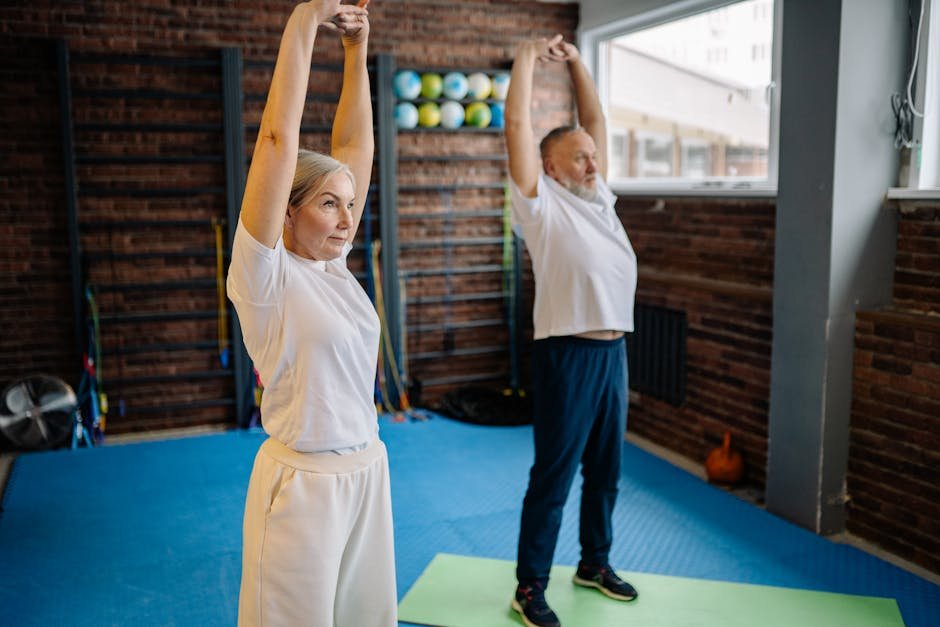
These exercises are designed specifically with seniors in mind — low-impact, easy to modify, and effective when done consistently. You don’t need to do them all at once. Starting with just two or three and building from there is a perfectly sensible approach.
Gentle shoulder circles are a wonderful starting point. Simply sit or stand tall, relax your shoulders, and slowly roll them forward in small circles for ten repetitions, then backward for ten. Keep the movement smooth and breathe steadily. If you feel any pinching, make the circles smaller.
Pendulum swings are brilliant for improving passive range of motion without putting stress on the joint. Stand beside a table, rest one hand on the surface for support, lean slightly forward, and let the other arm hang freely. Gently swing it in small, relaxed circles or side-to-side movements for 20–30 seconds. Let gravity do the work — this isn’t about forcing the arm anywhere.
The wall finger walk is a gentle way to improve how far you can reach upward. Stand facing a wall, place your fingertips on it at waist height, and slowly walk them upward as far as is comfortable, then back down again. Repeat 6–10 times. If standing feels tricky, this can also be done seated at a table.
Scapular squeezes help strengthen the muscles around your shoulder blades, which supports better posture and shoulder alignment. Sit or stand tall and gently squeeze your shoulder blades together as though you’re trying to hold a pencil between them. Hold for 3–5 seconds and release. Aim for 10–15 repetitions. This simple move does more for your posture than most people realise.
The doorway chest stretch targets tightness in the chest and front of the shoulders — a common culprit behind limited shoulder movement. Stand in a doorway, rest your forearms on the frame at shoulder height, and gently step forward until you feel a comfortable stretch across the chest. Hold for 15–30 seconds and repeat 2–3 times. A light resistance band (available on Amazon and widely recommended for home exercise) can also be used for gentle chest-opening exercises if a suitable doorway isn’t available.
For those ready to add a little gentle strengthening, external rotation with a light resistance band is excellent for the rotator cuff. Bend your elbow to 90 degrees, keep it close to your side, and slowly rotate your forearm outward away from your body, then return. Two sets of 8–12 repetitions on each side, using very light resistance, is plenty. Focus on slow, controlled movement rather than speed or force.
What You Can Do: Practical Tips for Building a Lasting Routine
Knowing the exercises is one thing — making them a regular part of your life is where the real magic happens. Here are some practical, down-to-earth tips to help you build a shoulder mobility routine you’ll actually stick with:
- Start small and build gradually. Begin with just 1–2 mobility exercises and 1–2 gentle strengthening moves. Add more repetitions or a new exercise only when you’re feeling comfortable with what you’re doing.
- Aim for 2–3 sessions per week. Every day isn’t necessary — in fact, rest days between sessions give your body time to recover and adapt. Twice a week consistently will serve you far better than daily sessions that leave you sore.
- Keep sessions short and enjoyable. Even 15–20 minutes is enough to make a meaningful difference over time. Pair your exercises with something you enjoy — your favourite radio programme, a podcast, or a sunny spot by the window.
- Always warm up first. Even five minutes of gentle movement before you start makes the exercises more comfortable and reduces the risk of irritation.
- End with a brief cooldown. Slow, gentle stretches and a few deep breaths signal to your body that it’s time to relax. This also helps reduce any mild post-exercise stiffness.
- Listen to your body every single session. Some days you’ll feel more mobile than others — that’s completely normal. Adjust your effort level accordingly and never push through sharp pain.
- Use props that make things easier. A towel, a chair, a resistance band, or a wall — these simple tools make many exercises safer and more accessible. You don’t need anything elaborate.
- Track your progress in a simple notebook. Noting what you did and how you felt can be surprisingly motivating and helps you see how far you’ve come over weeks and months.
When to Seek Professional Help for Shoulder Pain
While gentle exercise is wonderful for maintaining and improving shoulder mobility, there are times when your body is asking for more targeted professional attention. Knowing when to reach out for help is just as important as knowing which exercises to do.
If you experience severe shoulder pain, numbness, swelling, warmth, or any visible deformity, seek medical attention promptly — don’t try to exercise through it. Similarly, if you’ve had a recent shoulder injury and pain isn’t settling down after a couple of weeks of gentle movement, it’s worth having it properly assessed. A physiotherapist can evaluate your specific situation and design a personalised program that’s safe and effective for you.
People with a history of rotator cuff tears, shoulder replacement surgery, significant arthritis, diabetes, nerve issues, or heart conditions that affect exercise should always check with their doctor before beginning a new exercise program. This isn’t about being overly cautious — it’s about making sure the exercises you’re doing are truly helping, not inadvertently making things worse. Your healthcare team wants you to move more and feel better; they’re on your side.
Finally, if a sharp or sudden pain occurs during any exercise — especially if it’s accompanied by weakness or difficulty moving the arm — stop immediately and consult a professional. These are signs that something may need attention beyond a home exercise program, and getting it checked early usually means a faster and smoother recovery.
The Bottom Line: Shoulder mobility for seniors is one of the most practical and rewarding things you can work on for your long-term independence and comfort. By understanding how your shoulders work, recognising the common challenges that come with age, and committing to a gentle, consistent exercise routine, you can genuinely improve your flexibility, strength, and confidence in everyday movement. You don’t need hours in the gym or any special skills — just a towel, a wall, a few minutes several times a week, and a willingness to be kind and patient with yourself. Small, steady steps really do add up. Your shoulders have carried you through a lifetime of moments; with a little care and attention, they’ll keep doing so for many years to come.
This is not medical advice. Consult your healthcare provider before starting any new health routine or using any product mentioned here.