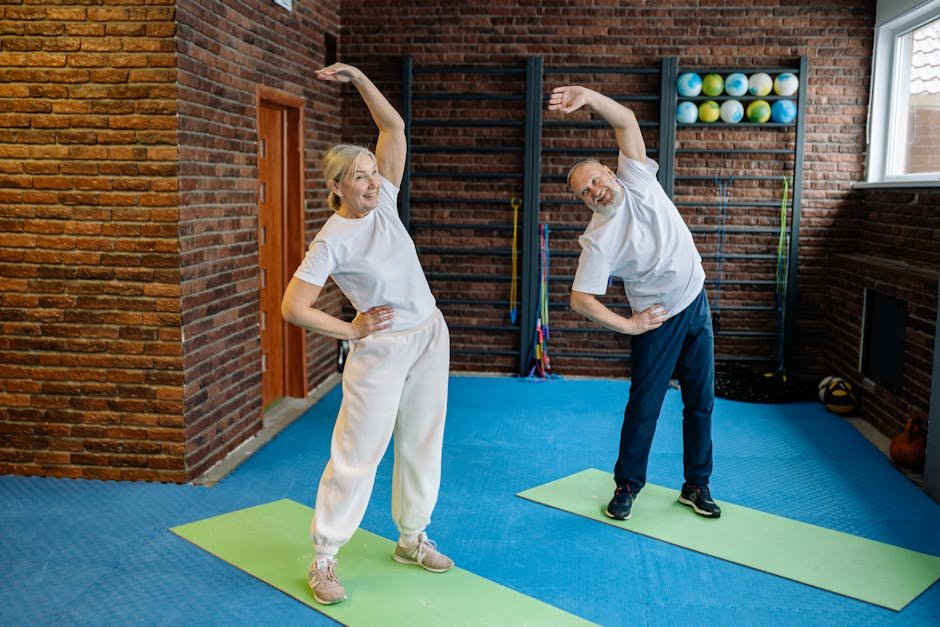
Gentle Full-Body Stretching for Seniors: A Simple Daily Flow to Stay Mobile and Feel Great
This post contains affiliate links. As an Amazon Associate, I earn from qualifying purchases at no extra cost to you.
Free resources — no credit card required for trial
🎧 Listen to health & wellness audiobooks free for 30 days
Start 30-Day Free Trial →
🛒 Recommended Products
As an Amazon Associate we earn from qualifying purchases at no extra cost to you.
TheraBand First Step to Active Health Kit — Senior Exercise Program for Balance and Fall P
$19.99
EZ Off Jar Opener for Seniors — Under Cabinet Jar Opener for Weak Hands and Arthritis
$9.99
Omron 5 Series Upper Arm Blood Pressure Monitor — 2-User 100-Reading Memory Wide-Range Cuf
$44.99
OMRON 7 Series Wireless Wrist Blood Pressure Monitor — Clinically Validated with Connect A
$69.99
Vitality 4 Life Senior Resistance Band with Instruction Guide — Specifically for Elderly F
$16.99
📚 Read unlimited health books free for 30 days
Try Kindle Unlimited Free →
If your mornings start with stiff joints, tight shoulders, or that familiar ache in your hips, you’re not alone — and the good news is, there’s something wonderfully simple you can do about it. Gentle full-body stretching for seniors is one of the most accessible, low-risk, and genuinely rewarding habits you can add to your day. It doesn’t require a gym membership, fancy equipment, or an hour of your time. Just a few mindful minutes of slow, comfortable movement can help you get up from a chair more easily, walk with more confidence, and carry a little more calm into everything you do. This post walks you through a complete, beginner-friendly stretching flow — and how to make it a natural part of your daily life.
Why Gentle Full-Body Stretching Matters So Much as We Age
As we get older, our muscles naturally lose some of their elasticity, and our joints can become less fluid and more prone to stiffness. This isn’t something to fear — it’s simply how the body changes over time. But the beautiful thing is that regular, gentle movement can slow that process considerably and help you maintain the range of motion you need for everyday activities.
Think about the movements you rely on every single day: getting in and out of a chair, reaching for something on a shelf, tying your shoes, taking a walk around the block. All of these require a baseline of flexibility and joint mobility that, when maintained, makes life feel so much easier. Gentle stretching supports that baseline in a way that’s kind to your body rather than demanding of it.
Beyond the physical benefits, there’s a real mental health component too. Taking even 10 minutes to move slowly and breathe intentionally can reduce stress, lift your mood, and give you a quiet moment of connection with your own body. It’s not just exercise — it’s self-care in its most practical form.
Before You Begin: Safety Tips to Keep in Mind
Stretching is wonderfully gentle by nature, but a few sensible precautions will make sure your practice stays safe and enjoyable. First and most importantly, if you have a chronic health condition, have had recent surgery, live with osteoporosis, or have significant balance concerns, it’s worth having a quick conversation with your doctor before starting any new movement routine. They can give you personalised guidance and peace of mind.
When you’re stretching, the golden rule is this: never push into pain. A stretch should feel like a gentle, almost pleasant pulling sensation — not sharp, not burning, not painful. If something hurts, ease off or skip that particular stretch for now. Move slowly in and out of each position, and never bounce in a stretch, which can strain the muscle rather than help it.
Set yourself up for success with a few practical preparations. Wear comfortable, non-restrictive clothing and supportive, non-slip footwear. Have a sturdy chair, wall, or countertop nearby to use for balance support whenever you need it. And breathe naturally throughout — inhale to prepare for a movement, and exhale as you ease gently into the stretch. That simple breathing rhythm makes a real difference.
Your Gentle Full-Body Stretching Flow: Step by Step
This nine-stretch flow moves through the whole body from top to toe, starting at the neck and shoulders and working down through the hips, legs, and ankles. Every stretch has seated, standing-with-support, and standing-without-support options — so you can choose whatever feels safest and most comfortable for you on any given day. There’s no pressure to do the “hardest” version. The version that feels right for your body today is always the right one.
Neck Release: Sit or stand tall, then gently tilt your head so your ear moves toward your shoulder. Hold for 15–20 seconds, then switch sides. This eases tension that builds up from sitting or sleeping in one position.
Shoulder Circles and Release: Roll your shoulders up, back, and down in slow, smooth circles — five to eight times in each direction. Finish by gently squeezing your shoulder blades together, then releasing. This is wonderful for anyone who spends time at a desk or hunched forward.
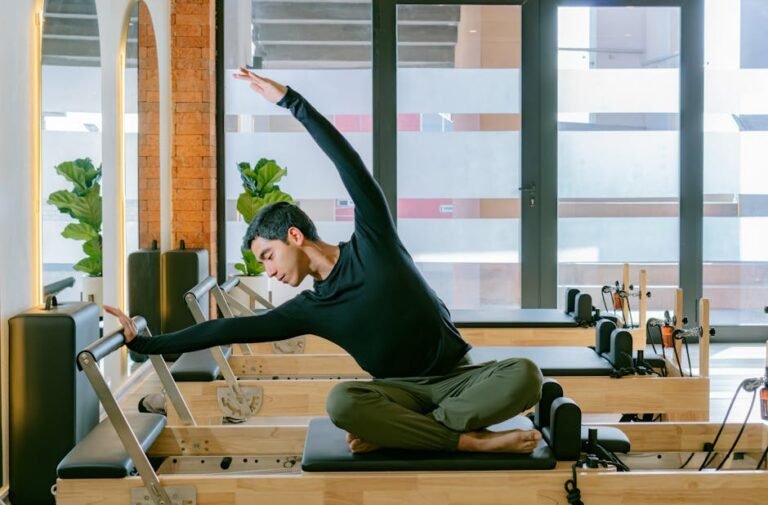
Arm Reach and Side Stretch: Extend one arm overhead and lean gently to the opposite side to feel a lovely stretch along your ribcage and shoulder. Hold 15–20 seconds, then switch. Even a small lean counts — go only as far as feels comfortable.
Chest and Upper Back Opener: Stand at a doorway or beside a wall and place your palm and forearm on the surface. Gently turn your chest away to open up the front of the shoulder and chest. This one is especially helpful if you tend to hunch forward.
Gentle Seated Spinal Twist: Sitting tall, place one hand on the opposite knee and gently rotate your torso to one side, keeping your hips still. Hold 15–20 seconds, then switch. A short, controlled twist is all you need.
Hip and Glute Opener (Figure Four): Seated, cross one ankle over the opposite knee and lean forward slightly from the hips. You’ll feel a gentle stretch deep in the hip and backside — one of the most satisfying stretches in this whole flow.
Hamstring Stretch: Either seated with your legs extended or standing with hands on a chair for support, hinge gently at the hips to feel a stretch at the back of your thighs. Keep a slight bend in the knees and let your spine stay long rather than rounding over.
Calf and Ankle Mobility: Standing near a wall, step one foot back and press your heel down to stretch the calf. If seated, simply lift and lower your heels and gently circle your ankles. Ankle mobility is surprisingly important for balance and walking steadily.
Final Deep Breath and Spine Lengthening: Stand or sit tall, inhale slowly through the nose, and exhale gently through the mouth. Let your shoulders soften and your spine grow tall. This is your moment to close the practice with calm and renewed posture.
What You Can Do: Practical Tips for Making This a Daily Habit
The biggest challenge with any new routine isn’t the stretching itself — it’s getting started consistently. Here are some practical, realistic ways to weave gentle stretching into your day so it becomes second nature rather than another item on the to-do list.
- Pick a regular time and stick to it. Morning stretching after waking up is popular because it eases stiffness before the day begins. But before bed, after a short walk, or even during a TV programme all work just as well. The key is consistency, not perfection.
- Start small. If the full nine-stretch flow feels like a lot, begin with just three or four stretches and build from there. Even five minutes a few times a week delivers real benefits over time.
- Use a chair for every stretch if needed. There is absolutely no shame in doing this entire routine seated. A supported practice done consistently beats an unsupported one done occasionally.
- Coordinate your breath with your movement. Each time you exhale, let yourself ease a little more into the stretch. This pairing of breath and movement deepens the sense of release without any forcing.
- Create a welcoming space. A warm, quiet corner, a familiar chair, maybe some soft background music — these small touches make the practice feel like a ritual worth looking forward to rather than a chore.
- Use a strap, towel, or resistance band to help you reach your feet during hamstring stretches if bending forward is difficult. These are simple, inexpensive tools that make a big difference in accessibility.
- Keep a simple journal note. Jotting down a quick line about how a stretch felt — easier than yesterday, a bit tight on the left side — helps you track your progress and adjust your routine thoughtfully.
- Set a gentle reminder. A note on the fridge, a phone alarm, or a calendar alert can be all the nudge you need to pause and stretch on busy days.
Adapting the Flow for Every Mobility Level
One of the things that makes this stretching flow so valuable is that it genuinely works for a wide range of mobility levels. You don’t need to be flexible to start — in fact, if you’re quite stiff at the moment, that’s exactly when gentle stretching can help the most. The routine has three adaptable levels, and you can move fluidly between them depending on how your body feels each day.
Level 1 (Seated): Perform every single stretch from a sturdy chair. Keep your feet flat on the floor, your back supported, and your hands on your thighs between movements. Use a strap or towel to help you reach when needed. This level is ideal for anyone with significant balance concerns, recent surgery, or those who are just starting out.
Level 2 (Standing with Support): Use a chair back, countertop, or wall to provide stability while you stand through the stretches. Your range of motion might be smaller than the “full” version, and that’s perfectly fine. Focus on controlled, aligned movements rather than reaching as far as possible.
Level 3 (Standing Without Support): Use the full range of movement, but maintain a soft bend in your knees and a tall spine throughout. Progress gradually and never sacrifice safety for depth of stretch. If any position feels unstable, simply return to Level 2 without a second thought.
Remember, your best stretch today might look quite different from your best stretch in a month’s time — and both are equally valid. This is about honouring where your body is right now and supporting it gently forward.
How Gentle Stretching Supports Your Independence and Wellbeing
There’s something quietly powerful about committing to a daily stretching practice. Over time, many people find that the small physical improvements — being able to reach the top shelf a little more easily, getting up from a low sofa without as much effort, walking with a slightly more upright posture — add up to a meaningful shift in how they feel day to day. Mobility and independence are deeply connected, and every stretch you do is an investment in both.
Beyond the physical, there’s the mental and emotional dimension. Taking time each day to move your body slowly and breathe intentionally is a form of mindfulness. It brings you into the present moment, quiets mental noise, and can genuinely brighten your mood. Many people find their stretching time becomes one of the most peaceful parts of their day — a quiet ritual that belongs entirely to them.
It’s also worth noting that the confidence gained from moving more freely tends to ripple outwards. When you trust your body a little more, you may find yourself more willing to go for that walk, join a friend for an outing, or try a gentle exercise class. Stretching isn’t just about flexibility — it’s about feeling at home in your body again.
The Bottom Line: A gentle full-body stretching routine is one of the most accessible and genuinely beneficial things a senior can do for their health and quality of life. By moving slowly through this nine-stretch flow — adapted to your comfort level, supported as needed, and done consistently — you can reduce stiffness, support joint mobility, improve your posture, and bring a little more calm into your day. You don’t need to be flexible, athletic, or pain-free to start. You just need a few minutes, a sturdy chair nearby, and a willingness to show up for yourself. Start gently, listen to your body, and enjoy every small step forward.
This is not medical advice. Consult your healthcare provider before starting any new health routine or using any product mentioned here.