How Stress Increases Pain — and What Seniors Can Do to Find Real Relief
This post contains affiliate links. As an Amazon Associate, I earn from qualifying purchases at no extra cost to you.
Free resources — no credit card required for trial
🎧 Listen to health & wellness audiobooks free for 30 days
Start 30-Day Free Trial →
🛒 Recommended Products
As an Amazon Associate we earn from qualifying purchases at no extra cost to you.
TheraBand First Step to Active Health Kit — Senior Exercise Program for Balance and Fall P
$19.99
EZ Off Jar Opener for Seniors — Under Cabinet Jar Opener for Weak Hands and Arthritis
$9.99
Omron 5 Series Upper Arm Blood Pressure Monitor — 2-User 100-Reading Memory Wide-Range Cuf
$44.99
OMRON 7 Series Wireless Wrist Blood Pressure Monitor — Clinically Validated with Connect A
$69.99
Vitality 4 Life Senior Resistance Band with Instruction Guide — Specifically for Elderly F
$16.99
📚 Read unlimited health books free for 30 days
Try Kindle Unlimited Free →
Have you ever noticed that after a particularly stressful day — a difficult phone call, a pile of worries about family or money — your body seems to hurt more? Your shoulders feel like concrete, your back aches in ways it didn’t that morning, and even small twinges shout louder than usual. If this sounds familiar, you are absolutely not imagining it. Stress increases pain in very real, physical ways, and understanding that connection is the first step toward feeling better. The wonderful news is that you don’t need to overhaul your entire life to make a difference. Gentle, practical steps taken one day at a time can help ease both the stress and the pain that travel alongside it.
Why Stress and Pain Are So Closely Connected
When your brain senses stress — whether it’s a financial worry, a health scare, or even a tense conversation — your body responds the way it has for thousands of years: it prepares to protect you. Muscles tighten, especially around the neck, shoulders, and lower back. Your breathing becomes shorter and shallower. Your heart beats a little faster. In the short term, this is your body doing its job. But when stress hangs around day after day, that constant muscle tension becomes its own source of pain, and the cycle is hard to shake.
Sleep is another big piece of this puzzle. Stress tends to disturb rest — causing you to wake often, lie awake with racing thoughts, or simply feel unrefreshed in the morning. And here’s the catch: poor sleep makes your body significantly more sensitive to pain. Something that was a mild ache the day before can feel sharp and demanding after a restless night. It’s not weakness; it’s biology.
Your mood plays a role too. Worry, frustration, and sadness can lower your ability to cope with discomfort, making pain feel more overwhelming than it might otherwise. This isn’t a character flaw — it’s simply how the mind and body work together. The good news is that working on one side of this equation — either the stress or the pain — tends to improve the other side as well.
Real-Life Ways Stress Makes Pain Worse (You’ll Recognise These)
Think about a morning that started with tension — maybe a difficult conversation or a nagging worry about an appointment. By midday, your back is stiff, and bending to pick something up feels uncomfortable. The stiffness makes you move more carefully, you brace your muscles, and that bracing creates even more tension. Before long, what started as emotional stress has become very physical pain.
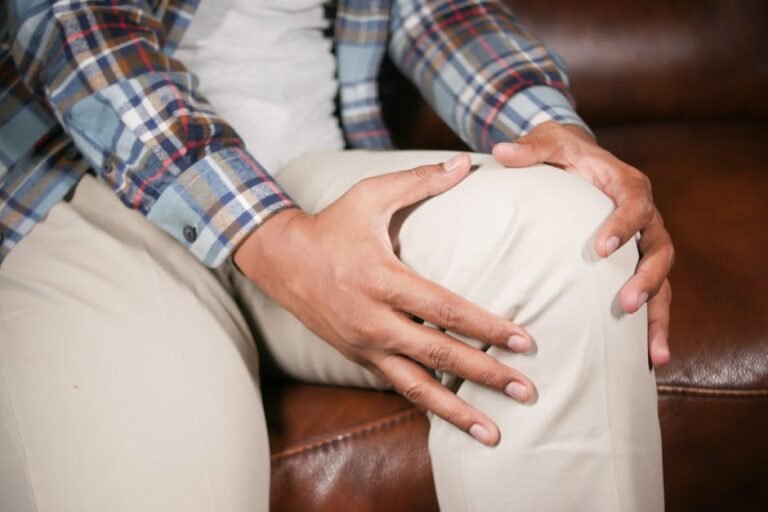
Or perhaps a phone call with upsetting news left you with a heavy, throbbing headache by the afternoon. Shallow breathing during a stressful moment tightens the muscles around your head and neck, and that tension is a classic headache trigger. Similarly, a stressful day of trying to manage tasks around the house can leave your knees or hips aching more than usual — and then the worry about not finishing everything adds another layer of tension on top.
Recognising these patterns in your own life is genuinely empowering. Once you can see the stress-pain cycle clearly, you can start to interrupt it — and even small interruptions make a real difference over time.
How Stress Increases Pain — and How Gentle Movement Breaks the Cycle
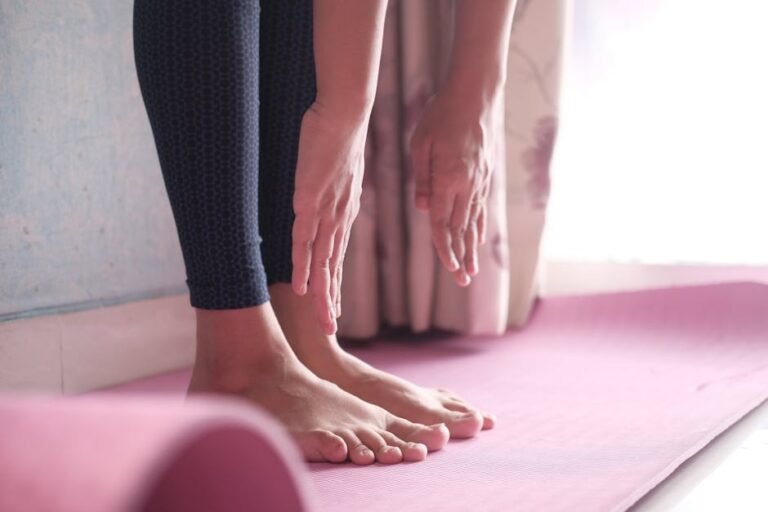
One of the most effective ways to ease both stress and pain is through gentle, consistent movement. This doesn’t mean pushing yourself through a workout or doing anything that feels uncomfortable. Even five or ten minutes of careful movement each day can ease stiffness, improve circulation, and signal to your nervous system that it’s safe to relax.
If you prefer to start seated, a sturdy chair is all you need. Try slow neck tilts — gently nodding your head and tilting it side to side — followed by shoulder rolls, lifting your shoulders up and rolling them back and down. Ankle pumps, where you simply point and flex your feet, are excellent for circulation and can be done while watching television or listening to the radio. These small movements loosen tight areas without putting any stress on your joints.
A short walk is also wonderfully effective. Even a five-minute stroll around your home or yard can ease muscle stiffness and lift your mood. If you use a walking aid, that’s perfectly fine — pace yourself, stay on familiar ground, and focus on how much better your body tends to feel afterwards. Consistency matters far more than length here. A small daily routine will serve you much better than an occasional long effort.
Breathing, Rest, and Mindfulness: Calming Your Body from the Inside Out
Your breath is one of the most powerful — and underused — tools for managing stress and pain. When you’re stressed, breathing becomes shallow and quick, which actually keeps your body in a state of tension. Deliberately slowing your breath sends a message to your nervous system that the threat has passed, and muscles begin to release.
Try this simple technique: breathe in slowly through your nose for a count of four, then breathe out through your mouth for a count of six. Repeat this six to ten times. You can do this sitting in your favourite chair, lying in bed, or even during a quiet moment in the kitchen. Just one or two minutes of this kind of breathing can noticeably reduce muscle tension and help you feel calmer and more in control.
A good night’s sleep is equally important. Try to go to bed and wake up at roughly the same time each day — your body loves rhythm. In the hour before bed, dim the lights, step away from bright screens, and do something quiet and enjoyable, like reading or listening to soft music. A warm bath or shower before bed is especially lovely — the warmth soothes tired muscles and makes it easier to drift off. A supportive pillow that keeps your neck comfortable overnight is worth its weight in gold.
Mindfulness doesn’t have to be complicated either. Simply naming what you’re feeling — saying to yourself, “I feel stressed about this right now” — can gently loosen the grip of that emotion. A slow body scan, where you mentally notice each part of your body from head to toes and breathe into any areas of tension, takes only a few minutes and can leave you feeling noticeably lighter.
What You Can Do: Practical Tips for Managing Stress and Pain at Home
Here is a collection of gentle, safe strategies you can try at home. You don’t need to do all of these — pick one or two that feel right, and add more when you’re ready.
- Start with just one small habit. Choose one technique from this list and commit to it for a week before adding another. Small, steady steps stick better than big, overwhelming changes.
- Use heat to soothe muscle stiffness. A warm towel, a heating pad on a low setting, or a warm bath can ease tight muscles beautifully. Always use a barrier between a heat pad and your skin, and never fall asleep with a heating pad switched on.
- Try a cold pack for swollen or tender joints. Wrap a cold pack in a towel and apply it to a sore joint for about 15 minutes, followed by rest. Never apply ice directly to skin.
- Schedule a daily “joy break.” Set aside five to ten minutes a few times a day for something you genuinely enjoy — listening to music, tending to a plant, doing a puzzle, or a little gentle knitting. Pleasure is a genuine pain-reliever.
- Reach out to someone you trust. A short phone call with a friend or family member can lift your mood and lower stress measurably. You don’t need to talk about your pain — just connect.
- Check your seating and environment. Use chairs that support your back, sit with both feet flat on the floor, and make sure your home has good lighting and clear walkways. A non-slip mat in the bathroom and grab bars where needed can prevent falls and give you confidence.
- Have a plan for difficult days. When pain flares, decide in advance which small comfort you’ll reach for — a few slow breaths, a warm bath, or a gentle seated stretch. Having a plan means you won’t feel helpless when a bad day arrives.
- Use helpful tools to reduce strain. Long-handled reachers, grip aids, and stable stools for standing tasks can make daily activities much easier and prevent you from aggravating pain.
- Consider gentle self-massage. Using your own hands to softly rub your neck, shoulders, or arms can release tension. Even a few minutes of gentle pressure can help.
- Explore community support. Senior centres, faith groups, and community volunteers offer free or low-cost connection and sometimes activity programmes that are ideal for this kind of gentle, regular routine.
When to Ask for Help — and What to Watch For
While the strategies above are safe and gentle for most people, it’s always wise to check in with your healthcare provider before starting any new exercise routine, especially if you have heart concerns, joint conditions, diabetes, or a recent injury. Your doctor knows your specific situation and can help you tailor any approach to what’s safest for you.
It’s also important to be aware of warning signs that need prompt medical attention. If your pain is new, significantly worse than usual, or comes with symptoms like numbness, weakness, fever, a sudden severe headache, or any chest discomfort, please contact a healthcare professional without delay. These symptoms need to be properly evaluated rather than managed at home.
Medication safety matters too. Over-the-counter pain relievers and sleep aids can be helpful, but they should never be mixed with alcohol or other medications without your doctor’s guidance. Always read labels carefully, and don’t hesitate to ask your pharmacist or doctor if you’re unsure about any combination. If you ever feel dizzy or unsteady during any activity, sit down and rest — fall prevention is a priority, and there is no rush that is worth the risk.
The Bottom Line: Stress and pain have a genuine, physical connection — but that connection runs both ways. By gently addressing stress through movement, breathing, rest, and connection, you can also ease pain; and by soothing physical discomfort, you naturally reduce some of the stress that comes with it. You don’t need to make sweeping changes overnight. Start with one small, comfortable step — a few slow breaths, a short walk, a warm bath before bed — and build from there at your own pace. You deserve comfort and ease, and these gentle, steady actions really do add up over time. Every small, thoughtful thing you do for yourself is a meaningful step in the right direction.
This is not medical advice. Consult your healthcare provider before starting any new health routine or using any product mentioned here.