Safe Kneeling Alternatives for Seniors: How to Keep Doing Yoga Without the Knee Pain
This post contains affiliate links. As an Amazon Associate, I earn from qualifying purchases at no extra cost to you.
Free resources — no credit card required for trial
🎧 Listen to health & wellness audiobooks free for 30 days
Start 30-Day Free Trial →
🛒 Recommended Products
As an Amazon Associate we earn from qualifying purchases at no extra cost to you.
EZ Off Jar Opener for Seniors — Under Cabinet Jar Opener for Weak Hands and Arthritis
$9.99
Back Gel Ice Pack Wrap — Microwaveable Pain Relief Heat Pad for Upper and Lower Back Thera
$22.99
BODYPROX Pain Relief Ice Pack with Strap for Hot and Cold Therapy — Microwave Heat Pad for
$14.99
Otstar Jar Opener Bottle Opener Can Opener for Seniors with Arthritis and Low Strength
$11.99
iReliev Hot and Cold Therapy Gel Pack — Reusable Freezable Microwaveable Compression Pack
$16.99
📚 Read unlimited health books free for 30 days
Try Kindle Unlimited Free →
If you’ve ever rolled out your yoga mat and thought, “I just can’t get down on my knees anymore,” you are absolutely not alone. Millions of older adults love yoga for the way it calms the mind, gently stretches the body, and builds quiet strength — but kneeling poses can be a real barrier. Whether it’s creaky knees, hip tightness, balance concerns, or a condition like osteoarthritis, kneeling on a hard floor can feel uncomfortable at best and painful at worst. The wonderful news? You don’t have to kneel to enjoy all the benefits of a meaningful yoga practice. This guide to safe kneeling alternatives for seniors will show you exactly how to keep moving, keep stretching, and keep feeling great — all while protecting your most precious joints.
Why Kneeling Can Be Tricky for Seniors — And Why That’s Okay
First, let’s take the guilt out of the equation. If kneeling has become uncomfortable, that’s not a personal failing — it’s your body giving you useful information. As we age, a number of perfectly normal changes can make kneeling poses feel less like a stretch and more like a strain. Osteoarthritis, for example, is extremely common in adults over 60 and can make direct pressure on the kneecap genuinely painful. Previous knee or hip injuries, even ones from decades ago, can also show up again when you spend time on the floor.
Beyond the knees themselves, deep knee bending can compress the hip joints or put unexpected pressure on the lower back, especially when the hips don’t move as freely as they once did. Balance and stability are another important factor — kneeling requires solid leg and core control, and a sudden wobble on a slick mat can turn a peaceful yoga session into a fall risk. For those managing osteoporosis, abrupt loading on the knees or hips carries extra concern. And if you’ve ever noticed tingling or numbness after kneeling for a while, that’s your nerves and circulation signaling that they’d prefer a different position, thank you very much.
The empowering truth is that yoga has always been about adaptation. Every single pose has a modification, and the spirit of the practice is about how you feel inside, not whether your body looks a certain way from the outside. By choosing smart kneeling alternatives, you’re not giving up on yoga — you’re practising it more wisely.
Seated Alternatives for Seniors: Spinal Warmups That Actually Work
One of the most popular kneeling sequences in yoga is Cat-Cow — that lovely spinal wave that warms up the back and releases tension through the shoulders. Traditionally done on all fours, it’s easily reimagined in a chair, and honestly, the seated version is wonderfully effective. Sit tall on a sturdy chair with your feet flat on the floor, hip-width apart. Place your hands on your thighs, then inhale to arch your back gently and lift your chest. Exhale to round the spine, tuck your chin, and draw your navel in. Flow through six to eight slow, breath-led cycles and notice how your whole back begins to soften.
For stretching the back of your legs and lengthening the spine without any floor kneeling, a seated forward fold is a brilliant option. You can do this right in your chair or at the edge of a yoga mat. Loop a yoga strap, a soft belt, or even a scarf around the soles of your feet. As you inhale, sit tall and lengthen; as you exhale, slowly hinge forward from the hips, letting the strap support your reach rather than forcing your body into a deeper bend than it wants. Hold for four to six easy breaths, then come back up with your next inhale. If your hamstrings feel tight, keep the fold modest — a little goes a long, long way.
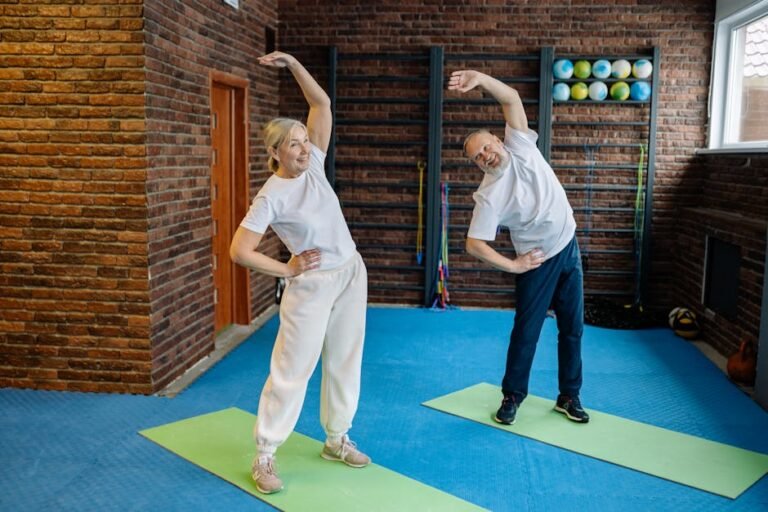
Seated side bends and gentle twists are also fantastic chair-based movements that open the sides of the body and give the lower back some breathing room. Reach one arm overhead, lean gently to the opposite side, and use your free hand on the chair seat for support. For a mild twist, place one hand on the back of the chair and rotate your torso slowly while keeping your hips grounded. Remember: smaller, slower movements are more therapeutic than dramatic ones. Comfort is the goal, not the deepest possible range of motion.
Standing Poses with Chair Support: Your Gateway to Safe Senior Yoga
Standing poses are some of the most accessible and beneficial movements in yoga, especially when a chair is nearby. The chair isn’t a crutch — it’s a smart tool that lets you focus on alignment, breath, and strength without worrying about balance. Start with Mountain Pose: stand behind a sturdy chair with your hands resting lightly on the back. Lengthen your spine, soften your knees slightly, and simply breathe. This deceptively simple pose activates your core, steadies your nervous system, and sets you up beautifully for more movement.
From Mountain Pose, try a gentle standing forward fold by hinging at the hips and holding the chair seat for support. Keep a soft bend in your knees the whole time — this protects the joints and allows your hamstrings to release gently rather than suddenly. For a slightly more dynamic option, step your feet wide apart, place your hands on the chair or a yoga block in front of you, and fold forward into a wide-leg standing fold. This position opens the inner thighs and lower back without ever putting weight on your knees.
Always make sure your chair is on a non-slip surface, and position yourself with enough room to move freely in all directions. If balance is a concern on any given day, practise next to a wall or ask a family member to be nearby. Distribute your weight evenly through both feet, and avoid the habit of locking your knees straight — a micro-bend keeps the joints happy and the muscles engaged.
Gentle Floor Options: Making Friends with Props
For those who do enjoy some time on the floor but want to protect their knees, the secret is generous use of props. A thick folded blanket or firm cushion placed under the hips can dramatically reduce knee compression in seated floor positions. Sitting higher means your knees are at a more comfortable angle, your spine is naturally longer, and your whole body relaxes more easily into the pose.
If you’d like to explore a Tabletop-style position — the base pose for kneeling Cat-Cow — try placing a folded blanket or yoga knee pad under your shins rather than directly under the kneecap. This distributes pressure more evenly and makes the position far gentler. From a cushioned Tabletop, you can gently flow through Cat-Cow movements before rolling into a comfortable seated position.
A supported Child’s Pose is another wonderful floor option. Rather than sinking back onto your heels in the traditional way, place a bolster or a stack of folded blankets under your chest and rest your forehead on a block or rolled towel. This version gives you all the restorative back and hip opening of Child’s Pose without compressing the knees. It’s deeply restful and feels genuinely nurturing. If at any point you notice numbness, tingling, or a sharp sensation, ease out of the position slowly and rest — that’s your body’s way of asking for a break.
Hip Openers Without Kneeling: Mobility That Matters
Hip mobility is one of the most important things we can maintain as we get older. Tight hips affect how we walk, climb stairs, stand up from chairs, and sleep. The good news is that some of the most effective hip-opening movements in yoga require absolutely no kneeling at all.
The seated figure-four stretch is a favourite for good reason. Sitting tall in your chair, cross your right ankle over your left knee, keeping both sit bones grounded. Gently use your hand to ease the right knee away from your chest, and feel the outer hip and glute begin to release. Hold for several comfortable breaths, then switch sides. You can also loop a strap around your thigh to help guide the movement without forcing it.
For a beautifully relaxing supine option, try lying on your back with the soles of your feet together and your knees falling open to the sides — a pose called Bound Angle or Butterfly. Slide a cushion or bolster under each knee for support so your hips can fully relax. Close your eyes, breathe deeply, and let gravity do the gentle work of softening the inner thighs and lower back. This is an especially lovely pose to include at the end of a practice session, when your body is warm and your mind is ready to rest.
What You Can Do: Practical Tips for Safe Kneeling Alternatives in Your Yoga Practice
Putting all of this together doesn’t need to be complicated. Here’s a simple set of guidelines to help you build a safe, enjoyable, and consistent senior yoga practice without the stress of kneeling:
- Start with a sturdy chair. A solid, armless chair placed on a non-slip mat is one of the most versatile yoga props you can own. Use it for seated poses, standing balance support, and gentle twists.
- Stock up on cushioning. Folded blankets, firm cushions, and yoga bolsters are your best friends on the floor. Use them generously under the hips, shins, or knees to reduce compression and make poses more comfortable.
- Keep a yoga strap or soft belt handy. A strap allows you to reach your feet, deepen a forward fold, or guide a stretch without straining. It extends your range safely and removes the temptation to force a position.
- Bring the floor to you with blocks. Yoga blocks (or thick hardback books in a pinch) raise the floor so you can fold forward comfortably without rounding the back.
- Lead with your breath. Inhale to lengthen and create space; exhale to soften and release. Letting your breath guide each movement keeps you connected to how your body feels moment to moment.
- Move slowly and without rushing. Transitioning in and out of poses deliberately reduces the risk of sudden joint pressure or a loss of balance.
- Listen to your body every single session. Some days hips feel more open, some days knees feel stiffer. Adjust your practice accordingly and never push through sharp pain.
- Consider a session with a senior yoga instructor. Even one or two sessions with a qualified teacher who specialises in senior or gentle yoga can give you personalised modifications that make your home practice much safer and more effective.
- If you have osteoporosis, recent surgery, or significant joint pain, check with your healthcare provider before starting or changing your yoga routine.
Building Consistency: Making Safe Senior Yoga a Daily Habit
One of the most powerful things about yoga as a self-care practice for seniors is that even ten or fifteen minutes a day can make a meaningful difference. You don’t need a full hour on the mat to notice improvements in flexibility, balance, and mood. In fact, shorter, regular sessions often serve older bodies better than infrequent, longer ones. The nervous system adapts, the joints stay lubricated, and the muscles maintain their gentle tone when movement is consistent and kind.
Try building a simple routine around two or three of the alternatives described in this post. A morning practice might begin with seated Cat-Cow to wake up the spine, followed by a forward fold with a strap, and finish with a figure-four hip stretch in the chair. An evening wind-down could include a supported Child’s Pose variation, supine Bound Angle with cushions, and a few minutes of quiet breathing. These kinds of sequences take less than fifteen minutes and leave most people feeling noticeably calmer, looser, and more centred.
Celebrate the small wins — a breath that felt freer than yesterday, a hip that released a little more easily, a morning when you got out of bed feeling steadier. These moments accumulate into genuine wellbeing over time, and they are worth noticing. Yoga for seniors is not about achieving a perfect pose; it is about showing up for yourself, day after day, with curiosity and care.
The Bottom Line: Safe kneeling alternatives for seniors open the door to a full, rich yoga practice that respects where your body is right now. By swapping traditional kneeling poses for seated movements, chair-supported standing sequences, cushioned floor work, and gentle hip openers, you can protect your knees and hips while still gaining all the flexibility, strength, and calm that yoga has to offer. The right props — a sturdy chair, a folded blanket, a yoga strap, a block — make all the difference. Move slowly, breathe mindfully, listen to your body, and know that every gentle, thoughtful movement is an act of self-care. Your practice, adapted to suit you perfectly, is just as powerful and meaningful as any other.
This is not medical advice. Consult your healthcare provider before starting any new health routine or using any product mentioned here.