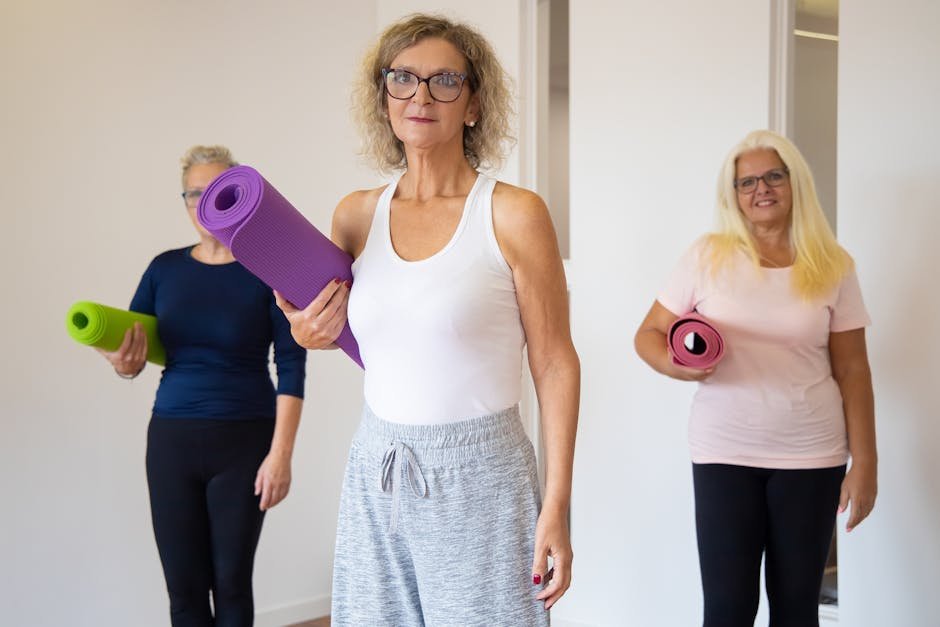
Yoga for Relaxation and Stress Relief: A Gentle Guide for Seniors
This post contains affiliate links. As an Amazon Associate, I earn from qualifying purchases at no extra cost to you.
Free resources — no credit card required for trial
🎧 Listen to health & wellness audiobooks free for 30 days
Start 30-Day Free Trial →
🛒 Recommended Products
As an Amazon Associate we earn from qualifying purchases at no extra cost to you.
TheraBand First Step to Active Health Kit — Senior Exercise Program for Balance and Fall P
$19.99
EZ Off Jar Opener for Seniors — Under Cabinet Jar Opener for Weak Hands and Arthritis
$9.99
Omron 5 Series Upper Arm Blood Pressure Monitor — 2-User 100-Reading Memory Wide-Range Cuf
$44.99
OMRON 7 Series Wireless Wrist Blood Pressure Monitor — Clinically Validated with Connect A
$69.99
Vitality 4 Life Senior Resistance Band with Instruction Guide — Specifically for Elderly F
$16.99
📚 Read unlimited health books free for 30 days
Try Kindle Unlimited Free →
Stress doesn’t get easier with age — but the good news is that yoga for relaxation and stress relief is one of the most accessible, effective tools available to older adults today. You don’t need to be flexible, athletic, or even particularly mobile. All you need is a quiet corner, a sturdy chair or a safe mat, and a few minutes to breathe and move with intention. Whether you’re dealing with everyday worries, difficulty sleeping, or just the general tension that comes with getting older, yoga offers a gentle, proven path back to calm. This guide is designed specifically with seniors in mind, and everything in it is safe, doable, and genuinely helpful.
Why Yoga for Relaxation Works So Well for Seniors
Yoga’s benefits aren’t just about flexibility or fitness — at its heart, it’s a practice that calms the nervous system. When we breathe slowly and move mindfully, the body shifts out of its “fight or flight” stress response and into a more restful, healing state. For older adults, this can mean a lower heart rate, eased muscle tension, better digestion, and even improved sleep quality. These are real, tangible changes that many seniors notice within just a few sessions.
What makes yoga especially well-suited for older adults is that it meets you exactly where you are. Unlike high-intensity exercise, there’s no pressure to push harder or go faster. The focus is entirely on what feels good and safe in your body today — not what you could do ten or twenty years ago. That shift in mindset alone can be profoundly stress-relieving.
Yoga also works on the mind as much as the body. The breathing techniques and gentle awareness practices help quiet racing thoughts, reduce anxiety, and build a sense of steady inner calm. Over time, many seniors find that regular yoga practice helps them feel more grounded, more resilient, and more confident in their daily lives.
Simple Breathing Techniques to Calm Your Mind and Body
Breathing is the foundation of yoga, and some of the most powerful relaxation techniques are purely breath-based. You can do these sitting comfortably in a chair, lying down, or even in bed before sleep. Start with one technique at a time, and remember: if you feel lightheaded, simply return to your natural breath and rest for a moment.
Belly breathing (also called diaphragmatic breathing) is a wonderful place to start. Sit with your back supported and place one hand on your belly. Inhale slowly through your nose for about four counts, letting your belly rise. Exhale gently for four counts, letting it fall. Repeat six to eight times. This simple technique signals your brain to relax and begins to ease physical tension almost immediately.
Box breathing — or square breathing — takes it a step further. Inhale for four counts, hold for four, exhale for four, and hold again for four. Repeat four to six rounds. If holding the breath feels uncomfortable at any point, simply shorten the counts. This technique is particularly helpful for quieting a busy or worried mind.
Progressive muscle relaxation pairs beautifully with breathwork. Starting at your feet, gently tense each muscle group for three to five seconds, then release. Work your way up through your calves, thighs, hands, arms, shoulders, and face. By the time you finish, you may be surprised at how much lighter and more relaxed your whole body feels. Skip any area that is sore or injured, and keep the tension gentle throughout.
Easy, Safe Yoga Poses for Stress Relief
All of the poses described here can be done seated in a sturdy chair — no mat required, no getting down on the floor necessary. If you do prefer to stand, always keep a chair nearby for balance and support. The golden rule is simple: never push into pain. Every pose should feel comfortable, or at most like a mild, pleasant stretch.
Seated Cat-Cow is a lovely spine-softening movement. Sit upright with your hands resting on your knees. As you inhale, gently arch your chest forward and lift your gaze slightly (Cow). As you exhale, round your spine and tuck your chin toward your chest (Cat). Flow between these two positions for six to eight slow, easy breaths. If your neck feels stiff, keep your gaze forward rather than tilting up. This movement gently massages the spine and releases built-up tension in the back.
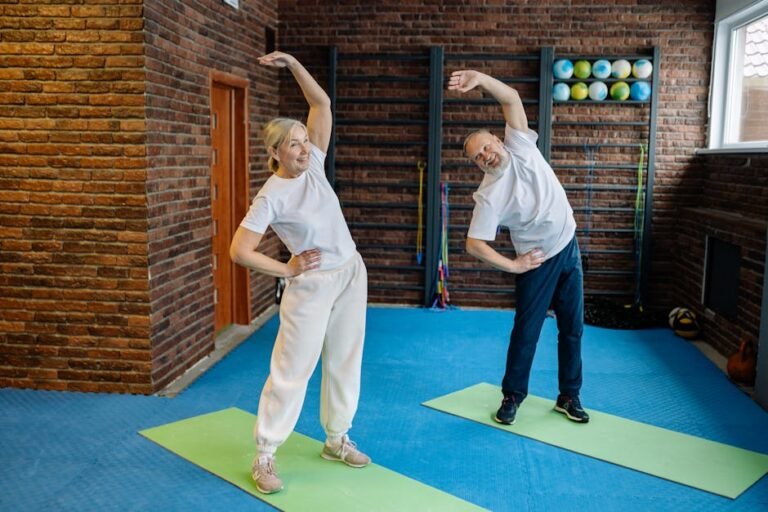
Seated Side Bend opens up the sides of the body and relieves tension around the shoulders and ribs. Sit tall and inhale as you reach one arm overhead. Exhale and lean gently to the opposite side, keeping your chest open. Hold for three slow breaths, then switch sides. Move only as far as feels comfortable — this isn’t a competition.
Seated Twist is wonderful for releasing tightness in the mid-back and waist. Sit tall with both feet flat on the floor. Inhale to lengthen your spine, then exhale and gently rotate your upper body to one side, using the chair back as a gentle guide. Hold for three breaths, return to center, and repeat on the other side. Keep the twist small — less is more, especially if you have any spine concerns.
Gentle Neck Stretches are simple but deeply relieving, especially for anyone who spends time reading, using a phone, or watching television. Sit tall with your shoulders relaxed. Gently drop your right ear toward your right shoulder and hold for three slow breaths. Return to center and repeat on the left. Move slowly, stop immediately if you feel any dizziness, and let gravity do the work rather than pulling with your hand.
Calming the Mind with Visualization and Body Scans
Not every yoga practice has to involve movement. Some of the most deeply relaxing techniques are purely mental — and they’re perfect for days when your energy is low or your body needs extra rest. These practices are also wonderful tools to use before sleep or during a stressful afternoon.
Guided imagery involves sitting or lying quietly and imagining a peaceful, safe place — perhaps a garden, a quiet beach, or a cozy fireside chair. Picture what you see, hear, and smell in this place. Breathe slowly and let your body soften as you spend three to five minutes “visiting” your safe haven. If your mind wanders (and it will — that’s completely normal), simply bring it back gently to the details of your imagined place.
Body scan is another beautifully calming technique. Starting at your toes, slowly move your attention up through your feet, legs, abdomen, chest, arms, neck, and face. At each area, simply notice any sensations without judgment, and breathe into any areas of tension, letting them soften as you exhale. This practice helps you tune into your body with kindness, often releasing tension you didn’t even know you were holding.
Both of these techniques require nothing more than a comfortable seat or a place to lie down. Many seniors find them especially helpful before bed, as they gently ease the mind away from the day’s worries and prepare the body for deeper, more restful sleep.
What You Can Do: Practical Tips for Building a Daily Yoga Habit
The real magic of yoga for relaxation and stress relief comes from practicing regularly — even if each session is short. A five-minute daily routine will do more for your wellbeing than an hour-long session once a month. Here are some practical, realistic ways to weave gentle yoga into your everyday life:
- Choose a consistent time. Many seniors find that morning after a light breakfast or early afternoon works well. A brief session before bed can also help improve sleep quality.
- Start with just 5–10 minutes. A short routine can be just as effective for reducing stress and lifting mood as a longer session. Don’t let time pressure become another source of stress.
- Create a comfortable space. A clear corner with a sturdy chair is all you need. Keep a glass of water nearby, and consider playing soft, calming music to help you settle in.
- Use helpful aids. A firm chair, a yoga strap or household towel for gentle stretching, and a wall for balance support can all make your practice safer and more enjoyable.
- Adapt to your energy levels. On tired days, stick to breathing exercises and a body scan. On better days, add a few gentle poses. There are no rules — only what serves your body today.
- Dress comfortably. Loose, soft clothing allows for easy movement. If you’re standing during any poses, wear supportive shoes rather than socks on a slippery floor.
- Be patient with yourself. Yoga is a practice, not a performance. Every breath, every gentle stretch, every moment of stillness counts — no matter how small it feels.
If you have conditions such as osteoporosis, arthritis, heart disease, or balance concerns, speak with your doctor before starting. Most gentle yoga is very safe for seniors, but your healthcare provider can help you identify any modifications that suit your specific needs.
Building Calm Resilience Over Time
One of the most beautiful things about a regular yoga practice is that its benefits compound over time. In the early days, you might notice that you feel a little more relaxed after a session, or that you sleep slightly better. After a few weeks, you may find that stressful situations feel a little less overwhelming, that your muscles are less tight at the end of the day, or that you’re simply in a better mood more often. These changes are real, and they’re yours to keep.
Yoga also offers something less tangible but equally valuable: a kinder relationship with your own body. As we age, it’s easy to feel frustrated by the things our bodies can no longer do. Yoga gently shifts the focus to appreciation — for what your body can do, for the breath that keeps you steady, for the small moments of ease that a good stretch can bring. That shift in perspective is itself a powerful form of stress relief.
Remember, too, that you are not alone in this. Millions of older adults around the world practice yoga every day, and many senior centers, community classes, and online platforms offer chair yoga and gentle yoga sessions specifically designed for older adults. If you enjoy company, seeking out a local class can add a welcome social element to your practice.
The Bottom Line: Yoga for relaxation and stress relief is one of the gentlest, most accessible gifts you can give yourself as a senior. With simple breathing techniques, easy chair-based poses, and calming visualization practices, you can begin to ease stress, soften tension, and sleep better — starting today. You don’t need any special equipment, athletic ability, or prior experience. All you need is a few minutes, a willingness to listen to your body, and the knowledge that even the smallest effort counts. Show up for yourself, breathe slowly, and trust that each gentle session is building something quietly powerful: a steadier, calmer, more resilient you.
This is not medical advice. Consult your healthcare provider before starting any new health routine or using any product mentioned here.