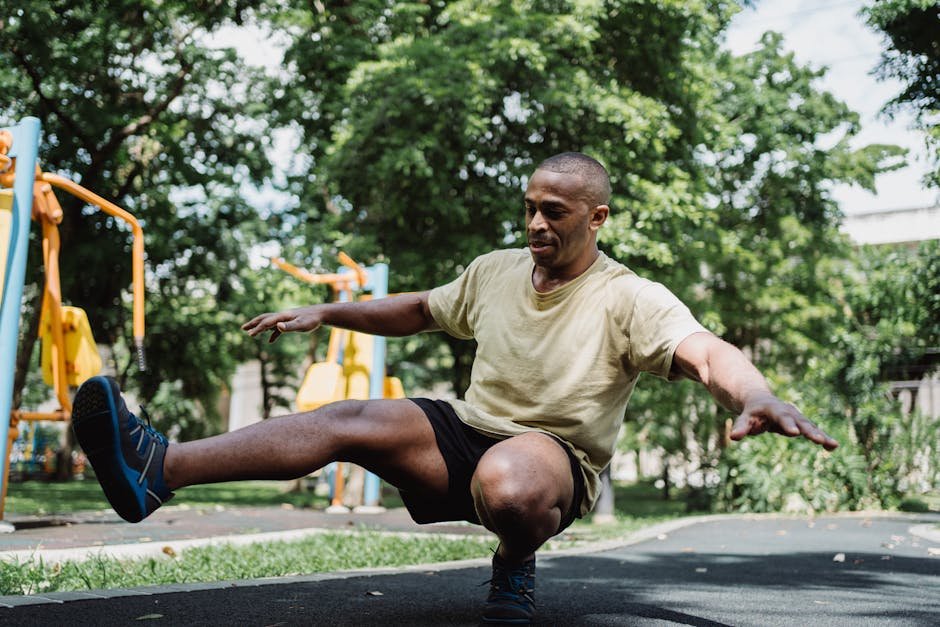
How Seniors Can Strengthen Their Lower Body Safely for Better Balance and Fall Prevention
This post contains affiliate links. As an Amazon Associate, I earn from qualifying purchases at no extra cost to you.
Free resources — no credit card required for trial
🎧 Listen to health & wellness audiobooks free for 30 days
Start 30-Day Free Trial →
🛒 Recommended Products
As an Amazon Associate we earn from qualifying purchases at no extra cost to you.
TheraBand First Step to Active Health Kit — Senior Exercise Program for Balance and Fall P
$19.99
EZ Off Jar Opener for Seniors — Under Cabinet Jar Opener for Weak Hands and Arthritis
$9.99
Omron 5 Series Upper Arm Blood Pressure Monitor — 2-User 100-Reading Memory Wide-Range Cuf
$44.99
OMRON 7 Series Wireless Wrist Blood Pressure Monitor — Clinically Validated with Connect A
$69.99
Vitality 4 Life Senior Resistance Band with Instruction Guide — Specifically for Elderly F
$16.99
📚 Read unlimited health books free for 30 days
Try Kindle Unlimited Free →
If you’ve ever felt a little wobbly getting up from a chair, hesitated at the top of a staircase, or caught yourself grabbing a wall to steady up, you’re not alone — and more importantly, you don’t have to accept that as “just getting older.” One of the most empowering things you can do for your health right now is focus on lower body strength. Strong legs, hips, and ankles are your best defence against falls, your ticket to staying independent longer, and your foundation for moving through daily life with confidence. The great news? You don’t need a gym membership or any fancy equipment. In this guide, we’ll walk you through everything you need to know about how seniors can strengthen their lower body safely — from getting started to keeping it going for the long term.
Why Lower Body Strength Is So Important for Seniors
Your legs, hips, and ankles do an enormous amount of work every single day. They lift you out of a chair, carry you up stairs, help you change direction on a busy footpath, and keep you steady when the ground isn’t perfectly flat. When those muscles start to weaken — which naturally happens as we age if we don’t actively work against it — all of those everyday movements become harder and riskier.
Strong lower body muscles don’t just make movement easier; they genuinely protect you. When your thighs and hips are strong, you can recover more quickly from a stumble before it becomes a fall. Strong calves and ankles absorb shock and keep each step stable, even on uneven ground. And strong glutes give your hips the stability they need so your legs don’t buckle unexpectedly during movement.
There’s also something less talked about but just as important: the brain-muscle connection. The more consistently you practise lower body exercises, the more smoothly your body reacts to unexpected shifts — a crack in the pavement, a slippery step, a sudden change in direction. It’s not just physical strength you’re building; you’re sharpening your reflexes and your body’s ability to keep you safe in real-world situations.
How to Get Started Safely
Before you do a single squat or step-up, a little preparation goes a long way. If you have joint pain, a recent surgery, dizziness, or any heart concerns, have a quick chat with your doctor first. This isn’t about getting permission to move — it’s about tailoring your approach so it works for your body specifically.
Setting up a safe exercise space matters more than most people realise. Clear the floor of any clutter, rugs that could slip, or objects you might trip over. Use a sturdy chair with a firm back — not a rocking chair or anything on wheels — and place it near a wall for extra security. Wear shoes with good support and non-slip soles; avoid exercising in slippery socks on a hard floor.
Always warm up before you begin. Just 3 to 5 minutes of gentle movement — marching in place, ankle circles, heel digs, and easy shoulder rolls — wakes up your muscles and joints and reduces the risk of strain. And if you’re just starting out, having a family member or carer nearby for the first few sessions is a smart, sensible precaution. There’s no shame in having a spotter while you find your footing — literally.
Seven Safe Lower Body Exercises to Try at Home
These exercises have been chosen because they’re effective, gentle, and adaptable to different fitness levels. You don’t need to do all of them in one go. Start with a few, get comfortable, and build from there.
Sit-to-Stand is arguably the most functional exercise on this list because it mirrors something you do dozens of times a day. Sit near the front edge of a sturdy chair, feet hip-width apart. Press through your heels to stand tall, then lower back down slowly and with control. Aim for 8 to 12 repetitions. The key is to keep your back straight and avoid using your arms to push yourself up — let your legs do the work. If it feels too difficult at first, try a higher chair or a firm stool.
Standing Marches with Support are wonderful for building hip flexor and leg strength while improving your balance. Stand behind a chair and hold the back lightly for support. Lift each knee alternately as if marching on the spot, aiming for 15 to 20 steps per set or about 30 to 60 seconds. Go at a comfortable, controlled pace — you’re training stability, not speed.
Step-Ups on a Low Stair build leg power and give you real confidence on staircases. Stand facing your bottom step with a railing to hold. Place one foot on the step and push through that heel to bring yourself up, then step back down. Do 8 to 12 repetitions per leg. Keep your knee in line with your foot — don’t let it cave inward — and use a slow, deliberate pace throughout.
Seated Leg Extensions safely target the front of your thighs (quadriceps) while seated, making them ideal if standing exercises feel challenging. Sit tall in a chair, feet flat on the floor. Slowly straighten one leg in front of you, hold for 2 to 3 seconds, then lower. Switch legs and repeat 8 to 12 times each side. Don’t lock the knee at the top — keep a soft, slight bend to protect the joint.
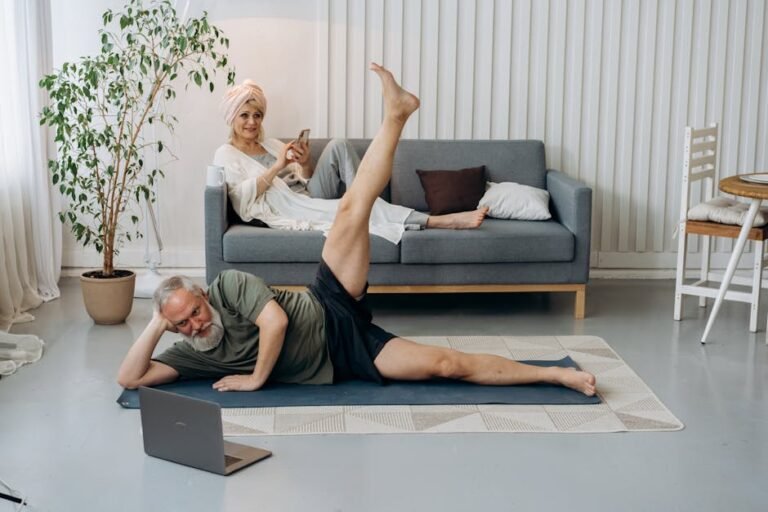
Standing Hip Abductions (side leg raises) strengthen the outer hips, which play a huge role in keeping you steady on your feet. Stand behind a chair, hold the back for balance, and slowly lift one leg out to the side about 6 to 8 inches, then lower. Do 8 to 12 repetitions per leg, keeping your shoulders square and avoiding the temptation to lean sideways.
Calf Raises are a quiet powerhouse for ankle and foot stability. Stand tall, feet hip-width apart, with hands on a counter or chair back. Rise up onto your toes, hold for a second or two, then lower slowly. Aim for 10 to 15 repetitions. The controlled lowering phase is just as important as going up — resist the urge to drop down quickly.
The Gentle Bridge works your glutes and hamstrings — the muscles at the back of your hips and thighs — and can be done on a comfortable mat or carpet. Lie on your back with knees bent and feet flat, hip-width apart. Press through your heels to lift your hips toward the ceiling, hold for 3 to 5 seconds, then lower slowly. Start with 8 repetitions and build from there. If lying flat is uncomfortable, a small pillow under your hips can help.
Practical Tips to Avoid Injury and Stay on Track
- Always start with a gentle warm-up (marching in place, ankle circles) and finish with a light cool-down such as slow walking and gentle stretching.
- Wear supportive shoes with non-slip soles every time you exercise — never slippery socks on a hard floor.
- Keep a chair or wall within reach during every standing exercise, especially in the early weeks.
- Move slowly and with control. Never force through pain. If something hurts, stop, rest, and reassess.
- Breathe steadily throughout each exercise — never hold your breath, especially when exerting effort.
- Stay hydrated. Keep a glass of water nearby and sip before and after your session.
- If you have knee, hip, or back issues, choose the gentler, chair-assisted variations and avoid deep bends or heavy loads until you’ve built more strength.
- Have a caregiver or family member present for the first few weeks if balance is a concern.
- Exercise on a clean, dry surface — never on a wet floor or loose rug.
Building a Consistent Routine: How Often and How Much
Consistency matters far more than intensity when it comes to lower body strengthening for seniors. Aim for 2 to 3 sessions per week, with at least 24 hours of rest between sessions to allow your muscles to recover. Each session can include 6 to 8 exercises in a simple circuit format and should take around 20 to 30 minutes in total — manageable, doable, and genuinely effective.
Track your progress in a simple notebook or on a printed chart. Note how many repetitions you completed, how long you held each position, and how steady you felt overall. This isn’t about judging yourself — it’s about celebrating your wins and spotting when you’re ready to progress. When you can comfortably complete the upper end of the rep range, add one or two more repetitions, or extend a hold by a second or two. Gradual, steady progression is the approach that gets lasting results and keeps injury risk low.
To round out your routine, pair your strength work with a short daily balance practice — something as simple as heel-to-toe walking down a hallway — and some gentle ankle stretches. These small additions complement your strength sessions beautifully and help build the well-rounded physical confidence you’re aiming for.
It also helps enormously to make your exercise sessions social or structured. Schedule your workout days on a calendar or set a phone reminder. Invite a friend or family member to join you — even on a video call. Set small, realistic weekly goals like “two days this week, three next week.” These little strategies turn exercise from something you “should do” into something you actually look forward to.
How Lower Body Strength Directly Prevents Falls
Falls are one of the leading causes of injury and loss of independence among older adults, but they are not inevitable. Strengthening the lower body is one of the most evidence-supported strategies for fall prevention, and when you understand the mechanics, it’s easy to see why.
Strong quadriceps and hip muscles mean you can stand up quickly if you start to stumble — giving your body the reactive speed it needs to self-correct before a fall happens. Strong calves and ankles improve your ability to absorb the small shocks and wobbles that come with walking on uneven ground, navigating kerbs, or stepping off a bus. Hip and glute strength gives your pelvis and legs the stability needed to avoid that terrifying feeling of the legs “giving way” mid-step.
Beyond the physical mechanics, there’s also the powerful effect of confidence. Every time you complete a set of sit-to-stands without holding on, or climb a flight of stairs a little more easily, you’re building trust in your own body. That trust encourages more movement in daily life — and more movement means stronger muscles, better balance, and a virtuous cycle of increased safety and independence.
Small, gradual steps genuinely do beat big overwhelming leaps. Celebrate every quiet win: the morning you stood up without reaching for the armrest, the longer walk you enjoyed with a friend, the steady moment you noticed on the way to the kitchen. Your goal isn’t perfection — it’s steady, sustainable momentum toward safer, freer movement every single day.
The Bottom Line: Lower body strength is one of the most important — and most achievable — investments you can make in your safety, independence, and quality of life as you age. By starting gently, moving with control, and building gradually over time, you can significantly improve your balance, reduce your risk of falls, and feel more confident in everything you do. The seven exercises in this guide are simple, safe, and designed to fit real life. You don’t need to do everything at once — just start, stay consistent, and trust that every small effort is making a real, lasting difference. Your stronger, steadier self is closer than you think.
This is not medical advice. Consult your healthcare provider before starting any new health routine or using any product mentioned here.