Best Mobility Exercises for Stiff Hips: A Senior’s Guide to Moving More Freely Every Day
This post contains affiliate links. As an Amazon Associate, I earn from qualifying purchases at no extra cost to you.
Free resources — no credit card required for trial
🎧 Listen to health & wellness audiobooks free for 30 days
Start 30-Day Free Trial →
🛒 Recommended Products
As an Amazon Associate we earn from qualifying purchases at no extra cost to you.
TheraBand First Step to Active Health Kit — Senior Exercise Program for Balance and Fall P
$19.99
EZ Off Jar Opener for Seniors — Under Cabinet Jar Opener for Weak Hands and Arthritis
$9.99
Omron 5 Series Upper Arm Blood Pressure Monitor — 2-User 100-Reading Memory Wide-Range Cuf
$44.99
OMRON 7 Series Wireless Wrist Blood Pressure Monitor — Clinically Validated with Connect A
$69.99
Vitality 4 Life Senior Resistance Band with Instruction Guide — Specifically for Elderly F
$16.99
📚 Read unlimited health books free for 30 days
Try Kindle Unlimited Free →
If getting up from your favourite chair feels like more of a mission than it used to, or if climbing the stairs leaves your hips aching, you are absolutely not alone. Stiff hips are one of the most common complaints among older adults — and they can quietly chip away at your confidence and independence before you even realise it. The wonderful news? The best mobility exercises for stiff hips are simple, gentle, and something you can start doing today, right at home, without any fancy equipment. In this guide, we’ll walk you through why hip mobility matters so much as we age, share seven easy low-impact exercises to get you moving more freely, and give you practical tips for building a routine that actually sticks.
Why Hip Mobility Matters More Than You Might Think
Your hips are the powerhouse of almost every movement you make. Whether you’re bending down to pick something up, stepping into the car, or just walking to the kitchen, your hip joints are working hard. When they become stiff or tight — which can happen gradually with age, reduced activity, or simply from sitting for long periods — everything from your balance to your lower back can feel the knock-on effects.
Better hip mobility means easier daily activities. Things like tying your shoes, getting in and out of a car, or even just standing up from a low sofa become noticeably less of a struggle. Flexible, strong hips also help you adjust your body as you move, which plays a big role in reducing your risk of falls — something that becomes increasingly important as the years go on.
There’s another bonus that surprises many people: improving your hip flexibility can actually ease lower back and knee discomfort too. When your hips aren’t moving properly, other joints and muscles compensate, often creating pain in places you wouldn’t expect. Gentle, consistent hip work can take some of that load off, making your whole body feel a bit more at ease. And ultimately, more mobile hips mean more independence — being able to enjoy the activities and people you love without stiffness holding you back.
Getting Started Safely: What to Know Before You Begin
Before diving into the exercises, a few important ground rules will keep you safe and set you up for success. Always warm up for three to five minutes before starting — a short walk around the room, some gentle marching in place, ankle pumps, or light arm swings are all perfect. This gets blood flowing to your muscles and joints so they’re ready to move.
If you have osteoporosis, a recent hip injury, severe arthritis, or significant balance concerns, it’s worth a quick conversation with your doctor or physiotherapist before beginning a new exercise routine. They can confirm which movements are right for you and suggest any modifications. That said, most of these exercises are gentle enough for the majority of older adults.
A good general guideline: move slowly, breathe evenly, and only go as far as feels comfortable. A gentle stretch sensation is perfectly fine — but sharp pain, dizziness, or numbness are your body’s signals to stop and rest. No heroics needed here. Progress comes from consistency and patience, not from pushing through pain. Aim to practise three to five days a week, with sessions of around ten to twenty minutes. That’s really all it takes to start noticing a difference.
Seven Easy Hip Mobility Exercises for Seniors
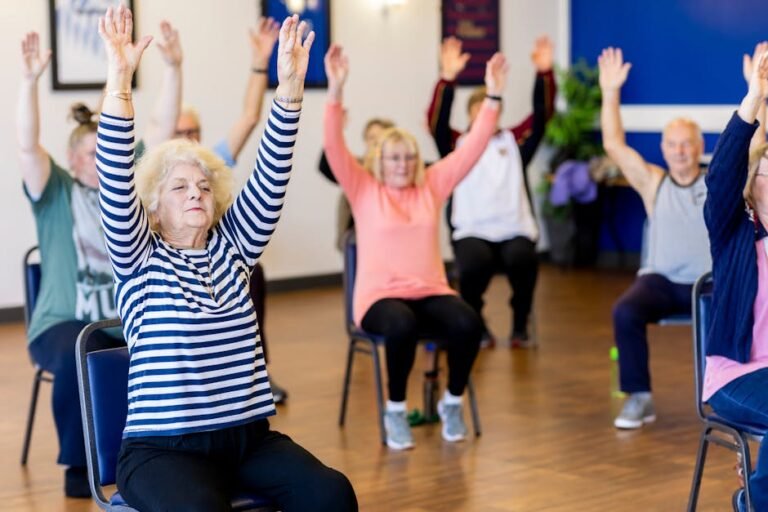
These seven moves cover all the main areas of hip movement — flexibility, strength, and rotation — and can all be done at home with just a sturdy chair and a little floor space. Start with one or two sets of each and build up gradually over the coming weeks.
Hip Circles (Warm-Up): Stand with feet shoulder-width apart, hands on your hips or resting on a chair back. Slowly rotate your hips in a small circle — five to ten times to the right, then five to ten times to the left. Keep your upper body steady and let the movement come from your hips. This gently loosens the joint and warms the surrounding muscles.
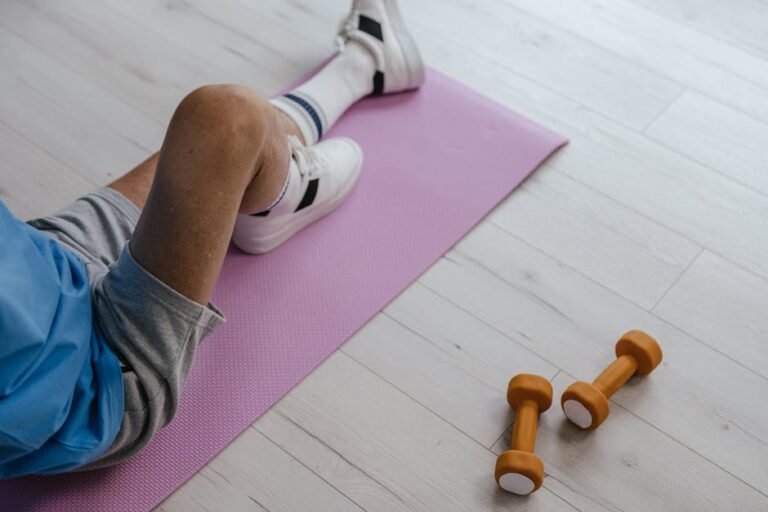
Pelvic Tilts: Lie on your back with knees bent and feet flat on the floor. Inhale, then gently press your lower back toward the floor by tilting your pelvis slightly upward. Hold for five seconds, then release. Repeat ten to fifteen times. This small movement helps your hips and pelvis move smoothly and supports better posture throughout the day.
Supine Glute Bridge: Still lying on your back with knees bent, press through your heels to lift your hips a few inches off the floor, squeezing your buttocks as you rise. Hold for three to five seconds, then slowly lower back down. Begin with ten repetitions and build to fifteen over time. This one strengthens the muscles that power your hip movement and make standing up easier.
Seated Knee-to-Chest Stretch: Sit tall in a sturdy chair with feet flat on the floor. Bring one knee toward your chest and hold it gently with both hands — you can hold your shin rather than your knee if that feels more comfortable. Hold for twenty to thirty seconds, then switch legs. Do two to three stretches per leg. This eases tight hip flexors and gives the whole hip area a lovely, gentle opening.
Standing Hip Abduction (Side Leg Lift): Stand behind a sturdy chair, lightly holding the back for balance. Keeping a soft bend in your supporting knee, slowly lift one leg out to the side, then lower it back down with control. Do eight to twelve lifts per leg, for two to three sets. This strengthens the outer hip muscles that keep you stable when walking.
Standing Hip Flexor Stretch: Facing a wall or chair for support, step one foot forward into a small, comfortable lunge. Tuck your tailbone slightly and gently press your hips forward to feel a stretch across the front of your back hip. Hold for twenty to thirty seconds, then switch sides, doing two to three stretches per side. This opens up the front of the hip, which tends to get particularly tight from sitting.
Seated Figure-4 Stretch: Sit in a chair with good back support. Place your right ankle on your left knee, keeping your right knee relaxed. Gently press the right knee away from your body, or lean forward slightly until you feel a comfortable stretch on the outside of your right hip. Hold for twenty to thirty seconds, then switch sides. This targets the hip’s external rotators — the muscles responsible for outward rotation and flexibility.
Practical Tips: How to Make These Exercises Part of Your Life
Knowing the exercises is one thing — actually building them into your daily routine is where the real magic happens. Here are some friendly, realistic strategies to help you stay consistent without it feeling like a chore.
- Schedule it like an appointment. Pick a regular time — after your morning cup of tea, during the afternoon news, or before bed — and treat it as a non-negotiable part of your day. Routine is everything when it comes to building a habit.
- Pair movements with things you already do. Hip circles while the kettle boils. Seated stretches while watching television. Small, frequent movements throughout the day truly add up.
- Start small and build gradually. If you’re brand new to this, begin with just one or two sets and six to eight repetitions — or hold stretches for only ten to fifteen seconds. After a couple of weeks, add a second set or extend your hold times slightly. There’s no rush.
- Track how you feel. Keep a simple note of how your hips feel after each session, or jot down when everyday tasks start feeling easier. Seeing your own progress — even subtle shifts — is incredibly motivating.
- Always use support if you need it. A sturdy chair, a countertop, or a wall are your best friends for standing exercises. There’s no prize for balancing without support, and keeping yourself safe is always the priority.
- Rest when your body asks for it. If you feel unusually sore the day after a session, take a lighter day — do fewer repetitions or swap to seated-only moves. Recovery is part of progress.
- Be patient and celebrate small wins. Mobility improvements happen gradually. A slightly longer stretch, an easier morning step, a little less stiffness when you first get up — these are all worth celebrating.
How to Progress Over Time Without Overdoing It
One of the most common mistakes people make when starting a new exercise routine — at any age — is trying to do too much too soon. With hip mobility work, slow and steady genuinely wins the race. In the first couple of weeks, focus on just getting comfortable with the movements and building the habit of showing up consistently. Don’t worry too much about sets or repetitions during this phase.
After two weeks of regular practice, you can begin to add a second set of each exercise, or extend your stretch hold times by five to ten seconds. From there, increase your repetitions gradually — one or two more per week, not all at once. This gentle progression allows your joints, muscles, and connective tissue to adapt without becoming overworked or inflamed.
A short daily routine of ten to fifteen minutes will serve you far better than a long, intensive session once or twice a month. Consistency is the single most important factor in improving hip mobility. Even on days when you feel a bit stiff or tired, a gentle five-minute version of your routine — just the seated stretches, perhaps — is far better than skipping altogether. Think of it as keeping the conversation going with your hips rather than having the occasional big argument with them.
When to Check In With a Healthcare Professional
These exercises are designed to be safe and accessible for most older adults, but there are times when it’s wise to get a professional opinion before proceeding. If you’ve recently had a hip fracture, hip replacement surgery, or have been diagnosed with severe osteoporosis, please speak with your doctor or physiotherapist first. They can confirm whether these exercises are appropriate for your situation and may suggest specific modifications or alternative movements that better suit your needs.
Similarly, if you experience pain that lingers beyond a few minutes after exercising, or if you notice new swelling, significant joint discomfort, or any numbness or tingling, it’s worth mentioning to your healthcare provider. These could be signs that something needs attention before you continue. That’s not a reason to be fearful — it’s simply smart self-care. A physiotherapist in particular can be an incredible resource, helping you understand exactly which muscles need strengthening or stretching and guiding your progress safely.
If all is well and you’ve been practising these exercises for a few months, you might also consider whether adding a gentle yoga or tai chi class — both well-known for improving balance and flexibility — could complement your hip mobility work. Many community centres and local councils offer senior-friendly classes, and there are plenty of excellent online options too.
The Bottom Line: Stiff hips don’t have to be an inevitable part of ageing that you simply put up with. The best mobility exercises for stiff hips are gentle, low-impact, and genuinely effective — and with just ten to twenty minutes of consistent practice most days of the week, you really can feel a meaningful difference in how freely and comfortably you move. From hip circles and pelvic tilts to seated stretches and glute bridges, these seven exercises cover everything your hips need to stay flexible, strong, and pain-free. Start small, stay consistent, listen to your body, and celebrate every step of progress. Your hips — and your whole daily life — will thank you for it.
This is not medical advice. Consult your healthcare provider before starting any new health routine or using any product mentioned here.