Chair Selection Guide for Seniors With Back Pain: How to Find the Perfect Seat for Your Spine
This post contains affiliate links. As an Amazon Associate, I earn from qualifying purchases at no extra cost to you.
Free resources — no credit card required for trial
🎧 Listen to health & wellness audiobooks free for 30 days
Start 30-Day Free Trial →
🛒 Recommended Products
As an Amazon Associate we earn from qualifying purchases at no extra cost to you.
TheraBand First Step to Active Health Kit — Senior Exercise Program for Balance and Fall P
$19.99
EZ Off Jar Opener for Seniors — Under Cabinet Jar Opener for Weak Hands and Arthritis
$9.99
Omron 5 Series Upper Arm Blood Pressure Monitor — 2-User 100-Reading Memory Wide-Range Cuf
$44.99
OMRON 7 Series Wireless Wrist Blood Pressure Monitor — Clinically Validated with Connect A
$69.99
Vitality 4 Life Senior Resistance Band with Instruction Guide — Specifically for Elderly F
$16.99
📚 Read unlimited health books free for 30 days
Try Kindle Unlimited Free →
If back pain is part of your daily life, you already know how much the wrong chair can make things worse. Whether you’re reading the morning paper, sharing a cup of tea with a friend, or working on a puzzle, the chair you’re sitting in has a surprisingly powerful effect on your spine, your comfort, and even your mood. The good news? Choosing the right chair for back pain doesn’t have to be complicated or expensive. With a few key features in mind and some simple testing tips, you can find a seat that truly supports you — and makes those long sitting sessions feel far more manageable. This chair selection guide for seniors with back pain walks you through everything you need to know, step by step.
Why Your Chair Choice Matters More Than You Think
Most of us don’t give our chairs much thought. We sit down, we get up, and we repeat the process dozens of times a day. But for older adults dealing with back pain, the wrong chair can quietly make things worse — contributing to poor posture, increased pressure on sore spots, and even difficulty getting up safely. On the flip side, a well-chosen chair can make a genuine difference in how your back feels throughout the day.
The spine has a natural S-shaped curve, and a good chair works with that curve rather than against it. When your chair supports your body properly, your muscles don’t have to work as hard to keep you upright, meaning less fatigue and less pain over time. Think of it as giving your back a reliable teammate throughout the day — one that shows up every single time you sit down.
This isn’t just about comfort in the moment, either. Consistently poor seating can gradually worsen back pain and make it harder to stay active and independent. Investing a little time and thought into your chair selection is truly an act of self-care — one that pays off every single day.
The Key Features That Make a Chair Spine-Friendly for Seniors
Not all chairs are created equal, and when it comes to back pain, the details really do matter. Here’s what to look for when you’re evaluating any chair — whether you’re browsing in a store or assessing what you already have at home.
Lumbar support is probably the most important feature on the list. Your lower back has a natural inward curve, and if your chair doesn’t support that curve, you’ll naturally start to hunch or lean forward — which puts extra strain on already-tender areas. Look for a chair with adjustable lumbar support that fits snugly into the small of your back. If your current chair doesn’t have built-in lumbar support, a small rolled towel or a slim lumbar cushion placed behind your lower back can work as a practical temporary fix, as long as it keeps you comfortable and doesn’t push you forward out of the seat.
Seat height and depth are equally important. A seat that’s too low forces your knees up too high and makes it harder to stand up; one that’s too high leaves your feet dangling, which creates pressure on the backs of your thighs. Ideally, you want a seat height that allows your feet to rest flat on the floor (or on a small footrest) with your knees at roughly a 90-degree angle. The depth of the seat matters too — there should be a small gap of about one to two inches between the back of your knee and the front edge of the seat. A rounded, gentle front edge is a bonus, as it helps keep blood flowing through your legs.
The backrest and tilt work together to distribute your body weight evenly and reduce spinal strain. A good backrest supports your back from the lower to the mid-upper area, and ideally offers an adjustable tilt or recline with a locking option. A mild recline can actually relieve pressure on the spine without flattening its natural curve — so don’t be afraid to experiment with the angle. Avoid chairs with very rigid backs or ones that don’t reach high enough to support you comfortably.
Cushioning should feel supportive without letting you sink in too deeply. A medium-firm seat is generally the sweet spot — soft enough to be comfortable, firm enough to prevent the slouching that comes with an overly cushy chair. Breathable, easy-to-clean fabric is a practical bonus for daily use. If you love the feel of memory foam, just make sure it doesn’t compress too quickly, as sagging foam stops doing its job in a hurry.
Armrests deserve more credit than they usually get. Well-positioned armrests help you lower yourself into the chair and push yourself up again — both of which matter enormously as we get older. Look for armrests at a height where your shoulders can relax and your elbows rest comfortably at about a 90-degree angle. Adjustable armrests are a real advantage, and if possible, choose ones that can swing out of the way when you’re getting in or out of the chair.
Stability and safety round out the essentials. A chair with a broad, five-point base and sturdy legs gives you confidence when you’re shifting your weight or pushing yourself up to stand. If you’re considering a chair with wheels, make sure they lock securely — especially on smooth floors where a rolling chair can easily slip at the wrong moment.
Common Chair-Buying Mistakes That Can Make Back Pain Worse
Even with the best intentions, it’s easy to make a chair purchase you’ll regret. Knowing what to avoid can save you a lot of discomfort — and wasted money. One of the most common mistakes is choosing a chair with no meaningful lumbar support, or support that’s in the wrong position. Without that lower-back hug, slouching is almost inevitable, and slouching is one of the quickest ways to aggravate an already sore spine.
Overly soft cushions are another surprisingly common issue. A plush, sink-into-it chair might feel heavenly in the shop, but after 30 minutes, you’ll likely find yourself slumped in an uncomfortable position with your pelvis tilted the wrong way. The opposite extreme — a hard seat with a sharp front edge — creates pressure points under your thighs and can even affect circulation over time. Medium-firm really is the goal.
Buying a “one-size-fits-all” chair without checking whether it actually fits your body is another pitfall. A chair that works beautifully for someone five inches shorter or taller than you may feel completely wrong for your frame. And finally, don’t overlook armrests that are poorly positioned or fixed in place — they should make getting in and out easier, not harder or more awkward.
How to Test a Chair for Back Pain: Practical Tips for Seniors
Whether you’re heading to a furniture store or trying out a chair at home, a bit of preparation goes a long way. Testing a chair properly takes only a few minutes and can spare you weeks of regret. Here’s how to do it well.
- Come prepared: Bring a small notebook or use your phone to jot down what you notice. If you know your comfortable sitting height, bring that measurement along to compare.
- Dress for comfort: Wear clothing and shoes similar to what you’d normally wear at home — this gives you a realistic feel for the chair.
- Sit properly from the start: Press your back against the backrest, place your feet flat on the floor, and make sure your knees are at roughly a 90-degree angle. This is your baseline position.
- Check the seat depth: Slide your hand between the seat edge and the back of your knee. You want a small gap — not a tight press — which means the seat isn’t too deep for your leg length.
- Feel the lumbar support: Notice whether the lumbar area of the chair gently meets the small of your back. Too high or too low? Adjust it if you can, or mark it as a concern.
- Test the tilt: Gently lean back and forward. You should feel supported and relaxed, not pushed or bounced out of a comfortable position. Try locking the tilt at your preferred angle.
- Rest your arms: Place your forearms on the armrests and check whether your shoulders can relax. Your elbows should be close to your body and at about a 90-degree angle.
- Stand up and sit down a few times: A chair that’s genuinely good for you should make this process feel manageable, not like a workout. If getting up is a struggle, the chair may be too low or the armrests aren’t in the right place.
- Ask about a trial period: Many retailers offer return windows or home trial options. Take advantage of these — a 10-minute in-store test can’t fully replicate living with a chair for a week.
- At home, keep a simple comfort diary: For the first week or two, note your pain levels, how long you can sit comfortably, and how easy it is to get in and out. If discomfort continues after two to three weeks, it’s worth reassessing or seeking professional guidance.
Optional Extras Worth Considering for Seniors With Back Pain
Once you’ve covered the essentials, a few optional add-ons can make your seating experience even more comfortable. A small, sturdy footrest is a simple but effective tool if your feet don’t comfortably reach the floor in your favourite chair — keeping your feet supported helps maintain the right knee angle and reduces strain all the way up the chain to your lower back.
A supportive headrest is worth considering if you like to lean back for reading or watching television. Without neck support, leaning back in a chair can create tension that travels down into the upper back and shoulders. A good headrest keeps your neck in a neutral position and helps you relax more fully without paying for it later.
Finally, if ease of standing up is a significant concern, look for chairs with a transfer-friendly design — ones that are slightly higher than average, have firm armrests at the right height, or even feature a gentle lift mechanism. These designs can make a meaningful difference in daily independence and safety, particularly for those recovering from injury or managing conditions that affect mobility.
When to Talk to a Healthcare Professional About Your Seating
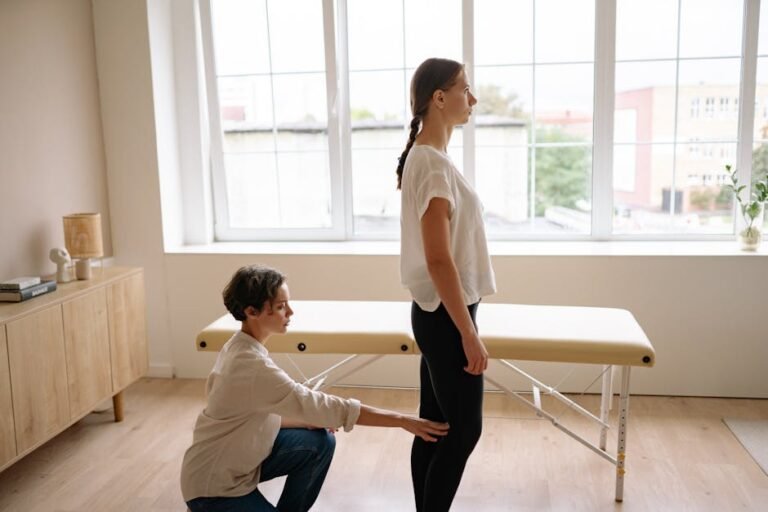
A good chair is a wonderful tool, but it’s not a substitute for medical care. If your back pain is persistent, getting worse, or limiting what you’re able to do day-to-day, please reach out to your doctor or healthcare provider. They can offer personalised guidance — and may refer you to a physical therapist who can assess your posture and movement patterns and make specific seating recommendations tailored to your body and condition.
If you have a medical condition that affects your posture, circulation, or ability to transfer safely — such as scoliosis, osteoporosis, or significant arthritis — it’s especially worthwhile to involve a clinician in your chair selection process. A physical therapist in particular can be an invaluable guide, helping you understand exactly what your spine needs and how to find a chair that delivers it.
There’s no shame in asking for help with this decision. Your comfort, safety, and independence are worth the conversation.
The Bottom Line: Choosing the right chair for back pain is one of the most practical, meaningful steps you can take for your spine health and your overall wellbeing as you get older. Focus on adjustable lumbar support, a seat height and depth that fits your body, a backrest that keeps your spine in its natural alignment, medium-firm cushioning, and stable, well-positioned armrests. Take your time testing chairs — both in stores and at home — and don’t be afraid to use return windows or trial periods to make sure a chair truly works for you. Remember, there’s no single perfect chair for everyone, so trust your body’s feedback, make notes, and give yourself permission to get this right. A little patience now can lead to years of more comfortable, more supported sitting — and that’s something your back will thank you for every single day.
This is not medical advice. Consult your healthcare provider before starting any new health routine or using any product mentioned here.