How Improving Core Strength Supports Joint Health as You Age
This post contains affiliate links. As an Amazon Associate, I earn from qualifying purchases at no extra cost to you.
Free resources — no credit card required for trial
🎧 Listen to health & wellness audiobooks free for 30 days
Start 30-Day Free Trial →
🛒 Recommended Products
As an Amazon Associate we earn from qualifying purchases at no extra cost to you.
TheraBand First Step to Active Health Kit — Senior Exercise Program for Balance and Fall P
$19.99
EZ Off Jar Opener for Seniors — Under Cabinet Jar Opener for Weak Hands and Arthritis
$9.99
Omron 5 Series Upper Arm Blood Pressure Monitor — 2-User 100-Reading Memory Wide-Range Cuf
$44.99
OMRON 7 Series Wireless Wrist Blood Pressure Monitor — Clinically Validated with Connect A
$69.99
Vitality 4 Life Senior Resistance Band with Instruction Guide — Specifically for Elderly F
$16.99
📚 Read unlimited health books free for 30 days
Try Kindle Unlimited Free →
Have you noticed that getting up from the sofa feels a little harder than it used to? Or that your knees protest when you climb the stairs, or your back aches after a long afternoon of gardening? You’re not alone — and the good news is that one of the most powerful things you can do for your joint health might surprise you. It’s not a fancy supplement or an expensive gadget. It’s your core. Building a stronger core — those muscles in your belly, back, and pelvis — can make a remarkable difference in how your joints feel and function every single day. Let’s explore how core strength and joint health are connected, and what you can do starting today.
What Does “Core Strength” Actually Mean?
When most people hear “core strength,” they picture athletes doing endless crunches or planks. But for everyday health — especially as we get older — core strength means something much more practical and approachable. Your core is essentially the central support system of your body. It includes the muscles in your abdomen, your lower back, and your pelvis, all working together to keep your spine stable, help you stand tall, and control the way you move.
Think of your core like the foundation of a house. If the foundation is solid and steady, everything built on top of it stays safe and balanced. If the foundation is shaky, even small stresses can cause damage. Your joints — in your back, hips, knees, and neck — are the “upper floors” of that house. When your core is strong, those joints get the support they need. When it’s weak, they’re left to handle far more strain than they should.
The encouraging part? You don’t need to be an athlete or even particularly fit to start strengthening your core. Gentle, consistent exercises done a few times a week can make a real difference, even if you’re starting from scratch or dealing with stiffness and discomfort.
How a Stronger Core Directly Supports Your Joints
So how exactly does working your core muscles help your joints? The connection is more direct than you might think. When your core is strong, it keeps your spine and pelvis properly aligned during everyday activities — standing, walking, bending, and lifting. That natural alignment means less extra stress gets placed on vulnerable joints in your back, hips, knees, and neck. Instead of your knees or lower back taking the brunt of every movement, your core muscles step in and share the load.
A stable core also improves your balance and the control you have over your movements. Better balance lowers the risk of awkward stumbles or sudden twists that can strain joints. And when your core is engaged, effort gets distributed more evenly across your whole body. That means everyday tasks like standing up from a chair, climbing stairs, or carrying groceries become less punishing on any single joint.
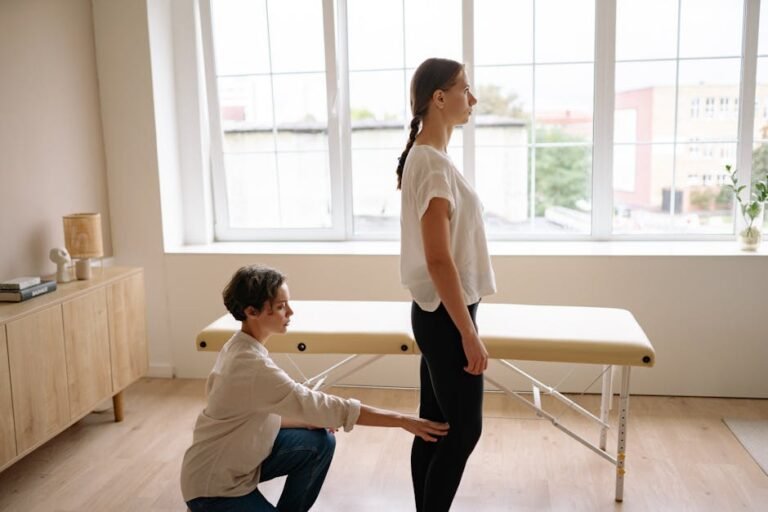
Posture is another big piece of the puzzle. When your core muscles are doing their job, it’s much easier to sit and stand with your shoulders back and your chest open. Good posture reduces the cumulative strain that comes from slouching — and if you’ve spent years hunched over a desk or a phone, your joints have likely been absorbing the consequences. Core work helps reverse that pattern, one small improvement at a time.
Finally, a strong core helps you stay active safely. Activities that are wonderful for joint health — like walking, light dancing, gardening, and gentle housework — all require a degree of core stability to do comfortably and without injury. The stronger your core, the longer and more easily you can keep doing the things you love.
Getting Started Safely: What You Need to Know First
Before you jump into any new exercise routine, a little preparation goes a long way — especially if you’ve had recent injuries, severe back pain, osteoporosis with vertebral fracture risk, or joint replacements. In those cases, it’s worth having a quick conversation with your doctor or a physical therapist before you start. They can tailor exercises specifically to your needs and make sure you’re moving in a way that supports rather than aggravates your condition.
For most people, the golden rule when starting out is: start small and build gradually. Aim for two to three short sessions per week — just 10 to 15 minutes each. Focus on doing movements slowly and with good form rather than rushing through repetitions. Control your breathing as you go: exhale when you’re exerting effort, and inhale as you relax. If you feel sharp pain, dizziness, or any new joint symptoms during an exercise, stop. Rest, adjust, or try a gentler version of the movement. Progress happens over weeks and months, not overnight, and that’s perfectly fine.
Gentle Core Exercises That Are Friendly for Joints
The following exercises are gentle, effective, and designed with joint health and safety in mind. They can be done at home with no special equipment. Remember: if any movement causes pain, stop and try a lighter version or skip it for now.
Pelvic Tilts are a wonderful starting point for the lower core. Lie on your back with your knees bent and feet flat on the floor. Inhale gently, then on the exhale, press your lower back toward the floor by tightening your abdominal muscles. Hold for 3 to 5 seconds, then relax. Repeat 8 to 12 times. If lying flat is uncomfortable, try placing a pillow under your hips for support.
The Bridge strengthens both the glutes and the core, which helps protect your lower back. Lie on your back with knees bent and feet hip-width apart. Press through your heels to lift your hips a few inches off the floor, keeping your spine in a neutral line. Hold for 3 to 5 seconds, then slowly lower. If you have knee pain, try keeping your feet a little closer to your hips, or do only a partial lift to start.
The Bird-Dog improves balance and core stability at the same time. Start on hands and knees, with wrists under shoulders and knees under hips. Slowly extend one arm forward while extending the opposite leg back, keeping your hips level and your back flat. Hold for 3 to 5 seconds, return to start, and switch sides. Do 6 to 8 repetitions per side, moving slowly and only lifting as high as you can while keeping a neutral spine.
Seated Knee Lifts are perfect for those days when getting on the floor feels like too much. Sit tall in a sturdy chair with feet flat. Brace your core gently — imagine pulling your belly button toward your spine — and slowly lift one knee toward your chest, then lower it. Alternate legs for 8 to 12 repetitions per leg. Keep your back straight and your shoulders relaxed throughout.
The Dead Bug might have a funny name, but it’s a very safe and effective exercise for bracing the core. Lie on your back with arms pointing straight up toward the ceiling and knees bent at 90 degrees over your hips. Slowly lower one arm and the opposite leg toward the floor, keeping your lower back pressed into the ground. Return to centre and switch sides. Start with just 4 to 6 repetitions per side.
Standing Abdominal Bracing is as simple as it sounds and can be done anywhere. Stand near a countertop or chair for support. Gently brace your core as you inhale, then exhale while holding that brace for 3 to 5 seconds. Repeat 6 to 10 times. Keep your shoulders relaxed and avoid locking your knees.
What You Can Do: Practical Tips for Bringing Core Strength Into Daily Life
One of the best things about core work is that it doesn’t have to be confined to “exercise time.” You can weave core awareness into your everyday movements, making every activity an opportunity to support your joint health.
- Brace before you rise: Before getting up from a chair, gently engage your core and push up using your leg muscles rather than twisting or pulling with your back. This small habit protects your spine and knees every single day.
- Use a hip hinge when bending: Instead of rounding your back to pick something up, stand with feet shoulder-width apart, soften your knees, and bend at the hips while keeping your back straight. This dramatically reduces strain on the spine and knees.
- Stand tall during daily tasks: Whether you’re doing the dishes or waiting in a queue, imagine a gentle string at the top of your head pulling you upright. This posture tip keeps your spine aligned and your core lightly engaged.
- Break your sessions into smaller chunks: You don’t need to do everything at once. Five to ten minutes of core work in the morning, another session in the afternoon — it all adds up and is easier to stick to.
- Pair core work with gentle walking: Walking keeps joints moving and complements core exercises beautifully. Even a short daily walk supports joint health and helps your core-strengthening efforts pay off faster.
- Add repetitions slowly: Every one to two weeks, try adding one extra repetition per exercise or holding each position a little longer. Gradual progression is the safest and most sustainable approach.
- Invest in a quality exercise mat: A good non-slip mat makes floor exercises more comfortable and safer, especially on hard floors. Look for a mat that offers good cushioning for your spine and knees.
Building a Routine You’ll Actually Stick To
The best exercise routine is the one you actually do — consistently, over time. That means building something realistic and sustainable, not an ambitious plan you’ll abandon after a week. Start with two to three days per week, keeping each session to just 10 to 15 minutes. That’s genuinely all it takes to start making progress. As the weeks go by and the exercises start to feel easier, you can gradually increase your repetitions or try slightly longer holds.
It can help to pick a regular time of day for your core sessions — perhaps right after your morning cup of tea, or before you sit down for the evening news. Connecting your new habit to something you already do consistently makes it much easier to remember and maintain. Keep a simple notebook or use your phone to track what you did each session. Seeing your progress written down is a wonderful motivator on days when it feels hard to get started.
Be patient with yourself and celebrate the small wins. Choosing to stand a little taller, bracing your core when you get up from the sofa, or completing your gentle exercises three times in a week — these are all meaningful steps. Over weeks and months, you may notice that everyday activities feel smoother, your balance improves, and your joints move with noticeably less stiffness. That is the power of consistency doing its quiet, steady work.
The Bottom Line: Core strength and joint health are deeply connected, and the good news is that you don’t need to be young, super-fit, or pain-free to start benefiting. Gentle, consistent core exercises help keep your spine and pelvis aligned, distribute effort more evenly across your body, improve your balance, and support the posture that protects your joints every day. With a simple routine of just a few sessions per week, and a little mindfulness about how you move during everyday tasks, you can build a stronger foundation for daily life — one that helps you move with more comfort, confidence, and ease for years to come. You deserve to feel that difference, and it is absolutely within your reach.
This is not medical advice. Consult your healthcare provider before starting any new health routine or using any product mentioned here.