Posture Correction Exercises for Older Adults: Stand Taller, Move Better, Feel Great
This post contains affiliate links. As an Amazon Associate, I earn from qualifying purchases at no extra cost to you.
Free resources — no credit card required for trial
🎧 Listen to health & wellness audiobooks free for 30 days
Start 30-Day Free Trial →
🛒 Recommended Products
As an Amazon Associate we earn from qualifying purchases at no extra cost to you.
TheraBand First Step to Active Health Kit — Senior Exercise Program for Balance and Fall P
$19.99
EZ Off Jar Opener for Seniors — Under Cabinet Jar Opener for Weak Hands and Arthritis
$9.99
Omron 5 Series Upper Arm Blood Pressure Monitor — 2-User 100-Reading Memory Wide-Range Cuf
$44.99
OMRON 7 Series Wireless Wrist Blood Pressure Monitor — Clinically Validated with Connect A
$69.99
Vitality 4 Life Senior Resistance Band with Instruction Guide — Specifically for Elderly F
$16.99
📚 Read unlimited health books free for 30 days
Try Kindle Unlimited Free →
Have you ever caught a glimpse of yourself in a mirror and noticed your shoulders rounding forward, or felt that familiar ache in your neck after sitting for a while? You’re not alone — and the good news is that posture correction exercises for older adults can genuinely make a difference. Not just in how you look, but in how you feel, move, and go about your daily life. Whether you want to get in and out of a chair more easily, breathe a little deeper, or simply feel steadier on your feet, improving your posture is one of the most practical and empowering steps you can take for your health. And the best part? You can start today, from the comfort of your own home, with no special equipment required.
Why Good Posture Matters More Than You Think
Most of us were told to “sit up straight” as children, but posture is about far more than appearances. For older adults especially, good alignment is a cornerstone of everyday wellbeing. When your spine, shoulders, and hips are properly lined up, your muscles can work more efficiently — which means less strain, less fatigue, and more energy for the things you love.
Think about the simple acts you do every day: walking to the kitchen, reaching for something on a shelf, or rising from your favourite chair. When your posture is off, these tasks become harder and riskier. But when your body is properly aligned, they become safer and more comfortable. Good posture also supports better breathing and can even help digestion feel smoother — things you might not immediately connect to how you’re holding yourself.
There’s also a significant link between posture and balance. When your head is aligned over your spine rather than jutting forward, and your shoulders sit back rather than curling in, your centre of gravity is more stable. This means a lower risk of trips and falls — one of the most important concerns for older adults. Better posture can also give your mood and confidence a genuine lift. Standing tall truly does help you feel taller in spirit, too.
Safety First: How to Get Started Without Hurting Yourself
Before diving into any exercise routine, a little preparation goes a long way. If you have osteoporosis, a history of spine injuries, joint problems, or any other conditions that affect your movement, please check in with your healthcare provider or a physical therapist before starting. They can give you personalised guidance and flag any movements to avoid.
Always begin with a gentle warm-up of one to two minutes. Try marching slowly in place, rolling your ankles in small circles, or gently rolling your shoulders forward and backward. This gets the blood moving and loosens up your joints before you ask them to do any focused work.
As you exercise, move slowly and breathe steadily through each movement. Never push into pain — discomfort is a signal worth listening to. If something hurts, stop and try a gentler version, or simply skip that exercise for now. Holding positions briefly — just three to five seconds to start — is plenty. The goal here is consistency over intensity. A few minutes most days will serve you far better than one long, exhausting session once a week. Keep a sturdy chair, wall, or piece of solid furniture nearby for balance support whenever you need it.
Posture Correction Exercises for Older Adults: A Simple, Step-by-Step Routine
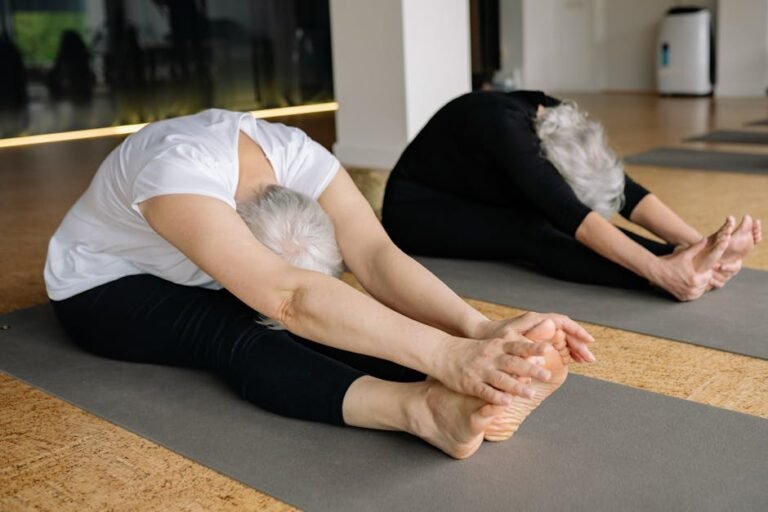
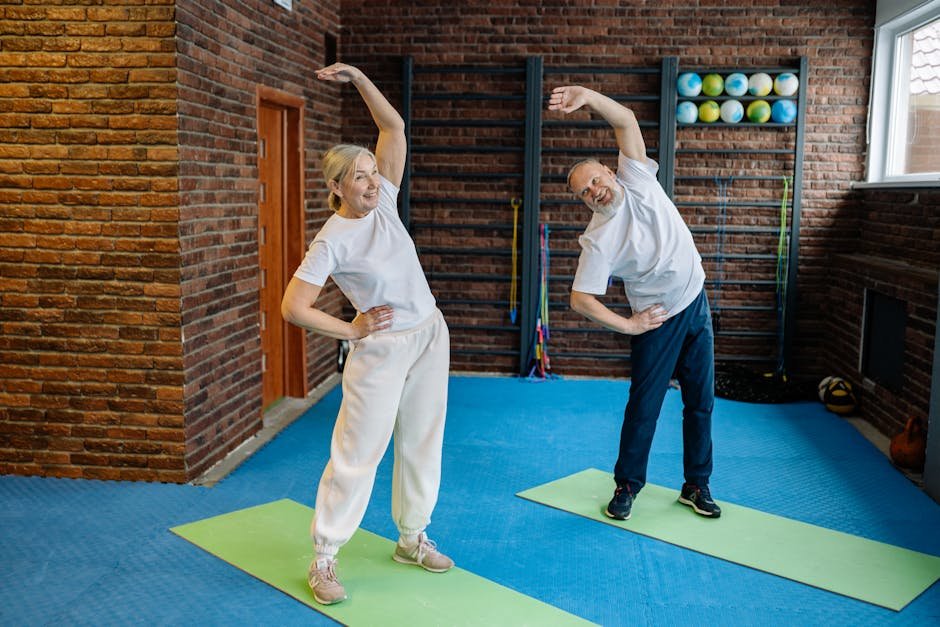
The following exercises are gentle, effective, and designed to be done either seated or standing. You don’t need a gym or any special equipment — just a chair with a straight back and a wall or doorway. Aim for one to two sets of each exercise, with six to twelve repetitions per set. Gradually build from there as you feel more confident.
Seated Chin Tuck: Sit tall with your feet flat on the floor and your shoulders relaxed. Gently draw your chin straight back — like you’re trying to make a double chin — while keeping your eyes looking forward. Hold for three to five seconds, then release. This strengthens the muscles that hold your head over your spine and reduces that common “forward head” position that can cause neck and shoulder tension. If neck movement feels limited, try a smaller, gentle nod instead.
Wall Scapular Squeeze: Stand with your back lightly touching a wall, feet shoulder-width apart. Bend your elbows to about 90 degrees and hold them at shoulder height. Now gently squeeze your shoulder blades together and downward, as if trying to pinch a pencil between them. Hold for five seconds, then relax. This move helps counteract the rounded upper back that so many of us develop from years of sitting and looking at screens. If standing is uncomfortable, you can do this seated with your back supported.
Doorway Chest Stretch: Stand in a doorway with one foot slightly forward. Place your forearm on the door frame at shoulder height, elbow bent. Gently step forward with the opposite foot until you feel a mild stretch across the front of your chest and shoulder. Hold for 20 to 30 seconds, breathing normally, then switch sides. Tight chest muscles are a major contributor to rounded shoulders, so this stretch is a real gem. If balance is a concern, try it seated with your forearm resting on the arm of a sturdy chair.
Seated Thoracic Rotation: Sit tall in your chair with feet flat. Place one hand on the opposite knee and gently twist your torso and head to one side, looking over your shoulder if that feels comfortable. Hold for three to five seconds, then slowly return to centre and repeat on the other side. This gentle twist helps free up the upper spine, which tends to stiffen with age and can contribute to both neck and lower back discomfort.
Pelvic Tilt: Sit tall in your chair with your hands resting on your belly. As you breathe out, gently tilt your pelvis so your lower back presses toward the chair, flattening that small curve. Hold for a moment, then relax back to a natural position. This exercise strengthens the lower back and abdominal muscles that support your entire spine. You can also do this lying on your back with your knees bent, pressing your lower back gently toward the floor.
Seated Back Extension: Sit toward the front edge of your chair with feet flat and hip-width apart. Place your hands on your hips or loosely lace your fingers behind your head with elbows wide. Gently lean back just a little — not far — lengthening through the spine and lifting your chest. Hold three to five seconds, then return upright. This is a wonderful antidote to the slumping that creeps in after long periods of sitting.
Chair Cat-Cow: Sit tall and move between two positions with your breath. As you exhale, round your spine gently, tucking your chin and drawing your belly in (Cat). As you inhale, arch softly, lift your chest, and let your belly soften forward (Cow). Move slowly between the two for six to eight cycles. This is a beautifully soothing way to wake up the entire spine and encourage mindful breathing at the same time.
What You Can Do: Practical Tips for Making Posture Work Part of Your Day
The secret to lasting improvement isn’t one intense session — it’s weaving small posture habits into your everyday life. Here are some simple, practical ways to make that happen:
- Build a short daily routine: Choose three or four exercises you enjoy and do them in the same order each day. Aim for five to ten minutes per session, five days a week if possible. Consistency is everything.
- Pair exercises with daily activities: Do a chin tuck while you wait for the kettle to boil. Try a wall scapular squeeze before you sit down for breakfast. Add a gentle seated twist after meals. Linking exercises to existing habits makes them far easier to remember.
- Set a reminder: A simple phone alarm or a sticky note on the fridge can prompt you to take a “posture break” once or twice a day. It sounds basic, but it works.
- Create a safe practice space: Keep a sturdy, straight-backed chair handy, and make sure a wall or doorway is within easy reach for balance support.
- Track your progress simply: Keep a small notebook where you jot down what you did and how you felt. Over time, you’ll start noticing real changes — less neck tension, easier rising from chairs, less fatigue on walks.
- Involve a friend or family member: Doing these exercises with a companion makes them more enjoyable and keeps you accountable. You might even put on some favourite music to make the session feel like a treat rather than a chore.
- Consider working with a professional: A physical therapist or a certified fitness trainer who specialises in older adults can tailor a programme specifically to your needs, making sure you’re getting the most benefit safely.
Staying Motivated for the Long Haul
One of the most common challenges with any new exercise habit is keeping it going beyond the first few weeks. The trick is to focus on the meaningful reasons behind what you’re doing. Better posture means more independence — easier daily tasks, steadier balance, and greater confidence moving around your home and community. These are things worth working towards every single day.
Be patient with yourself. Muscles genuinely take time to adapt, and progress can feel slow at first. But small wins add up. Notice the days when you catch yourself sitting straighter without thinking about it, or when you realise your neck feels less stiff in the evenings. Celebrate those moments — they’re signs that your efforts are paying off.
Try to keep a little variety in your routine so it doesn’t feel repetitive. Rotate between exercises, try them at different times of day, or occasionally do them in a different room. The goal is to keep all areas of your spine and shoulders engaged, while keeping the experience enjoyable rather than something you dread.
When to Seek Professional Guidance
While these exercises are gentle and designed with safety in mind, there are times when it’s important to seek professional advice rather than going it alone. If you experience new or worsening back pain, numbness, tingling, or weakness in your limbs during or after exercise, stop immediately and contact your healthcare provider. These could be signs of something that needs proper assessment.
If you have been diagnosed with osteoporosis, have a history of vertebral fractures, or have had recent surgery involving your back, neck, or shoulders, please get personalised clearance and guidance before starting any new exercise programme. Deep back bends or twisting movements that feel unstable are best avoided without professional supervision if you have any of these conditions.
A good physical therapist is an incredible resource. They can assess your specific posture challenges, identify any muscular imbalances, and design a programme that fits your body, your abilities, and your goals. Many offer home visits or telehealth appointments, making it more accessible than ever.
The Bottom Line: Posture correction exercises for older adults are one of the most practical and rewarding investments you can make in your health. By gently and consistently training the muscles that support your spine, you can reduce everyday discomfort, improve your balance, breathe more easily, and feel more confident and capable in everything you do. Start small, stay consistent, listen to your body, and don’t hesitate to ask for help when you need it. Your body is more capable than you might think — and every small effort you make adds up to real, lasting change in your wellbeing.
This is not medical advice. Consult your healthcare provider before starting any new health routine or using any product mentioned here.