Spinal Motor Control Explained: How Your Spine’s Hidden Command Centers Keep You Moving
This post contains affiliate links. As an Amazon Associate, I earn from qualifying purchases at no extra cost to you.
Free resources — no credit card required for trial
🎧 Listen to health & wellness audiobooks free for 30 days
Start 30-Day Free Trial →
📚 Read unlimited health books free for 30 days
Try Kindle Unlimited Free →
Have you ever marvelled at how you can walk across a room while holding a conversation, catch yourself before a fall, or swing a tennis racket without consciously thinking about every single muscle involved? The secret behind all of that effortless coordination lies deep inside your spinal cord — in a network of remarkable “local command centers” that neuroscientists call interneurons and central pattern generators, or CPGs. Spinal motor control, the process by which your nervous system orchestrates movement and stability, is far more sophisticated than most of us ever realise. Understanding how it works doesn’t just satisfy curiosity — it can genuinely change the way you exercise, sit, stand, and recover from injury. So let’s pull back the curtain on one of your body’s most extraordinary hidden systems.
Your Spine Is Far More Than a Stack of Bones
Most people think of the spine as a structural column — essentially a bony pole that holds you upright. And while it absolutely does that job brilliantly, it’s also so much more. Picture the mast of a sailing ship: it has to be strong enough to withstand powerful forces from every direction, yet flexible enough to bend and adapt without snapping. Your spine works on exactly the same principle, balancing rock-solid stability with an impressive range of motion every second of every day.
This balancing act is made possible not just by bones, ligaments, and muscles, but by an intricate web of neural communication. Your spine is in constant conversation with your brain, your senses, and its own internal circuits — all working together to keep you upright, coordinated, and pain-free. When you bend down to pick something up, reach across a desk, or step off a kerb you didn’t notice, thousands of tiny adjustments happen in milliseconds. No conscious thought required. That’s the beauty of spinal motor control at work.
Understanding this system matters because when something disrupts it — whether through injury, poor posture, inactivity, or chronic pain — the consequences ripple outward into everything you do. The good news is that this neural system is remarkably adaptable. With the right knowledge and habits, you can actively support and even improve the way your spine controls movement throughout your entire life.
The Hidden Intelligence Inside Your Spinal Cord: Interneurons and CPGs
Here’s something that surprises many people: your spinal cord isn’t simply a passive cable relaying messages between your brain and your muscles. It contains its own sophisticated processing circuits — networks of interneurons and central pattern generators (CPGs) that act as genuine “mini-brains,” capable of generating and coordinating complex movement patterns largely on their own.
Interneurons are specialised nerve cells within the spinal cord that communicate with each other and with motor neurons (the cells that actually tell muscles to contract). Rather than waiting for instructions from the brain for every little thing, these interneuron networks can interpret incoming sensory information — things like how stretched a muscle is, or where your body is positioned in space — and generate coordinated muscle activation patterns autonomously. This is what spinal motor control actually means at its most fundamental level: local intelligence driving local action.
Central pattern generators take this a step further. CPGs are specific networks of interneurons that produce rhythmic, repetitive movement patterns — like the alternating leg movements of walking, the rhythm of breathing, or the coordination involved in swimming. Once your brain sets these patterns in motion, the CPGs can sustain and regulate them without needing constant conscious oversight. Think of your brain as a conductor who starts the orchestra playing, then steps back while the musicians carry on beautifully by themselves. This is why you can walk and talk at the same time, or why breathing continues perfectly well while you sleep.
These systems are profoundly efficient. Without them, every single step would require deliberate, effortful thought from your brain — an overwhelming demand that would grind normal life to a halt. Instead, your spinal motor control circuits handle the routine rhythms, freeing your conscious brain for higher-level tasks like decision-making, creativity, and conversation.
Two Muscle Systems Working in Perfect Harmony
To carry out all of this remarkable spinal motor control, your body relies on two distinct but deeply connected groups of muscles — and understanding the difference between them is genuinely useful if you want to train smarter or recover from back problems more effectively.
The first group is the deep intrinsic muscles — small, precise muscles nestled directly against your vertebrae, including the multifidus, rotatores, and intertransversarii. Think of these as your spine’s fine-tuning system. They make constant micro-adjustments to maintain spinal alignment and protect individual vertebral segments during movement. They’re not built for brute force; they’re built for precision and responsiveness. These muscles are the first line of defence against injury, and they’re the ones that often become inhibited or weakened after a back injury or episode of pain.
The second group is the larger global muscle systems — the powerhouses. These include the erector spinae running along your back, the latissimus dorsi, and the major abdominal muscles that make up what we commonly call “the core.” These muscles generate the substantial forces needed for bigger movements: bending, lifting, rotating, and providing broad trunk stability during demanding tasks. They’re the brass section to the deep muscles’ strings — powerful, prominent, and essential.
The key insight here is that both groups must work together with exquisite timing. When one system is underperforming — which often happens after injury, prolonged sitting, or poor movement habits — the other tends to compensate in ways that aren’t sustainable. This is frequently at the root of chronic back pain and recurring injuries. Good spinal health isn’t just about having strong muscles; it’s about having well-coordinated muscles that respond appropriately to the signals your nervous system sends them.
The Brain-Spine-Body Feedback Loop: A Constant Conversation
Your spinal motor control system doesn’t operate in isolation. It’s part of a beautifully layered hierarchy of neural control that spans from those local spinal circuits all the way up to the sophisticated networks in your brain that govern conscious movement and motor learning.
At the base level, those interneurons and CPGs handle the automatic and rhythmic aspects of movement quickly and efficiently. Above them, the brainstem and cerebellum integrate information about balance, posture, and smooth movement transitions — essentially acting as assistant conductors refining what the spinal circuits initiate. And at the top, your cortex — the thinking part of your brain — handles voluntary decisions and motor learning. When you consciously choose to reach for your coffee cup or carefully step over a puddle, your brain sends instructions down descending motor pathways to your spinal cord, which coordinates the muscle response.
What makes this system truly remarkable is the constant feedback loop running through all of it. Sensors in your muscles, joints, skin, and inner ear are continuously sending real-time information about your body’s position, speed of movement, and the forces acting on you back to both your spinal cord and brain. This allows for instant adjustments — the kind that stop you stumbling when you step on an uneven surface, or help you smoothly correct your posture when you start to slouch. This sensory feedback is often referred to as proprioception, and it’s absolutely central to healthy spinal motor control.
When this feedback loop is disrupted — through injury, pain, or inactivity — movements can become less precise, less coordinated, and more injury-prone. The encouraging flip side is that this system is highly trainable. Rehabilitation exercises, mindful movement practices, and regular varied activity can all help restore and enhance the quality of this neural communication, making your spinal motor control more resilient over time.
Practical Tips: What You Can Do to Support Spinal Motor Control
Now that you have a sense of the incredible machinery working inside your spine every day, here are some genuinely practical ways to support it. These aren’t complicated — but they’re backed by what we know about how spinal motor control actually works.
- Keep moving regularly and vary how you move. Your spinal discs, muscles, and neural circuits all benefit from movement. It delivers nutrients, maintains signal quality, and keeps your CPGs active and well-tuned. Avoid sitting or standing in the same position for long stretches without a break.
- Train your deep muscles, not just the obvious ones. Practices like Pilates, yoga, and targeted spinal stability exercises specifically activate those deep intrinsic muscles — the fine-tuners that protect your vertebrae. Don’t neglect them in favour of only big, flashy movements.
- Include strength training for your global muscles too. Squats, deadlifts, planks, rows, and similar exercises build the power and endurance of your larger muscle systems. A strong core in the broadest sense — front, back, and sides — gives your spine the support it needs for demanding tasks.
- Practise balance exercises. Standing on one leg, using a balance board, practising Tai Chi, or simply doing single-leg exercises challenges your sensory systems and spinal circuits in a way that flat-ground exercise doesn’t. This directly improves proprioception and spinal motor control quality.
- Move mindfully during everyday activities. Notice your posture as you sit, stand, and lift. Are you rounding your lower back when you pick something up? Craning your neck forward at a screen? Small habitual corrections, practiced consistently, genuinely retrain the neural pathways involved in spinal motor control.
- Listen to your body’s early signals. Persistent stiffness, minor aches, or a nagging sense of instability are often your sensory systems flagging that something needs attention. Catching these signals early — before they become significant pain — gives you far more options.
- Work with a professional if you need to. Physical therapists are specifically trained to assess how your spinal motor control is functioning and to design targeted programmes to retrain it. If you have persistent or recurring back problems, professional assessment is well worth it.
None of these tips require expensive equipment or hours at the gym. They require consistency, awareness, and a little understanding of what you’re actually trying to achieve — which you now have.
Why This Knowledge Matters for Long-Term Spinal Health
There’s a reason that understanding spinal motor control has become increasingly central to modern back pain rehabilitation and sports performance training. For a long time, back problems were treated almost exclusively as structural issues — a disc was bulging, a muscle was torn, a joint was inflamed — and treatment focused almost entirely on the physical tissue. While that absolutely matters, it’s only half the picture.
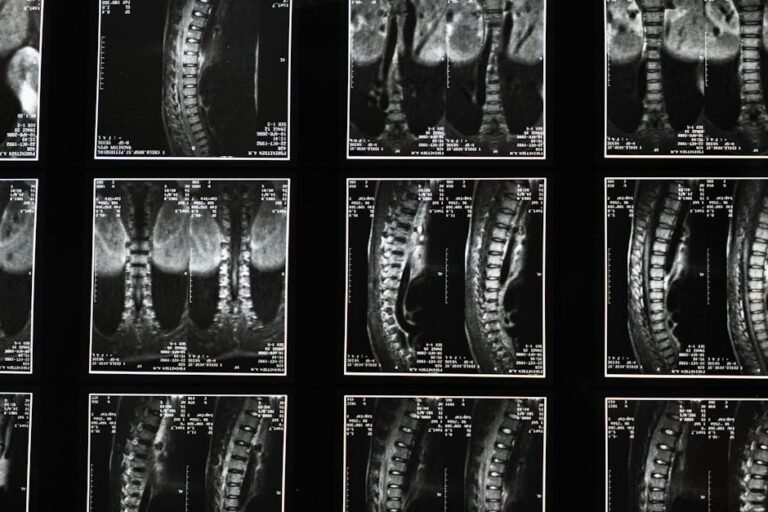
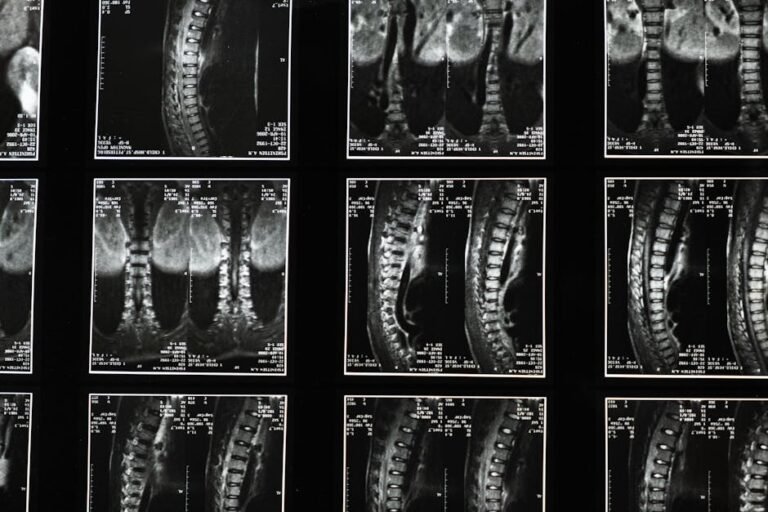
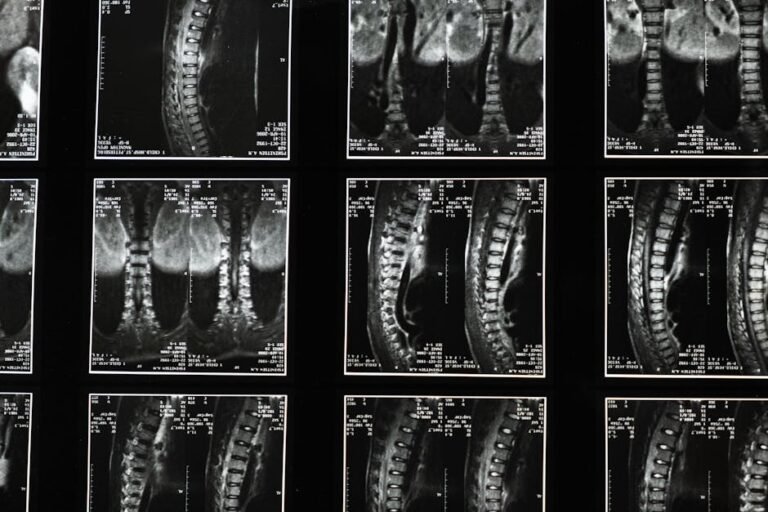
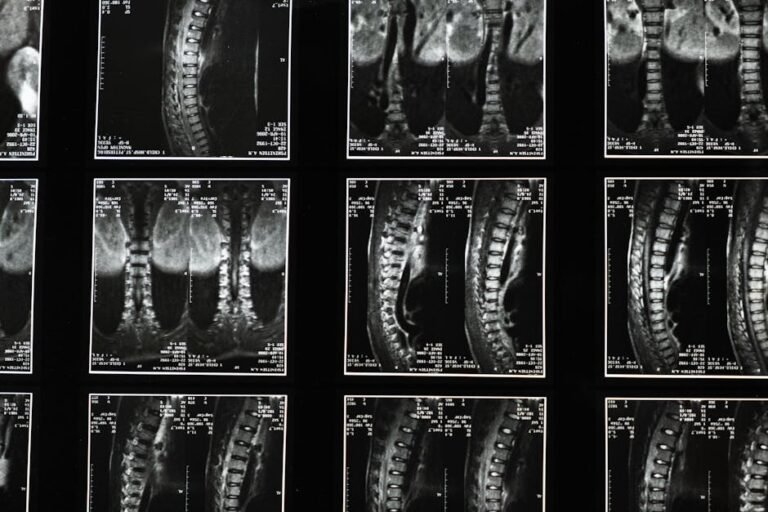
What we now understand is that the neural control of your spine — the quality of those interneuron circuits, the responsiveness of your CPGs, the richness of your sensory feedback loop — plays an enormous role in whether you stay pain-free and functional. Two people can have identical-looking spines on an MRI and have completely different experiences of pain and movement capacity, largely because of differences in how their nervous systems are managing spinal motor control.
This is genuinely empowering news. It means that even if you have some structural wear and tear — as most of us do as we age — there is a great deal you can do to improve the way your body manages and protects your spine. Exercise, mindful movement, balance training, and good sleep all influence the health of your neural circuits. You are not simply at the mercy of your anatomy.
Your spine is doing extraordinary work every moment of your life, and most of it happens without you ever having to think about it. The least you can do is give it the movement, attention, and care it deserves. A little understanding goes a very long way.
The Bottom Line: Spinal motor control is one of your body’s most sophisticated and underappreciated systems. Deep within your spinal cord, networks of interneurons and central pattern generators work tirelessly to coordinate movement, maintain stability, and adapt to everything life throws at you — all with minimal input from your conscious brain. Two muscle systems, deep fine-tuners and powerful global movers, must work in perfect sync to keep your spine strong and flexible. By keeping active, training both muscle systems, practising balance work, and moving mindfully, you can actively support this remarkable neural machinery and build a foundation for genuine, lasting spinal health.
This is not medical advice. Consult your healthcare provider before starting any new health routine or using any product mentioned here.