How to Check Your Posture at Home: A Practical Guide for Older Adults
This post contains affiliate links. As an Amazon Associate, I earn from qualifying purchases at no extra cost to you.
Free resources — no credit card required for trial
🎧 Listen to health & wellness audiobooks free for 30 days
Start 30-Day Free Trial →
🛒 Recommended Products
As an Amazon Associate we earn from qualifying purchases at no extra cost to you.
TheraBand First Step to Active Health Kit — Senior Exercise Program for Balance and Fall P
$19.99
EZ Off Jar Opener for Seniors — Under Cabinet Jar Opener for Weak Hands and Arthritis
$9.99
Omron 5 Series Upper Arm Blood Pressure Monitor — 2-User 100-Reading Memory Wide-Range Cuf
$44.99
OMRON 7 Series Wireless Wrist Blood Pressure Monitor — Clinically Validated with Connect A
$69.99
Vitality 4 Life Senior Resistance Band with Instruction Guide — Specifically for Elderly F
$16.99
📚 Read unlimited health books free for 30 days
Try Kindle Unlimited Free →
Have you ever caught a glimpse of yourself in a shop window and thought, “Is that really how I walk?” You’re not alone. As we get older, it’s easy for posture to quietly shift without us noticing — a slight forward lean here, a rounded shoulder there. But here’s the good news: learning how to check your posture at home is surprisingly simple, and the benefits it brings to your breathing, balance, comfort, and everyday independence are absolutely worth the effort. Whether you want to stand taller, move more easily, or just feel a little more confident in your body, this guide has got you covered.
Why Posture Matters More Than You Might Think
Most of us were told to “stand up straight” as children, but posture is about so much more than appearances. Good alignment directly supports some of the most important aspects of daily health — especially as we age. When your body is stacked upright in its natural position, your lungs have room to fully expand, which means better, deeper breathing with less effort. That alone can make a noticeable difference in your energy levels throughout the day.
There’s also a strong connection between posture and balance. When your head, shoulders, hips, and feet are properly aligned, your body is far better equipped to stay steady on its feet — which is a crucial factor in reducing the risk of falls. And when your joints are moving in their intended alignment, everyday tasks like getting in and out of a chair, reaching into a cupboard, or walking to the letterbox simply feel easier and less taxing on your body.
Perhaps most importantly, working on your posture is something you can genuinely do at home, at your own pace, without any special equipment. Small, consistent improvements can build lasting independence — and that’s worth celebrating.
What Good Posture Actually Looks Like
Before you start checking your posture, it helps to know what you’re aiming for. And here’s the first thing to understand: good posture isn’t about being perfectly rigid or military-straight. It’s about comfortable, natural alignment that lets your body work the way it’s designed to.
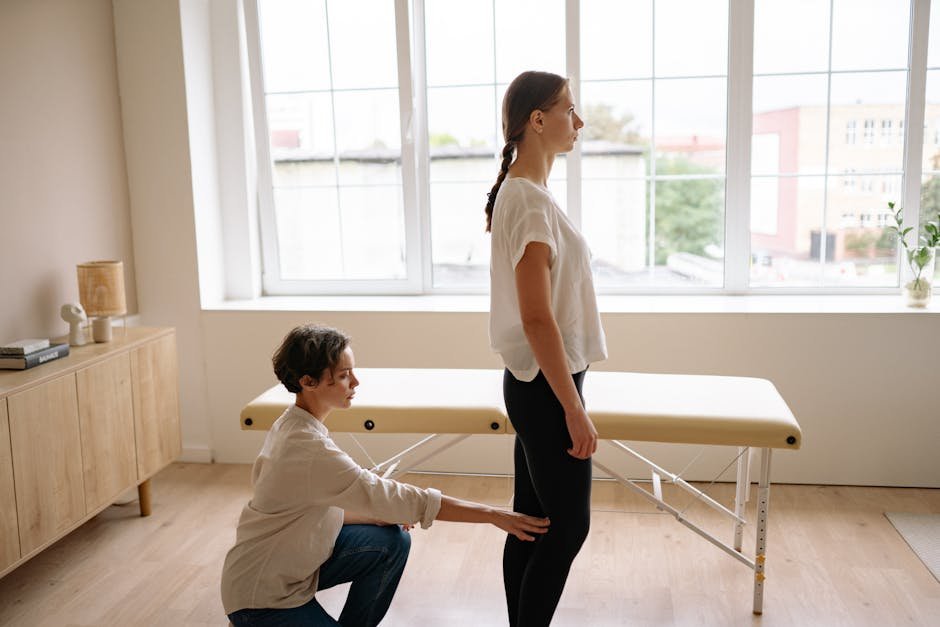
When you’re standing, picture a straight line running from your ear, down through your shoulder, past your hip, and ending at your ankle. Your chin should be level, your chest open, and your feet roughly hip-width apart. Your knees should be soft — never locked tight. When you’re sitting, your feet should be flat on the floor, your knees roughly at hip height, and your back supported by the chair. Imagine gently lengthening the back of your neck, with your ears sitting over your shoulders. And when you’re walking, keep your head up, eyes looking forward, shoulders relaxed, and let your movement flow smoothly from your hips through to your feet. Avoid letting your head push forward like a turtle — it’s one of the most common posture habits people develop without realising.
How to Check Your Posture at Home: Three Simple Checks
You don’t need a fancy clinic or expensive equipment to get a clear picture of your posture. A full-length mirror in a well-lit room, a stable chair, and a few minutes of your time are all it takes. If you have a smartphone, even better — a quick side-on photo can be incredibly revealing and useful for tracking progress. Let’s walk through three checks you can do in around ten minutes.
Standing posture check: Stand in front of your full-length mirror in comfortable clothing that doesn’t hide your body shape. First, look at yourself from the side (use your phone camera or ask a family member to help). Is your ear roughly above your shoulder, your shoulder above your hip, and your hip above your ankle? Is your chin level? Does your chest feel open? Now face the mirror head-on. Are your shoulders level with each other? Are your hips and feet pointing forward? Does your weight feel evenly balanced on both feet? If your head seems to jut forward, gently tuck your chin and imagine a string pulling the very top of your head upward. Roll your shoulders back and down, away from your ears, and softly engage your tummy muscles. Hold this position for five to ten seconds, then relax and repeat a few times.
Seated posture check: Sit toward the front edge of a supportive chair with your feet flat on the floor and your back gently touching the chair’s backrest. There should be a small, natural curve in your lower back — not a flat, slumped back. If you find it hard to maintain that curve, try rolling up a small towel and placing it behind your lower back for support. Check that your ears are over your shoulders and your shoulders are over your hips. Practice sitting in this position for two to three minutes while watching television or reading — and every time you catch yourself slumping, simply reset and start again. It gets easier with practice.
Walking posture check: Stand tall with your head up and eyes looking forward. Relax your shoulders — don’t let them creep up toward your ears. Gently engage your core (just a soft tummy pull-in, nothing dramatic) and take a few steady steps, landing softly on your heel and rolling through to your toe. If you notice your head pushing forward, pause, reset, and bring it back into alignment. If you have any balance concerns, keep a hand on a chair or wall as you practice, and always stop if you feel unsteady.
Common Posture Issues to Watch For
When you do your posture checks, there are a handful of patterns that tend to show up regularly in older adults. Knowing what to look for makes it much easier to address them early.
Forward head and rounded shoulders is one of the most common — the head drifts in front of the body, and the shoulders curve inward. This often comes from years of reading, screen use, or looking downward. Gentle chin tucks and shoulder blade squeezes are your friends here. Swayback is another common one, where the pelvis tilts forward and the lower back curves excessively. A small pelvic tilt — gently drawing the pelvis under you — along with light core engagement can help correct this over time.
You might also notice locked knees, where the legs are pushed back into a stiff, straight position. This strains the joints and affects balance — aim to keep a soft, gentle bend at all times. Uneven shoulders or hips can stem from old habits, past injuries, or simply favouring one side of the body. Regularly checking yourself in the mirror and consciously distributing your weight evenly between both feet can make a real difference.
What You Can Do: Practical Tips for Better Posture Every Day
Improving your posture doesn’t require a major overhaul of your daily routine. Small, consistent habits are far more effective than the occasional intense effort. Here are some practical, gentle actions you can start today:
- Do a daily posture reset: Three times a day, spend five minutes standing tall, taking a slow breath in, exhaling and relaxing your shoulders, doing a couple of chin tucks, and finishing with two shoulder blade squeezes. It’s simple and surprisingly effective.
- Try neck retractions: Slowly pull your head straight back as if you’re making a double chin (yes, really!). Hold for a few seconds and release. Repeat five to ten times. This counters the forward head position beautifully.
- Do chest openers: Stand with your arms at your sides, palms facing forward. Gently squeeze your shoulder blades together, open your chest, and hold for five seconds. Repeat eight to ten times.
- Practice shoulder blade squeezes: Sitting or standing, squeeze your shoulder blades together and hold for five seconds. Aim for eight to twelve repetitions. This strengthens the muscles that hold your upper back upright.
- Use a chair hip hinge: Stand behind a sturdy chair with your hands on the backrest. Gently hinge at the hips, pushing your bottom backward as if about to sit, then stand tall again. Eight to twelve reps help activate the muscles that support good standing posture.
- Set hourly posture reminders: Use your phone to set a gentle reminder every hour to do a one-to-two minute posture check. Frequent small resets build lasting awareness faster than you’d expect.
- Break up sitting time: Aim to switch between sitting, standing, and gentle walking every twenty to thirty minutes. Prolonged sitting — even with great posture — leads to stiffness and slouching.
- Wear supportive, non-slip footwear: Good shoes make a real difference to your balance and alignment from the ground up.
- Ask for a weekly check-in: Invite a family member or trusted friend to help you review your alignment once a week. A second pair of eyes catches things you might miss, and it keeps you motivated.
A Simple Daily Routine to Build Lasting Posture Habits
Consistency is the real secret to improving your posture, and having a gentle daily structure makes it much easier to stay on track. Here’s a simple routine you can adapt to fit your day. In the morning, spend five minutes doing your posture reset followed by five gentle stretches focusing on the neck, chest, and shoulders. This sets a positive tone for the whole day. At midday, take two to three minutes in front of your mirror for a quick standing posture check and make any adjustments needed.
In the afternoon, run through five minutes of the hip hinge and gentle back extension exercises. These are especially helpful if you’ve been sitting for a while. In the evening, do a seated posture check while watching television — it’s a relaxed, low-effort way to keep awareness ticking along. And weekly, do one slightly longer check with a family member or friend, noting any improvements and celebrating your progress. Progress in posture is real, even if it’s slow — and every small step forward counts.
One important note: always move slowly and listen to your body. If anything hurts, stop immediately. If you have osteoporosis, recent injuries, or balance concerns, use a stable surface for support when trying new positions. And if you experience persistent pain, numbness, or weakness, please speak with your healthcare provider before continuing.
The Bottom Line: Learning how to check your posture at home is one of the most empowering things you can do for your long-term health, comfort, and independence. You don’t need any fancy equipment or professional training to get started — just a mirror, a little time, and the willingness to tune in to how your body is holding itself. With gentle daily awareness, a handful of simple exercises, and the occasional check with someone you trust, real improvement is absolutely within reach. Be patient with yourself, celebrate every small win, and remember: standing taller isn’t just about how you look — it’s about how freely, safely, and confidently you move through every single day.
This is not medical advice. Consult your healthcare provider before starting any new health routine or using any product mentioned here.