How to Test Your Balance Safely at Home: A Friendly Guide for Older Adults
This post contains affiliate links. As an Amazon Associate, I earn from qualifying purchases at no extra cost to you.
Free resources — no credit card required for trial
🎧 Listen to health & wellness audiobooks free for 30 days
Start 30-Day Free Trial →
🛒 Recommended Products
As an Amazon Associate we earn from qualifying purchases at no extra cost to you.
TheraBand First Step to Active Health Kit — Senior Exercise Program for Balance and Fall P
$19.99
EZ Off Jar Opener for Seniors — Under Cabinet Jar Opener for Weak Hands and Arthritis
$9.99
Omron 5 Series Upper Arm Blood Pressure Monitor — 2-User 100-Reading Memory Wide-Range Cuf
$44.99
OMRON 7 Series Wireless Wrist Blood Pressure Monitor — Clinically Validated with Connect A
$69.99
Vitality 4 Life Senior Resistance Band with Instruction Guide — Specifically for Elderly F
$16.99
📚 Read unlimited health books free for 30 days
Try Kindle Unlimited Free →
If you’ve ever grabbed a wall for support when standing up quickly, or felt a little wobbly stepping off a curb, you’re not alone — and you’re paying attention to something that really matters. Knowing how to test your balance at home is one of the smartest, most proactive things you can do for your long-term health and independence. Balance affects almost everything we do: getting up from a chair, walking across a room, climbing stairs, or just standing still while chatting with a neighbour. The great news? You don’t need fancy equipment or a clinic visit to get a snapshot of how steady you are right now. This guide walks you through everything you need to know — safely, step by step — so you can feel informed, confident, and in control of your own wellbeing.
Why Testing Your Balance at Home Actually Matters
As we get older, small changes in balance can creep up gradually — so gradually that we barely notice them until something goes wrong. Falls are one of the leading causes of injury among older adults, but the reassuring truth is that many falls are preventable. When you regularly check in on your balance, you can spot small shifts early, before they become bigger problems. Think of it like checking the tyre pressure on your car — a quick test tells you whether you’re good to go or whether a little maintenance is needed.
Testing your balance at home also gives you something really valuable: a starting point. When you know where you stand today (quite literally!), you can track your progress over time as you practice balance and strength exercises. That sense of progress is incredibly motivating. And if your results suggest you’d benefit from some extra support, you’ll have specific, useful information to share with your doctor or physiotherapist — which means you get better, more tailored help.
Perhaps most importantly, taking charge of your balance helps you stay independent. Moving through daily life with confidence — without fear of falling — is a huge part of overall wellbeing and quality of life. You deserve to feel steady and secure in every step you take.
Safety First: What to Do Before You Begin
Before we get into the actual tests, let’s talk safety — because doing this well means doing it carefully. First, if you’ve had a recent fall, surgery, joint or spine problems, heart or eye conditions, or you experience fainting or dizziness, please check in with your doctor or physiotherapist before trying any balance tests at home. They can tell you which activities are appropriate for your specific situation.
Set yourself up in a safe space. Choose a room with good lighting, a hard non-slip floor, and enough room to move around. Clear away any clutter, loose rugs, or anything you might trip over. You’ll want a sturdy chair with armrests or a wall nearby to hold onto — think of it as your safety anchor throughout the tests. Wear comfortable, well-fitting shoes with non-slip soles. Loose slippers or socks on a smooth floor are a no-go.
If it’s your first time doing these tests, having a family member or friend nearby is a really good idea. Keep your phone within reach as well, just in case. And throughout all of these tests, the golden rule is simple: if you feel dizzy, lightheaded, short of breath, or like you might fall — stop immediately, sit down slowly, and rest. There’s no rushing here. Your safety always comes first.
Four Simple At-Home Balance Tests (Step by Step)
You can do all four of these tests in a single session, or spread them across a few days if you prefer. Always do each test near a wall or sturdy chair, and only push to your own comfort level. Remember, the goal is information — not performance. There’s nothing to prove here.
1. Tandem Stance (Heel-to-Toe Stand): Stand near your chair or wall. Place the heel of one foot directly in front of the toes of the other, so your feet form a straight line. Let your arms rest at your sides, or lightly touch your support if needed. Try to hold this position for up to 30 seconds. Note the longest time you can hold it comfortably without stepping or gripping your support tightly.
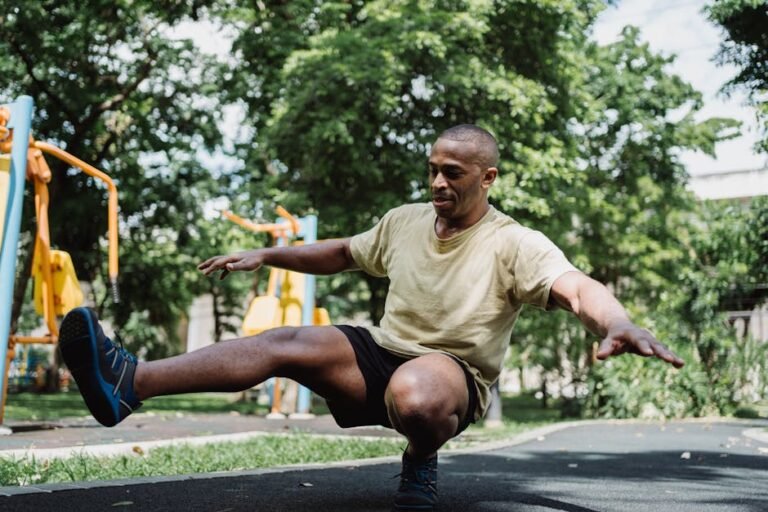
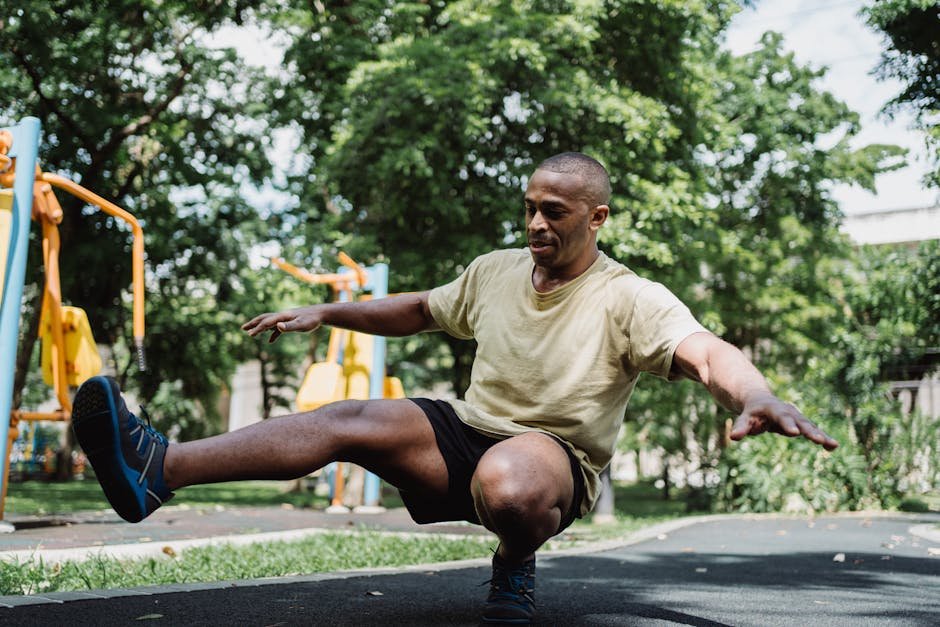
2. Single-Leg Stand: Stand near your chair or wall and shift your weight onto one leg. Lift the other foot slightly off the floor. Try to hold steady for up to 30 seconds, then switch legs. Note how long you could hold each side, and whether one leg felt steadier than the other. Keep a hand lightly resting on your support if needed — there’s no shame in using it.
3. Functional Reach Test: Stand with your feet shoulder-width apart, facing a wall. Extend one arm straight in front of you and reach forward as far as you comfortably can — without stepping or losing your balance. You can mark your reach on the wall, or ask someone to help measure it with a tape measure. This test gives you a sense of how confidently you can lean forward, which is a key part of everyday balance.
4. Timed Up and Go (TUG): Sit near the edge of a sturdy chair, feet flat on the floor. On a signal, stand up, walk to a marker about 3 metres away, turn around, walk back, and sit back down. Have someone time this with a stopwatch or use the timer on your phone. Notice whether you stood smoothly, walked at a steady pace, and turned without hesitation. A longer completion time can signal slower mobility and is a useful thing to discuss with your doctor.
Understanding What Your Results Mean
Here’s the thing about at-home balance testing — your results aren’t about passing or failing. They’re about understanding where you are right now, so you know what to focus on. If you could hold the tandem stance or single-leg stand for a full 30 seconds with light support, that’s a genuinely positive sign of good balance. Keep up whatever you’re doing, and consider adding a little variety to your routine to maintain that strength.
If you needed a lot of support, or could only hold positions for a few seconds, that’s really useful information too. It suggests that adding a regular, gentle balance practice to your week could make a meaningful difference — and it may be worth having a chat with your GP or a physiotherapist to get a tailored programme in place. Similarly, if your functional reach felt quite limited, or your TUG time felt slow, these are helpful signals that balance and strength exercises could genuinely help you feel more stable and capable day to day.
Between formal tests, it’s also worth keeping an eye out for everyday balance clues: do you find yourself holding walls or furniture more than usual? Taking very small shuffling steps? Feeling dizzy when you stand up or change position? Noticing more near-trips in daily life? These signs are worth taking seriously and mentioning to your healthcare provider.
What You Can Do: Practical Tips to Improve Your Balance
Based on how your tests went, here are some clear, practical ways to move forward — whatever your starting point.
- If your balance was strong: Keep it that way! Aim for 10–15 minutes of balance practice on most days. Mix up your stances (feet together, semi-tandem, then tandem) and add gentle leg-strength moves like calf raises and chair squats.
- If you struggled with tandem or single-leg standing: Start with easier variations — feet slightly apart — and gradually narrow your stance as you feel steadier. Practice 3–4 times a week in short 5–10 minute sessions. Seated leg extensions and calf raises are great beginner-friendly strengtheners.
- If your functional reach was limited: Practice controlled reaching in all directions while standing near a stable chair. Aim to reach a little further each week. Gentle trunk rotations and side-to-side weight shifts can also help improve your range and stability.
- If your TUG took longer than expected: Focus on combining balance exercises with safe walking practice. Work on turning smoothly and starting and stopping with confidence, using a hallway with a clear path. Gradually increase your walking time in small, steady increments.
- Make your home safer: Clear away cords, loose rugs, and clutter. Improve lighting in hallways and on stairs — night lights are a simple, effective investment. Installing grab bars in the bathroom and a sturdy handrail on stairways can make a real difference to daily safety.
- Consider helpful aids: If you’re going outdoors or on uneven surfaces, a good cane or walker provides extra peace of mind. These aren’t signs of weakness — they’re tools that keep you active and independent.
- Practice consistently, not intensely: A small daily balance practice beats long, irregular sessions every time. Even 5–10 minutes a day, done regularly, can lead to real improvements over weeks and months.
- Breathe and stay relaxed: Tension actually makes balance harder. Breathe steadily throughout your practice and try not to grip your support too tightly.
- Look after the basics: Good hydration, nutrition, and sleep all affect how steadily you move each day. These fundamentals are part of your balance programme too.
- Invite a buddy: A family member or friend can join you for safety and encouragement — and it makes practice more enjoyable.
When to Seek Professional Help for Balance Issues
Home balance testing is a wonderful starting point, but it works best alongside professional guidance when needed. Please do reach out to your GP or a physiotherapist if you’ve had a fall or a near-fall recently, if you experience dizziness, fainting, or chest pain during any activity, or if you notice a sudden or progressive change in your balance or walking ability. These are important signals that deserve professional attention.
It’s also well worth seeking support if you have specific health conditions — such as diabetes, heart disease, stroke, osteoporosis, or arthritis — that affect how you move. A physiotherapist can design a personalised balance programme tailored to your exact needs, check your technique, and make sure you’re progressing safely. Many GP practices can also refer you for a formal fall-risk assessment or a home safety review, which can be enormously helpful if you’ve had a recent fall or if your home environment feels tricky to navigate.
Don’t hesitate to ask for help. Seeking support isn’t a step backward — it’s a smart, proactive choice that keeps you moving forward safely. The right professional guidance can make your at-home practice significantly more effective and give you genuine confidence in your progress.
The Bottom Line: Learning how to test your balance at home is one of the kindest, most empowering things you can do for yourself. With a sturdy chair, a clear space, and a few simple tests — tandem stance, single-leg stand, functional reach, and the Timed Up and Go — you can get a clear, honest picture of where your balance stands today. Use what you discover to guide a regular, gentle practice, make your home safer, and reach out to a professional when you need extra support. Balance genuinely can improve with consistent, careful effort — and every steady step you take is a step toward greater independence, confidence, and quality of life. You’ve got this.
This is not medical advice. Consult your healthcare provider before starting any new health routine or using any product mentioned here.