Leg-Strengthening Exercises for Climbing Stairs: Build Confidence, Balance, and Independence
This post contains affiliate links. As an Amazon Associate, I earn from qualifying purchases at no extra cost to you.
Free resources — no credit card required for trial
🎧 Listen to health & wellness audiobooks free for 30 days
Start 30-Day Free Trial →
🛒 Recommended Products
As an Amazon Associate we earn from qualifying purchases at no extra cost to you.
TheraBand First Step to Active Health Kit — Senior Exercise Program for Balance and Fall P
$19.99
EZ Off Jar Opener for Seniors — Under Cabinet Jar Opener for Weak Hands and Arthritis
$9.99
Omron 5 Series Upper Arm Blood Pressure Monitor — 2-User 100-Reading Memory Wide-Range Cuf
$44.99
OMRON 7 Series Wireless Wrist Blood Pressure Monitor — Clinically Validated with Connect A
$69.99
Vitality 4 Life Senior Resistance Band with Instruction Guide — Specifically for Elderly F
$16.99
📚 Read unlimited health books free for 30 days
Try Kindle Unlimited Free →
When was the last time you thought about climbing stairs? For many of us, it’s just something we do — up to the bedroom, down to the kitchen, out the front door. But as we get older, those steps can start to feel a little steeper, a little shakier, and a whole lot more daunting. The good news? Leg-strengthening exercises for climbing stairs can make a real, meaningful difference. With the right moves done regularly at home, you can build the muscle power and balance you need to take on stairs with confidence — and dramatically reduce your risk of a fall in the process.
Why Your Legs Are the Key to Safer Stair Climbing
Stairs put a surprising demand on your body. Every time you lift your foot onto a step, you’re relying on a team of muscles working together — and if any one of them is weak or tired, your stability can take a hit. Understanding which muscles do the heavy lifting helps you appreciate why targeted exercise makes such a big difference.
Your quadriceps — the large muscles at the front of your thighs — are the power players. They straighten your knee so you can push yourself up from each step. Your calves help you rise onto your toes as you step up and control your foot as you descend, acting like a natural brake. Meanwhile, strong hips and ankles provide the balance and stability that keep you from wobbling or tripping mid-step.
When these muscles are strong and working well together, stair climbing feels smooth and controlled. When they’re weak, even a small stumble can turn into a dangerous fall. The encouraging truth is that with consistent, gentle practice, you can build real strength in all these areas — no gym membership required.
Before You Begin: Safety First
If you have knee, hip, or back pain, a recent surgery, or a history of falls, it’s worth having a quick chat with your doctor or a physical therapist before you dive in. They can help you adjust any of these movements to suit your individual needs. That said, these exercises are designed to be gentle, low-impact, and safe for most older adults.
A few simple things to have in place before you start: a sturdy, non-wobbling chair with armrests, clear space around you, and supportive shoes with non-slip soles. Keep a wall or solid railing within reach. Always warm up first — just 5 to 10 minutes of gentle marching in place, slow walking, or shoulder rolls is enough to get your blood moving and your joints ready. And remember: breathe naturally throughout, move slowly, and if you ever feel sharp pain, dizziness, or shortness of breath, stop and rest.
The Best Leg-Strengthening Exercises for Climbing Stairs
These eight exercises cover all the key muscle groups you need for safe, confident stair climbing. You don’t need to do them all in one session — start with two or three that feel manageable, and build from there over the coming weeks.
Sit-to-Stand is one of the most powerful exercises you can do. Sit tall in your chair, feet hip-width apart and flat on the floor. Press through your heels to stand up fully, then slowly lower yourself back down with control. This works your quads, hips, and core all at once — exactly the muscles that power you up a step. Aim for 8 to 12 repetitions, 2 to 3 sets, a few times a week.
Calf Raises build the push-off strength you need for each step. Stand behind a chair for support, rise slowly onto your toes, hold for a moment, and lower back down. Do 10 to 15 repetitions per set. Move slowly and don’t bounce — the controlled lowering is just as important as the lift.
Step-Ups on a Low Step are the closest thing to actual stair climbing you can practice at home. Use a low stair or a sturdy step about 4 to 6 inches high. Stand facing the step near a railing or wall. Place one foot on the step, push through your heel to lift yourself up, bring the other foot up to meet it, then step back down. Alternate which leg leads. Start with 6 to 8 repetitions per leg and focus on keeping your movements slow and steady.
Seated Leg Extensions are perfect if you’re just starting out or have knee sensitivity. Sit in a supportive chair, extend one leg straight out in front of you, and slowly lower it back down. Don’t lock the knee at the top — keep it soft. This directly strengthens the quadriceps without putting weight through your joints. Do 12 repetitions per leg, 2 sets.
Standing Leg Curls work the back of your thigh. Hold the back of a chair for balance, bend one knee to bring your heel toward your buttock, keeping your thighs still, then lower slowly and switch sides. Keep your hips level and avoid twisting your body. Start with a small range of motion and grow it as you feel stronger.
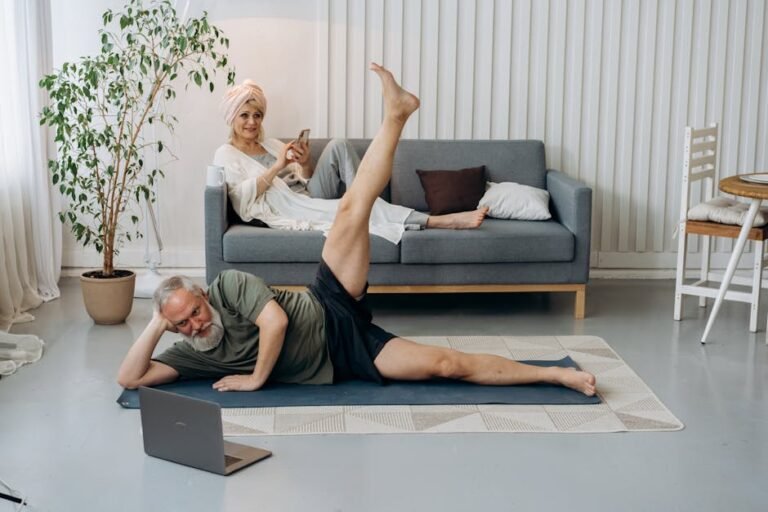
Side Leg Lifts target your hip abductors — the muscles that keep you stable when you shift your weight from one foot to the other on stairs. Stand behind your chair, lift one leg out to the side about 6 to 8 inches with a slow, controlled motion, then lower it back down. Keep your upper body still and don’t swing the leg.
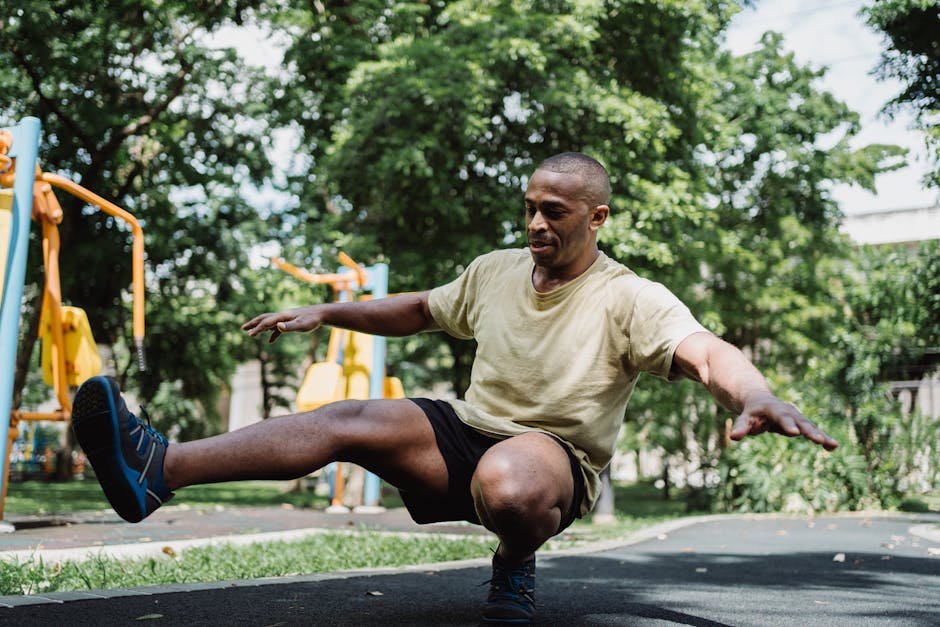
Balance Builders — including tandem walking and single-leg stands — are simple but incredibly effective. For a tandem walk, place one foot directly in front of the other (heel to toe) and walk in a straight line for 8 to 10 steps, using a wall for support. For single-leg stands, hold onto a chair or wall and balance on one foot for 10 to 15 seconds before switching. These drills train your body to stay steady when your weight shifts — exactly what happens on every single step.
Gentle Stair Practice is the final piece of the puzzle. If you have a staircase at home with a solid handrail, practice going up 2 to 3 steps slowly, using the railing, then coming back down just as carefully. Start with 2 to 3 repetitions, twice a week, and increase as you feel more confident. Good lighting and clear stairs are essential — remove any clutter or loose rugs before you begin.
What You Can Do: Practical Tips for Safe and Effective Practice
Building leg strength is less about any single workout and more about showing up consistently and staying safe while you do it. Here are some straightforward tips to help you get the most out of these exercises:
- Always warm up for 5 to 10 minutes before exercising — gentle marching in place, ankle circles, or a slow walk around the room will do the trick.
- Wear supportive shoes with non-slip soles every time you exercise, even indoors.
- Keep a sturdy chair and a clear space nearby so you always have something solid to hold onto if you need it.
- Start with the seated exercises (seated leg extensions, sit-to-stand) and work your way up to standing and balance exercises as you grow stronger.
- Move slowly and with control — the goal is steady, safe movement, not speed.
- Breathe naturally — exhale as you push or lift, inhale as you lower or return to your starting position.
- Never push through pain — if something hurts your knee, hip, or back, reduce the range of motion or stop and rest.
- Track your progress in a simple notebook — note your reps, how you felt, and any improvements in your balance. Seeing progress in writing is motivating.
- Aim for 2 to 4 sessions per week with at least one rest day between harder sessions to give your muscles time to recover and rebuild.
- Stay hydrated — drink water before and after your session, especially in warm weather.
How to Progress at Your Own Pace
One of the most important things to understand about building leg strength is that progress is personal. There’s no race, no deadline, and no minimum standard you have to meet. What matters is that you’re moving regularly and feeling the exercises get a little easier over time — because that is real, measurable progress.
In the first few weeks, focus on the simplest exercises: sit-to-stands, calf raises, and seated leg extensions. Do them 2 to 3 days a week and keep the number of repetitions on the lower end. Once these feel comfortable and you can complete them with good form and control, start adding step-ups and balance work. When you’re ready, try a slightly higher step or add a couple more repetitions to each set.
If you’re caring for an older parent or loved one, these exercises are just as valuable to guide someone else through. A steady hand on the chair, a word of encouragement, and a shared routine can make all the difference in someone’s confidence and willingness to keep going. Celebrate every bit of progress — finishing three step-ups on each leg when you could only manage two last week is genuinely worth acknowledging.
Why This Work Matters Beyond the Stairs
Building leg strength isn’t just about getting up and down the stairs more easily, though that is a wonderful and tangible result. It’s about staying independent. It’s about being able to walk to the letterbox, carry groceries, visit friends, and live fully in your own home for as long as possible. Falls are one of the leading causes of injury in older adults, and the majority of those falls happen during everyday activities — including climbing and descending stairs. Strengthening your legs is one of the most effective things you can do to reduce that risk.
Regular strength and balance training also protects your joints, supports your posture, and improves your overall energy and mood. The benefits compound over time. A few minutes of gentle exercise a few days a week might not feel like much in the moment, but over weeks and months, those sessions add up to significantly stronger legs, better balance, and a quieter confidence in your own body. You deserve to move through your home and your life feeling steady and secure.
The Bottom Line: Leg-strengthening exercises for climbing stairs are one of the most practical and empowering things you can add to your self-care routine as you age. With gentle moves like sit-to-stands, calf raises, step-ups, and balance drills, you can build the strength and stability you need to tackle stairs safely and confidently. Start slowly, listen to your body, and be patient with yourself — consistency matters far more than intensity. Every small effort you make is an investment in your independence, your safety, and your quality of life. Steady, gradual progress leads to stronger legs, safer stairs, and a steadier, more confident you.
This is not medical advice. Consult your healthcare provider before starting any new health routine or using any product mentioned here.