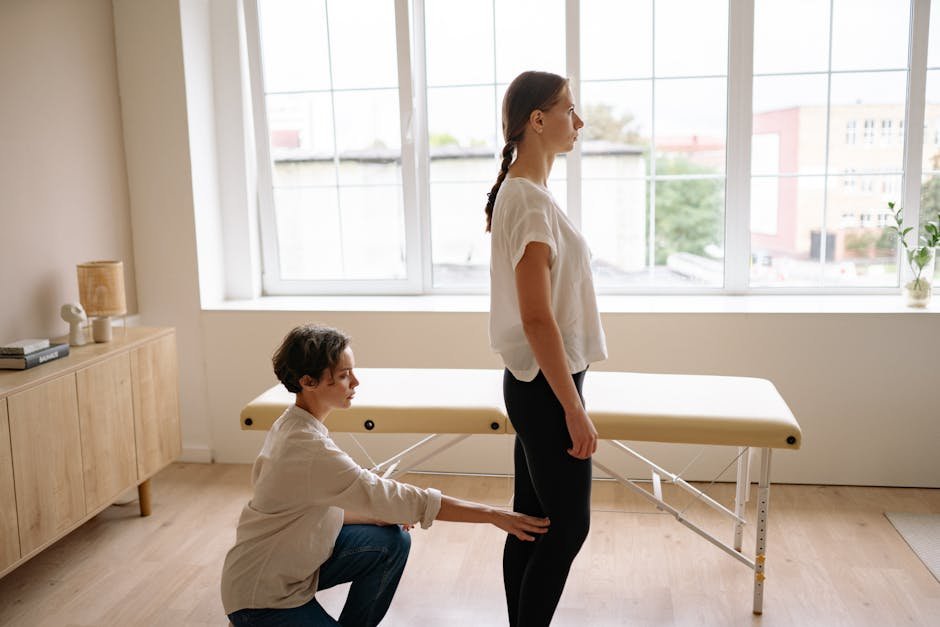
Simple Posture Exercises for Older Adults: A Gentle Daily Guide to Standing Tall
This post contains affiliate links. As an Amazon Associate, I earn from qualifying purchases at no extra cost to you.
Free resources — no credit card required for trial
🎧 Listen to health & wellness audiobooks free for 30 days
Start 30-Day Free Trial →
🛒 Recommended Products
As an Amazon Associate we earn from qualifying purchases at no extra cost to you.
TheraBand First Step to Active Health Kit — Senior Exercise Program for Balance and Fall P
$19.99
EZ Off Jar Opener for Seniors — Under Cabinet Jar Opener for Weak Hands and Arthritis
$9.99
Omron 5 Series Upper Arm Blood Pressure Monitor — 2-User 100-Reading Memory Wide-Range Cuf
$44.99
OMRON 7 Series Wireless Wrist Blood Pressure Monitor — Clinically Validated with Connect A
$69.99
Vitality 4 Life Senior Resistance Band with Instruction Guide — Specifically for Elderly F
$16.99
📚 Read unlimited health books free for 30 days
Try Kindle Unlimited Free →
Have you noticed yourself slouching a little more than you used to? Maybe your neck feels stiff after reading, or your upper back aches by the end of the day? You’re not alone — and the good news is, it doesn’t have to stay that way. Simple posture exercises for older adults can make a real, meaningful difference in how you feel every single day. Good posture isn’t just about standing up straight and looking confident (though that’s a lovely bonus). It helps you breathe more easily, reduces strain on your back and neck, supports your joints, and can even give your energy and mood a welcome lift. The best part? These exercises can be done gently at home, in short bursts, with no special equipment needed. Let’s walk through everything you need to know to get started safely and feel the benefits.
Why Good Posture Matters More as We Get Older
As the years go by, our bodies change in ways that can quietly chip away at our posture. Muscles may stiffen, balance can become less steady, and the habits of daily life — sitting at a desk, looking down at a phone, resting on a soft sofa — all add up over time. These changes can lead to a rounded upper back, a forward-jutting head, and a lower back that loses some of its natural curve. It’s incredibly common, and it’s not something to feel embarrassed about.
What many people don’t realise is just how much posture affects overall wellbeing. When you’re hunched forward, your lungs simply don’t have as much room to expand, so breathing can feel more effortful. Poor posture also puts extra pressure on the spine, joints, and surrounding muscles, which can contribute to persistent aches and fatigue. On the flip side, when you sit and stand with better alignment, those same muscles and joints are better supported, movement becomes easier, and you may even feel more alert and positive. It really does ripple through your whole day.
The wonderful thing is that it’s never too late to improve. The body responds to gentle, consistent movement at any age. With just a few minutes of targeted posture work each day, you can begin to undo some of those patterns and feel steadier, more comfortable, and more in control of how you move through the world.
Getting Started Safely: What to Know Before You Begin
Before diving into any new exercise routine, a little preparation goes a long way — especially if you have existing health conditions. If you have osteoporosis, have had recent surgery, experience frequent dizziness, or have a serious back or knee problem, it’s worth checking in with your doctor first. This isn’t about being overly cautious; it’s about making sure the exercises you choose are truly the right fit for your body right now.
When you’re ready to begin, keep the environment simple and safe. Use a sturdy chair with a back, wear flat shoes with good grip, and clear a comfortable space around you. If balance is a concern at all, seated versions of every exercise are just as effective and much safer. There’s no prize for doing the standing version — what matters is that you move consistently and comfortably.
Pay attention to how your body feels throughout. You should notice a gentle stretch or mild muscle engagement — not sharp pain. If something hurts, stop and rest. Move slowly and remember to breathe naturally, exhaling as you put in effort and inhaling as you release. If you ever feel lightheaded, sit down quietly and wait until you feel steady before continuing. Listening to your body is always the smartest move.
Six Simple Posture Exercises for Older Adults to Try at Home
These exercises have been chosen because they’re gentle, effective, and easy to adapt. You don’t need to do all of them every day — even one or two practised regularly will start to make a difference. Read through each one, try it slowly, and see how it feels for you.
Seated Posture Reset with Shoulder Rolls: Sit tall in your sturdy chair with feet flat on the floor. Inhale and lift your shoulders up toward your ears, then exhale and let them slide down and back in a slow, smooth motion. Repeat 6–10 times. This simple movement loosens tight upper-body muscles, eases breathing, and helps you find that upright, aligned position that good posture starts from.
Chin Tucks for Neck Alignment: Sitting or standing, gently tuck your chin straight back — as if you’re making a very subtle double chin — keeping your eyes level. Hold for 3–5 seconds, then release. Aim for 8–12 repetitions. This exercise targets forward head posture, which is extremely common in older adults, and can ease neck strain and even reduce tension headaches over time.
Wall Angels for Upper Back Mobility: Stand with your back a few inches from a wall, arms bent to form a “W” shape with your elbows at shoulder height. Slowly slide your arms up the wall into a “Y” shape, then back down. Repeat 8–12 times. This movement improves shoulder blade mobility and gently opens up the chest and upper back. If standing feels unsteady, sit with your back against the chair and try the same arm movement — it works beautifully that way too.
Thoracic Extension Over a Chair: Sitting on the edge of your chair, place your hands behind your head and gently lean your upper back over the chair back to extend through the chest and mid-spine. Hold for about 5 seconds, then return upright. Do 6–10 reps. This is one of the most satisfying ways to counteract a rounded upper back, and it feels wonderful after long periods of sitting.
Seated Scapular Squeezes: Sitting tall with feet flat, squeeze your shoulder blades together as though you’re gently holding a pencil between them. Hold for 5–7 seconds, then release. Repeat 10–15 times. This builds the back muscles that keep your shoulders aligned and supports better posture during all kinds of daily activities.
Seated Pelvic Tilt: Sitting tall with feet flat and knees hip-width apart, gently tuck your pelvis under — as if flattening your lower back slightly against the chair. Hold for 5 seconds, then release. Repeat 10–15 times. This strengthens the core and lower back muscles that stabilise your spine, making it easier to sit and stand upright without effort.
What You Can Do: Practical Tips for Making This a Daily Habit
Knowing the exercises is one thing — building them into your day is where the real magic happens. The key is consistency over intensity. A few minutes every day will serve you far better than one long session once a week. Here are some practical ways to make these posture exercises a natural part of your routine:
- Start your morning gently: Spend 2–3 minutes on shoulder rolls and a seated posture reset right after you wake up. It’s a lovely way to ease into the day and set your body up well from the start.
- Pair exercises with things you already do: Do chin tucks while the kettle boils, or scapular squeezes during a TV programme. Attaching new habits to existing ones makes them much easier to remember.
- Break it into short sessions: Two 5-minute sessions spread across the day is just as effective as one 10-minute block — perhaps even better, as it keeps your muscles engaged throughout the day.
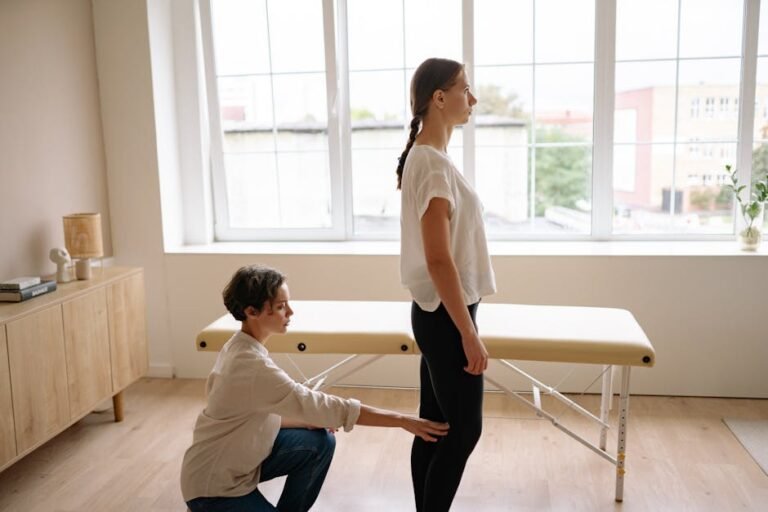
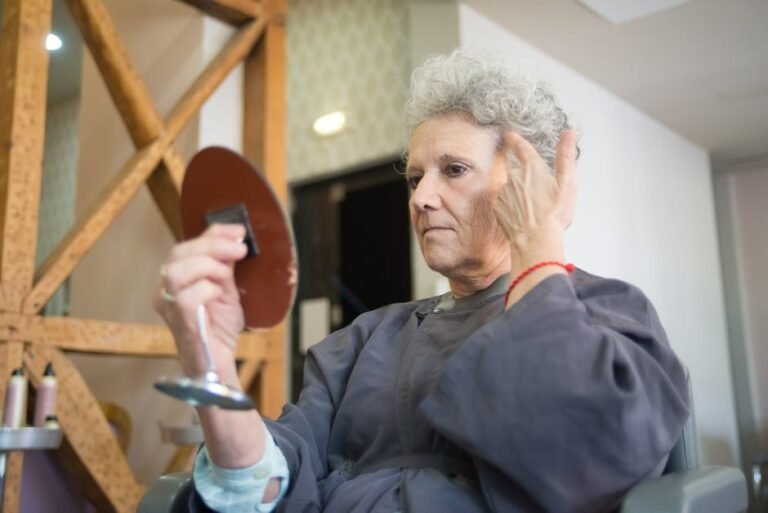
- Use a mirror at first: Checking your alignment in a mirror during the first few days helps you understand what upright actually feels and looks like for your body. After that, trust how you feel.
- Try a midday posture check: Set a gentle alarm or phone reminder at lunchtime to pause, sit tall, and do a quick round of scapular squeezes or a chin tuck series. It only takes a couple of minutes.
- Wind down with a chest opener: The thoracic extension over a chair followed by a slow neck release makes a soothing pre-bedtime routine that can ease the tension accumulated during the day.
- Celebrate small improvements: Notice when you naturally sit taller at the dinner table, or when your neck feels less stiff after a morning walk. These small wins are worth acknowledging — they’re real progress.
- Start with 5–7 minutes and build gradually: There’s no rush. As your body adapts and the movements start to feel familiar, you can add a few more minutes or an extra exercise at your own pace.
Modifications and Safety Precautions to Keep You Protected
One of the most important things about exercising as an older adult is knowing how to adapt movements to suit your individual body. These exercises are designed to be gentle, but everyone’s body is different, and what feels easy for one person may need tweaking for another. That’s completely normal — and there’s always a safe modification available.
If you have osteoporosis, be especially mindful with any exercise that involves leaning backward or extending the spine. Use a chair back for support and avoid deep arches. The thoracic extension exercise can still be beneficial, but keep the movement very small and controlled, and check with your doctor or physiotherapist about what’s appropriate for your level of bone density.
For anyone with neck pain, skip the chin tucks initially and try the wall angel exercise instead, which works on alignment without directly targeting the neck. If your shoulders have limited mobility, smaller, gentler shoulder rolls are perfectly fine — even a tiny movement done consistently has value. Always remember: if something causes pain beyond mild muscle awareness, stop immediately and rest. Pushing through sharp or sudden pain is never the right approach.
Keep yourself hydrated during your exercise sessions and always breathe continuously — holding your breath creates unnecessary tension and can make you feel dizzy. If at any point you feel unsteady or lightheaded, sit down on a firm surface and take a moment before continuing. There’s no rush, and taking care of yourself in each moment is what truly makes this practice sustainable.
How These Exercises Support Your Broader Health and Independence
It might seem like a small thing — a few gentle stretches and squeezes here and there — but the cumulative effect of these simple posture exercises on your overall health can be genuinely significant. Better posture means your lungs have more room to do their job, so breathing becomes easier, even during activity. It means your spine and joints are better aligned, which can reduce the everyday aches and fatigue that so many older adults simply accept as inevitable.
There’s also a real connection between posture and balance. When your head, shoulders, and hips are better aligned, your centre of gravity is more stable, which naturally supports steadier movement and reduces the risk of trips and falls. This kind of independence — moving through your home and your daily life with confidence and ease — is something that’s absolutely worth investing a few minutes each day to protect.
Beyond the physical, there’s an emotional dimension too. Sitting and standing tall has a quiet but real effect on how you feel about yourself. It signals confidence, both to others and to your own nervous system. Many people find that as their posture improves, their energy and mood lift a little too. Small consistent habits, practised with patience and kindness toward your body, truly do add up to meaningful changes over time.
The Bottom Line: Simple posture exercises for older adults don’t need to be complicated, time-consuming, or physically demanding to be effective. By spending just a few minutes each day on gentle movements like shoulder rolls, chin tucks, wall angels, and seated scapular squeezes, you can gradually improve your alignment, ease everyday discomfort, and move through life with greater confidence and comfort. Start slowly, listen to your body, adapt as needed, and be proud of every small step forward. You deserve to feel strong, steady, and at ease in your own body — and with a little consistent practice, that’s exactly where you’re headed.
This is not medical advice. Consult your healthcare provider before starting any new health routine or using any product mentioned here.