The Complete Senior Guide to Healthy Posture: Simple Steps to Stand Taller, Move Better, and Feel Great
This post contains affiliate links. As an Amazon Associate, I earn from qualifying purchases at no extra cost to you.
Free resources — no credit card required for trial
🎧 Listen to health & wellness audiobooks free for 30 days
Start 30-Day Free Trial →
🛒 Recommended Products
As an Amazon Associate we earn from qualifying purchases at no extra cost to you.
TheraBand First Step to Active Health Kit — Senior Exercise Program for Balance and Fall P
$19.99
EZ Off Jar Opener for Seniors — Under Cabinet Jar Opener for Weak Hands and Arthritis
$9.99
Omron 5 Series Upper Arm Blood Pressure Monitor — 2-User 100-Reading Memory Wide-Range Cuf
$44.99
OMRON 7 Series Wireless Wrist Blood Pressure Monitor — Clinically Validated with Connect A
$69.99
Vitality 4 Life Senior Resistance Band with Instruction Guide — Specifically for Elderly F
$16.99
📚 Read unlimited health books free for 30 days
Try Kindle Unlimited Free →
If you’ve ever caught your reflection in a shop window and noticed you were hunching forward, or felt that familiar ache in your neck after a long afternoon in your favourite chair, you’re far from alone. Healthy posture for seniors is one of those topics that doesn’t always get the attention it deserves — yet it quietly touches almost every part of daily life. The good news? It’s never too late to make positive changes. You don’t need special equipment, a gym membership, or an hour set aside each day. With a little know-how and a few easy habits, you can start feeling more comfortable, balanced, and energised almost straight away.
Why Healthy Posture Matters More Than You Think
Most of us grew up hearing “sit up straight!” without anyone explaining why it actually matters. As we get older, the reasons become much more meaningful than just appearances. When your spine is well aligned, your lungs and diaphragm have more room to expand. That means fuller, steadier breaths and better oxygen flow throughout the day — something that can have a real impact on your energy levels and mental clarity. Good posture can even support more comfortable digestion, since a slouched position compresses the organs in your abdomen.
Then there’s the very real issue of back, neck, and joint comfort. Slouching puts unnecessary strain on the muscles, ligaments, and joints around your neck, shoulders, and lower back. Over time — and especially after long periods of sitting — this adds up to persistent aches that can make everyday tasks feel more effortful than they should. Good posture helps distribute your body weight more evenly, reducing that chronic strain.
Perhaps most importantly for older adults, upright alignment supports better balance and steadier walking, which directly lowers the risk of trips and falls. And there’s even a mood connection: research and common sense both suggest that standing or sitting tall — relaxed rather than rigid — can help you feel more alert and confident. That’s a lot of benefit from something that costs nothing at all.
A Quick 60-Second Posture Check You Can Do Right Now
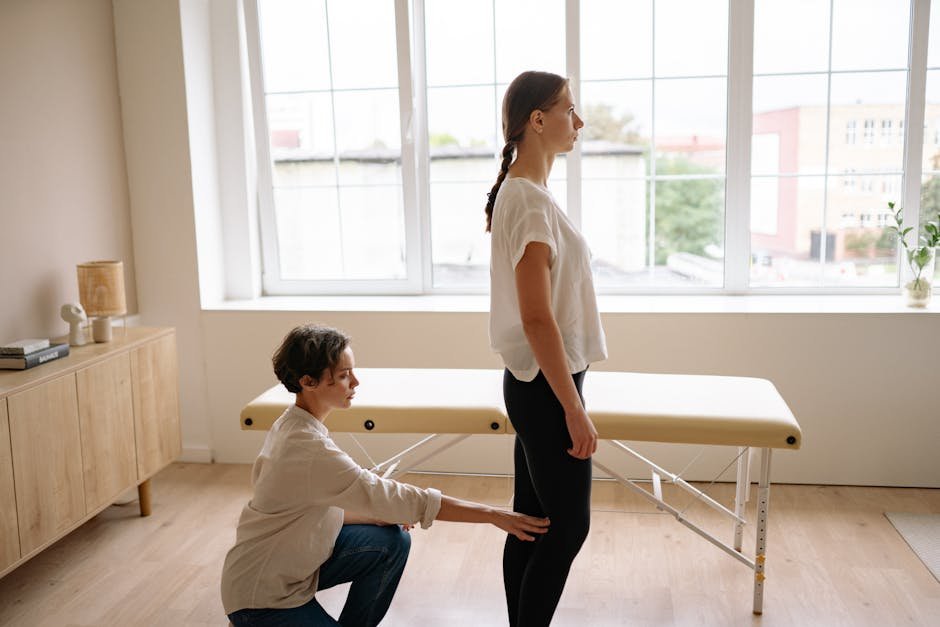
Before diving into exercises and daily habits, it helps to understand what good posture actually feels like in your body. Here’s a simple check you can do any time, anywhere. Stand with your back against a wall, feet about 6–8 inches away from it. Your heels can touch the wall if that feels comfortable. Now check: your head, shoulder blades, and buttocks should all lightly touch the wall. If there’s a big gap, gently adjust so your spine feels lengthened — not forced or strained.
Your chin should be level, with your ears aligned over your shoulders, and your shoulders resting away from your ears rather than up around them. You should feel your chest gently open and your belly softly engaged. If this feels awkward or uncomfortable, try breathing in slowly and then letting your shoulders soften as you breathe out. That simple act of exhaling tension can shift your posture quite noticeably. Repeat this wall check a few times during the day, especially after you’ve been sitting for a while. It only takes a moment and builds body awareness over time.
Everyday Habits That Support Good Posture for Seniors
Exercise routines are valuable, but the habits woven into your everyday life often have the biggest long-term impact. The way you sit, sleep, and move throughout the day all contribute to your overall posture. Let’s start with sitting, since most of us spend a significant portion of our day in a chair. Ideally, choose a chair with a straight back and a seat height that allows your feet to rest flat on the floor. Your knees should be roughly the same height as your hips, or just a little lower. If your feet don’t quite reach the floor, a small footstool can make a big difference.
Technology is another major factor. If you spend time on a tablet, phone, or computer, the screen height matters enormously. Looking downward for extended periods puts a huge amount of stress on the neck — far more than holding your head upright. Try raising your screen to eye level, or use a tablet stand to avoid craning your neck. When typing, keep your wrists straight and relaxed rather than bent upward or downward.
Sleep position also plays a role in how your neck and back feel each morning. Using a pillow that supports the natural curve of your neck is a worthwhile investment. If you sleep on your side, a pillow between your knees helps keep your hips and spine aligned. If you prefer sleeping on your back, a small pillow tucked under your knees can ease pressure on the lower back. Try to avoid sleeping with your head turned to one side for long stretches, as this can contribute to neck stiffness.
Finally, set gentle reminders on your phone or use a favourite TV programme as a cue to stand up, roll your shoulders back, and take a few slow breaths. Even 30 seconds of movement every hour can counteract the effects of prolonged sitting. Combine these pauses with small movements — shoulder blade squeezes, a chin tuck, or a few ankle circles — and you’ve built a low-effort, high-reward routine right into your day.
Safe and Effective Exercises to Improve Your Posture at Home
The exercises below are gentle, practical, and designed with seniors in mind. The goal is consistent, comfortable practice — not intensity. Start slowly, listen to your body, and build gradually over time. If you have osteoporosis, a history of fractures, or significant back or neck problems, please check with your doctor or a physical therapist before starting new movements.
Seated shoulder blade squeezes are a brilliant starting point. Sit tall in a sturdy chair with your feet flat on the floor. Inhale and lengthen your spine from tailbone to the top of your head. As you exhale, gently pull your shoulder blades together as if you’re trying to pinch a small pencil between them. Hold for 3–5 seconds, release, and repeat 8–12 times. This simple move strengthens the upper back and trains your body to hold a more upright position naturally.
Wall angels are wonderful for upper-back mobility and shoulder alignment. Stand with your back, hips, and head lightly touching the wall, feet about 6 inches away. Bend your elbows to 90 degrees with your upper arms out to the side — like a goalpost shape. Slowly slide your arms up the wall as far as comfortable, keeping them in contact with the wall as much as possible, then lower back down. Aim for 8–12 repetitions. Chin tucks are equally simple: sit or stand tall and gently draw your chin straight back — not down — as if making a double chin. Hold for 5 seconds, release, and repeat 6–10 times. This reduces forward head posture, which is one of the most common issues for people who spend time on screens or reading.
For the lower back, pelvic tilts are a gentle classic. Lie on your back with knees bent and feet flat on the floor. Flatten the small of your back against the floor by gently tilting your pelvis upward, then release. Repeat 10–15 times. And don’t overlook the doorway chest stretch: stand in a doorway with your forearms on the frame at about shoulder height, then gently step forward to feel a stretch across your chest. Hold 15–30 seconds. This counters the tight chest muscles that pull shoulders forward after hours of sitting.
What You Can Do: Practical Tips to Get Started Today
- Do the wall check twice a day — once in the morning and once after your longest sitting period. It takes 60 seconds and builds genuine body awareness over time.
- Raise your screens — prop your tablet or phone on a stand, or position your computer monitor at eye level to reduce neck strain immediately.
- Set a movement reminder — use your phone alarm or a favourite TV show as a cue to stand up, stretch, and take a few deep breaths every 30–60 minutes.
- Try a lumbar support — a small rolled towel or a lumbar cushion placed behind your lower back while sitting can make a noticeable difference to comfort and alignment.
- Invest in a supportive pillow — a pillow that maintains the natural curve of your neck can reduce morning stiffness and improve how your back feels throughout the day.
- Practice the heel-to-toe walk — slowly walk along a hallway in a heel-to-toe pattern, using a wall or sturdy chair for support if needed. Focus on keeping a tall spine and steady breathing. Ten to fifteen steps a day builds both balance and posture awareness.
- Aim for a weekly routine — 5–10 minutes of posture checks and breathing daily, plus 2–3 short sessions (8–15 minutes each) of the exercises above, and 1–2 balance practices on alternate days.
- Stop if something hurts — if an exercise causes sharp pain, dizziness, or numbness in your arms or legs, stop immediately and rest. If the discomfort lasts more than a couple of days, speak to a health professional before continuing.
When to Seek Professional Help for Posture Problems
While most posture improvements can be made safely at home, there are times when it’s important to get professional guidance. If you’re experiencing persistent pain that lasts more than a week or gets worse with activity, that’s a clear signal to speak with your GP or a physiotherapist. The same goes for numbness, tingling, or weakness in your arms or legs — these symptoms need proper assessment rather than self-treatment.
New balance problems or a pattern of frequent falls should always be taken seriously. A physical therapist or occupational therapist can design a safe, individualised posture programme tailored to your specific needs, fitness level, and any health conditions you’re managing. This is especially important if you have arthritis, osteoporosis, scoliosis, or a history of spinal injury. Getting a personalised plan doesn’t mean you’ve failed at self-care — it means you’re taking your health seriously, which is exactly the right attitude.
It’s also worth noting that if any of the exercises described in this post feel uncomfortable or unsuitable given your current health situation, please don’t push through. A short consultation with a professional can save you weeks of discomfort and give you the confidence to exercise safely and effectively. Many physiotherapy practices offer postural assessments specifically designed for older adults, and your GP can refer you if needed.
The Bottom Line: Healthy posture for seniors isn’t about achieving a rigid, military-straight stance — it’s about helping your body work with you rather than against you. Small, consistent changes to how you sit, stand, sleep, and move can ease everyday aches, improve your balance, support better breathing, and leave you feeling more confident and energised. Start with the 60-second wall check, add a few gentle exercises a couple of times a week, and build from there. Your spine, your joints, and your overall wellbeing will thank you for it — and those benefits tend to grow the more you practise. You absolutely have the ability to move with greater ease and comfort, starting today.
This is not medical advice. Consult your healthcare provider before starting any new health routine or using any product mentioned here.