Yoga for Arthritis-Friendly Mornings: A Gentle Senior Routine to Ease Stiffness and Start Your Day Right
This post contains affiliate links. As an Amazon Associate, I earn from qualifying purchases at no extra cost to you.
Free resources — no credit card required for trial
🎧 Listen to health & wellness audiobooks free for 30 days
Start 30-Day Free Trial →
🛒 Recommended Products
As an Amazon Associate we earn from qualifying purchases at no extra cost to you.
Back Gel Ice Pack Wrap — Microwaveable Pain Relief Heat Pad for Upper and Lower Back Thera
$22.99
BODYPROX Pain Relief Ice Pack with Strap for Hot and Cold Therapy — Microwave Heat Pad for
$14.99
iReliev Hot and Cold Therapy Gel Pack — Reusable Freezable Microwaveable Compression Pack
$16.99
Magic Gel Ice Pack for Back Pain Relief — 2 Pack Reusable Lower Back Wrap for Hot or Cold
$19.99
Relief Expert Reusable Ice Pack for Back — Lower Back Ice Pack Wrap with Cold Compress
$17.99
📚 Read unlimited health books free for 30 days
Try Kindle Unlimited Free →
If arthritis makes your mornings feel like a battle — stiff fingers, aching knees, joints that just don’t want to cooperate — you’re not alone. Millions of seniors wake up every day feeling that familiar tightness and wondering how they’re going to get moving. The good news? A short, thoughtful yoga for arthritis routine can make a real difference. We’re not talking about pretzel poses or sweaty power flows. We’re talking about gentle, purposeful movements designed to wake up your joints kindly, ease morning stiffness, and help you feel more like yourself before the day even gets started. This routine takes about 15–20 minutes, requires nothing more than a sturdy chair, and is designed specifically with seniors and arthritis in mind.
Why Morning Yoga Is a Game-Changer for Arthritis
Mornings are often the hardest part of the day for people living with arthritis. Overnight, joints can stiffen up from inactivity, and that first hour after waking can feel especially uncomfortable. Gentle movement is one of the best ways to signal your body that it’s time to ease into the day — and yoga does this beautifully because it combines mindful movement with steady breathing, giving your joints time to warm up without forcing them into anything uncomfortable.
Unlike high-impact exercise, yoga works with your body. Each movement is slow, intentional, and fully within your control. You decide how far you go, how long you hold a stretch, and whether you stay seated or stand. That flexibility makes yoga an ideal daily practice for seniors — it meets you exactly where you are on any given morning, whether you’re feeling pretty good or having a harder day.
Research and real-world experience both point to consistent, gentle movement as one of the most effective tools for managing arthritis symptoms. The key word is consistent. A little every day goes much further than an intense session once a week. Even five or ten minutes of mindful movement can reduce stiffness, improve circulation, and lift your mood — and that’s a wonderful way to begin any morning.
Safety First: What to Know Before You Begin
Before diving into any new movement routine, especially if you’re managing arthritis, it’s worth taking a moment to set yourself up for success — safely. The most important first step is checking with your doctor or healthcare provider, particularly if you’re in the middle of a flare-up, have had recent surgery, or experience significant joint pain on a regular basis. They can give you the green light and point out any movements to avoid based on your specific situation.
Once you’re ready to move, create a safe environment. Practice in a clutter-free space with good lighting so you’re not tripping over anything. Wear comfortable, flat-soled shoes and warm, breathable clothing — cold muscles and joints are stiffer, so warmth really does help. Keep a sturdy chair with a solid back nearby at all times. This chair is your best friend: it gives you balance support, helps you modify poses, and allows you to do the entire routine seated if that’s what works best for you today.
One of the most important rules in arthritis-friendly yoga is this: never push through sharp or increasing pain. A gentle stretch sensation is fine and even helpful, but if something hurts, ease back or skip it entirely. Pain is your body’s signal to slow down, and it’s always worth listening. Finally, breathe gently throughout — if you ever feel lightheaded or short of breath, stop, rest, and let your body settle before continuing.
Your 15–20 Minute Arthritis-Friendly Morning Yoga Routine
This sequence is designed to work from the top of your body down, gently waking up each area in turn. You can do it entirely seated in your chair, or mix seated and standing movements depending on how you’re feeling. Move slowly, pause between poses, and remember — there’s no rush here.
Start with a neck and shoulder warm-up. Sitting tall in your chair with feet flat on the floor, gently drop your chin toward your chest and lift it back to neutral — repeat three times. Then slowly roll your head to one side and then the other in small, comfortable circles. Follow this with shoulder rolls: lift your shoulders up toward your ears, roll them back, and let them drop. Do five to eight rolls. If you have shoulder discomfort, bend your elbows slightly and keep the movement small and easy.
Move into a seated Cat-Cow stretch for your spine. Sitting tall, inhale and gently arch your back (Cow), lifting your chest; exhale and round your spine (Cat), drawing your belly in slightly. Repeat six to eight times at a comfortable pace. This simple movement is wonderful for mobilising the spine and helping you breathe more deeply. Keep your neck relaxed — avoid throwing your head back or forward aggressively.
Try a seated side stretch and gentle twist. For the side stretch, reach both arms up if comfortable and then lean gently to one side, feeling a stretch along your ribcage. Hold for three slow breaths, then switch sides. For the twist, place one hand on the back of your chair and the other on your opposite knee, then inhale to sit tall and exhale to rotate gently. Three breaths on each side is plenty. Keep these movements soft and small — the goal is a gentle release, not a deep stretch.
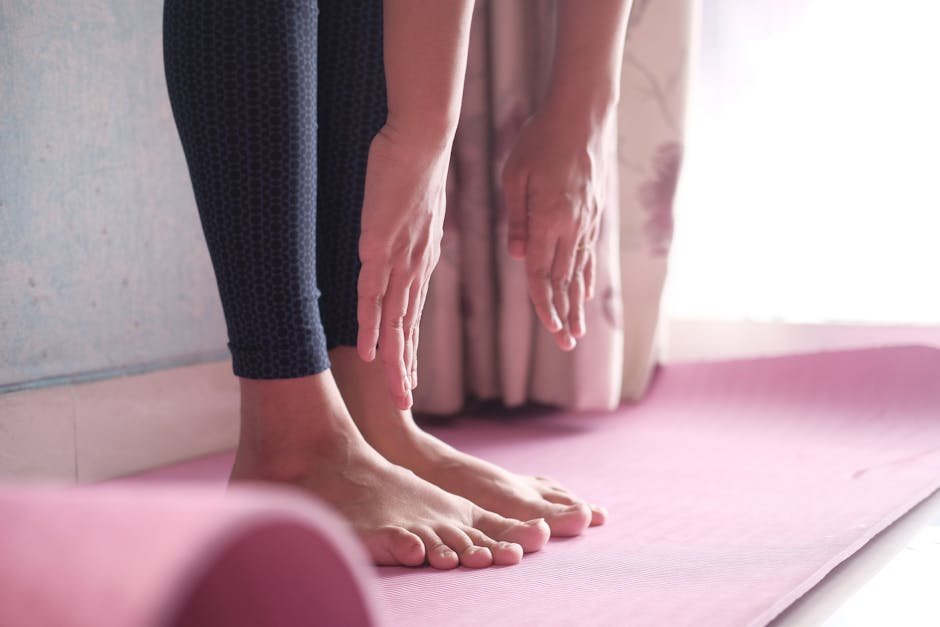
Add some standing movements if you’re feeling steady. Standing beside your chair with one hand resting on it for support, try Mountain Pose: feet hip-width apart, knees soft, spine long. Inhale and sweep your arms gently overhead, or bring your hands to your heart if reaching up doesn’t feel good. Hold for three to five breaths. You can also try a gentle forward fold — hinging slightly from the hips while keeping your back long — or calf raises, slowly rising onto your toes and lowering back down eight to ten times. Ankle circles (lifting one foot and making small circles) are also brilliant for joint mobility.
Finish with a cool-down and hand stretch. Sit comfortably, place one hand on your heart and the other on your belly, and take several slow, deep breaths. Then interlace your fingers, press your palms gently away from you, and relax. Repeat twice. End with a quiet moment — simply notice how your body feels. Often you’ll find that your joints feel a little more at ease, your breathing is deeper, and there’s a calm that wasn’t there when you started.
What You Can Do: Practical Tips for Getting Started
Getting started is often the hardest part — but it doesn’t have to be complicated. Here are some simple, practical ways to make this yoga for arthritis morning routine a regular, enjoyable part of your day:
- Set a dedicated time and space. Doing your routine at the same time each morning helps it become a habit. Even a small corner of your bedroom or living room works perfectly — just make sure it’s clear of obstacles and has good lighting.
- Use your chair as your anchor. Don’t think of the chair as a sign of limitation — think of it as a tool. It gives you safety, confidence, and the freedom to focus on your movement rather than your balance.
- Start small and build gradually. If you’re new to yoga or returning after a break, begin with just five to ten minutes and add two to three minutes each week. Small, consistent progress adds up quickly.
- Dress warmly before you begin. Cold joints are stiffer, so wear layers or do a few minutes of gentle walking around the house before you sit down to practice.
- Use props to support your body. A small pillow under your knees, a yoga strap for gentle reach, or even a folded blanket on your chair seat can make poses much more comfortable.
- Practice after a light snack. Don’t do yoga on an empty stomach — have a light breakfast or snack first, and stay hydrated before, during, and after your session.
- Reflect after each session. Take a moment to note what felt good and what felt challenging. This helps you adjust the routine over time to suit your body perfectly.
- Invite a buddy to join you. Sharing even a few minutes of this routine with a partner, friend, or family member can make it feel more enjoyable and keep you accountable.
- Be flexible with yourself on flare-up days. If arthritis is giving you a harder time than usual, shorten the routine, reduce the range of motion, or simply do the breathing and cool-down section. Something is always better than nothing.
Adapting the Routine to Your Own Level
One of the most beautiful things about this kind of yoga practice is that it truly is for everyone — no matter your current mobility level or how long you’ve been living with arthritis. There is no “wrong” way to do it, as long as you’re moving mindfully and listening to your body. If you have limited mobility, do the entire routine seated and simply reduce how far you move in each direction. Seated poses are just as effective as standing ones — especially when done with care and intention.
If you have osteoporosis alongside arthritis, it’s worth getting specific guidance from your healthcare provider on safe ranges of motion. In general, deep spinal twists and extreme forward bends are best avoided, but gentle, small movements in these directions are usually fine. When in doubt, keep it smaller and softer — your joints will still benefit from the gentle circulation and warmth that movement brings.
As the weeks go on, you may notice that certain poses become a little easier, or that your morning stiffness eases a bit faster than it used to. These are signs that your body is responding — and they’re worth celebrating. You might also find that some poses simply don’t work for your body and that’s completely fine. Skip them, substitute something more comfortable, or just rest in your chair with a few deep breaths. This is your practice, and it exists entirely to serve you.
The Power of Consistency and Self-Compassion in Managing Arthritis
Living with arthritis means living with unpredictability. Some mornings you’ll feel better than others, and some days the idea of any exercise will feel overwhelming. That’s why the mindset you bring to this practice matters just as much as the movements themselves. Consistency is far more valuable than intensity — a gentle, ten-minute session every morning will do far more for your joints and your wellbeing than an intense session once a fortnight.
Be kind to yourself on the difficult days. If you miss a morning, don’t give yourself a hard time about it. Simply begin again the next day with a gentle, patient attitude. Arthritis can be unpredictable, but your commitment to caring for yourself — even in small ways — is genuinely powerful. Over time, many people find that their morning yoga routine becomes a source of comfort and calm, something they look forward to rather than something they force themselves to do.
It’s also worth acknowledging the emotional side of living with arthritis. Chronic pain is tiring, and it can affect your mood and outlook. Yoga, with its emphasis on breathing and body awareness, has a natural calming effect on the nervous system. Many people find that even a short morning practice helps them feel more grounded, more hopeful, and more capable of handling whatever the day brings. That’s not a small thing — that’s a real and meaningful quality-of-life improvement, and it’s available to you every single morning.
The Bottom Line: Yoga for arthritis doesn’t have to be complicated, intense, or intimidating — and with this gentle morning routine, it isn’t. Ten to twenty minutes of mindful movement, supported by a sturdy chair and guided by your own comfort level, can meaningfully ease morning stiffness, improve joint mobility, and set a positive, calm tone for your entire day. Start small, move slowly, listen to your body, and above all, be patient with yourself. With steady breaths and gentle intent, arthritis-friendly mornings are absolutely within your reach — and they might just become the best part of your day.
This is not medical advice. Consult your healthcare provider before starting any new health routine or using any product mentioned here.