Yoga for Better Lung Capacity: A Senior’s Guide to Breathing Easier Every Day
This post contains affiliate links. As an Amazon Associate, I earn from qualifying purchases at no extra cost to you.
Free resources — no credit card required for trial
🎧 Listen to health & wellness audiobooks free for 30 days
Start 30-Day Free Trial →
🛒 Recommended Products
As an Amazon Associate we earn from qualifying purchases at no extra cost to you.
TheraBand First Step to Active Health Kit — Senior Exercise Program for Balance and Fall P
$19.99
EZ Off Jar Opener for Seniors — Under Cabinet Jar Opener for Weak Hands and Arthritis
$9.99
Omron 5 Series Upper Arm Blood Pressure Monitor — 2-User 100-Reading Memory Wide-Range Cuf
$44.99
OMRON 7 Series Wireless Wrist Blood Pressure Monitor — Clinically Validated with Connect A
$69.99
Vitality 4 Life Senior Resistance Band with Instruction Guide — Specifically for Elderly F
$16.99
📚 Read unlimited health books free for 30 days
Try Kindle Unlimited Free →
Have you noticed that climbing a flight of stairs or walking to the end of the block leaves you a little more winded than it used to? You’re not imagining it. As we get older, our lungs naturally become a little less flexible, the ribcage can stiffen, and everyday activities that once felt effortless can start to take more out of us. The good news? Yoga for better lung capacity is a gentle, proven approach that can help you breathe more fully, feel more energetic, and move through your day with greater ease — and you don’t need to be flexible or athletic to get started. In this guide, we’ll walk you through exactly what senior-friendly yoga can do for your breathing, and give you simple, chair-supported practices you can begin today.
Why Lung Capacity Matters More as We Age
Breathing feels automatic — until it doesn’t. Many seniors notice a gradual decline in stamina that they simply chalk up to “getting older.” While some change is natural, a lot of the breathlessness people experience is actually connected to reduced mobility in the chest and ribcage, weakened breathing muscles, and the cumulative effect of years spent hunching over desks, steering wheels, or phones. These habits compress the chest and make it harder for air to flow freely in and out of the lungs.
Here’s something encouraging: the muscles involved in breathing — particularly the diaphragm and the muscles between your ribs — respond well to gentle training. When these muscles get stronger and your ribcage becomes more mobile, your lungs can expand more fully with every breath. That means more oxygen delivered to your tissues, better stamina for daily activities, and often a calmer, more settled nervous system overall. You don’t need to run a marathon to improve your lung capacity. You just need a consistent, thoughtful practice that works with your body, not against it.
It’s also worth noting that shallow, rapid breathing — often triggered by stress — is a habit many of us fall into without realising it. Yoga teaches you to slow things down, breathe more deeply, and interrupt that shallow-breath cycle. Over time, this can become your new normal, which is a genuinely life-changing shift for many older adults.
How Yoga Supports Better Breathing for Seniors
Yoga isn’t just stretching. When it comes to lung health, yoga works on several levels at once, making it one of the most well-rounded tools available for seniors who want to breathe better. First and most obviously, yoga’s breathing techniques — called pranayama — directly train the diaphragm and accessory breathing muscles. Think of it as a workout for the muscles you use to inhale and exhale, without any of the strain associated with aerobic exercise.
Beyond the breath itself, yoga’s gentle movement practices improve chest and ribcage mobility. When your ribcage can expand more freely, air moves in and out with less effort. Many seniors find that after just a few weeks of practice, they notice their posture improving — and that’s no coincidence. Yoga’s emphasis on an upright, open chest means your airways are less compressed during daily life, which makes breathing easier whether you’re sitting at the kitchen table or out for a stroll.
There’s also a powerful stress-reduction element at play. Stress often drives rapid, shallow breathing, which over time can make you feel more anxious and even more breathless. The slow, steady rhythms of yoga practice help dial down that stress response, creating a positive cycle: calmer breathing leads to a calmer mind, which leads to calmer breathing. And finally, the gentle movement combined with breath provides a mild cardiovascular effect — enough to support energy and circulation without putting strain on the heart or joints.
Yoga for Better Lung Capacity: Simple Practices You Can Try Today
The following practices are designed specifically with seniors in mind. They’re chair-friendly, safe at a range of fitness levels, and can be done in as little as 10 minutes a day. Always use a sturdy chair for support, wear comfortable clothing, and have a glass of water nearby. If anything causes discomfort — particularly chest tightness, dizziness, or pain — stop and rest. And before beginning any new exercise routine, have a quick conversation with your healthcare provider, especially if you have a heart or lung condition like COPD.
Diaphragmatic (Belly) Breathing is the cornerstone of the entire practice. Sit tall in your chair with both feet flat on the floor. Place one hand on your belly just below the ribs. Inhale slowly through your nose for about four counts, letting your belly rise under your hand. Exhale gently for four to six counts, feeling the belly fall. Aim for six to eight slow breaths. This technique trains your body to use the diaphragm more effectively, filling the lower parts of the lungs with each breath — something shallow chest-breathing simply doesn’t do.
Pursed-Lip Breathing is another excellent technique, particularly useful during activities that leave you a little breathless. Inhale through your nose for two counts, then exhale slowly through lips pursed as if you’re about to whistle, for four to six counts. This controlled exhale helps keep the airways open and can be used any time you need to slow your breath down during daily life — climbing stairs, carrying groceries, or walking briskly.
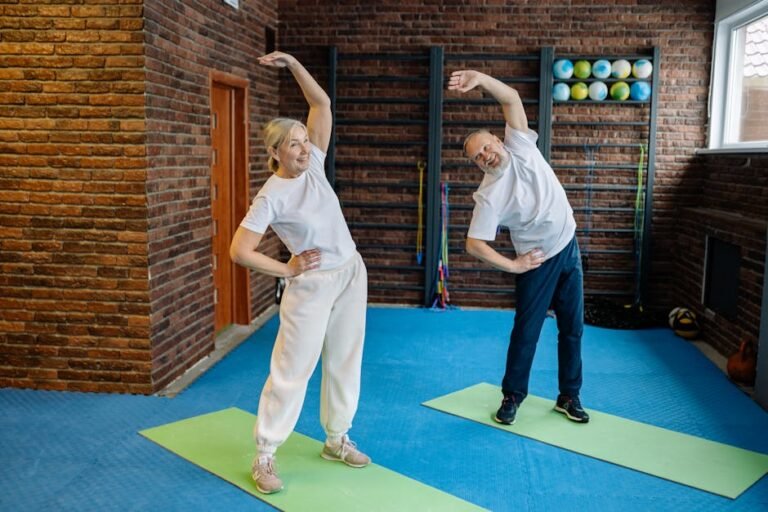
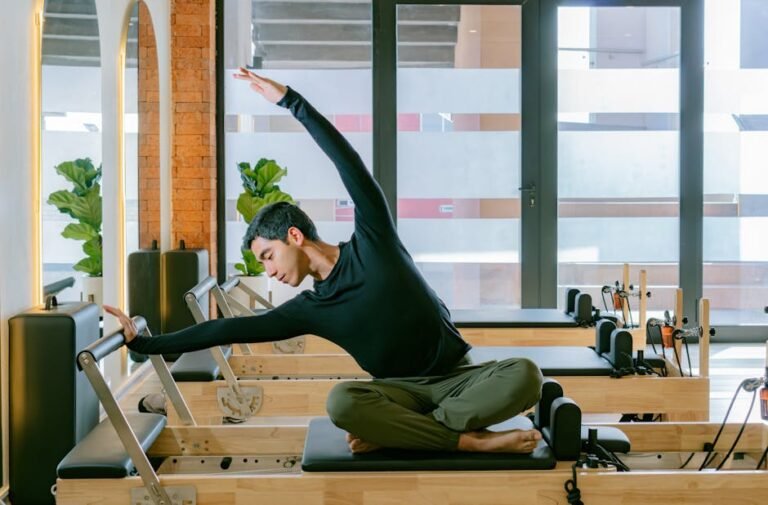
Seated Cat-Cow adds gentle movement to the breath. Sitting upright in your chair with hands on your knees, inhale as you lift your chest and widen your collarbones, then exhale as you round your spine and tuck your chin. Moving through six to eight slow cycles, you’ll feel your ribcage expanding on each inhale — this is exactly the kind of mobility work that makes breathing easier over time. Follow this with a Seated Side Stretch: raise one arm overhead, inhale tall, then gently lean to the opposite side on the exhale. Hold for three to five breaths before switching sides. This expands the side of the ribcage beautifully, creating more room for air with every breath.
Finally, a Gentle Chest Opener — standing in a doorway or using the back of a chair — stretches the front of the chest and shoulders, counteracting the forward-rounded posture that compresses the lungs. Simply place your hands on the doorframe or chair back, step or lean slightly forward, and breathe deeply for 15 to 20 seconds. You should feel a soft, pleasant stretch across the chest. Done daily, this simple move can make a noticeable difference in how freely you breathe.
A Simple 10-Minute Lung-Friendly Yoga Sequence
If you’d like a ready-made routine to follow, here’s a gentle sequence that takes about 10 minutes and covers all the key elements of yoga for better lung capacity. You can do this in the morning to set a calm, energetic tone for your day, or in the evening to wind down.
Start with two minutes of diaphragmatic belly breathing, simply sitting quietly and focusing on the rise and fall of your abdomen. Follow that with one to two minutes of pursed-lip breathing. Move into two minutes of seated cat-cow, flowing gently with your breath. Spend two minutes on seated side stretches — about a minute on each side. Do one minute of the doorway or chair chest opener. Then finish with one to two minutes back in diaphragmatic breathing, letting your shoulders drop and your jaw relax completely.
That’s it — ten minutes that cover breathing training, ribcage mobility, chest opening, and a calming finish. Over days and weeks, this brief daily investment can translate into noticeably easier breathing during ordinary activities. Many people find it helpful to practice at the same time each day to build the habit, whether that’s right after morning tea or before the evening news.
What You Can Do: Practical Tips for Safe, Consistent Practice
Getting the most out of yoga for better lung capacity isn’t about doing more — it’s about doing it regularly and safely. Here are some key tips to help you build a practice that truly supports your health:
- Start small and stay consistent. Even five to ten minutes daily makes a meaningful difference over time. Consistency matters far more than duration, especially in the early weeks.
- Always move with your breath. Let the inhale and exhale guide your movements. If you find yourself holding your breath during a pose, slow down and simplify.
- Use support freely. A sturdy chair, a wall, or a doorframe are not signs of weakness — they’re smart tools that keep you safe and allow you to focus on breathing rather than balance.
- Create a calm environment. A warm, quiet room with comfortable clothing makes your practice feel welcoming and sustainable. A simple yoga mat or folded blanket underfoot can also add comfort.
- Track your progress in everyday terms. Notice whether stairs feel slightly easier, whether a walk leaves you less winded, or whether you simply feel calmer and more settled during the day. These real-life changes are the best measure of progress.
- Stay hydrated. Sip water before and after your practice, and take a short rest if you ever feel lightheaded.
- Personalise your practice. Skip or modify any pose that feels uncomfortable. A smaller side stretch or a shorter hold is always perfectly fine — meeting your body where it is today is the whole point.
- Consider a qualified instructor. If you’re new to yoga or have balance concerns, working with a senior yoga instructor — even for a few sessions — can help you find safe, personalised modifications.
- Stop immediately if you experience chest pain, severe shortness of breath, dizziness, or fainting, and seek medical attention.
Staying Motivated and Celebrating Your Progress
One of the most common challenges with any new health habit is staying motivated when progress feels slow or invisible. With yoga for better lung capacity, the changes often happen gradually — a slightly deeper breath here, a little less effort on the stairs there. These small shifts are easy to miss if you’re not paying attention, which is why many people find it helpful to keep a simple journal. After each session, jot down a few words about how you felt: a sense of calm, a deeper breath, less tightness in the chest. Over weeks, these notes become a meaningful record of real progress.
It’s also worth celebrating the non-physical wins. Many seniors who begin a regular breathing and yoga practice report feeling more confident in their bodies, less anxious about exertion, and more connected to the present moment. These are genuine quality-of-life improvements, and they matter enormously. Breathing well isn’t just about lung function — it’s about feeling capable, grounded, and engaged in your daily life.
If you find yourself flagging in motivation, consider practising with a friend or family member, joining a local senior yoga class, or following along with a chair yoga video at home. Sharing the practice makes it more enjoyable and helps you stay accountable. And remember: you don’t need to do every pose perfectly. The goal is steadiness, safety, and gradual, kind improvement — not performance.
The Bottom Line: Yoga for better lung capacity is one of the most accessible, gentle, and effective self-care tools available to seniors. Through simple breathing techniques, chest-opening stretches, and mindful movement, you can gradually strengthen your breathing muscles, improve ribcage mobility, and feel more energetic and at ease throughout your day. You don’t need special equipment, extraordinary fitness, or hours of free time — just a sturdy chair, a few minutes each day, and the willingness to breathe a little more fully. Start small, stay consistent, and be patient with yourself. With time, those small daily breaths add up to something genuinely transformative.
This is not medical advice. Consult your healthcare provider before starting any new health routine or using any product mentioned here.