Extraspinal Muscles and Spinal Load Redistribution: The Hidden Support System Your Back Depends On
This post contains affiliate links. As an Amazon Associate, I earn from qualifying purchases at no extra cost to you.
Free resources — no credit card required for trial
🎧 Listen to health & wellness audiobooks free for 30 days
Start 30-Day Free Trial →
🛒 Recommended Products
As an Amazon Associate we earn from qualifying purchases at no extra cost to you.
TruContour Lumbar Pillow for Sleeping — Adjustable Height Lower Back Support
$39.99
Branfit Shoulder and Back Brace Posture Corrector — Breathable Posture Trainer for Upper B
$24.99
Posture Corrector for Women and Men — Comfortable Effective Brace for Shoulder and Back Pa
$22.99
Bodywellness Posture Corrector for Men and Women — Adjustable Back Straightener with Clavi
$19.99
ComfiLife Lumbar Support Pillow for Sleeping — Memory Foam Triangle Wedge Pillow
$34.99
📚 Read unlimited health books free for 30 days
Try Kindle Unlimited Free →
When most people think about their spine, they picture a stack of bones with some cushioning discs in between — a rigid pillar holding everything upright. It’s not a wrong picture, but it’s a very incomplete one. The truth is, your spine is at the centre of a remarkable, whole-body support system, and its health depends on muscles you might never have connected to your back at all. Understanding how extraspinal muscles work together to redistribute spinal load — spreading stress and strain across your entire body — could be the missing piece in your journey to a stronger, pain-free back. Whether you’re dealing with nagging lower back discomfort, trying to improve your posture, or simply want to move better as you age, this article is for you.
Your Spine Is Not a Solo Act: Why the Whole Body Matters for Spinal Health
For decades, the conventional approach to back health focused almost exclusively on the muscles directly surrounding the vertebrae. If your back hurt, you’d stretch your back muscles. If you wanted a stronger spine, you’d do back exercises. While those things certainly have value, modern science has painted a far more expansive and exciting picture. Your spine is not just a passive column of bones — it’s a dynamic, living structure that constantly receives, distributes, and adapts to mechanical forces from virtually every corner of your body.
What makes this possible is an intricate network of muscles, connective tissues, and a body-wide web of flexible tissue called fascia. Think of fascia as a sophisticated, three-dimensional saran wrap that connects everything inside you — muscles, organs, bones — into one continuous, communicating system. Through this network, a movement or tension in your shoulder, hip, or even your foot can travel all the way to your spine, influencing how it loads and functions. The spine, in other words, is a team player, not a lone wolf.
This shift in thinking — from isolated muscles to an integrated system — represents one of the most important advances in our understanding of back health. When load redistribution works well, your spine stays protected and mobile. When it breaks down, certain structures end up bearing far more stress than they were designed for, and that’s when discomfort and injury tend to follow.
Meet the Extraspinal Muscles: The Unsung Heroes of a Healthy Back
So which muscles are we actually talking about? The term “extraspinal” simply refers to muscles that aren’t directly attached along the length of the spine but still exert a powerful influence on its stability, alignment, and movement. You might be surprised by who’s on this team.
The quadratus lumborum, tucked deep in your lower back and sides, helps anchor your pelvis and stabilise the lumbar region. The iliopsoas — a group of muscles connecting your trunk to your thighs — is one of the most powerful hip flexors in the body and has a direct effect on the curve of your lower back. The large latissimus dorsi muscles, which stretch from your arms down to your lower back, contribute significantly to trunk rotation and extension. Your gluteal muscles (yes, your glutes) are fundamental for hip stability, and since your hips sit directly beneath your lower spine, strong glutes mean a better-supported lumbar region. And the entire abdominal wall — not just the surface muscles but the deeper layers — functions like a natural corset, wrapping around and supporting your spine from the front and sides.
These muscles exert their influence on spinal load redistribution through three key mechanisms. First, their fascial connections mean that tension or activation in one muscle can transmit effects along the whole system. Second, each muscle pulls in a specific direction with a specific force — these are the “vectorial forces” you may have heard about — and when multiple muscles coordinate their pulls from different angles, they create a beautifully balanced system that protects your spine. Third, your nervous system constantly orchestrates when and how strongly each muscle fires, ensuring that the whole team works in harmony rather than in conflict. It’s less like a tug of war and more like a carefully choreographed dance.
The Foundational Trio: Core, Pelvic Floor, and Breathing
Within the broader extraspinal system, there are three elements that form what you might think of as the absolute bedrock of spinal stability: your deep core muscles, your pelvic floor, and your breathing mechanics. These three components are so deeply intertwined that it’s almost misleading to discuss them separately — they function as one unified system.
Your deep core goes far beyond the visible “six-pack” muscles. The real workhorses here are the transverse abdominis (your deepest abdominal layer, which wraps around your trunk like an internal weight-lifting belt), the multifidus muscles (small but mighty muscles running along your spine that provide segment-by-segment stability), and the diaphragm. When these muscles activate correctly, they generate what’s known as intra-abdominal pressure — essentially an internal balloon effect that supports your lumbar spine from within. This is why people who “brace their core” when lifting heavy objects are genuinely protecting their spines.
The pelvic floor muscles sit at the base of your pelvis like a hammock, supporting your organs and contributing to core stability in ways that are often overlooked. A strong, well-coordinated pelvic floor works in tandem with your deep core and diaphragm to create a stable container of support around your spine. When the pelvic floor is weak or poorly coordinated, this container loses integrity, and your spine has to compensate.
Then there’s breathing. It might seem like a stretch to connect your breath to your back health, but diaphragmatic breathing — proper “belly breathing” — is one of the most powerful tools you have for activating your deep core, managing tension, and maintaining the optimal internal pressure that keeps your spine supported. Every breath you take is an opportunity to either reinforce or undermine your spinal stability. When this foundational trio works in harmony, everything else in your movement system has a solid platform to build on.
What Happens When the System Breaks Down
When the extraspinal support system and foundational bedrock are functioning well, your spine can handle the demands of daily life with remarkable resilience — bending, twisting, lifting, running, sitting, all without complaint. But when one or more parts of this system become weak, tight, or poorly coordinated, the entire load redistribution mechanism is compromised. Your body is clever, though: it compensates. And those compensations, over time, are often where the problems begin.
For example, if your glutes are weak and underactive (very common in people who sit for long periods), your lower back muscles are forced to take on more of the work of stabilising your pelvis. Over time, those lower back muscles become overloaded and fatigued, which often manifests as the all-too-familiar ache at the end of a long day. Similarly, if your deep core muscles don’t activate properly before you move, your spine bears unprotected impact, which increases the risk of disc and joint stress.
Poor breathing patterns — particularly shallow, chest-only breathing — can also prevent the diaphragm from playing its role in core stability, leaving your spinal support system perpetually incomplete. The good news is that once you understand where the breakdown is happening, you can take targeted, practical steps to rebuild that system and give your spine the support it deserves.
Practical Tips: What You Can Do to Support Your Spine’s Load Redistribution System
The science of extraspinal forces and spinal load redistribution might sound complex, but the practical steps you can take are refreshingly accessible. Here’s how to start building a stronger, more integrated support system for your back:
- Practice mindful movement throughout your day. When lifting objects — even light ones — bend your knees and let your legs do the work rather than rounding your lower back. When sitting, aim for a neutral spine rather than slumping. These small, consistent habits significantly change how load is distributed across your spine.
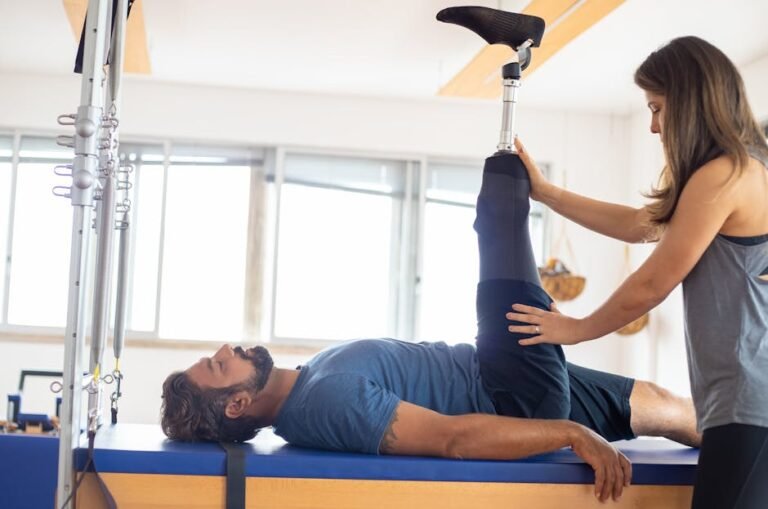
- Learn to engage your deep core correctly. Forget about “sucking in” your stomach. Instead, gently draw your lower belly inward as if you’re softly tightening a corset, without holding your breath. This subtle activation targets the transverse abdominis — your spine’s internal support belt. A physiotherapist or qualified Pilates instructor can teach you to get this right.
- Prioritise glute strengthening. Exercises like glute bridges, squats, and lateral band walks can dramatically improve the stability of your pelvis and lower back. Focus on quality of movement rather than how heavy you can go, and ensure you actually feel your glutes working rather than compensating with your lower back.
- Master diaphragmatic breathing. Lie on your back with one hand on your chest and one on your belly. Inhale slowly and deeply, focusing on making your belly rise rather than your chest. Exhale gently. Even five to ten minutes of this practice daily can improve your deep core activation and reduce overall muscular tension.
- Include regular mobility and stretching work. Hip flexor stretches, hamstring stretches, and gentle thoracic (mid-back) mobility exercises keep your fascial system supple and prevent the kind of stiffness that forces your spine to compensate. Practices like yoga and Pilates are excellent for this integrated approach.
- Don’t sit in one position for too long. Set a reminder to get up and move at least once every 45–60 minutes if you have a desk job. Even a short walk or a few gentle movements helps reset the load distribution across your spinal structures.
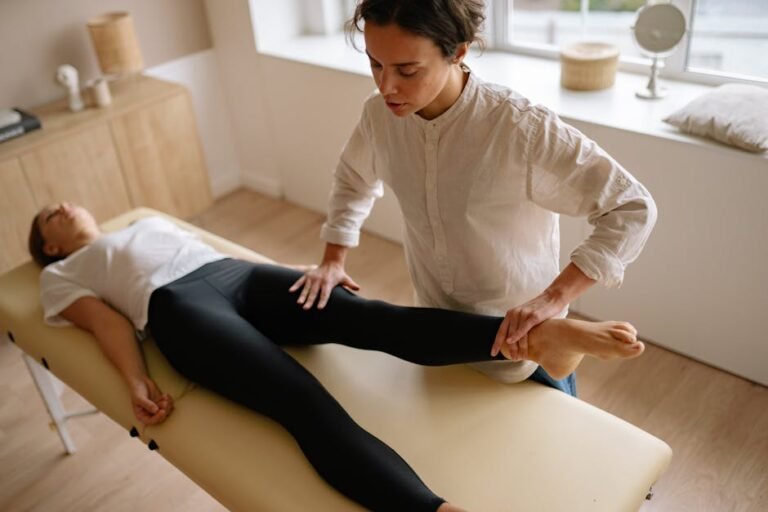
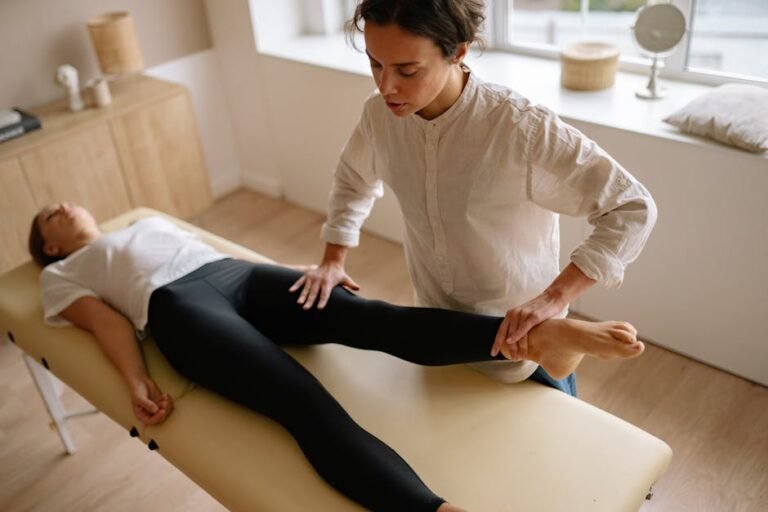
- Seek professional guidance when needed. If you have persistent back pain, a physiotherapist or chiropractor can assess your movement patterns, identify weaknesses or imbalances in your extraspinal support system, and guide you through a personalised programme to address them.
Bringing It All Together: A Holistic View of Back Health
One of the most empowering shifts you can make for your long-term back health is moving away from the idea that your spine is a problem to be fixed in isolation and towards seeing it as the centrepiece of a whole-body system that you can actively nurture and strengthen. When you understand that your glutes, your breathing, your abdominal layers, your hips, and even your posture during everyday tasks all play a role in how well your spine is supported, the path forward becomes much clearer.
This holistic perspective also helps explain why so many people find short-term relief from back treatments but keep returning with the same issues. If the extraspinal support system is never properly addressed — if the glutes remain weak, the deep core stays disengaged, or breathing patterns continue to be shallow — the spine will keep taking on more load than it should. Sustainable back health comes from building and maintaining the entire team, not just treating the part that’s currently making noise.
The encouraging reality is that the human body is extraordinarily adaptable. With consistent, targeted effort — and a little patience — you can genuinely improve the coordination, strength, and resilience of your spinal support system at any age. Start small, be consistent, and don’t hesitate to seek expert support when you need it. Your spine has been quietly depending on this whole-body team your entire life. Now it’s your turn to return the favour.
The Bottom Line: Your spine’s health is not determined by the vertebrae and discs alone — it depends on a whole-body network of extraspinal muscles, fascia, and connective tissue that constantly works to redistribute mechanical load and keep you stable, mobile, and protected. Key players include the glutes, iliopsoas, latissimus dorsi, abdominal wall, and the foundational trio of deep core muscles, pelvic floor, and diaphragm. By strengthening these muscles, learning proper movement habits, and practising diaphragmatic breathing, you can actively support your spine’s load redistribution system and lay the foundation for lasting back health.
This is not medical advice. Consult your healthcare provider before starting any new health routine or using any product mentioned here.