
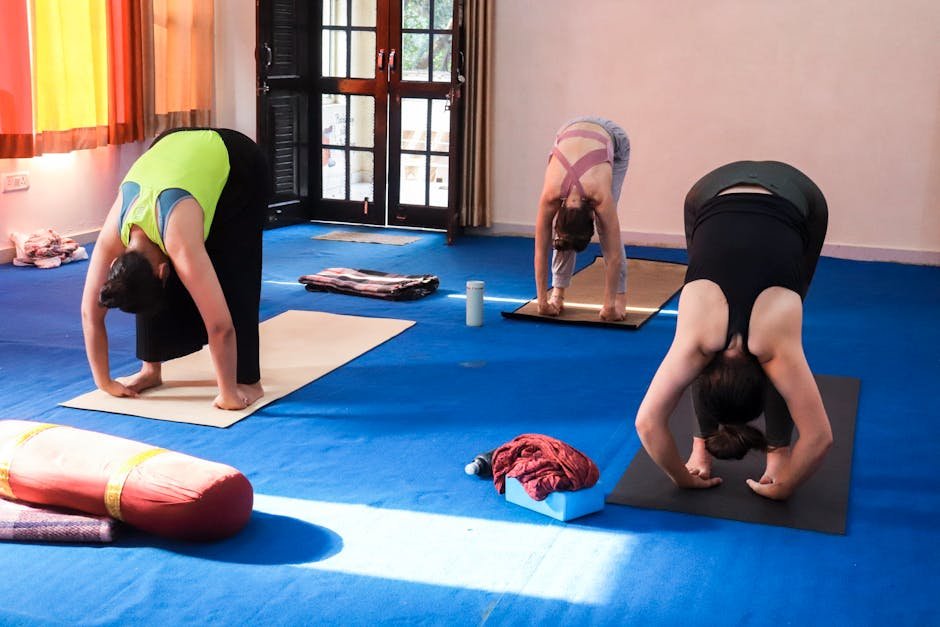
How Mindful Movement Improves Sensory and Motor Information Integration for a Healthier Spine
This post contains affiliate links. As an Amazon Associate, I earn from qualifying purchases at no extra cost to you.
Free resources — no credit card required for trial
🎧 Listen to health & wellness audiobooks free for 30 days
Start 30-Day Free Trial →
📚 Read unlimited health books free for 30 days
Try Kindle Unlimited Free →
Free resources — no credit card required for trial
🎧 Listen to health & wellness audiobooks free for 30 days
Start 30-Day Free Trial →
📚 Read unlimited health books free for 30 days
Try Kindle Unlimited Free →
Your spine does something extraordinary every single day — and most of us completely take it for granted. It holds you upright, lets you twist, bend, and reach, and acts as the body’s main communication superhighway, carrying millions of signals between your brain and the rest of you. But here’s the thing: the spine isn’t just a mechanical structure. It’s a living, dynamic system that thrives when your brain and body are in constant, clear conversation. When that conversation breaks down — through poor posture, stress, or inactivity — back pain, stiffness, and discomfort often follow. The exciting news is that mindful movement practices like yoga and Pilates are proving, through solid science, that you can actively improve sensory and motor information integration in your central nervous system, helping your spine not just feel better, but function at its very best.
Your Spine Is So Much More Than a Stack of Bones
Most of us only start thinking about our spine when it starts hurting. But understanding what your spine actually does — beyond just keeping you upright — can completely change how you approach your health. Your spine is a masterpiece of biological engineering. It needs to be strong enough to support your entire body weight, flexible enough to allow a remarkable range of motion, and protective enough to shield the delicate spinal cord running through its centre. That spinal cord is, quite literally, your body’s central communication cable.
Every sensation you experience — warmth, pressure, pain, movement — travels through this cable on its way to your brain. And every instruction your brain sends to move a muscle, shift your weight, or catch yourself from falling travels back down through it. This two-way flow of sensory and motor information is happening constantly, often without you even realising it. When the system runs smoothly, movement feels effortless and natural. When it’s disrupted — through injury, poor movement habits, or a sedentary lifestyle — everything from your posture to your pain levels can suffer.
The good news is that this system is not fixed. Your nervous system is remarkably adaptable, and the right kind of movement can actively retrain how your brain and body communicate. That’s where mindful movement comes in — and it’s far more powerful than most people realise.
What Makes Mindful Movement Different from Regular Exercise
Traditional exercise programmes often focus on isolated outcomes — building bigger biceps, running faster, or losing weight. These are all perfectly valid goals, but they don’t always address the complex, interconnected nature of spinal health. Mindful movement practices like yoga and Pilates take a fundamentally different approach. Rather than treating the body as a collection of separate parts, they treat it as an integrated whole — one where breath, awareness, strength, and flexibility all work together.
Think of it like the difference between playing a few random notes on a piano and performing a full symphony. When all the elements of mindful movement come together — controlled breathing, core activation, precise alignment, and genuine body awareness — the effect is far greater than any single component could produce alone. This synergy is what sets these practices apart.
Yoga and Pilates also address something that most gym programmes simply don’t: the psychological and emotional dimensions of physical health. Chronic back pain, for example, isn’t purely physical. Stress and tension have a very real way of showing up in the body, particularly in the back, shoulders, and neck. Mindful movement teaches you to breathe through discomfort, calm your nervous system, and release physical tension that’s rooted in mental stress. That holistic approach makes it uniquely effective for spinal health in a way that isolated stretching or strength training alone often isn’t.
What the Research Actually Says About Yoga and Spine Health
It’s easy to be sceptical of wellness trends, but the evidence behind mindful movement for spinal health is genuinely compelling. Multiple well-designed studies have shown that regular yoga practice can significantly reduce chronic lower back pain — one of the most common and debilitating health complaints in the modern world. More importantly, yoga doesn’t just dampen the pain signals; it actually improves your functional ability, meaning you can move more freely and comfortably in your everyday life.
One particularly noteworthy randomised controlled trial found that consistent yoga practice substantially reduced excessive upper back curvature — known as kyphosis — in older adults. This matters because kyphosis isn’t just about appearance; it can contribute to balance problems, breathing difficulties, and ongoing pain. The fact that a movement practice could measurably reverse this kind of structural change is remarkable.
Pilates, meanwhile, has its own impressive body of research. With its deep focus on core strengthening, precise body control, and spinal alignment, Pilates has been shown to effectively reduce chronic low back pain, improve physical capacity, and enhance quality of life. These aren’t fringe claims — they’re supported by peer-reviewed science. Both practices have earned their place as legitimate, evidence-based tools for spinal rehabilitation and long-term spine health maintenance.
The Brain-Body Connection: How Mindful Movement Improves Sensory and Motor Information Integration
Here’s where things get truly fascinating. The benefits of yoga and Pilates go much deeper than muscles and flexibility — they reach right into your nervous system. Modern neuroscience has revealed that mindful movement can promote something called neuroplasticity: your brain’s incredible ability to reorganise itself, form new neural pathways, and essentially rewire how it processes information. In practical terms, this means your brain can literally learn better ways to control your movements and interpret the signals coming from your spine and body.
One of the most tangible ways this shows up is through improved proprioception — your body’s internal GPS. Proprioception is your sense of where your limbs and joints are in space, even with your eyes closed. It’s what lets you walk without looking at your feet, or catch yourself when you start to lose your balance. When your proprioceptive system is sharp, you move with greater precision, you’re less prone to injury, and maintaining good posture becomes almost effortless.
Mindful movement directly trains this system. When you hold a yoga pose and consciously notice the subtle sensations in your joints and muscles, or when you perform a Pilates exercise with deliberate, controlled precision, you’re sending rich, detailed information to your brain about where your body is and how it’s moving. Over time, this improves the overall integration of sensory and motor information in your central nervous system — the signals travelling from your body to your brain and back again become faster, clearer, and better coordinated.
For your spine specifically, this is a game-changer. Optimal spinal function depends on incredibly sophisticated coordination between dozens of muscle groups, constant feedback from your joints and ligaments, and the ability to maintain postural control across everything from sitting at a desk to lifting a heavy bag. When your sensory and motor communication is finely tuned, your spine moves with efficiency, grace, and resilience — rather than compensating, straining, and eventually complaining.
Practical Tips: What You Can Do to Start Supporting Your Spine Today
The best part about mindful movement is that you don’t need to be flexible, fit, or experienced to start benefiting. Here’s how to bring these principles into your life in a way that’s sustainable, safe, and genuinely enjoyable:
- Start small and be patient with yourself. You don’t need to master complex poses or sequences from day one. Begin with gentle, beginner-friendly classes or online tutorials that focus on foundational movements and body awareness. Progress naturally as your confidence grows.
- Find a qualified instructor. Especially in the beginning, working with a knowledgeable yoga or Pilates teacher can make a huge difference. A good instructor will offer alignment cues, suggest modifications for your body’s unique needs, and help you avoid common mistakes that could strain rather than support your spine.
- Make breath your anchor. Conscious breathing is absolutely central to mindful movement. Practise connecting your inhale and exhale to your movements — this deepens body awareness, calms your nervous system, and improves the stability of your core and spine.
- Listen to your body, always. This might be the most important habit to build. Pain is a signal, not something to push through. Mindful movement is about tuning in — noticing sensations without judgement and respecting what your body is telling you on any given day.
- Prioritise consistency over intensity. Even 10 to 20 minutes of mindful movement a few times a week can produce meaningful results over time. Short, regular sessions are far more effective for building new neural pathways and strengthening the spine than occasional intense workouts.
- Consider supportive tools. A quality yoga mat with good grip and cushioning, a foam roller for releasing spinal tension, or supportive yoga blocks can make your practice more comfortable and accessible — especially if you’re working with stiffness or sensitivity.
- Talk to your doctor or physio first. If you’re dealing with chronic pain, a diagnosed spinal condition, or you’re recovering from an injury, always get personalised guidance from a healthcare professional before starting a new movement practice.
Building a mindful movement habit isn’t about achieving perfect postures or following a rigid routine. It’s about developing a genuine, ongoing relationship with your body — one built on awareness, respect, and care.
The Long-Term Rewards of a Spine-Conscious Life
When you commit to mindful movement, the benefits compound beautifully over time. In the short term, many people notice less stiffness, reduced pain, and a greater sense of ease in everyday movements. But the longer-term rewards go even deeper. With consistent practice, you develop stronger postural muscles that support your spine without effort, sharper proprioception that protects you from injury, and a nervous system that is better equipped to process and integrate sensory and motor information efficiently.
There’s also a profoundly positive effect on mental wellbeing. The mindfulness component of these practices reduces stress and anxiety, which in turn reduces the physical tension that so often contributes to back pain. Many long-term practitioners describe feeling more connected to their bodies, more resilient in the face of physical challenges, and genuinely more at ease in their own skin. That’s a powerful return on a modest investment of time and attention.
It’s also worth noting that these practices are accessible across a huge range of ages, fitness levels, and health conditions. Whether you’re a young professional dealing with desk-related tension, a middle-aged adult managing chronic lower back pain, or an older person looking to maintain mobility and independence, mindful movement has something genuinely valuable to offer. The entry point is wherever you are right now — and the journey gets richer the longer you stay on it.
The Bottom Line: Your spine is one of your body’s most remarkable structures, and it deserves far more daily attention than most of us give it. Mindful movement practices like yoga and Pilates offer a beautifully integrated approach to spinal health — one that builds strength, improves flexibility, and crucially, enhances sensory and motor information integration in your central nervous system. Backed by real science and rooted in centuries of wisdom, these practices can help you move with less pain, greater ease, and a deeper sense of connection to your own body. Start gently, stay consistent, and let your spine discover its true superpower.
This is not medical advice. Consult your healthcare provider before starting any new health routine or using any product mentioned here.