Spinal Therapeutic Exercise: How Smarter Movement Can Transform Your Back Health
This post contains affiliate links. As an Amazon Associate, I earn from qualifying purchases at no extra cost to you.
Free resources — no credit card required for trial
🎧 Listen to health & wellness audiobooks free for 30 days
Start 30-Day Free Trial →
🛒 Recommended Products
As an Amazon Associate we earn from qualifying purchases at no extra cost to you.
Branfit Shoulder and Back Brace Posture Corrector — Breathable Posture Trainer for Upper B
$24.99
Posture Corrector for Women and Men — Comfortable Effective Brace for Shoulder and Back Pa
$22.99
Bodywellness Posture Corrector for Men and Women — Adjustable Back Straightener with Clavi
$19.99
Updated Posture Corrector — Adjustable Upper Back Brace for Clavicle Support and Neck Pain
$21.99
Upgraded Posture Corrector Back Brace for Men and Women — Full Back Support for Neck and S
$29.99
📚 Read unlimited health books free for 30 days
Try Kindle Unlimited Free →
Your spine works hard for you every single day — from the moment you roll out of bed to the last stretch before sleep. It lets you pick up your kids, haul grocery bags, twist to back out of the driveway, and sit through a long day at a desk. But when back pain, stiffness, or that nagging discomfort creeps in, all those everyday moments can feel surprisingly difficult. The frustrating part? Many of us are told to “just strengthen your core” without ever understanding what that actually means for a spine that’s already struggling. The good news is that spinal therapeutic exercise offers something far more powerful than generic gym advice — it’s a targeted, intelligent approach to retraining your body so you can move freely, feel confident, and get back to the life you love.
Why Your Spine Is More Remarkable Than You Realise
It’s easy to take your spine for granted — until something goes wrong. But consider what it actually does: it bears the weight of your upper body, acts as a protective tunnel for your spinal cord (the communication superhighway between your brain and the rest of your body), and allows you to bend, twist, and reach in almost every direction imaginable. That combination of strength, protection, and flexibility is genuinely extraordinary.
The secret behind all of this lies in a delicate balance between two opposing forces: stability and mobility. Stability comes from the muscles, ligaments, and discs that hold your vertebrae in place and give your spine a firm foundation. Mobility is what lets you move freely and fully through your range of motion. When these two forces are working in harmony, your spine feels good and functions beautifully. When that balance is disrupted — whether through injury, years of wear and tear, repetitive poor posture, or simply ageing — pain, stiffness, and dysfunction can follow.
Understanding this push and pull between stability and mobility is the foundation of everything in spinal therapeutic exercise. It’s not about making your back “tough.” It’s about restoring that elegant balance so your spine can do its job without constantly complaining.
Spinal Therapeutic Exercise Goes Far Beyond “Just Getting Stronger”
For years, back pain advice was fairly simple: strengthen your back muscles and everything will improve. And while building strength is certainly part of the picture, the science of spinal health has come a long way. We now understand that it’s not just how strong your muscles are — it’s how well they work together, when they switch on, and the overall quality of your movement patterns that truly matter.
This is where the concept of motor control becomes important. Motor control is essentially your brain’s ability to send the right signals to the right muscles at the right moment. Think of it like conducting an orchestra — every musician needs to play their part precisely, at exactly the right time, for the performance to sound beautiful. When motor control is poor, some muscles overwork while others stay stubbornly quiet, leading to imbalances, strain, and eventually pain.
Modern spinal therapeutic exercise also distinguishes between two groups of muscles: the deep “local stabilisers” (smaller muscles close to the spine that act like internal guy wires, holding each vertebral segment steady) and the larger “global mobilisers” (the bigger, more superficial muscles that generate powerful movements). True spinal stability happens when both groups are working in sync. And finally, there’s movement quality — are you moving smoothly and efficiently, or compensating for weakness by overusing other areas? Therapeutic exercise addresses all of these layers, helping your body move smarter, not just harder.
The Kinetic Chain: Why Your Back Pain Might Not Be Just About Your Back
Here’s something that surprises a lot of people: the source of your back pain is often not the same place as the cause of your back pain. Your spine doesn’t function in isolation — it’s part of what movement specialists call a kinetic chain, a connected system where your pelvis, hips, rib cage, neck, and shoulders all influence each other constantly.
Picture it like a chain of gears. If one gear is stiff or misaligned, the gears connected to it have to compensate — and over time, that compensation creates its own problems. Tight hip flexors from too much sitting can tilt your pelvis forward, increasing the arch in your lower back and putting extra pressure on your lumbar discs. Limited mobility in your mid-back (the thoracic spine) can force your neck or lower back to do more of the rotational work, contributing to pain in those areas. Weak glutes — your body’s powerhouse — can leave your lower back to take on loads it was never designed to handle alone.
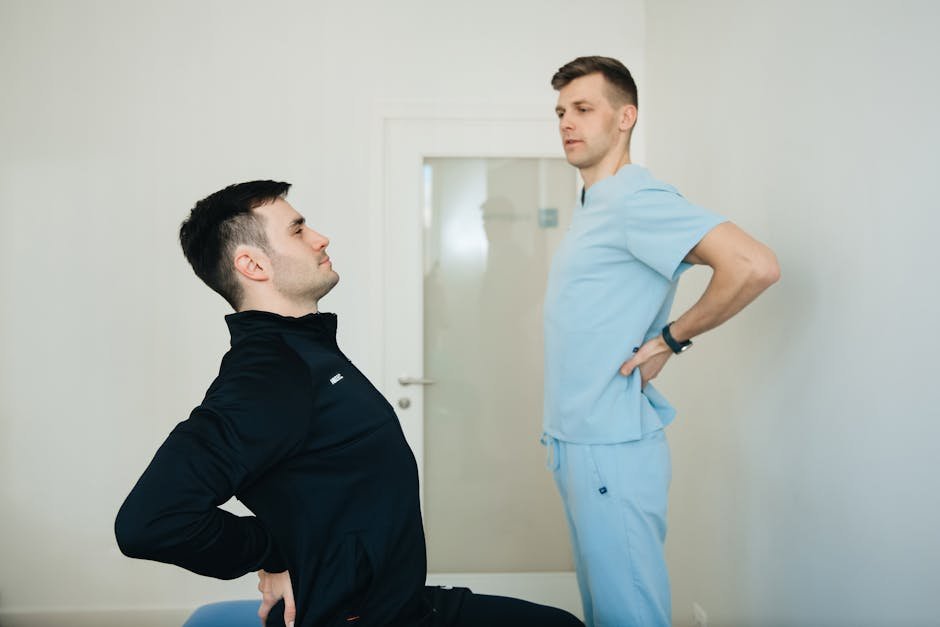
This is why a well-designed spinal therapeutic exercise programme doesn’t just look at where it hurts. A skilled physiotherapist or movement specialist will assess your entire body, identify the underlying imbalances and movement dysfunctions contributing to your symptoms, and address the whole picture. This comprehensive approach is what leads to lasting relief rather than temporary fixes — because you’re solving the actual problem, not just managing the symptom.
The Real-World Goals of Spinal Therapeutic Exercise
So what is all this carefully designed exercise actually working toward? Beyond reducing pain (which is obviously important!), the true functional goals of spinal therapeutic exercise are about restoring your ability to live your life fully and confidently. Let’s break down what that looks like in practice.
Improved musculoskeletal mechanics means your muscles, joints, and bones are moving together in the most efficient way possible — reducing unnecessary wear and tear on the structures of your spine. Reduced stress on spinal structures follows naturally: when your supporting muscles are strong and coordinated, your discs, ligaments, and facet joints don’t have to shoulder as much load. Enhanced muscular endurance means your spinal muscles can actually sustain their supportive role throughout the day, rather than fatiguing by mid-afternoon and leaving you slumping at your desk.
One of the most fascinating goals is restoring proprioception — your body’s built-in “position sense.” This is your nervous system’s ability to know where each part of your body is in space without looking. When proprioception is sharp, your body reacts instinctively to maintain balance and avoid injury. After back problems, this sense can become dulled, which is one reason re-injury is so common. Therapeutic exercise actively retrains these neurological pathways. And ultimately, all of this feeds into the biggest goal of all: improved functional ability — the confidence and physical capacity to bend, lift, carry, sit, walk, play sport, and enjoy your hobbies without fear of pain flaring up again.
What You Can Do: Practical Tips for Supporting Your Spine
Whether you’re currently dealing with back pain or simply want to be proactive about your spinal health, there are meaningful steps you can take starting today. Here are some practical, evidence-informed actions to guide you:
- Work with a qualified professional first. A physiotherapist or spine-specialised healthcare provider can assess your specific movement patterns, identify imbalances, and design a programme tailored to your individual needs. Generic exercises from the internet may not address your particular issues — and in some cases could make things worse.
- Prioritise quality over quantity. When it comes to therapeutic exercise, a handful of repetitions performed with excellent form will always outperform a large set done sloppily. Poor form reinforces the very movement patterns you’re trying to correct.
- Listen to your body — and distinguish between types of discomfort. Some mild muscle fatigue after exercise is completely normal and expected. But sharp, shooting, or progressively worsening pain is your body asking you to stop and check in with your healthcare provider.
- Be consistent, even on the days it feels unnecessary. The benefits of therapeutic exercise are cumulative. Short, regular sessions will always beat occasional intense ones. Think of it as a daily investment in your future mobility.
- Carry your new awareness into daily life. Notice how you sit, stand, lift, and carry. The mindful movement habits you build during exercise sessions need to travel with you into your everyday activities — that’s where the real transformation happens.
- Support your spine beyond exercise. Take regular movement breaks if you sit for long periods, stay well hydrated (your spinal discs are largely made of water), pay attention to your sleeping position, and maintain a healthy weight to reduce unnecessary load on your spine.
- Consider supportive tools thoughtfully. Ergonomic supports, lumbar cushions, or resistance bands for home exercise can all complement a professional programme — look for well-reviewed options that suit your specific needs.
Remember, the goal isn’t perfection — it’s progress. Every small, consistent action you take builds toward a healthier, more resilient spine over time.
Building a Future Where Your Spine Supports Your Life
There’s something genuinely empowering about understanding that back pain, stiffness, and restricted movement aren’t inevitabilities you simply have to accept. The body is remarkably adaptable, and with the right approach, meaningful improvement is absolutely possible for most people. Spinal therapeutic exercise isn’t a quick fix — but it is one of the most evidence-supported, sustainable routes to lasting spinal health available to us.
The journey involves re-educating your nervous system, restoring coordinated muscle activation, building real endurance and strength, and gradually improving the quality of how you move in every direction. It’s a process of learning to work with your body rather than pushing through pain or ignoring warning signs. When you commit to that process — ideally with professional guidance — you’re not just addressing today’s discomfort. You’re laying down the foundation for a more mobile, active, and pain-free future.
And perhaps most importantly, you’re reclaiming agency over your own health. Rather than being at the mercy of a bad back, you become someone who understands what their body needs — and knows how to give it. That shift in perspective alone can be transformative.
The Bottom Line: Spinal therapeutic exercise is about far more than building a stronger back. It’s a smarter, more integrated approach to restoring the delicate balance between stability and mobility that your spine needs to function at its best. By improving motor control, addressing the full kinetic chain, and working toward real-world functional goals — from reducing pain to enhancing your body’s position sense — this type of targeted exercise empowers you to move freely and live fully. Start with professional guidance, focus on movement quality, and stay consistent. Your spine does so much for you every day; investing in its health is one of the most rewarding things you can do for your overall wellbeing.
This is not medical advice. Consult your healthcare provider before starting any new health routine or using any product mentioned here.