
Individualized vs. Standardized Exercise Prescription: Why Your Spine Deserves a Personalised Plan
This post contains affiliate links. As an Amazon Associate, I earn from qualifying purchases at no extra cost to you.
Free resources — no credit card required for trial
🎧 Listen to health & wellness audiobooks free for 30 days
Start 30-Day Free Trial →
📚 Read unlimited health books free for 30 days
Try Kindle Unlimited Free →
When your back acts up, it’s rarely just an inconvenience — it’s a roadblock. Suddenly, tying your shoes, picking up a child, or even sitting comfortably becomes a challenge. Millions of people live with spinal pain or stiffness as a near-constant companion, and the search for relief can feel overwhelming. Hot packs, painkillers, and brief passive treatments might take the edge off temporarily, but if you’re looking for real, lasting freedom from spinal pain, therapeutic exercise is one of the most powerful tools available. Here’s the catch, though: not just any exercise will do. When it comes to your spine — one of the most complex and individual structures in your entire body — a one-size-fits-all exercise prescription often falls frustratingly short. What truly works is a personalised, progressive plan built around your unique needs. Let’s break down exactly why that matters, and what you can do about it.
Your Spine Is More Remarkable Than You Realise
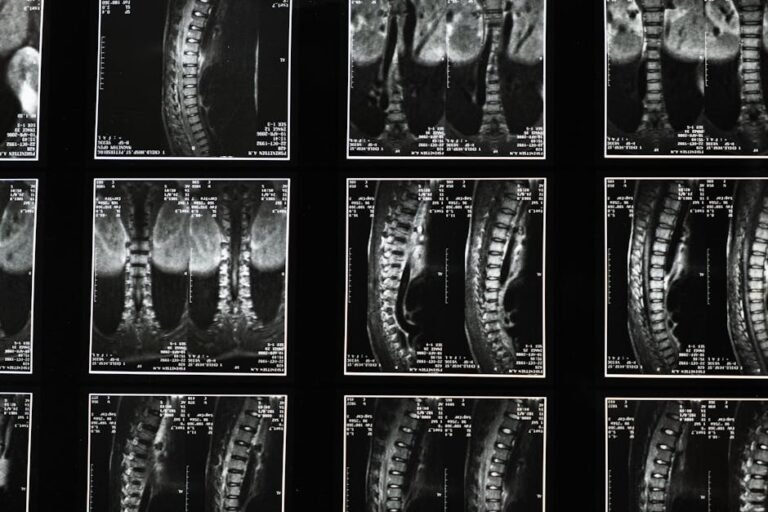
Before we dive into exercise strategies, it helps to appreciate just how extraordinary your spine actually is. This intricate column of bones, discs, ligaments, and muscles is engineered to be simultaneously strong and flexible — allowing you to twist, bend, lift, and carry with ease. It also serves as the main highway of your nervous system, relaying vital messages between your brain and every other part of your body. That combination of stability and mobility is something most of us take for granted right up until the moment it starts to falter.
When this delicate balance is disrupted — by injury, poor posture, repetitive strain, or simply the wear and tear of daily life — pain, stiffness, and weakness follow. These are your spine’s distress signals. And while passive treatments like massage, heat therapy, or medication can provide welcome short-term relief, they don’t address the underlying issues driving your symptoms. The real pathway to restoring spinal health lies in carefully crafted, progressive therapeutic exercise — not random stretches or generic gym routines, but a meticulous programme designed to rebuild strength, flexibility, and neuromuscular control from the ground up.
Why a One-Size-Fits-All Exercise Prescription Misses the Mark
Here’s something many people don’t realise: spinal rehabilitation is genuinely complex. Unlike a straightforward fracture that heals in a predictable, linear way, spinal dysfunction involves a multifaceted interplay of several distinct elements. Understanding these is key to understanding why individualised exercise prescription is so much more effective than a standardised programme.
First, there’s neuromuscular control — the way your brain and nervous system communicate with your muscles to produce smooth, coordinated movement. When pain or injury strikes, this communication can become scrambled, leading to compensation patterns that put additional stress on your spine. Then there’s structural integrity, which refers to the health and alignment of your bones, discs, and ligaments. While structural issues can’t always be fully corrected, the right exercise programme can significantly improve how your body supports and moves around them. Pain processing is another critical factor — pain isn’t always a direct reflection of tissue damage. Your brain’s interpretation of pain signals can be influenced by stress, fear, sleep quality, and past experiences, meaning a truly comprehensive approach must consider the psychological and emotional dimensions of pain, not just the physical ones. Finally, functional movement patterns — the specific ways you sit, stand, bend, reach, and lift in everyday life — can contribute enormously to spinal problems when they go awry over time.
Because every person has a unique combination of these factors, the challenges they face and the goals they’re working toward will vary enormously. A standardised exercise prescription — the same programme handed to everyone with “back pain” — simply cannot account for this complexity. What helps one person may be ineffective or even harmful for another. Your rehabilitation needs to reflect your specific biomechanics, the way your nervous system controls your muscles, and the way your body responds and adapts to exercise over time.
Building Your Spinal Foundation: A Progressive, Layered Approach
Effective spinal rehabilitation works like building a house — you establish a strong foundation first, then build upward in a logical, progressive sequence. Skipping ahead too quickly is a recipe for setbacks. The goal throughout isn’t just to relieve current symptoms but to holistically restore the balance of stability and mobility your spine needs to support an active, fulfilling life.
The first and most critical phase focuses on awakening what’s known as the deep stabilising system — the group of muscles that act like your body’s natural internal corset. This system includes the diaphragm (your primary breathing muscle, which also plays a surprisingly important role in core stability), the pelvic floor, the transversus abdominis (a deep abdominal muscle that wraps around your trunk like a natural weight belt), and the multifidus (small, deep muscles running along the length of the spine that provide essential segmental support). When you experience pain or injury, these muscles often become inhibited — they effectively “switch off.” Gently reactivating and re-educating them is the essential starting point for any spinal rehabilitation programme.
Once that foundational stability is established, the focus expands to what’s called the global movement system — recognising that your body functions as an integrated, interconnected unit rather than a collection of isolated parts. Strong, mobile hips protect the lower back. Good mobility through the mid-back (thoracic spine) prevents your lower back or neck from compensating unnecessarily. Exercises at this stage focus on restoring functional movement patterns like bending, reaching, and twisting, gradually incorporating load-bearing activities in a safe and controlled way. The aim is full-body efficiency and harmony, reducing cumulative stress on the spine.
The final stage of progression is highly personalised, tailoring exercises to your specific lifestyle, hobbies, and ambitions. Whether you want to return to gardening, get back to recreational sport, lift grandchildren without wincing, or train for a marathon, exercises at this stage become increasingly specific and challenging, building dynamic stability, strength, endurance, and resilience. Importantly, this progression is rarely perfectly linear — your body’s response will continually shape the pace and direction of the programme, which is exactly why ongoing assessment and adaptation are so essential.
Individualised vs. Standardised: What the Difference Looks Like in Practice
To make this concrete, consider two people who both walk into a clinic with lower back pain. The first person is a desk worker in their 40s whose pain flares after long hours of sitting, with weakness in the deep stabilisers and tight hip flexors from prolonged sitting. The second is a recreational runner in their 30s whose pain came on after increasing their mileage too quickly, with good core activation but limited thoracic mobility and poor hip control during single-leg movements. A standardised programme might give both people the same set of generic core exercises. An individualised prescription, by contrast, would look quite different for each — one focused heavily on postural retraining, hip flexor lengthening, and deep core re-education; the other emphasising thoracic mobility, single-leg stability, and running-specific load management.
This is the real power of a personalised exercise prescription. It starts with a thorough assessment that identifies the specific drivers of your symptoms — not just where it hurts, but why. From there, every exercise is chosen deliberately, progressed carefully, and adjusted based on how your body responds. It’s a dynamic, responsive process rather than a static protocol, and that responsiveness is precisely what makes it so much more effective for complex spinal conditions.
What You Can Do: Practical Tips for Your Spinal Health Journey
Knowing that an individualised approach is best is one thing — knowing how to get started is another. Here are practical, actionable steps to help you take charge of your spinal health right now:
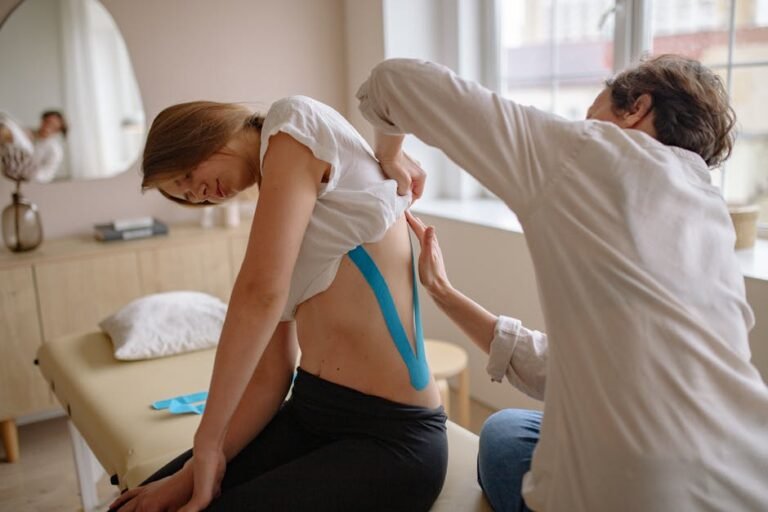
- Work with a qualified specialist: The single most important step is consulting a physiotherapist or physical therapist who specialises in spinal rehabilitation. They can carry out a thorough assessment, identify the root causes of your pain or dysfunction, and design an individualised exercise prescription built specifically for you — rather than for “back pain patients” in general.
- Prioritise quality over quantity: Especially in the early stages of rebuilding deep core stability, slow, controlled, precise movements are far more valuable than fast or high-repetition efforts. Focus on actually feeling the right muscles engage rather than simply completing reps.
- Listen to your body: Some mild muscle fatigue or gentle discomfort is a normal part of rebuilding strength. But sharp, shooting, or worsening pain is a clear signal to stop and reassess. Always communicate any new or unusual symptoms to your therapist promptly.
- Make consistency your priority: Short, regular sessions — even 10 to 15 minutes daily — will almost always produce better results than sporadic, intense bursts of activity. Consistency builds cumulative progress in a way that irregular effort simply cannot.
- Break up prolonged static postures: Your body is designed for movement, not for sitting or standing rigidly for hours at a time. Set a reminder to move every 30 to 45 minutes — a short walk, a gentle stretch, or simply changing your position can make a meaningful difference to how your spine feels over the course of a day.
- Be patient with the process: Genuine structural and neuromuscular change takes time. Progress is rarely perfectly linear — there will be good days and harder days. Celebrate the small victories, stay committed to your personalised plan, and remember that you’re making a genuine long-term investment in your health and independence.
- Consider supportive tools: A quality foam roller, resistance bands, or a supportive lumbar cushion for your desk chair can be helpful adjuncts to your exercise programme. Look for physiotherapist-recommended options on Amazon to complement your professional care.
The Long Game: Why Investing in Personalised Therapeutic Exercise Pays Off
It can be tempting, especially when you’re in pain, to focus entirely on immediate relief. But spinal health is genuinely a long game, and the payoff for taking a personalised, progressive approach to therapeutic exercise is enormous. Research and clinical experience consistently show that people who engage in active, individualised rehabilitation — rather than relying solely on passive treatments — experience better long-term outcomes, fewer relapses, and a much higher quality of life. They return to the activities they love more fully and more confidently.
Think of individualised exercise prescription not as a short-term fix, but as an investment in your spine’s long-term resilience. Every session spent properly activating your deep stabilisers, improving your movement patterns, and building functional strength is a deposit into your body’s reserves — reserves that will protect you during the demanding moments of daily life and help keep you active for decades to come. The goal isn’t just to be pain-free today; it’s to build a body that’s strong, adaptable, and capable of supporting the life you want to live.
Your spine is a truly remarkable structure, and it deserves care that matches its complexity. By embracing an approach that sees you as an individual — not a generic “back pain case” — you give yourself the best possible chance of lasting recovery and real, functional freedom of movement.
The Bottom Line: When it comes to spinal health, a one-size-fits-all exercise prescription simply doesn’t cut it. Your spine is complex, your body is unique, and your rehabilitation plan should reflect that. A personalised, progressive approach to therapeutic exercise — one that works through building deep stability, restoring full-body movement, and ultimately preparing you for the specific demands of your life — is the most effective path to lasting spinal health. Start by seeking guidance from a qualified specialist, commit to consistency, and trust the process. Your spine has carried you this far; the right exercise prescription can help it carry you much further.
This is not medical advice. Consult your healthcare provider before starting any new health routine or using any product mentioned here.