How Yoga Supports Your Spine and Eases Back Pain: A Complete Guide to a Healthier Back
This post contains affiliate links. As an Amazon Associate, I earn from qualifying purchases at no extra cost to you.
Free resources — no credit card required for trial
🎧 Listen to health & wellness audiobooks free for 30 days
Start 30-Day Free Trial →
🛒 Recommended Products
As an Amazon Associate we earn from qualifying purchases at no extra cost to you.
Branfit Shoulder and Back Brace Posture Corrector — Breathable Posture Trainer for Upper B
$24.99
Posture Corrector for Women and Men — Comfortable Effective Brace for Shoulder and Back Pa
$22.99
Bodywellness Posture Corrector for Men and Women — Adjustable Back Straightener with Clavi
$19.99
Updated Posture Corrector — Adjustable Upper Back Brace for Clavicle Support and Neck Pain
$21.99
Upgraded Posture Corrector Back Brace for Men and Women — Full Back Support for Neck and S
$29.99
📚 Read unlimited health books free for 30 days
Try Kindle Unlimited Free →
That dull ache in your lower back after a long day at the desk. The stiffness that greets you every morning before your body finally “wakes up.” The occasional sharp twinge when you twist to grab something off a shelf. If any of this sounds familiar, you are in very good company. Back pain is one of the most common complaints among adults worldwide, and our modern lifestyles — full of long hours sitting, repetitive movements, and relentless stress — are often the culprits. But here is the encouraging part: yoga for back pain is not just a trendy wellness buzzword. It is an ancient, time-tested practice that modern science is increasingly confirming as a genuinely powerful tool for spinal health. Whether you are dealing with chronic discomfort or simply want to protect your back for the decades ahead, yoga might just be the multi-dimensional solution you have been looking for.
Why Your Spine Deserves More of Your Attention
Your spine is, without exaggeration, one of the most impressive structures in the human body. Made up of 33 individual bones called vertebrae — stacked from the base of your skull all the way down to your tailbone — it serves a dual role that no other part of your anatomy can match. On one hand, it is the strong central pillar that holds your entire body upright and supports virtually every movement you make. On the other hand, it is a flexible, dynamic structure that allows you to bend forward, arch backward, twist sideways, and reach in countless directions throughout your day. All while quietly protecting the delicate network of nerves that makes up your spinal cord.
Yet despite this remarkable engineering, the spine is surprisingly vulnerable to the habits of modern life. Prolonged sitting — whether in an office chair, a car, or on a sofa — places uneven pressure on spinal discs and encourages poor posture. A lack of regular movement weakens the muscles that are supposed to support and stabilise the spine, leaving it more exposed to injury and pain. Over time, these patterns can lead to chronic lower back pain, stiffness, reduced mobility, and subtle structural imbalances that quietly affect your quality of life. The good news is that none of this is inevitable. With the right approach, you genuinely can build a stronger, more resilient spine — and yoga is one of the most effective tools available to help you do exactly that.
From Ancient Tradition to Modern Therapy: The Evolution of Yoga for Back Pain
Yoga has been practised for more than 5,000 years, originally developed as a holistic system integrating physical postures, controlled breathing, and meditative focus. Its roots were deeply spiritual, but its physical benefits were never incidental — they were always central to the practice. Over the past few decades, yoga has made a remarkable transition from the realm of spiritual tradition into mainstream healthcare, and it is now widely recognised as a therapeutic tool for musculoskeletal conditions, particularly those affecting the spine.
This shift has not happened by accident. A growing body of scientific research has examined yoga’s effects on back pain, spinal mobility, and related conditions — and the results have been genuinely impressive. What was once considered intuitive wisdom is now being validated in clinical studies, confirming that yoga’s comprehensive approach addresses the kind of complex, multi-layered challenges that back pain presents. This reflects a broader evolution in how we think about health: moving away from simply treating isolated symptoms and toward integrative approaches that treat the whole person — body, mind, and lifestyle together. Yoga fits naturally and powerfully into that model.
More Than Just Stretching: How Yoga Actually Works for Your Spine
When most people picture yoga, they imagine gentle stretching — maybe a seated forward fold or a peaceful child’s pose. And while flexibility work is certainly part of it, yoga’s impact on spinal health runs considerably deeper than that. Unlike conventional exercise programmes that tend to target specific muscle groups in isolation, yoga weaves together controlled movement, sustained postures, conscious breathing, and mindfulness into a single, unified practice. That combination is what makes it so uniquely effective for the back.
One of yoga’s most important contributions to spinal health is the way it improves neuromuscular coordination and proprioception — your body’s ability to sense its own position and movement in space. As you hold poses and transition mindfully between them, you are essentially training your brain and body to communicate more effectively. This leads to better posture, more efficient movement patterns, and a greater ability to catch yourself before a careless movement becomes a painful injury. Research has also shown that yoga’s blend of physical movement, breathwork, and mindfulness helps to calm the nervous system and can reduce what is known as a maladaptive pain response — a cycle in which the brain becomes oversensitised to pain signals, continuing to register discomfort even after the original injury has healed. Yoga helps interrupt that cycle by teaching you to relate to discomfort with awareness rather than fear or bracing tension.
The physical benefits are equally impressive. A regular yoga practice builds strength in the deep core muscles, glutes, and back muscles that form the essential support system for your spine. It also improves flexibility throughout the spinal column and surrounding soft tissues — reducing stiffness, increasing range of motion, and helping each region of the spine (cervical, thoracic, and lumbar) move as it was designed to. Add to that yoga’s well-documented systemic benefits — reducing stress hormones, improving circulation, supporting better sleep — and you can see why its positive effects on the spine are so far-reaching. When your whole system is functioning better, your back naturally benefits too.
What Yoga Can Do for Chronic Back Pain Specifically
Chronic back pain is a particularly stubborn and complex problem, and it is one area where yoga’s multi-dimensional approach really shines. The challenge with chronic pain is that it rarely has just one cause. There may be physical factors — tight muscles, weak stabilisers, compressed discs — but there are almost always psychological and neurological layers too. Stress and anxiety can amplify pain perception. Fear of movement can cause people to become less active, which in turn weakens the muscles they need most. A sense of helplessness about the pain can set in, making recovery feel impossible.
Yoga addresses all of these layers simultaneously. The physical postures work on mobility, strength, and structural alignment. The breathing practices activate the parasympathetic nervous system — the “rest and digest” response — which directly counters the stress response that so often amplifies pain. The mindfulness component encourages a different, more empowered relationship with discomfort, helping you notice sensation without immediately catastrophising it. This is what researchers mean when they describe yoga as an intervention for maladaptive pain responses: it does not just mask the pain, it gently retrains the whole system — physical, neurological, and psychological — to respond in a healthier way.
It is worth noting that yoga is not a quick fix, and it is not a substitute for proper medical care when that is needed. But as a complementary practice — used alongside guidance from a physiotherapist, doctor, or other healthcare professional — it can be genuinely transformative for people dealing with ongoing back issues. Many people find that over weeks and months of consistent practice, not only does their pain diminish, but their confidence in their body returns, their posture improves, and daily activities that used to be uncomfortable become easy again.
Practical Tips: How to Start Using Yoga for a Healthier Back
Feeling inspired to give yoga a try? Here are some warm, practical suggestions to help you get started safely and effectively — whether you are a complete beginner or returning to movement after a period of pain or inactivity.
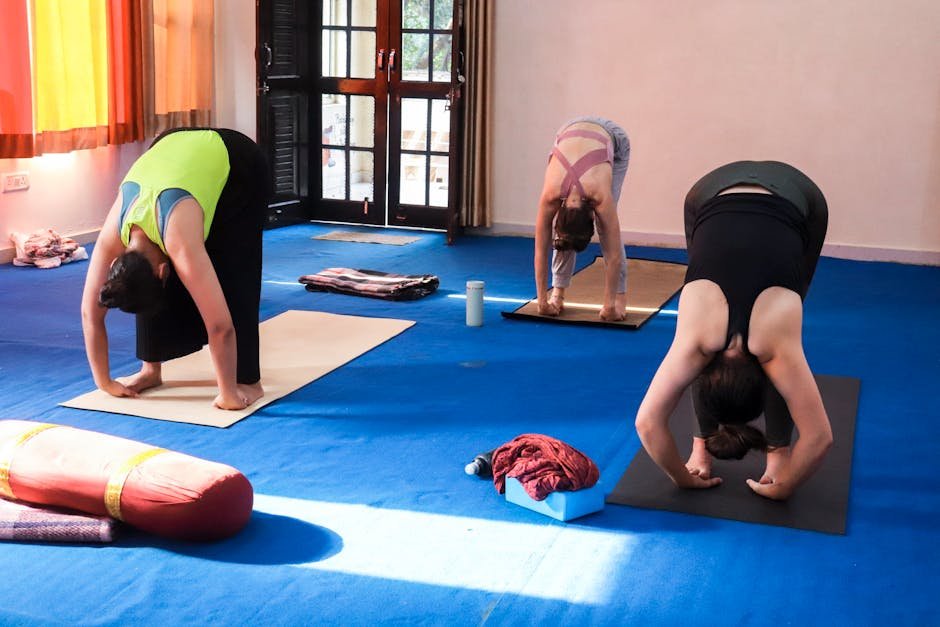
- Start gentle and go slow. If you are new to yoga or currently dealing with back pain, look for beginner-friendly classes labelled Gentle Yoga, Restorative Yoga, or Yoga for Back Care. These formats are designed to be accessible and safe, without the intensity that some other styles involve.
- Find a qualified, experienced instructor. A good yoga teacher can offer modifications tailored to your body and flag any alignment issues before they become problems. Before class, let your teacher know about any back concerns — a knowledgeable instructor will appreciate the heads-up and guide you accordingly.
- Use props freely and without embarrassment. Yoga blocks, straps, bolsters, and blankets are not signs of weakness — they are tools that help you access poses safely and comfortably. Using them consistently protects your spine and allows you to build strength and flexibility at a sustainable pace.
- Pay attention to your breath. The breathing practices in yoga (pranayama) are not just relaxation techniques — they are an active part of the therapeutic process. Focusing on slow, controlled breath helps calm your nervous system, supports proper core engagement, and keeps you present in your body during movement.
- Prioritise consistency over intensity. A short, gentle yoga session three or four times a week will do far more for your spine than an occasional marathon class. Even 15 to 20 minutes of mindful movement on a regular basis can produce meaningful changes over time.
- Never push through pain. Mild discomfort or a gentle stretch sensation is normal. Sharp, stabbing, or radiating pain is not. If something hurts, ease out of the pose immediately and consult your healthcare provider before continuing.
- Always check with your doctor or physiotherapist first. This is especially important if you have a diagnosed spinal condition, a history of injury, or any other health concerns. A healthcare professional can advise on which types of movement are appropriate and safe for your specific situation.
Building Long-Term Spinal Resilience Through Yoga
One of the most empowering things about yoga as a practice for spinal health is that its benefits compound over time. The more consistently you practise, the stronger and more mobile your spine becomes. The better your proprioception and neuromuscular coordination, the less likely you are to injure yourself in everyday activities. The calmer and more regulated your nervous system, the less your brain amplifies pain signals. These are not temporary fixes — they are genuine, lasting changes to how your body functions.
Beyond the physical, many people find that yoga shifts their relationship with their body in a profound way. Instead of viewing the back as a source of fear, limitation, or frustration, they begin to see it as something capable of strength, adaptability, and recovery. That psychological shift — from helplessness to agency — is itself a powerful part of the healing process. When you feel confident in your body, you move more freely, protect yourself more intuitively, and live more fully.
You do not need to be flexible, young, athletic, or pain-free to begin. You just need a willingness to show up consistently and a commitment to listening to your body along the way. The spine you have right now — wherever it is in terms of health and comfort — is capable of improvement. Yoga is one of the most accessible, evidence-supported, and genuinely enjoyable ways to help it get there.
The Bottom Line: Yoga for back pain is far more than a gentle stretch routine — it is a multi-dimensional practice that simultaneously strengthens the muscles supporting your spine, improves flexibility and posture, trains your nervous system to respond to pain more adaptively, and nurtures your overall physical and mental well-being. Backed by a growing body of research and thousands of years of practical wisdom, yoga offers a genuinely powerful path to a healthier, more resilient back. Start gently, stay consistent, use the support of a qualified instructor, and always work in partnership with your healthcare team. Your spine has incredible potential for recovery and strength — yoga is a wonderful way to help it reach that potential.
This is not medical advice. Consult your healthcare provider before starting any new health routine or using any product mentioned here.