Bidirectional Load Transmission Through the Spine: How Your Back Moves Forces Every Day
This post contains affiliate links. As an Amazon Associate, I earn from qualifying purchases at no extra cost to you.
Free resources — no credit card required for trial
🎧 Listen to health & wellness audiobooks free for 30 days
Start 30-Day Free Trial →
📚 Read unlimited health books free for 30 days
Try Kindle Unlimited Free →
Have you ever stopped mid-stride and thought about what’s actually happening inside your spine? Probably not — most of us only think about our backs when they start hurting. But your spine is doing something extraordinary every single second of every day: it’s transmitting forces both upward and downward through your body in a perfectly coordinated, two-way system. This concept, known as bidirectional load transmission through the spine, is one of the most fascinating areas of biomechanics — and understanding it could completely change how you move, exercise, sit, and take care of yourself. Whether you’re picking up a dropped set of keys or sprinting for the bus, your spine is the unsung hero making it all possible.
Your Spine Is More Than a Stack of Bones
Most people picture the spine as a simple column of vertebrae — a kind of biological tower holding you upright. But that image sells this incredible structure dramatically short. In the world of biomechanics, the spine is understood as the central hub of what’s called a “kinetic chain.” Think of it like the links in a bicycle chain: every single segment is connected, and movement in one part directly affects every other part. Your feet, ankles, knees, hips, pelvis, and spine are all linked in a continuous, dynamic system.
What makes your spine so remarkable is the clever engineering principle behind it, called “biotensegrity.” Rather than being a rigid pole that would snap under pressure, your spine achieves stability through a perfectly balanced interplay of tension and compression. Muscles and ligaments pull, vertebrae and discs push, and the whole system works together like a finely tuned suspension bridge. This combination of strength and flexibility is what allows you to twist, bend, reach, and absorb impact — all without falling apart.
Your spine also serves as a three-dimensional movement engine. It doesn’t just allow you to bend forward and back; it enables rotation, side bending, and combinations of all three. And while it’s doing all of that, it’s simultaneously protecting the delicate bundle of nerves running through it — your spinal cord — acting like a flexible suit of armour for your entire nervous system. When you appreciate the full picture, it’s hard not to feel a little awe for what’s going on just beneath the surface.
Understanding Bidirectional Load Transmission Through the Spine
Here’s where things get truly interesting. Your spine doesn’t just carry load in one direction — it constantly transmits forces both upward from your lower body and downward from your upper body. This bidirectional load transmission is happening during every movement you make, and it’s the key to understanding why spine health affects your whole body, not just your back.
Let’s start with forces travelling upward. Every time your foot strikes the ground — whether you’re walking, running, or simply stepping off a kerb — a wave of force ripples upward through your body. It travels from your foot, through your ankle, up your leg, through your knee and hip, into your pelvis, and straight up into your spine. Your spine’s job is to absorb, adapt to, and distribute that energy safely throughout your body. Think of it like a car’s suspension system: without it, every bump in the road would rattle your entire frame. If any link in that upward chain is stiff, weak, or out of alignment — say your ankles lack mobility or your hip muscles are underpowered — your spine ends up absorbing more stress than it was designed to handle.
Now consider forces travelling downward. When you lift a heavy box, carry a loaded bag, or simply sit upright working at a computer, forces from your upper body — your arms, shoulders, and torso — need to travel downward through your spine, into your pelvis, and ultimately into your legs and the ground beneath you. This downward transmission is what keeps you stable and balanced. Your spine acts like a sturdy mast on a sailing boat, directing those forces efficiently. When downward transmission is compromised by a weak core, poor lifting mechanics, or habitual slouching, your spinal discs and joints can end up bearing far more pressure than is healthy, setting the stage for pain and long-term damage.
Why This Two-Way System Affects Your Whole Body
Once you understand that the spine is a two-way force highway, a lot of things start to make more sense — including why back pain sometimes seems to come out of nowhere, or why treating just the painful spot doesn’t always solve the problem. Because your kinetic chain is so interconnected, a weak link anywhere in the system can show up as pain or dysfunction somewhere else entirely.
Consider lower back pain, one of the most common health complaints worldwide. In many cases, the root cause isn’t actually in the lower back itself. Stiff hips, flat feet, or tight hamstrings can all disrupt the upward transmission of forces, forcing the lumbar spine to compensate. Similarly, a weak core or rounded shoulders can interfere with downward force transmission, placing excessive strain on the mid and lower back. This is why effective spine care often involves addressing the entire kinetic chain rather than focusing solely on the site of pain.
The same principle applies in the opposite direction. Neck pain and tension headaches can sometimes be traced back to how well the thoracic (mid) spine and core are supporting the head and upper body. When the downward transmission chain isn’t functioning efficiently, the neck muscles overwork trying to stabilise the head — which weighs around 10 to 12 pounds — and discomfort follows. Seeing the spine as part of an integrated, bidirectional system is genuinely empowering, because it opens up far more options for prevention and care.
The Real-World Impact on Injury, Posture, and Quality of Life
Understanding bidirectional load transmission isn’t just an intellectual exercise — it has very real consequences for how you feel and function day to day. When your spine is transmitting forces efficiently in both directions, your body moves with less effort, less strain, and far less risk of injury. When that system is disrupted, the effects ripple outward in ways that can significantly reduce your quality of life.
Efficient load transmission means smoother, more powerful movement. Athletes often notice that when their core and spinal mechanics are optimised, they generate more force with less effort — because the kinetic chain is sharing the work rather than one area carrying the entire burden. The same principle applies to everyday tasks. Getting out of bed, gardening, walking upstairs, or lifting shopping bags all become easier when your spine is doing its job properly as a two-way force conductor.
Posture, too, is deeply linked to this system. Good posture isn’t simply about standing up straight — it’s about aligning your entire kinetic chain so that forces can travel efficiently in both directions. When your posture is optimised, your muscles don’t have to work as hard to hold you upright, your joints experience less compressive stress, and you simply feel more comfortable in your own body. Even small improvements in how forces move through your spine can translate into noticeable reductions in everyday aches, fatigue, and tension.
Practical Tips for Supporting Your Spine’s Bidirectional Load Transmission
The good news is that supporting your spine’s ability to transmit forces effectively doesn’t require expensive equipment or complex training programmes. Consistent, thoughtful daily habits make the biggest difference over time. Here are some practical, evidence-informed steps you can start taking right away:
- Move regularly and vary your movement: Avoid sitting or standing in one position for longer than 30 to 60 minutes at a stretch. Stand up, take a short walk, do a few gentle stretches. Variety keeps your kinetic chain adaptable and prevents stiffness from building up in any one area.
- Build a truly holistic core: Your “core” is far more than your abdominal muscles. It includes your deep abdominals, back muscles, glutes, and even your diaphragm. Exercises like planks, bird-dogs, and glute bridges target these muscles together and help your spine transmit forces more efficiently in both directions.
- Work on hip and thoracic mobility: Stiffness in your hips or mid-back is one of the most common causes of disrupted force transmission. Gentle mobility drills for these areas — such as hip flexor stretches, thoracic rotations, and cat-cow movements — can make a significant difference to how well your whole kinetic chain functions.
- Lift mindfully: When picking something up, bend your knees and hinge at your hips rather than rounding your lower back. Keep the load close to your body. This simple adjustment dramatically improves downward force transmission and protects your spinal discs.
- Check your sitting setup: If you work at a desk, make sure your feet are flat on the floor, your hips are roughly level with or slightly above your knees, and your screen is at eye level. A well-configured workspace supports healthy spinal alignment throughout the day.
- Pay attention to your footwear: What happens at your feet directly influences upward force transmission. Shoes with good arch support and cushioning help your body absorb ground reaction forces more effectively, reducing the stress that reaches your spine.
- Listen to early warning signs: Mild stiffness or discomfort is your body asking for attention. Don’t ignore it or push through pain. Early intervention — even just some gentle movement and rest — can prevent minor issues from becoming major problems.
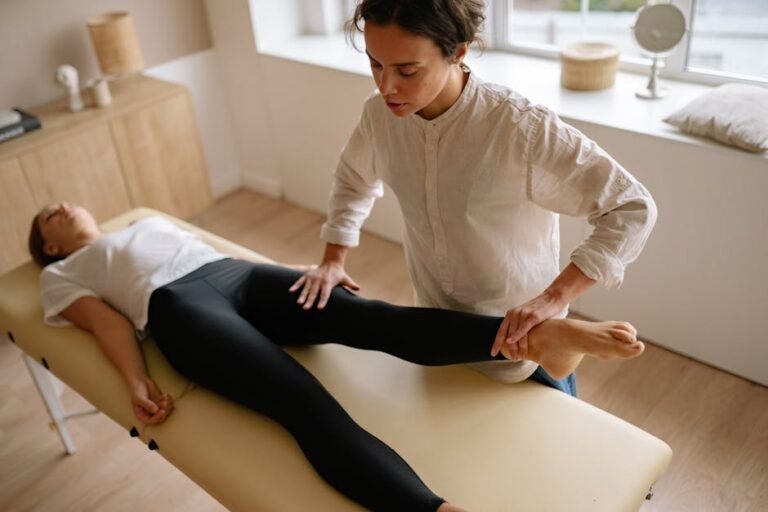
- Seek professional assessment if needed: If you have persistent back pain, difficulty moving freely, or simply want to optimise your body’s mechanics, a physiotherapist or movement specialist can assess your entire kinetic chain and provide a personalised plan.
Incorporating even a few of these habits consistently will help your spine do its remarkable job more effectively — and you’ll likely notice the difference in how you feel during everyday activities.
When to Take Your Spine Health More Seriously
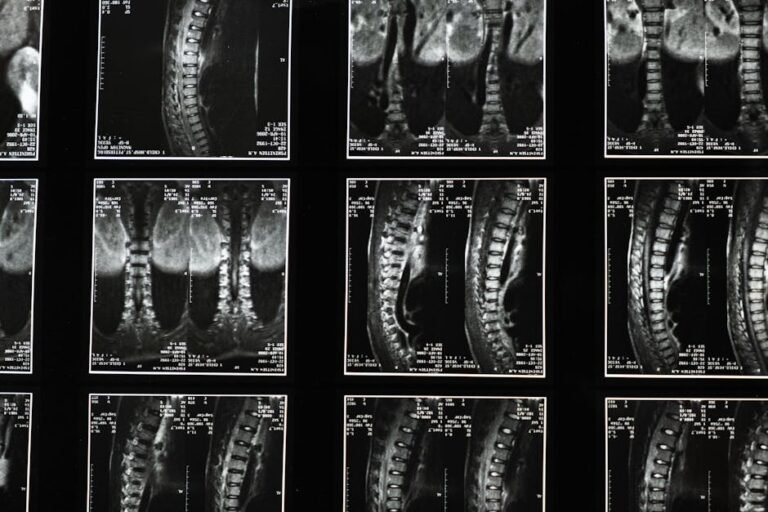
While most people can significantly improve their spine health through sensible lifestyle habits, there are times when professional guidance is genuinely necessary. If you experience persistent pain that lasts more than a few weeks, pain that radiates into your legs or arms, numbness or tingling, or any loss of strength in your limbs, these are signals that deserve prompt medical attention. Conditions affecting the spinal discs, joints, or nerves can sometimes present with these symptoms, and early diagnosis makes a real difference to outcomes.
It’s also worth noting that age-related changes in the spine — such as reduced disc hydration, decreased flexibility, and subtle shifts in posture — are normal and manageable, but they do change how your spine transmits forces over time. Staying active, maintaining muscle strength, and keeping your joints mobile are the most effective things you can do to slow these changes and maintain a high quality of life well into your later years. The key message is that it’s never too early — or too late — to start taking better care of this extraordinary structure.
Even if you’ve never experienced a day of back pain in your life, investing in your spine’s health now is one of the most valuable things you can do for your future self. The science of bidirectional load transmission reminds us that the spine isn’t just a back problem waiting to happen — it’s a dynamic, intelligent system that rewards care, attention, and movement.
The Bottom Line: Your spine is one of the most sophisticated structures in the human body, constantly transmitting forces both upward from the ground and downward from your upper body in a seamless, coordinated system. This bidirectional load transmission through the spine is the foundation of everything from healthy posture to efficient movement to injury prevention. By understanding how your kinetic chain works, prioritising core strength and joint mobility, moving regularly, and lifting mindfully, you give your spine the best possible chance to do its extraordinary job — keeping you upright, comfortable, and moving freely through everything life throws at you.
This is not medical advice. Consult your healthcare provider before starting any new health routine or using any product mentioned here.